
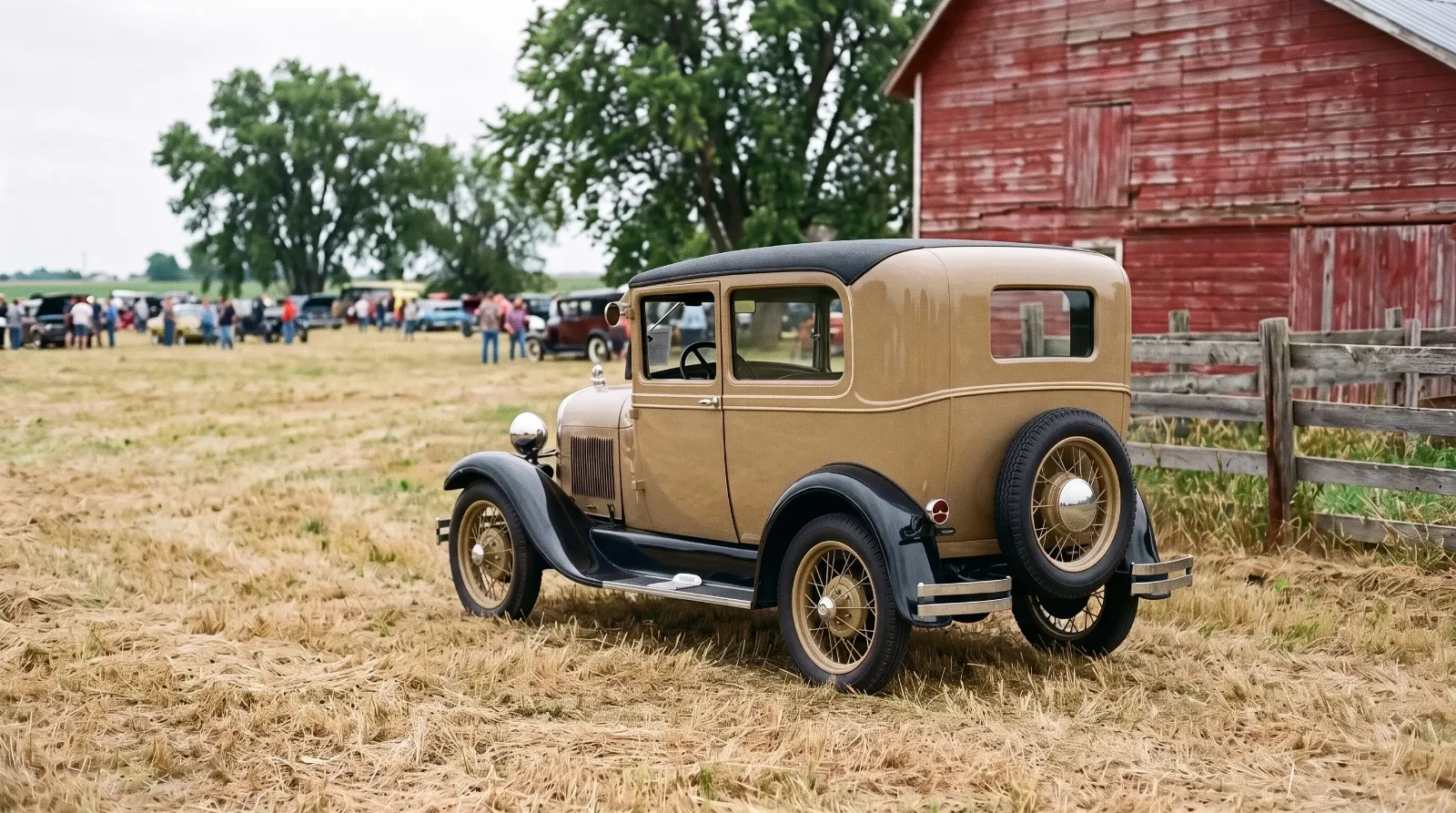
Park a 1929 Model A beside a 1930 and the difference reads from across a field before you can name it. The later car sits lower. Its radiator stands taller and catches the light differently, because the shell is now stainless steel. The wheels look smaller in the fenders because they are. The 1930 Ford Model A changes did not touch the 103.5 inch wheelbase, the engine or the basic chassis, yet they divided the four-year run into two visual families that judges, restorers and buyers still sort by eye.
Car Features
6 min read
The 1930 Model A Restyle: Stainless Shell, Taller Hood and Smaller Wheels
Stainless radiator shell, raised hood and cowl, 19 inch wheels and new B bodies: the 1930 Model A changes and how to date a car by them.
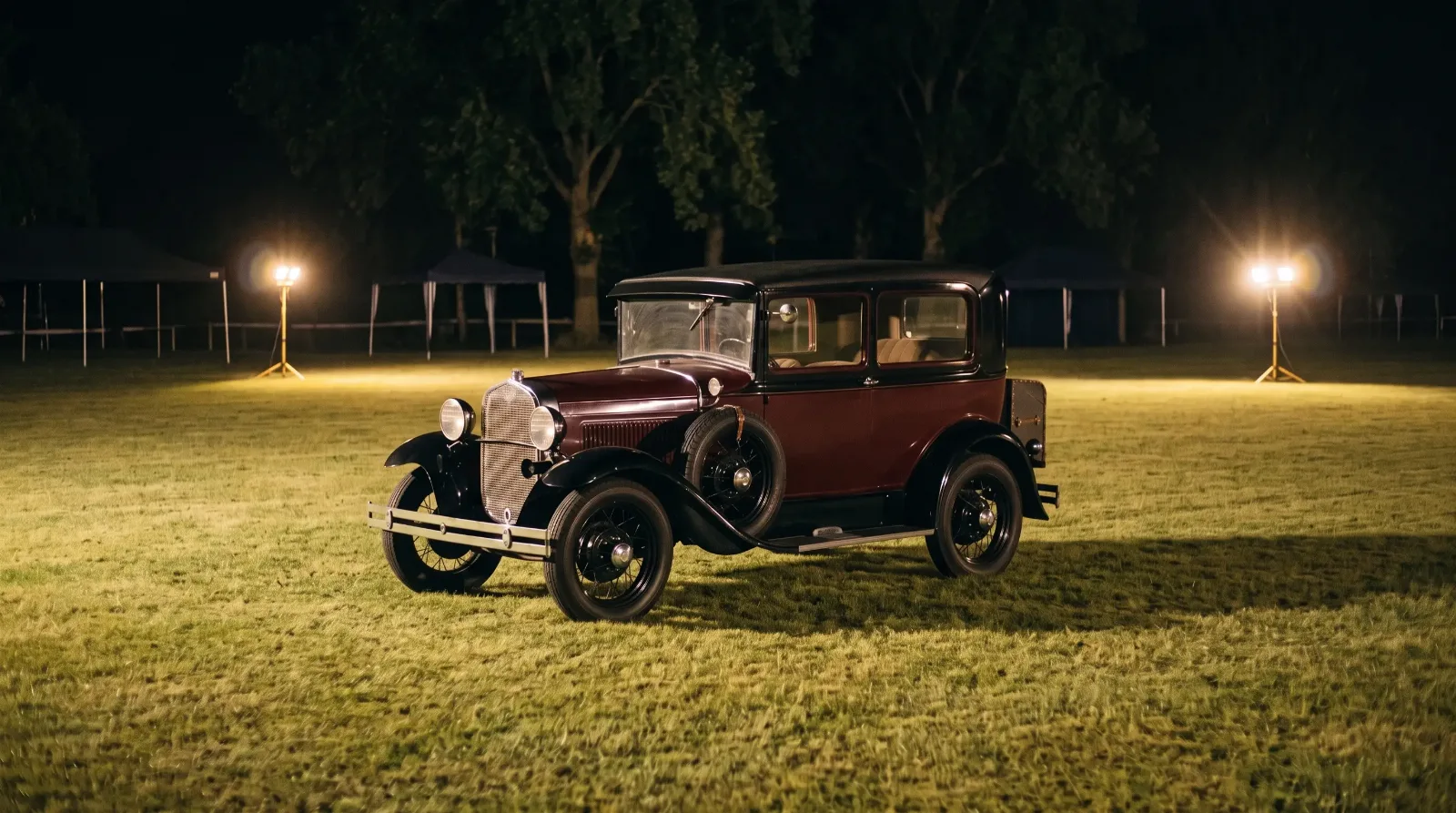
This article documents those changes element by element, with the codes and figures that let you date a car. For the wider arc of the program, the pillar on the full story covers 1927 to 1931.
The 1930 Ford Model A changes at a glance
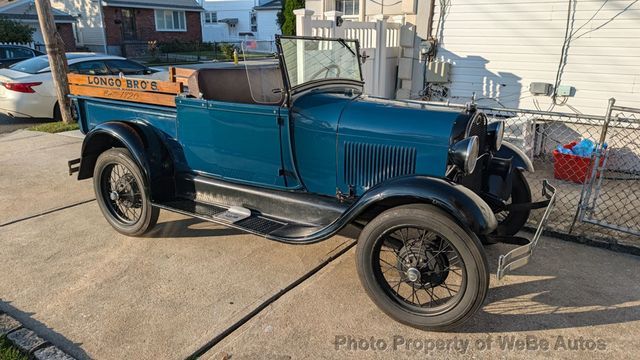
The sources agree on a short list. Ford raised the hood and radiator, made the radiator shell of stainless steel, raised the cowl, which gave room for a larger fuel tank, and cut the wheels from 21 inches to 19 inches with wider tires. Roadsters and phaetons also received fold-down windshields. We found no reliable source for the claim, sometimes repeated, that the body itself grew longer, and the wheelbase did not change.
| Element | 1928 to 1929 | 1930 |
|---|---|---|
| Radiator shell | Earlier shell, lower hood and radiator | Stainless steel shell, hood and radiator raised |
| Wheel diameter | 21 in | 19 in |
| Tire section | 4.50 in | 4.75 in |
| Fuel tank in cowl | 10 gal | 11 gal |
| Steering ratio | 11.25:1 | 13:1 |
| Tudor body code | 55-A, curved cowl | 55-B, straight cowl |
| Wheelbase | 103.5 in | 103.5 in |
Read the table as a set. A car that shows one column's radiator and the other column's wheels has been altered at some point, which is common and not always a fault, but it should be explained.
Stainless shell and the taller hood
The radiator shell is the single most useful identifier on the front of a Model A. On the 1930 car it is stainless steel. Paired with the raised hood and radiator, it gives the front a more upright, formal face than the first Model A had.
The cowl rose with the hood. On the Tudor, the change is recorded in the style number: the 55-A of 1928 and 1929 has a curved cowl, and the 55-B of 1930 and 1931 has a straight one. The straight cowl had appeared earlier on one Ford, the 140-A Town Car of 1929, and nowhere else in the line until the 1930 bodies. Collectors who know the earliest cars, the subject of the background piece on the 1928 AR, will recognize how much the front had already evolved before this.
Nineteen inch wheels and the lower stance
The wheel change did more to the car's proportions than any panel. Dropping from 21 inch to 19 inch wheels, with the tire section growing from 4.50 to 4.75 inches, brought the whole body closer to the road. The sources credit it with an improved ride as well as the lower look. Ford kept the 19 inch wheel through 1931.
For originality, this is where many cars drift. Wheels are easy to swap, so an earlier car may wear 19 inch wheels for a better ride, or a 1930 car may carry 21s from a parts stash. Check the wheels against the shell and the cowl before you check anything else.
"Judges look at the stance first, whether they admit it or not. A 1930 Model A should sit noticeably lower than a 1929, and if it does not, the wheels are the first thing I would measure."
Sarah Whitfield
Inside the cowl and behind the wheel

The higher cowl had a practical purpose. The Model A carried its fuel tank in the cowl, between the firewall and the dash, with the gauge in the tank itself. The 1928 and 1929 tank held 10 gallons. The 1930 and 1931 tank held 11.
The steering ratio also changed, from 11.25:1 on the 1928 and 1929 cars to 13:1 for 1930 and 1931. A slower ratio trades quickness for less effort at the rim, a sensible pairing with the wider tires.
The instrument panel is a running change rather than a model-year one, and it matters for dating. From October 1927 to June 1930, cars had a smooth panel with an oval speedometer. From June 1930 to the end, the panel was ribbed and the speedometer round. A 1930 car can therefore carry either, depending on its build date. The speedometer makers shift in the same window: Northeast supplied units from December 1929 to December 1930, Waltham from June 1930, and Stewart-Warner throughout.
New B bodies and the expanded catalog
The restyle came with a rebuilt body catalog. The 1930 codes introduced the B series bodies, including the 35-B, 40-B, 45-B and 55-B, along with the 40-B DeLuxe Roadster, the 45-B DeLuxe Coupe, the 180-A DeLuxe Phaeton, the 170-B DeLuxe Fordor and the 190-A Victoria. The Special Coupe and Business Coupe were dropped. Roadster output alone reached 124,214 for 1930, of which 11,313 were DeLuxe, according to a single catalog source. The full body list, with codes, is set out in the body styles guide; read more here.
Prices barely moved. The 1930 list ran from $440 for the Phaeton to $1,200 for the Town Car, with the Tudor at $495, the Fordor at $600 and the new Victoria at $580. Ford built 1,155,162 US passenger cars in calendar 1930, down from 1929 but still the second-best year of the run.
The trucks followed the cars. All Model A trucks received a new, less boxy cab for 1930 in the closed-car style, with the 82-B closed cab replacing the 82-A from June 1930.
The 1930 look carried into 1931 with refinements rather than a second redesign. The body-color shell accent, one-piece splash shields and a new instrument panel in April 1931 are covered in our piece on the final year. If you are comparing cars now, the codes and dimensions above will tell you more than any listing headline. Start with the current 1930 Model As for sale and read each one against the table.
Sources and notes
Related Reading

Have a
Ford Model A
for Sale?
Reach thousands of serious classic car collectors across the US.
Sell It Here →
Selling a classic? Here's how: compare the places to sell classic cars
Are You a Classic Car Dealer?
List your full inventory and connect with targeted classic car buyers.
Join as a Dealer →
#ford model a
#Model A originality
#Early Ford history
#1930 Ford
#Model A restyle
#Model A body codes

About the author
Sarah Whitfield
Third-generation classic car collector specializing in pre-war American and European coachbuilt automobiles. Researcher and concours enthusiast.
Related Listings - Ford Model A
Comments
Be the first to comment on this article.