
Sixteen cylinders. Say it out loud and it still sounds like a stunt. In 1930, Cadillac put a V16 into production and the rest of the luxury field had to answer. That is the whole story in one sentence, but the number underneath it matters more than the marketing did, so let's get into the 1930s v12 v16 cars story with the specs first and the myth-busting second.
Car Features
6 min read
The Multi-Cylinder Race: V12s & V16s
Sixteen cylinders was never about speed. It was about a smooth idle and a name on the valve covers, and the Depression numbers prove it.
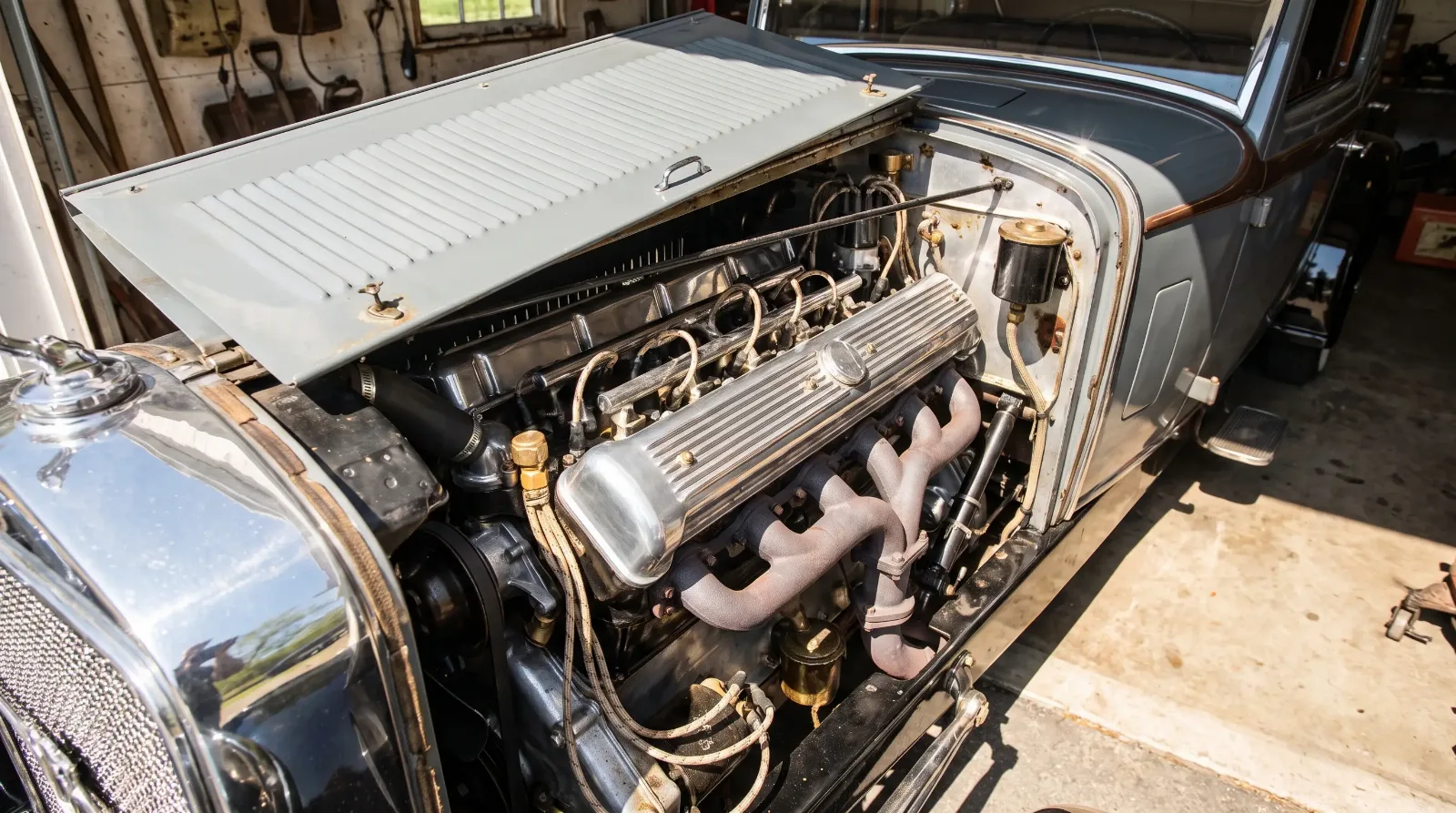
Cadillac's V16 was rated at 165 horsepower at launch, out of a 452 cubic-inch engine with a 45-degree bank angle chosen specifically so it would run as smooth as a straight-eight while looking like nothing else on the road. Marmon answered with its own V16 in 1931, a lighter aluminum-block design that on paper out-torqued Cadillac's. Packard, Lincoln, and Pierce-Arrow went the V12 route instead, which was the more common answer because it delivered most of the smoothness for less weight and less cost.
The engineering brief behind each of these programs was essentially the same, even if the execution differed. More cylinders, each smaller than a comparable straight-eight's, meant more frequent and smaller power pulses per revolution, which translates directly into less felt vibration at idle and at speed. Cadillac's engineers reportedly chose the 45-degree V angle specifically because it produced even firing intervals without resorting to a more complex crankshaft, a decision that traded a bit of ultimate smoothness for manufacturing simplicity. Marmon went a different direction with an aluminum block, chasing weight savings that mattered more to that company's smaller, sportier flagship than raw displacement did.
The real reason these engines existed
Here is the part that gets skipped in the romantic version of this story. A multi-cylinder engine in 1930 was not primarily about horsepower. Straight-eights of the era already made comparable power. What a V12 or V16 delivered was smoothness, the near-total absence of vibration that comes from more, smaller power pulses per revolution instead of fewer, larger ones. A wealthy buyer paying for a chauffeured car cared about a smooth idle at a stoplight more than a fast quarter mile, and that is what these engines were built to sell.
The other number that matters is cylinder count against production volume. Cadillac built roughly 4,076 V16-powered cars across the whole run from 1930 to 1940, most of those in the first two years before the Depression gutted the market for anything that expensive. Marmon's V16 lasted about two years before the company folded entirely, with only about 390 cars built. These were not mass-market engines. They were flagship halo pieces that a handful of manufacturers built at a loss, or close to it, to prove they could.
V12 versus V16: the numbers that actually decide it
Collectors argue about which layout is the better car to own, and the honest answer is that it depends what you are optimizing for. A V12 is lighter, cheaper to maintain, and nearly as smooth. A V16 is rarer, harder to service, and the bigger flex at a show field. Here is how the mainstream examples stack up.
| Engine | Maker | Displacement | Roughly built |
|---|---|---|---|
| V16 | Cadillac | 452 cu in | Around 4,076 |
| V16 | Marmon | 491 cu in | Around 390 |
| V12 | Packard Twelve | 445 cu in | Around 5,700 |
| V12 | Lincoln K-series | 414 cu in | Several thousand |
Notice the gap between Cadillac's V16 numbers and Marmon's. That gap is the whole story of why Marmon does not exist anymore and Cadillac does. Building an exotic flagship engine only works if the rest of your lineup is healthy enough to absorb the loss.
What killed the multi-cylinder race
The Depression gets blamed for ending the V16 era, and it deserves most of the blame, but the mechanics of the collapse are worth stating plainly. Fewer buyers could afford a car that cost more than a house. Manufacturers that had bet heavily on ultra-luxury engines, Marmon and Peerless among them, ran out of runway fast. Cadillac survived because General Motors could carry the V16 as a low-volume prestige line while the Chevrolet and mainstream Cadillac divisions kept the lights on.
By the late 1930s, even Cadillac had quietly moved its second-generation V16 to a simpler, cheaper flathead design instead of the original overhead-valve unit, a clear sign that the economics of building sixteen cylinders had stopped adding up even for the one company still committed to it. The engine survived, but the ambition behind it had shrunk.
"People want to talk about these engines like they were about speed. They were not. They were about a smooth idle and a name on the valve covers that told everyone at the club what you could afford. Once nobody could afford it anymore, the whole category disappeared inside a decade."
Dan Reeves
What this means for buyers today
If you are shopping this end of the market, the production numbers should drive your expectations on both price and parts availability. A Packard V12 is a more livable ownership proposition than a Marmon V16 simply because more of them were built, more parts survive, and more specialists know the engine. The V16 cars carry a premium that reflects rarity and spectacle rather than any meaningful driving advantage, and buyers should walk in knowing that is exactly what they are paying for.
Maintenance cost is the other number worth being honest about upfront. A sixteen-cylinder engine has, obviously, twice as many spark plugs, valves, and cylinders to service as an eight-cylinder engine of similar displacement, and specialists who actually understand the Cadillac or Marmon V16 in depth are a small and shrinking group. Budget accordingly, and don't assume a V16 costs roughly what a V12 costs to keep running just because the cars look similar on the outside. The gap in ongoing ownership cost between these two engine families is real and it compounds every time something needs attention.
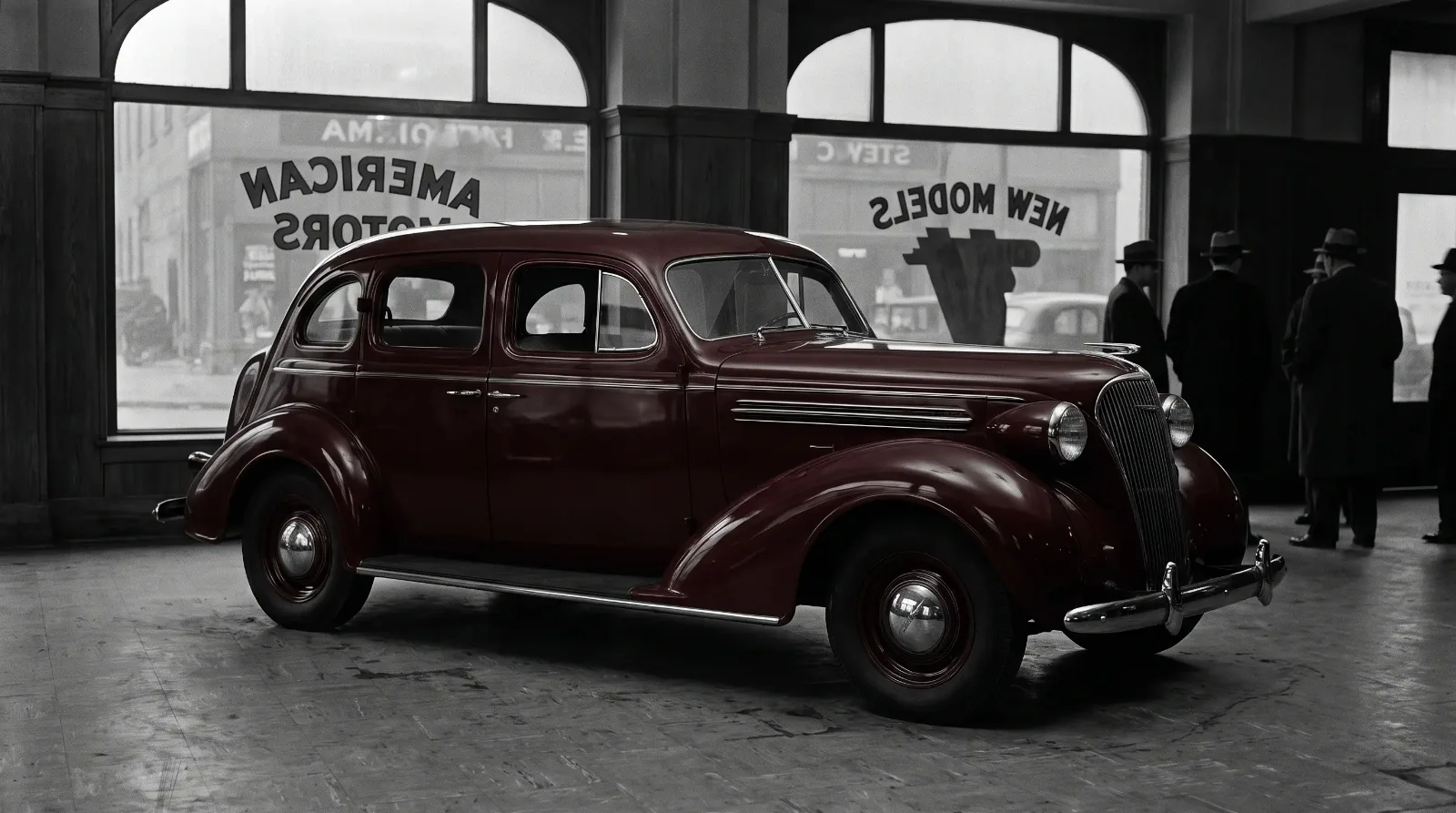
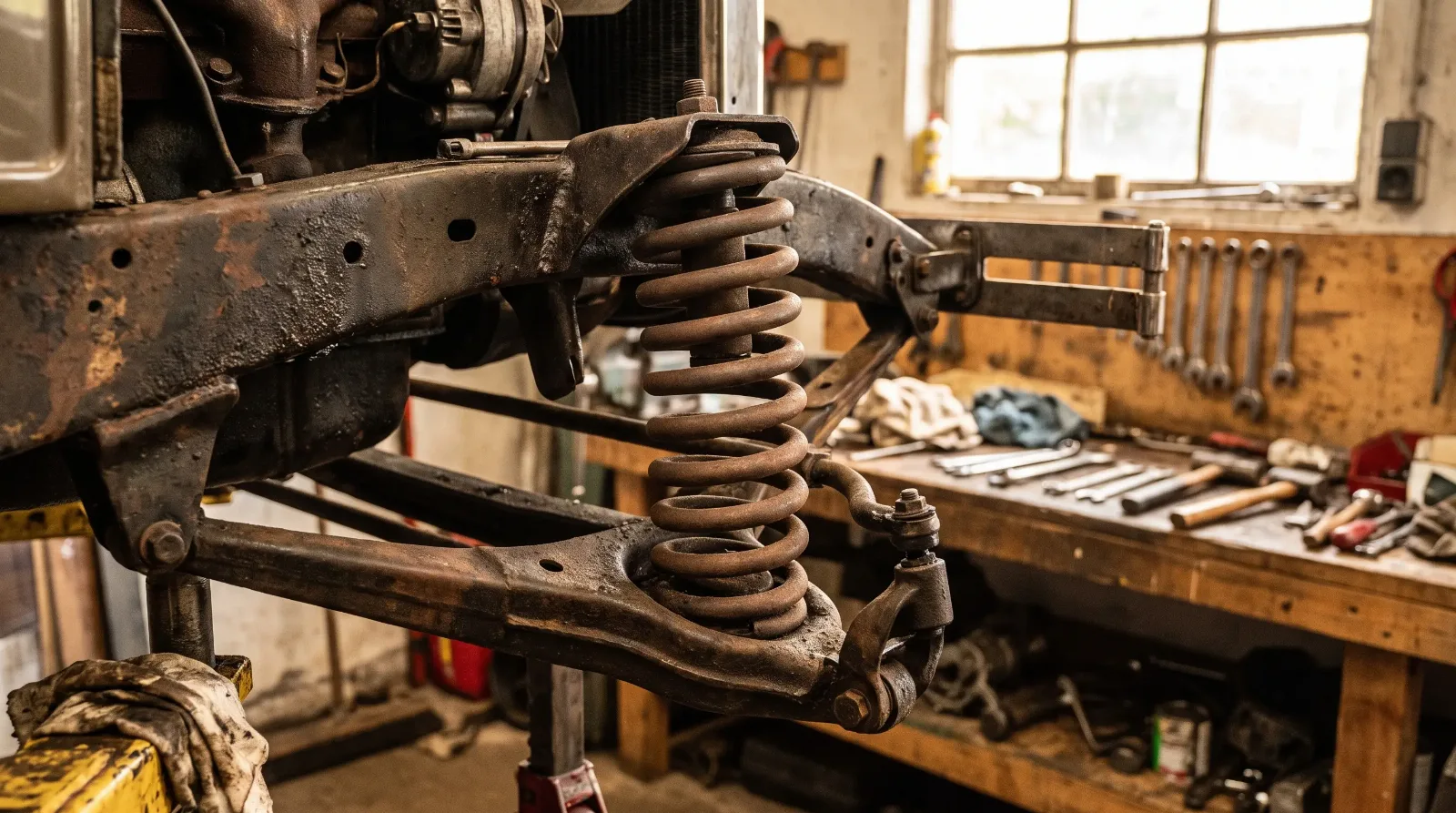
Bodywork on these chassis was frequently coachbuilt to match the engine's status, which ties this whole category directly into the coachbuilding world of the same decade. If you want to see how far that went, keep reading into the shops that clothed these engines in bespoke bodies. The chassis underneath these big engines also got a real engineering upgrade of its own around the same years, and a related read covers how independent front suspension changed the way these heavy luxury cars actually rode.
Sources and notes
Related Reading
Have a
Classic Car
for Sale?
Reach thousands of serious classic car collectors across the US.
Sell It Here →
Are You a Classic Car Dealer?
List your full inventory and connect with targeted classic car buyers.
Join as a Dealer →

About the author
Dan Reeves
Performance engine builder from North Carolina's motorsports corridor, focused on swaps, forced induction and making real, repeatable power.

Comments
Be the first to comment on this article.