
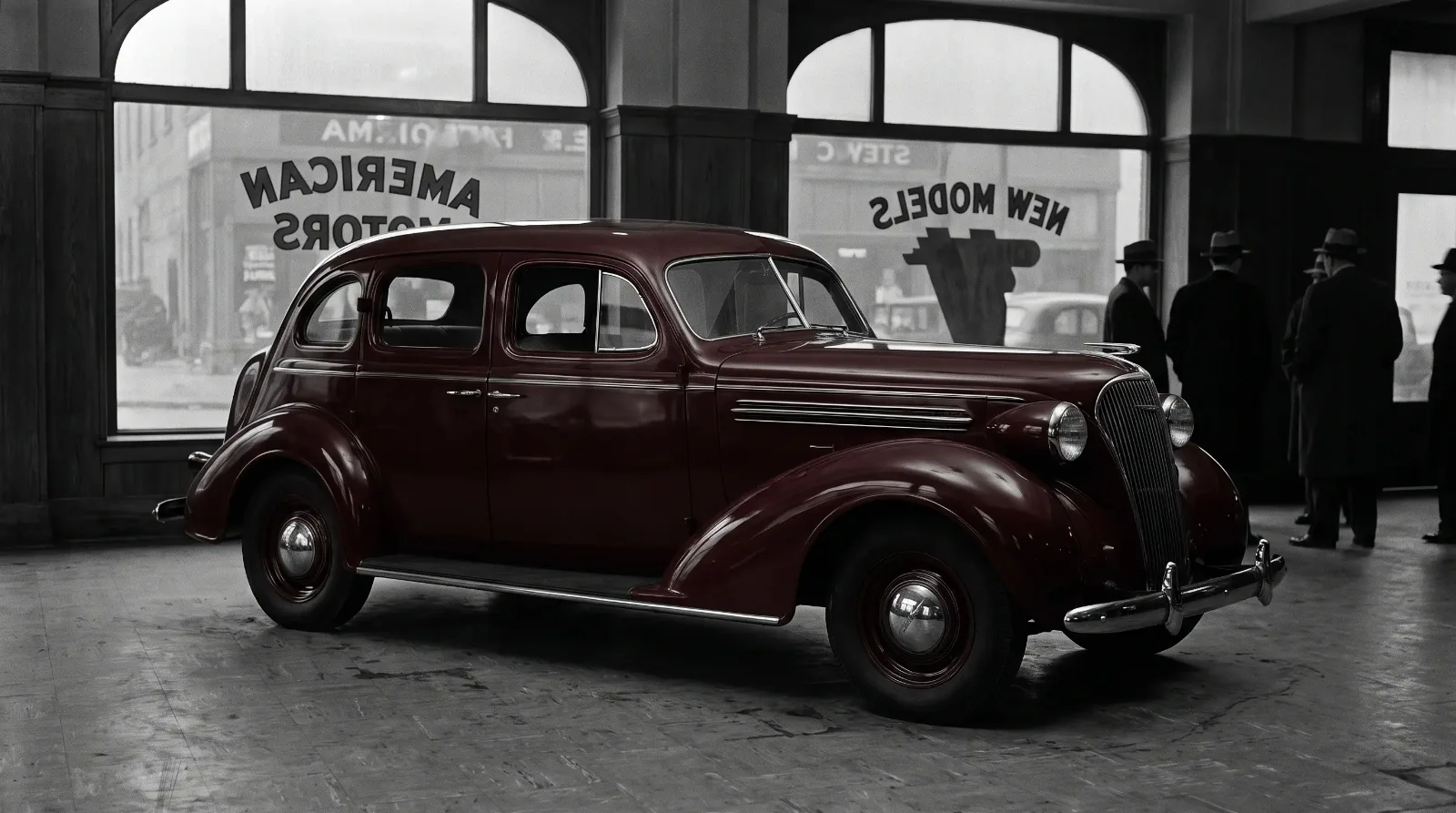
Sit a 1929 sedan next to a 1937 sedan and the difference is not really about ornament. It is about air. The earlier car is a box with fenders bolted on, built the way a wagon was built, with little regard for what happened to the wind moving over it at speed. The later car has a shape, a hood that tapers, a windshield set at an angle, a tail that narrows. Something changed in those eight years, and understanding what changed is the fastest way into the streamlined 1930s cars story.
Car Features
7 min read
Streamlining & Aerodynamics: The 1930s Revolution
A shape borrowed from airships and aircraft remade the automobile in less than a decade. Here is how streamlining actually changed a car's body.
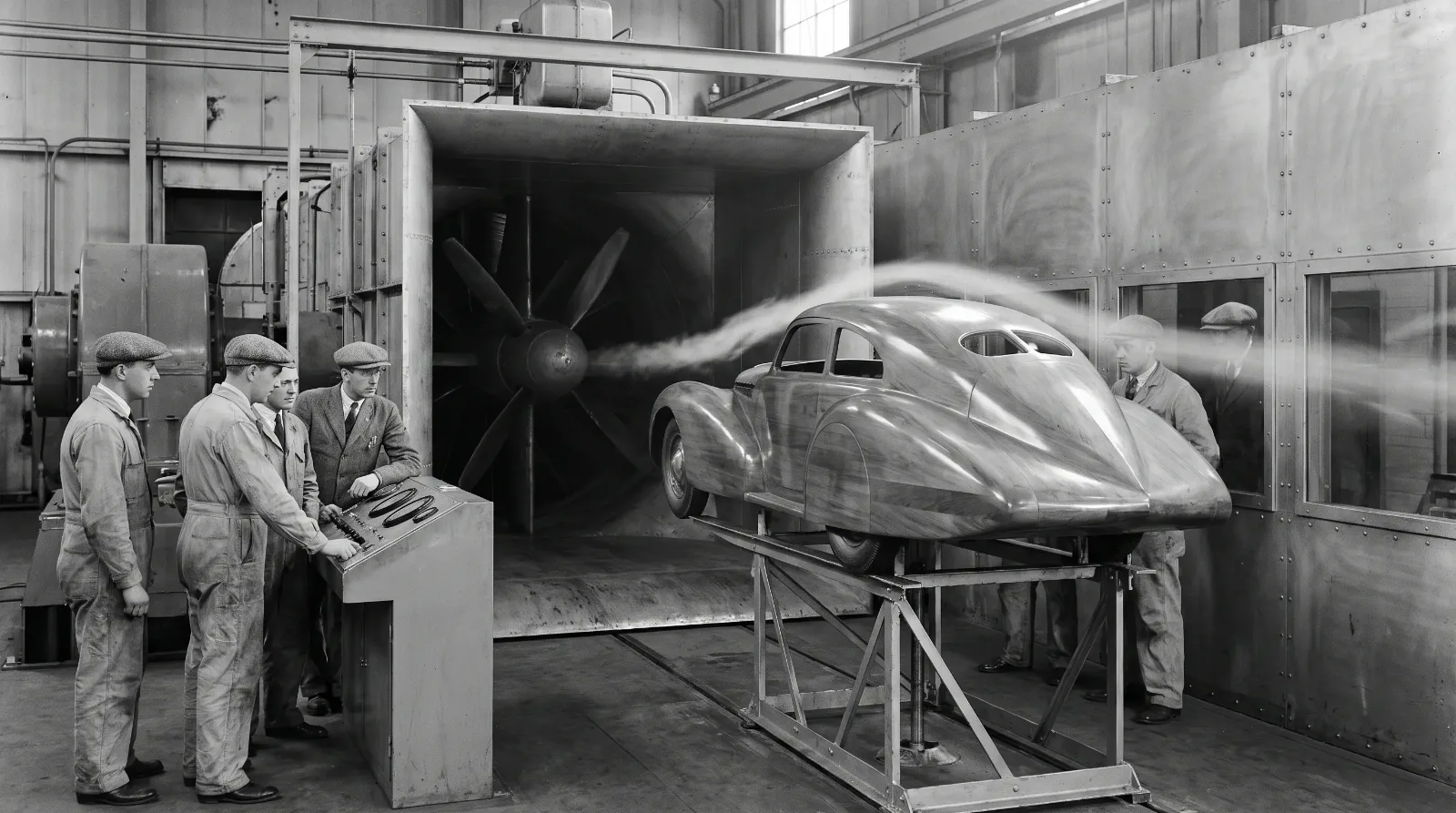
The shift did not come from a single inventor or a single company. It came from engineers, aircraft designers, and a handful of stylists who all noticed the same thing at roughly the same time: a car shaped like a raindrop moved through the air with less resistance than a car shaped like a shoebox, and less resistance meant better speed and better fuel economy for the same horsepower.
Where the idea came from
Streamlining as a design principle did not start in Detroit. It started in wind tunnels built for airships and aircraft, where engineers had already worked out that a teardrop shape, blunt at the front and tapering at the rear, produced the lowest drag for a given frontal area. Paul Jaray, an Austrian engineer who had worked on Zeppelin design, patented automobile body shapes based on this thinking as early as the 1920s, and his patents influenced designers across Europe and eventually in the United States.
The Great Depression gave the idea a commercial push it might not otherwise have had. With sales collapsing across the industry, manufacturers were desperate for anything that could distinguish a car in showrooms, and a shape that promised better speed and lower fuel bills was an easy story to tell a cash-strapped buyer, even if the actual savings were modest. Streamlining became as much a sales pitch as an engineering discipline, and the two motives, real aerodynamics and marketing theater, are tangled together throughout the decade.
The Chrysler Airflow gamble
No single car did more to put streamlining in front of the American public than the Chrysler Airflow of 1934. Chrysler engineers built and tested scale models in a wind tunnel, an unusual step for a production car at the time, and the resulting body broke sharply from convention. The nose curved forward instead of standing upright, the headlamps sat low and faired into the fenders, and the passenger cabin was moved ahead relative to the rear axle to improve weight distribution.
The Airflow was, by most measures, a genuinely better engineered car than its conventional competitors. It rode more smoothly, it handled better because of its improved weight balance, and it was almost certainly more efficient through the air. None of that mattered much to buyers who found the styling strange next to the upright, familiar shapes still filling most showrooms. Sales fell well short of Chrysler's projections, and the Airflow is remembered today less as a sales success and more as proof that engineering ahead of public taste is a risky bet. Its ideas did not disappear, though. Rivals absorbed the lessons more gradually, rounding noses and lowering beltlines year over year rather than making the leap all at once.
What streamlining actually changed on the car
It helps to separate the visual language of streamlining from the mechanical reality underneath it, because the two did not always move together. Some cars looked fast and were not aerodynamically remarkable at all. Others carried real aerodynamic thinking under styling that looked conservative by comparison. A few specific changes recur across the genuinely engineered examples of the era.
- Sloped, rounded fronts. Replacing the flat, upright radiator grille with a curved nose reduced the frontal pressure that built up ahead of the car.
- Faired headlamps. Moving lamps into the fenders instead of mounting them on separate stalks cleaned up the airflow around the front of the car.
- Skirted rear fenders. Partially enclosing the rear wheels smoothed the turbulence generated behind the front wheel openings.
- Tapered tails. A narrowing rear section reduced the low-pressure wake that formed behind a blunt tail, which is where a surprising amount of aerodynamic drag actually comes from.
None of these changes made a 1930s car aerodynamically efficient by later standards. Drag coefficients for even the most advanced streamlined production cars of the decade were still well above what a modern sedan achieves. But relative to the boxy cars that came before them, the improvement was real and measurable, and it showed up in top speed and fuel figures even if period buyers were more persuaded by the look than the numbers.
Coachbuilders push the idea further
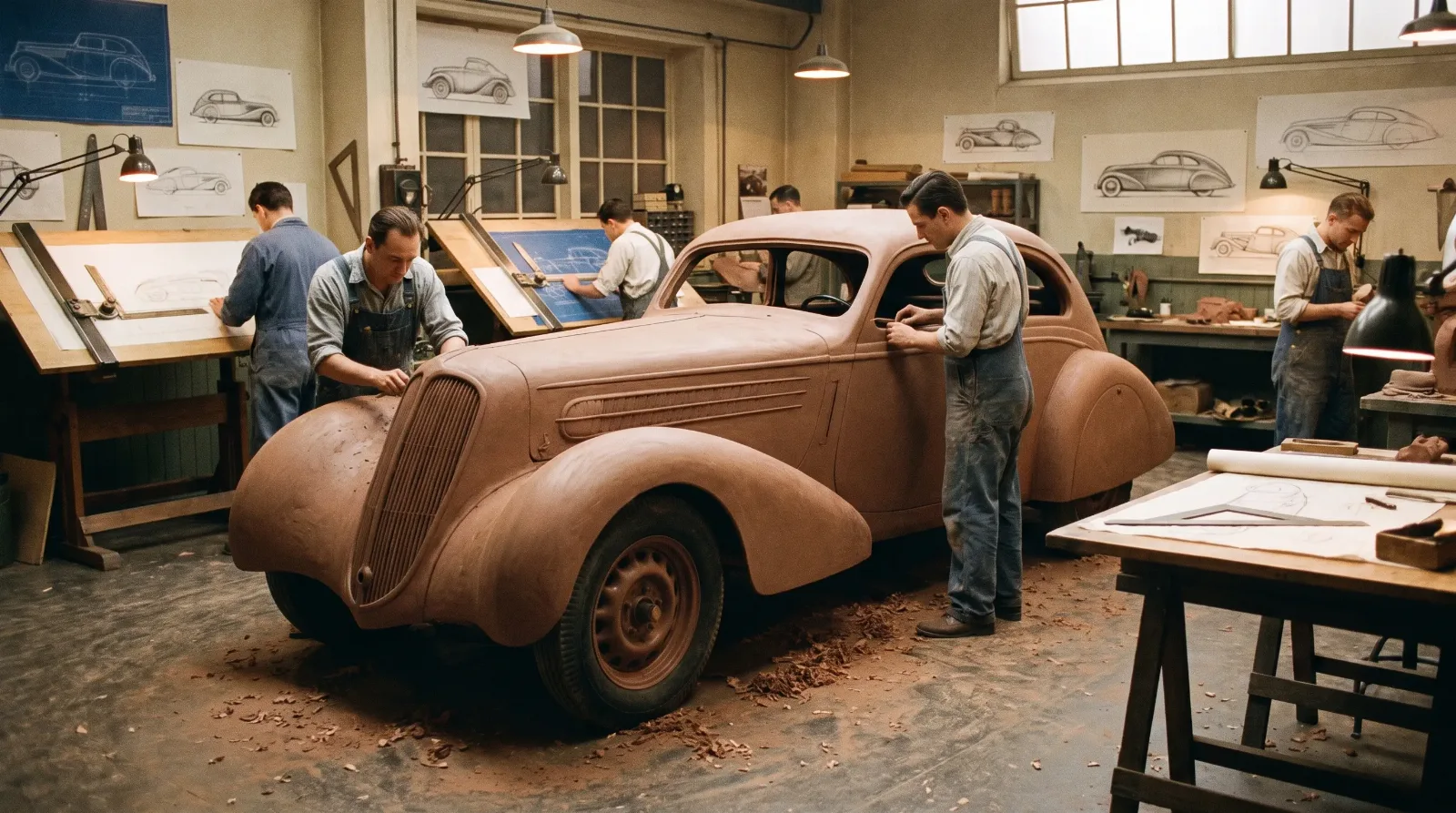
While Detroit worked in thousands of units, European coachbuilders pushed streamlining toward its purest expression on one-off luxury chassis. The teardrop bodies built by French coachbuilders for chassis from Delahaye and Talbot-Lago carried the aesthetic to an extreme that a mainstream factory could never justify economically, with fully skirted wheels, headlamps faired flush into the fenders, and tails that tapered almost to a point. This coachbuilt tradition, and the visual vocabulary it shared with mainstream streamlining, is covered in more depth in a related read on how style and structure came together across the decade.
These cars were rolling demonstrations of what the shape could look like when cost was not a constraint, and they influenced the way stylists at mainstream firms thought about proportion even when the production budgets did not allow for the same execution.
"The Airflow gets remembered as a failure, but it was really a car that arrived a few years before its audience was ready. Look at what every manufacturer's front end looked like by 1939 and you can see exactly which argument won."
Sarah Whitfield
Why the era still matters to collectors today
For anyone studying original bodywork from this period, streamlining is a useful lens because it dates a car almost as reliably as a build plate. A sharply upright grille and separate, stalk-mounted headlamps point to the earlier part of the decade. A curved nose, faired lamps, and a tapering tail point toward the end of it. Knowing the visual sequence helps when assessing whether a car's body panels and trim are consistent with its claimed year, since parts swaps and later modifications sometimes mix features from different points along that timeline.
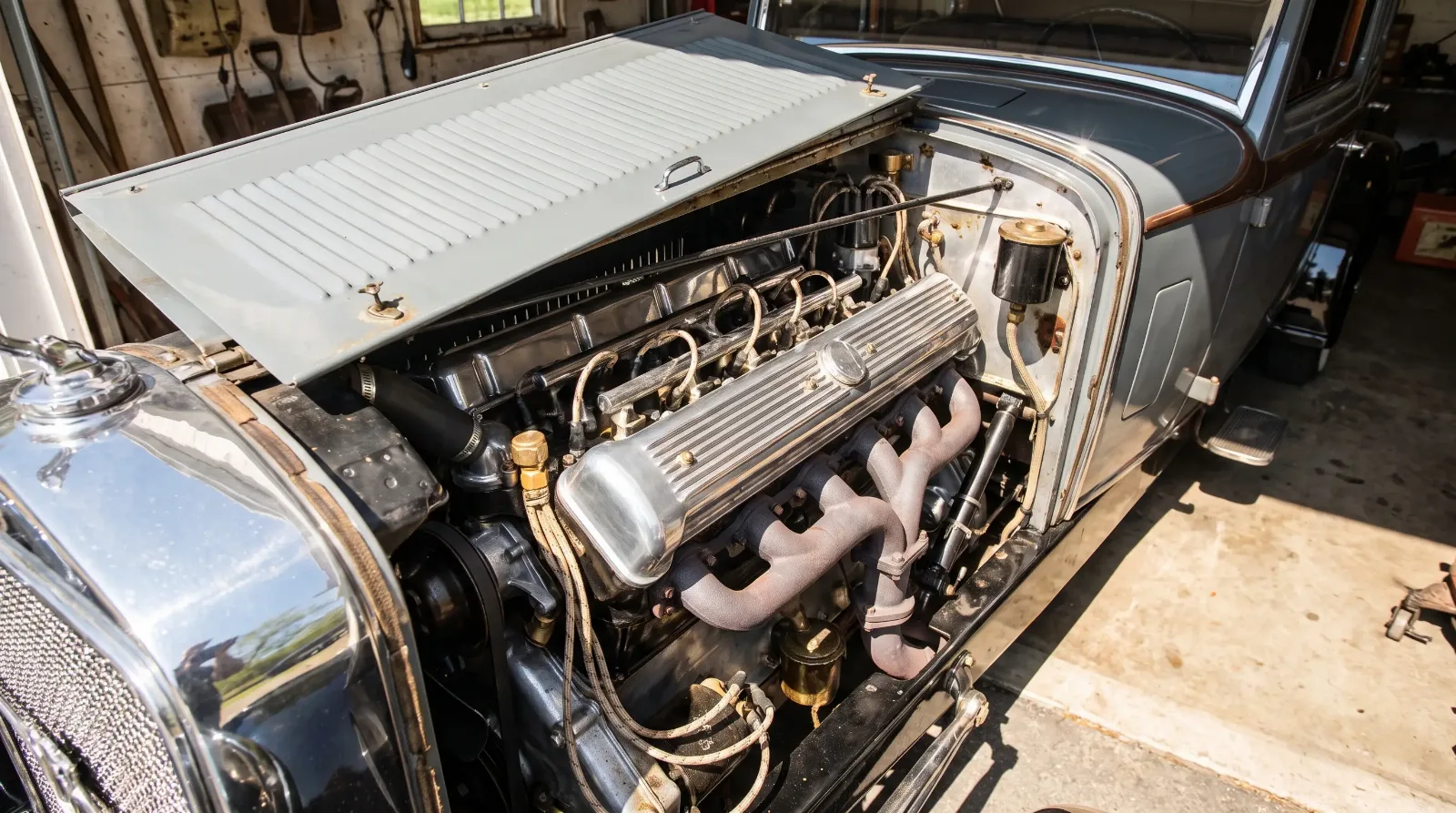
The commercial lesson of the Airflow also still echoes through how collectors think about the period. A car can be engineered correctly and still lose in the market to something more familiar, and the value gap between the Airflow today and its more conventional contemporaries is a direct legacy of that 1934 gamble. The next installment in this arc moves under the hood, where a different kind of engineering ambition was playing out at the same time in multi-cylinder engine design. For readers coming to this from the wider arc, the pre-war classics story ties the styling shifts of this decade to everything that came before and after it.
Sources and notes
Related Reading
Have a
Classic Car
for Sale?
Reach thousands of serious classic car collectors across the US.
Sell It Here →
Are You a Classic Car Dealer?
List your full inventory and connect with targeted classic car buyers.
Join as a Dealer →
#pre-war classics
#chrysler airflow
#streamlined 1930s cars
#aerodynamics
#art deco design
#1930s styling

About the author
Sarah Whitfield
Third-generation classic car collector specializing in pre-war American and European coachbuilt automobiles. Researcher and concours enthusiast.




Comments
Be the first to comment on this article.