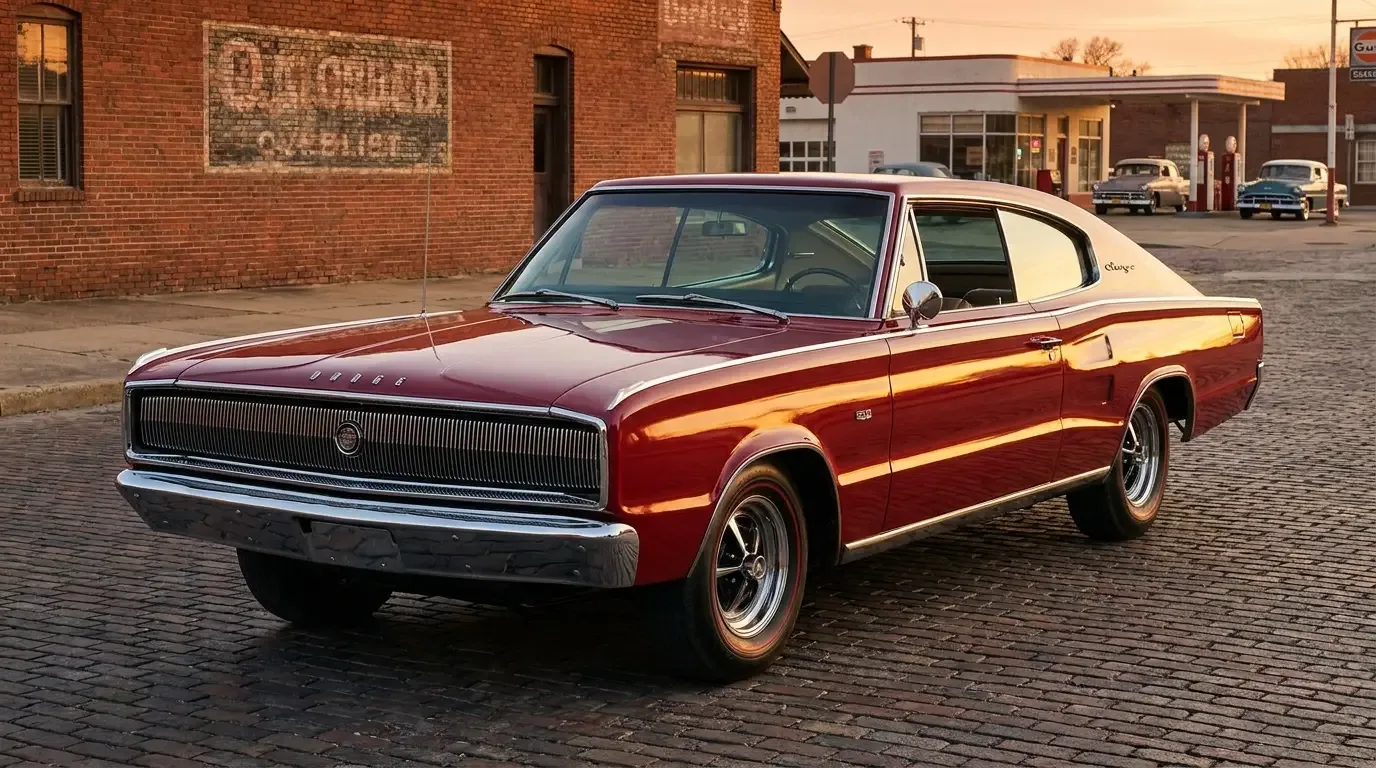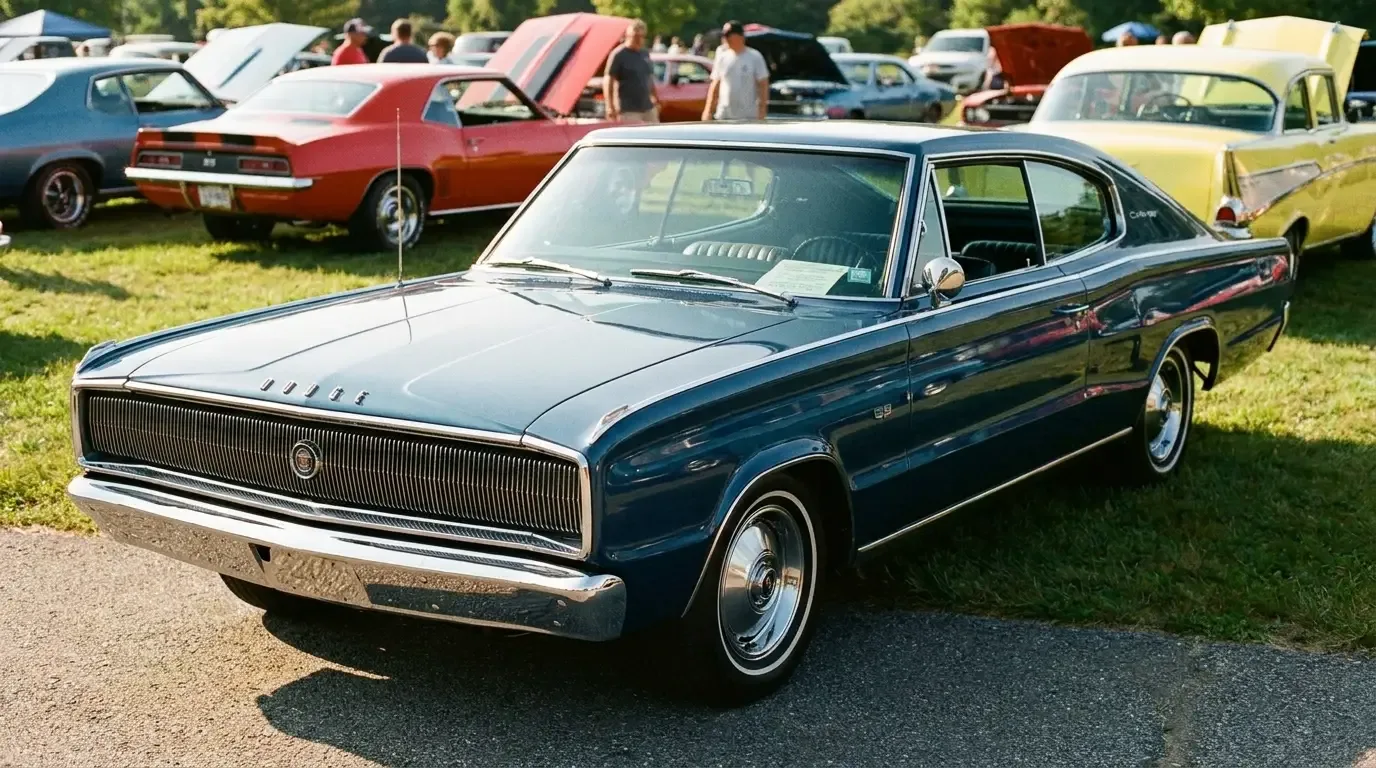
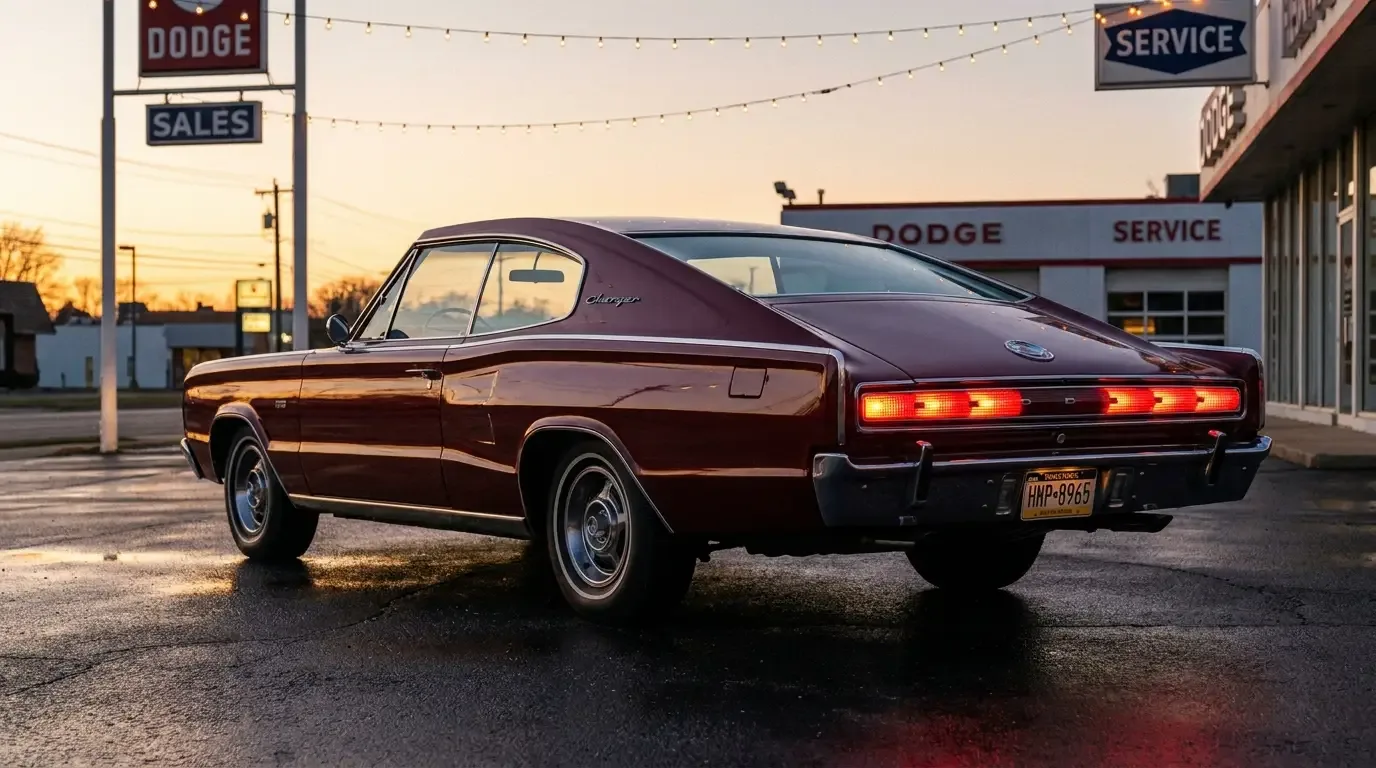
Dodge dealers had nothing like it on the showroom floor in the fall of 1965. The 1966 dodge charger arrived with a full-length fastback roofline that ran unbroken from the base of the windshield to the trunk lip, a shape no other Dodge product had attempted before and one that startled buyers walking in expecting another notchback Coronet.
The fastback treatment was not a last-minute styling flourish. It was the entire point of the car, and understanding why Chrysler committed to it explains most of what makes the first-generation Charger distinct from the B-bodies that came before and after it.
Where the fastback idea came from
Chrysler's styling studios, under Elwood Engel, had watched the Plymouth Barracuda and the Ford Mustang fastback move fastback profiles into the performance conversation through 1964 and 1965. The Corvette Sting Ray's tapering roof had also proven that a fastback could read as athletic rather than awkward, a lesson earlier fastback attempts at other manufacturers had not always learned. Dodge needed a car that could sit above the Coronet in a showroom without duplicating the Barracuda's smaller-car proportions, and stylists settled on stretching a fastback across the full-size Coronet platform instead of a compact one.
The resulting profile used a shallow windshield rake feeding into a roofline that dropped continuously to the tail, with almost no break at the C-pillar. Most fastbacks of the period kept a visible sail panel or a step where the roof met the decklid. The Charger's roof and decklid were designed to read as one uninterrupted surface, which is why period photographs of the car from a three-quarter rear angle look almost aircraft-like next to a Coronet hardtop parked beside it.
Chrysler's stylists reportedly worked through a series of full-size clay models before settling on the final proportions, testing how far the roofline could taper before the rear glass angle became impractical for production. Steeper rake meant a more dramatic silhouette, but it also meant more compound curvature in a single piece of glass, which drove up tooling cost and manufacturing risk. The compromise Dodge landed on kept the visual drama while staying within what its stamping presses and glass suppliers could reliably produce at volume, a balance that shows up in almost every design decision on this car once you start looking for it.
Full-width details that reinforced the shape
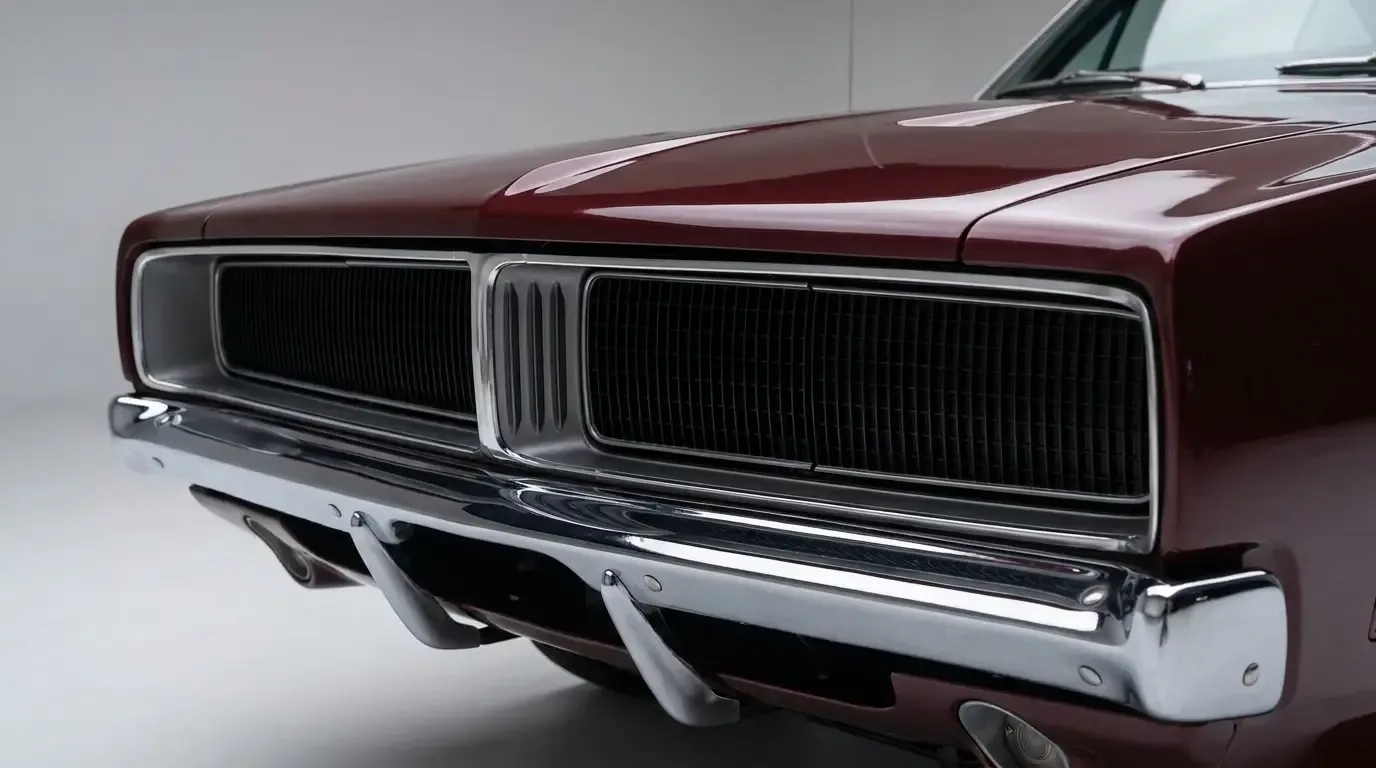
The fastback roof did not work alone. Dodge paired it with a full-width taillight panel and hidden headlights tucked behind a split grille, both of which visually widened the nose and tail to balance the long, tapering roof. Those elements get their own treatment elsewhere, but the short version is that none of them were arbitrary trim choices. Each one was selected to make the fastback silhouette read correctly from every angle, not just the three-quarter view a stylist's rendering usually favors.
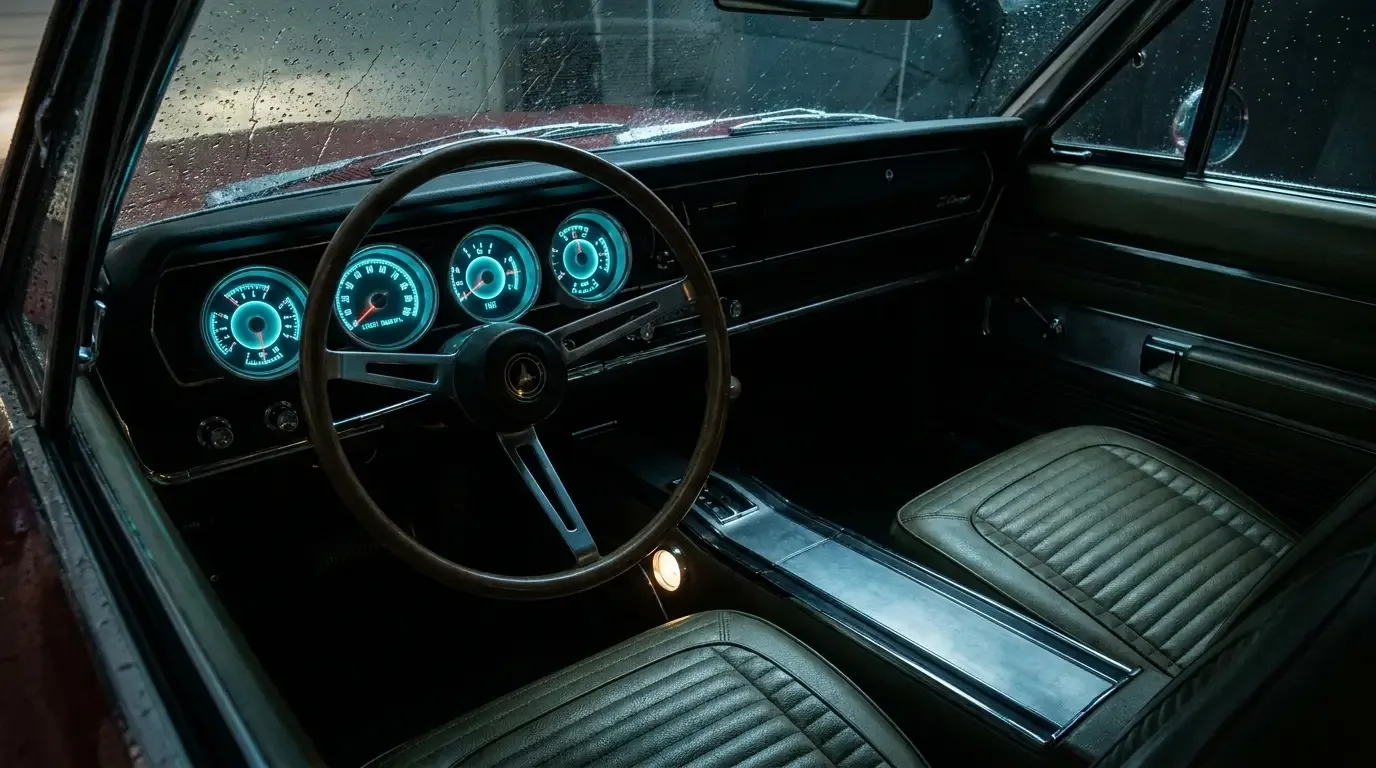
Inside, the fastback shape also dictated the seating. A console ran the full length of the cabin, front to rear, uniting four bucket seats into a layout Dodge marketed hard in 1966 advertising. That interior story, including the fold-down rear seat that made the fastback trunk genuinely useful, is covered at length in the 1966 Charger Dashboard story, which goes into the instrument panel Dodge built to match the exterior's forward-looking language.
How the public actually reacted
Reaction split along predictable lines. Enthusiast magazines praised the shape as the boldest thing to come out of Dodge in a decade, and dealers reported strong initial showroom traffic driven by curiosity alone. But traditional Dodge buyers, the kind who wanted a Coronet with more chrome, found the fastback polarizing. Some considered it too radical for a family sedan lineup, and Dodge's own sales figures for 1966 reflected that split: strong early interest that cooled once the novelty wore off and buyers compared the fastback's smaller trunk opening and reduced rear headroom against a conventional hardtop.
"You can tell a genuine 1966 by the way the roof and decklid line up. Reproduction panels almost never get that transition exactly right, and it's the first thing I check before I even open the hood."
— Tom Ramirez
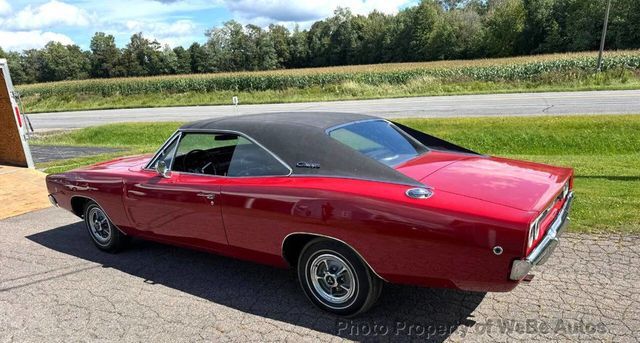
Trade press coverage from the period tells a more complicated story than the enthusiast magazines did. Some dealer body reports noted customers cross-shopping the Charger against the Barracuda and the Mustang fastback found the Dodge's rear visibility noticeably worse, a direct consequence of that steep roofline stylists had fought so hard to achieve. Others simply wanted the performance image without the fastback's practical trade-offs, and Dodge would eventually respond to exactly that tension when it redesigned the car for 1968 with a notchback-adjacent Coke-bottle profile that softened the fastback's most extreme angles.
Design details worth knowing before you shop one
A handful of dimensions and details define the shape for anyone evaluating an original car today.
| Detail | 1966 Charger specification |
|---|---|
| Overall length | About 203.6 inches |
| Wheelbase | 117 inches, shared with Coronet |
| Roofline style | Full fastback, no C-pillar break |
| Rear glass | Steeply raked, curved single-piece unit |
| Model year production | 37,344 units for 1966 |
Because the fastback body was unique to the Charger within Dodge's 1966 lineup, sheet metal for the roof, quarter panels, and decklid does not interchange with Coronet parts. That single fact drives a large share of the parts scarcity collectors run into today, and it is worth reading the complete history of the model if you want the full arc of how that scarcity developed across all four generations.
What it means for buyers now
Six decades on, the fastback roofline is the single feature that makes a first-generation Charger unmistakable at a glance, and it is also the panel set most vulnerable to rust and accident damage because of how much compound curvature Chrysler's stamping dies had to produce. A car with straight, gap-consistent fastback glass and an unmolested C-pillar transition is worth a real premium over one with visible filler or replacement quarters. If you are cross-shopping the model year, it helps to browse 1967 Chargers as well, since the second year of production carried the same fastback body with only detail trim changes, giving buyers a wider pool of original sheet metal to compare against.
The shape that seemed radical in a 1965 dealer showroom is now the reason the car has a following at all. Everything else Dodge did with the 1966 Charger, the hidden lights, the console, the electroluminescent dash, existed to support a roofline the styling studio bet the whole model on.
Sources and notes
- Wikipedia - Dodge Charger (1966) - confirmed 37,344 units for 1966, 203.6 in length, 117 in wheelbase, and the fastback/electroluminescent-dash feature set.
- Conceptcarz - 1966 Dodge Charger specifications - corroborated 203.0 in length, 117 in wheelbase and the five-engine lineup.
- Hagerty - Dodge's 1966-67 Charger Charts Its Own Path - context on the fastback's market reception and first-gen scarcity.
- Ate Up With Motor - Dodge's 1966-1967 Fastback Charger - design history of the full-length fastback roofline and its Coronet basis.
- ClassicCars.com Journal - 1966 Dodge Charger - detail on the console, folding rear seats and body-panel uniqueness.