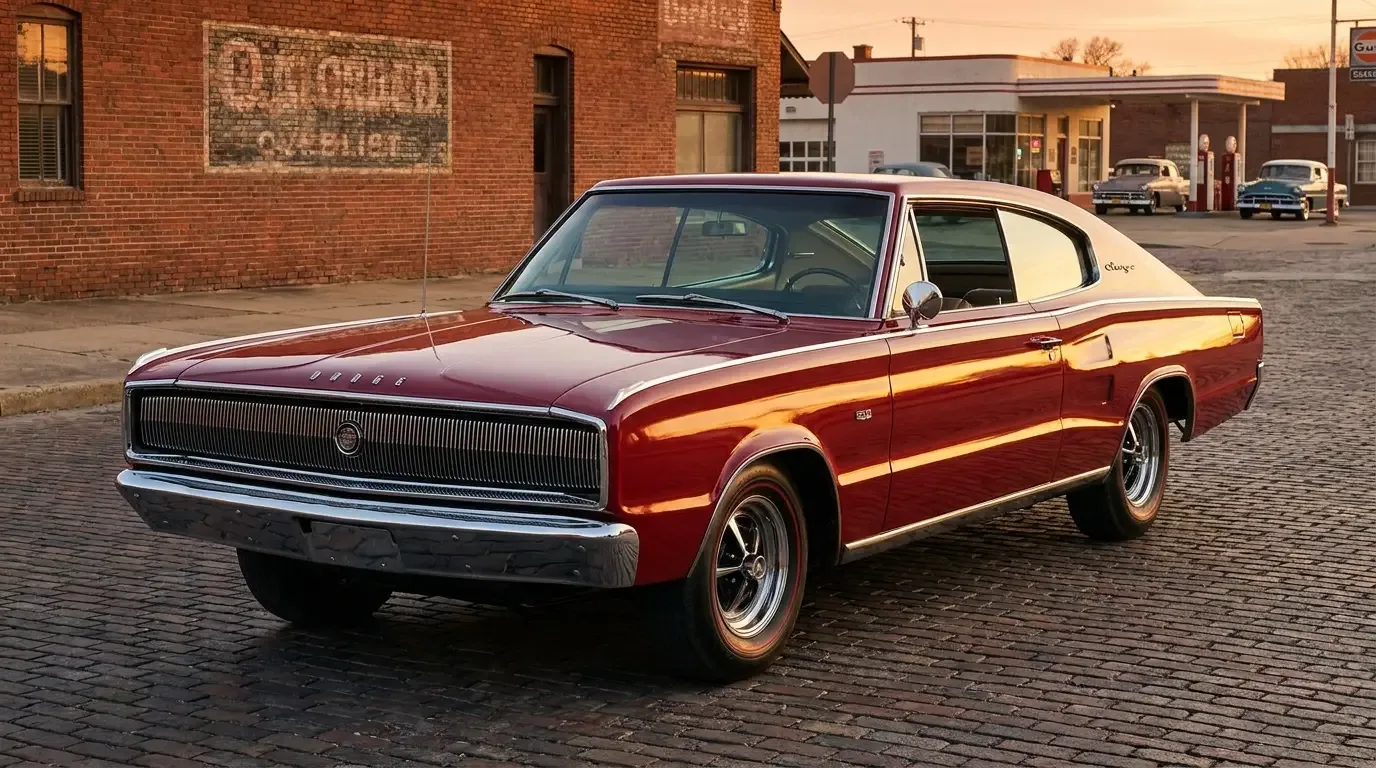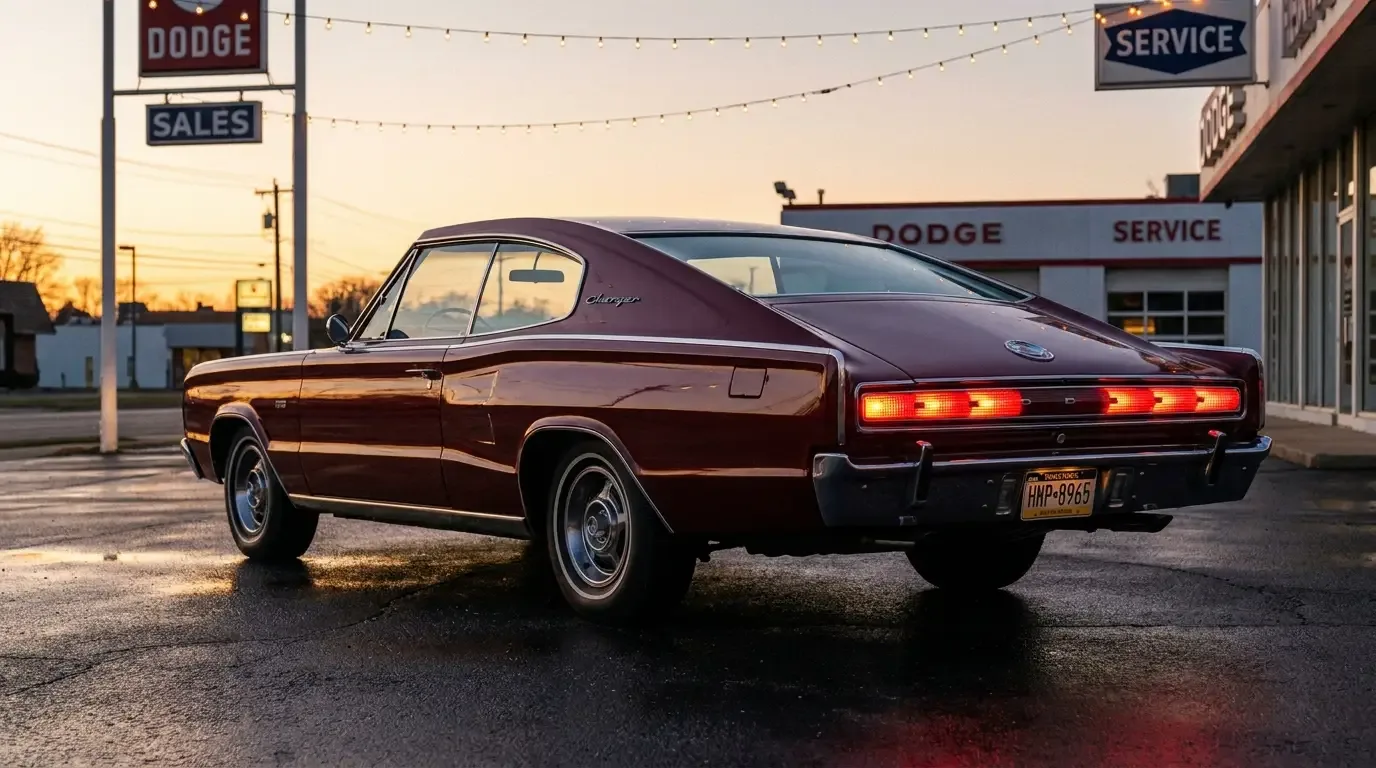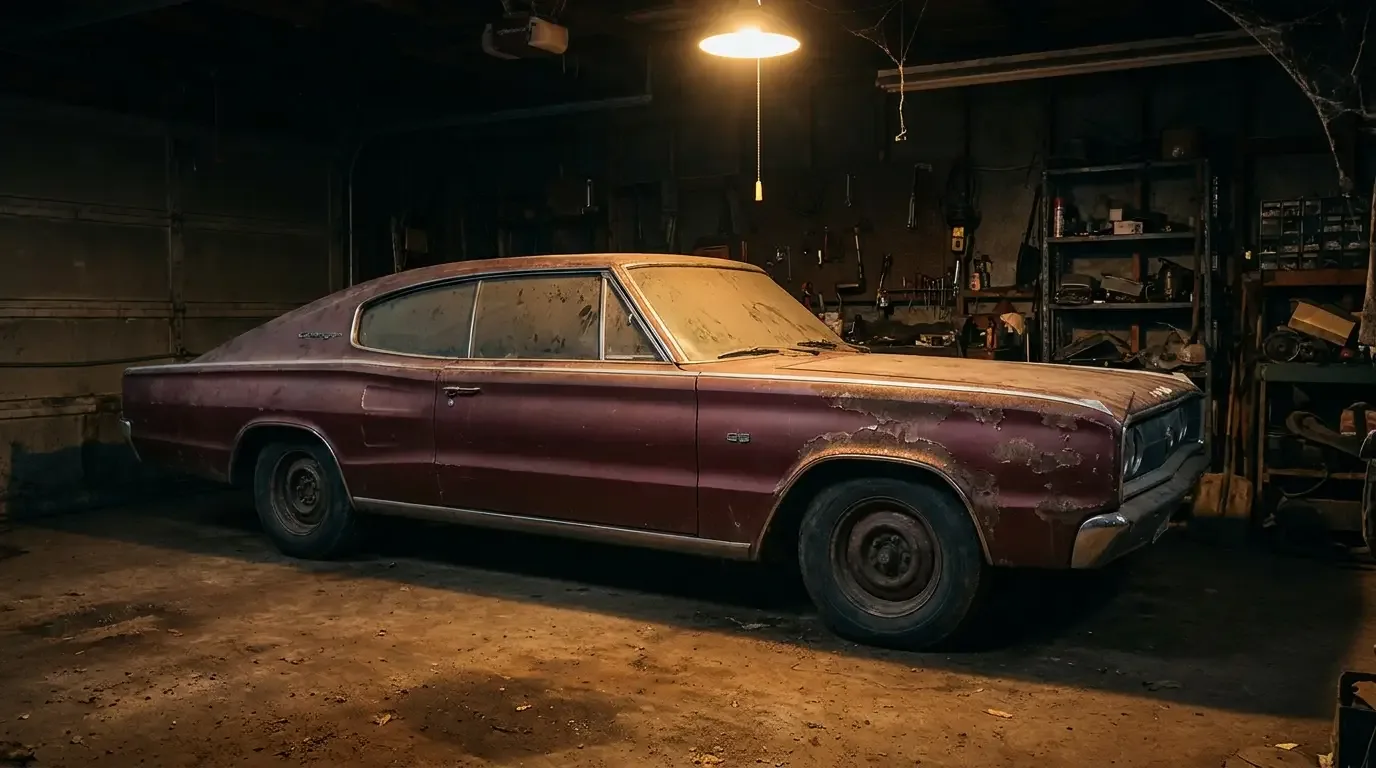
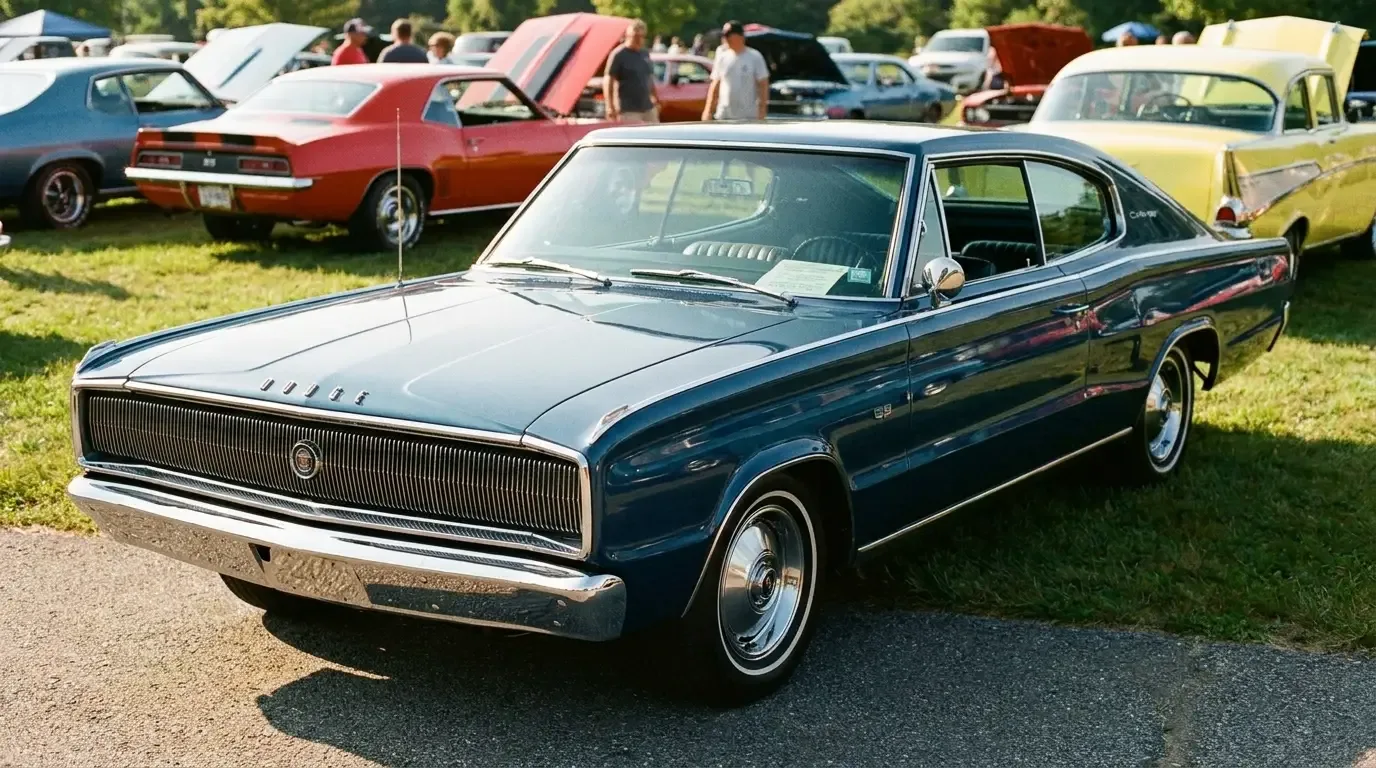
There's a guy at our club meets who's owned the same 1967 Charger since 1991, and for a good decade of that ownership, people would ask him why he didn't just trade up to a 1969. Everybody at the club had a theory about why he kept the "wrong" Charger until somebody actually pulled the production numbers one meeting night, and just like that, the bench-racing was over. He wasn't driving the wrong car. He was driving the rarer one, and most of us just hadn't done the math.
That's the story of collecting first-gen Chargers in a nutshell. For a long time, this car lived in the shadow of the 1968-70 body style, the one everybody pictures when they hear the name. But talk to anyone who's actually chased down a good 1966 or 1967 car, and you'll hear the same thing: it's harder to find a solid one than it is to find a solid second-gen car, and the market is only just starting to catch up to that reality.
Why this generation got overlooked
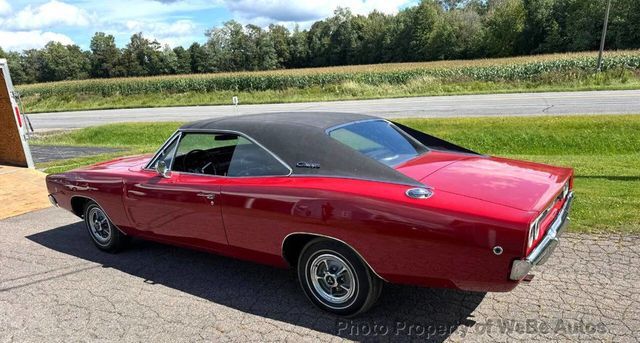
Part of it is simple timing. The 1968 redesign came fast, only two model years after the Charger launched, and it was a dramatic enough change in styling that it captured most of the cultural attention going forward. Movies, television, and decades of magazine covers reinforced the coke-bottle body as "the" Charger look. Even the first-gen Charger era got treated, fairly or not, as a warm-up act for what came next.
I don't think that's a fair read of the car, and neither do the people I know who've actually lived with one. The fastback roofline and formal greenhouse of the 1966-67 car are genuinely distinctive, arguably more so than the second-gen body precisely because there's nothing else quite like it in Chrysler's lineup of that era. But collecting isn't always fair. It follows cultural memory as much as it follows engineering merit, and cultural memory took a while to circle back around to this car.
What the club has learned buying these cars
A few of us have chased first-gen Chargers over the years, and the lessons repeat often enough that they're worth passing along plainly. First, don't assume a lower price tag on a first-gen car means a lower-quality example. Some of the cleanest, most original Chargers I've seen at meets have been 1966 and 1967 cars that sold for less than a rougher 1969 would have brought, simply because fewer buyers were competing for them.
Second, documentation matters even more here than on the second-gen car. Because these cars have historically drawn less collector attention, fewer of them have had their history carefully tracked and preserved. A build sheet, a fender tag that checks out, a chain of ownership you can actually trace, these push a first-gen car's value up disproportionately, because verified originality is scarcer in this population than it is among the more heavily documented 1968-70 cars.
| What to look for | Why it matters more on a first-gen car |
|---|---|
| Original fender tag | Fewer registries track first-gen cars specifically |
| Matching numbers drivetrain | Swaps are harder to detect without established baselines |
| Continuous ownership history | Documentation gaps are more common in this generation |
| Rust-free structure | Fewer parts cars exist to source replacement sheet metal |
Finding a car worth buying
Regional car clubs and Mopar-specific swap meets remain the best place to actually find these cars, better than general classic car listings, because the sellers you meet there tend to know what they have and are more willing to talk honestly about a car's history over coffee than they would be in a five-line online ad. I've watched more than one good first-gen Charger change hands at a swap meet for a fair price precisely because the buyer and seller had a mutual friend at the club who could vouch for both sides of the deal.
That kind of trust doesn't build overnight, and it's part of why I keep telling newer members to show up to meets even before they're ready to buy. Learn the cars, learn the people, and by the time you're actually shopping, you'll know who's worth calling when a good one comes up quietly before it ever hits a public listing.
Where the value conversation is heading
Auction results over the past several years have started showing first-gen Chargers with well-documented Hemi or 440 drivetrains bringing prices that would have seemed unlikely a decade ago, though the top-tier second-gen cars, particularly R/T and Daytona variants, still command the headline numbers at major sales. What's changed is the middle of the market. Solid, honest driver-quality first-gen cars are commanding real respect now, not just curiosity, from buyers who've done the homework on how few of them are actually out there compared to the second-gen population.
"Everybody at the club had a theory until somebody pulled the paperwork, and just like that the bench-racing was over. That's how this whole generation of Chargers has gone from overlooked to respected, one conversation at a time, as more people actually looked at the numbers instead of repeating what they'd always assumed."
— Wayne Coburn
Getting started if you want one
If you're new to this corner of the hobby, start by understanding the car on its own terms rather than measuring it against the 1968-70 generation. Read up on the 1966 charger fastback design to appreciate what Dodge was actually trying to accomplish with the body style, because that context changes how you look at the car in person. Then go look at real examples. Talk to owners at shows before you talk to dealers. The community around these cars is smaller than the one around the second-gen Charger, but it's tight, and it's generous with what it knows, provided you show up willing to learn rather than just to buy.
And if you're ready to actually shop, there are classic 1967 Chargers listed right now worth a look. Just remember what my friend at the club figured out after thirty years of people asking why he didn't trade up: sometimes the car everyone overlooks is the one that was quietly the smarter buy the whole time.
Sources and notes
- Dodge Charger (1966) - Wikipedia - confirmed the low first-gen production (37,344 in 1966, 15,788 in 1967) that underpins the car's rarity argument.
- Ate Up With Motor - 1966-1967 Charger history - confirmed the 1967 sales collapse and the first-gen car's overshadowing by the 1968-70 body.
- Muscle Car Facts - 1966 Charger - cross-checked production figures and desirable drivetrain rarity.
- Horsepower Memories - 1966-1967 Dodge Charger - background on why the first-gen car was long overlooked by collectors.
- Old Cars Weekly - 1966 Dodge Hemi Charger - context on premium Hemi/big-block first-gen cars in today's collector market.