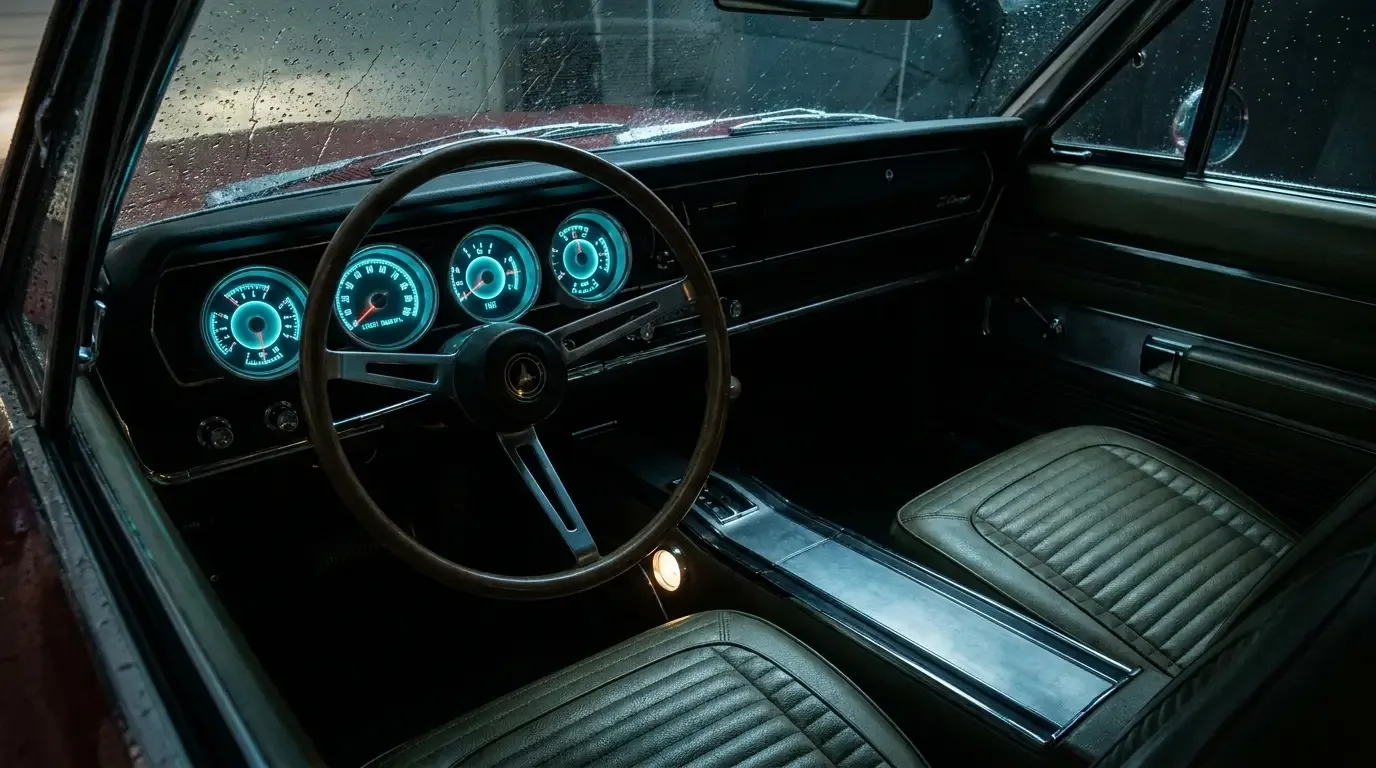
Open the door of an unrestored 1966 Charger at dusk and start the engine, and the instrument panel does something no other Dodge dashboard of the era did: it glows evenly from within, every needle and number lit by a thin film behind the gauge faces rather than a handful of incandescent bulbs poked through holes in a stamped metal panel. Dodge called it electroluminescent lighting, and it was one of the more genuinely novel engineering choices on a car full of them.
The dash gets less attention than the fastback roof or the hidden headlights, but it was just as deliberate a decision, and it says a lot about how Chrysler's engineers were thinking about the Charger's target buyer.
Instrument panels across most of Detroit's lineup in 1966 still relied on a handful of small bulbs positioned behind translucent numerals, a setup that produced uneven brightness, created glare on the inside of the windshield at night, and tended to burn out in isolated spots long before the rest of the cluster failed. Drivers noticed. A dim speedometer needle or a dark patch on the fuel gauge was a common enough complaint that Chrysler's engineers had reason to look for something better, and the Charger's status as a new, image-defining model gave them the budget to actually try it.
What electroluminescent lighting actually is
Electroluminescence works by sandwiching a phosphor layer between two electrode panels, one of them transparent, and running an alternating current through it. The phosphor emits a soft, even glow across its entire surface rather than a point source of light. Aircraft cockpits had used similar technology for years because it does not create hot spots or blind a pilot's night vision the way a cluster of small bulbs can. Dodge's engineering team borrowed the concept for the Charger's four full-size circular gauges, a layout that itself was unusual for a Dodge in 1966, when idiot lights and a speedometer were still standard fare on most of the lineup.
The result was a dashboard where the numbers and needles appeared to float in even, blue-green light instead of being spotlit from one direction. Owners who have driven both restored and unrestored examples consistently describe the effect as closer to a jet's instrument panel than anything else on a mid-1960s American sedan.
Why Dodge built it this way
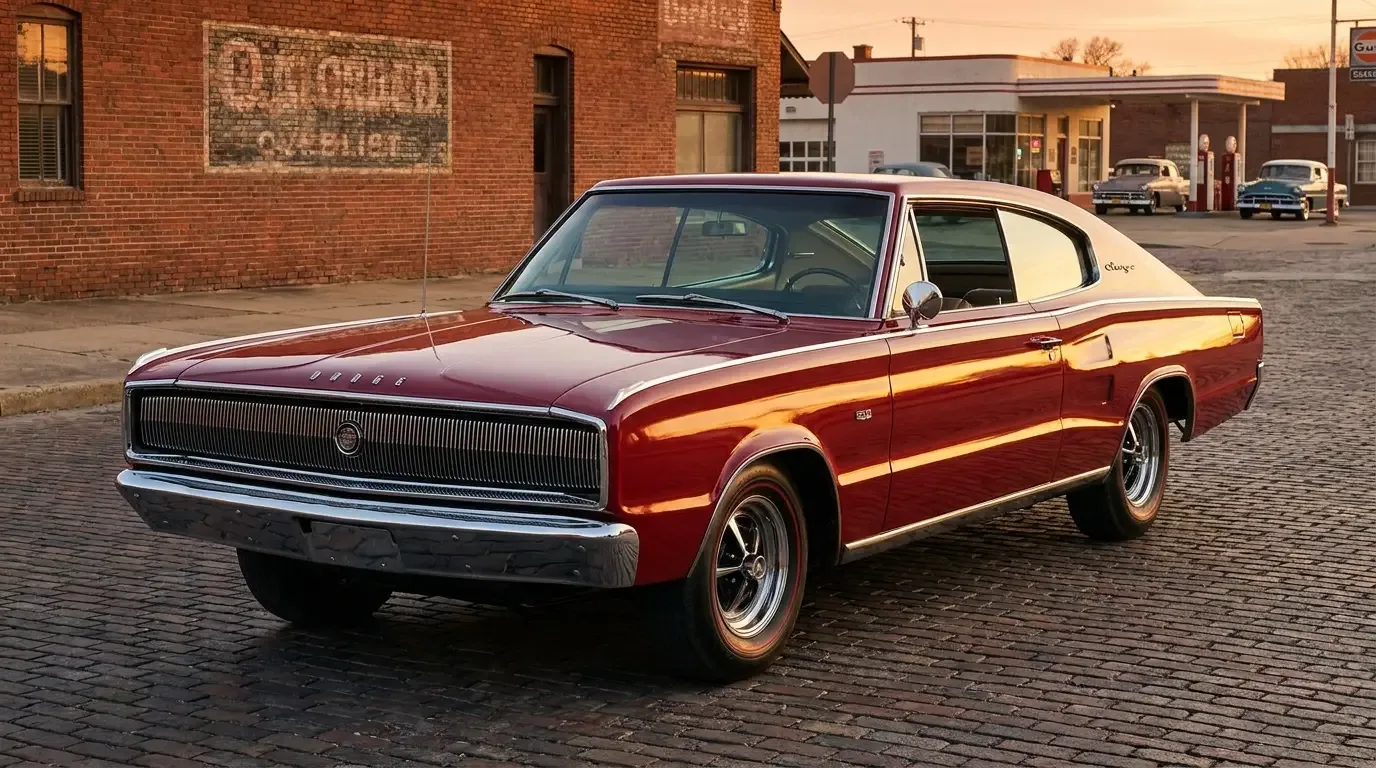
The four-gauge cluster, deep-set instrument bezel, and full-length console were all part of the same pitch: the Charger was supposed to feel like a driver's car, not a family Coronet with a fastback roof bolted on. Chrysler had watched Pontiac sell the GTO on an image of aggressive, driver-focused engineering, and the electroluminescent dash was Dodge's answer, a genuinely different piece of technology rather than just a sportier badge. It is consistent with everything else about the car covered in the Charger feature on Classic Cars Arena, where the fastback body and the hidden headlight treatment get the same full explanation.
It also was not cheap to produce reliably. The electroluminescent panels required consistent voltage regulation to avoid flickering or premature dimming, which meant an added electrical component most competing dashboards did not need. Dodge absorbed that cost across the Charger's price point rather than making it an option, which tells you how central the feature was to the car's identity in the boardroom, not just the brochure copy.
The problem collectors run into today
The phosphor layer in an electroluminescent panel degrades with age and with exposure to sustained voltage, and by the time a Charger has covered fifty-plus years, a meaningful share of surviving original panels have dimmed unevenly or gone dark in patches. Replacement panels exist through the restoration parts network, but a correctly functioning original panel, one that still glows evenly across its full face, is genuinely scarce and something serious buyers check for specifically rather than assume.
Restoration shops that specialize in this era have developed their own repair methods over the years, ranging from re-silvering the phosphor layer to sourcing new-old-stock panels from parts cars that never left the factory. None of it is cheap, and none of it is quick, which is part of why so many restorations quietly settle for a dim or partially working panel rather than chase a full repair. A buyer who understands that trade-off going in is in a much better position to negotiate than one who assumes every gauge cluster in a "fully restored" Charger works the way it did off the assembly line.
"A dead electroluminescent panel doesn't mean a dead car. It means somebody skipped a line item on the restoration budget, and you should ask what else got skipped along with it."
— Tom Ramirez
What to check before buying
A test drive at night, or at minimum in a dim garage, tells you almost everything. Cycle the headlight switch through its detents and watch the gauge faces closely for uneven brightness, dark patches near the needle pivots, or a delayed glow that suggests a marginal voltage regulator rather than a healthy panel. None of this is a deal breaker on its own. It is a negotiating point, and on a car where so much of the appeal rests on details like this one, it is worth the extra five minutes before signing anything.
Ask the seller directly whether the panel has been repaired or replaced, and if the answer is yes, ask what shop did the work and whether documentation exists. A properly done repair by a shop that specializes in this era is nothing to hold against a car. An undisclosed repair that only comes to light after you've bought the thing is a different matter entirely, and it is the kind of detail that separates a straightforward transaction from a frustrating one.
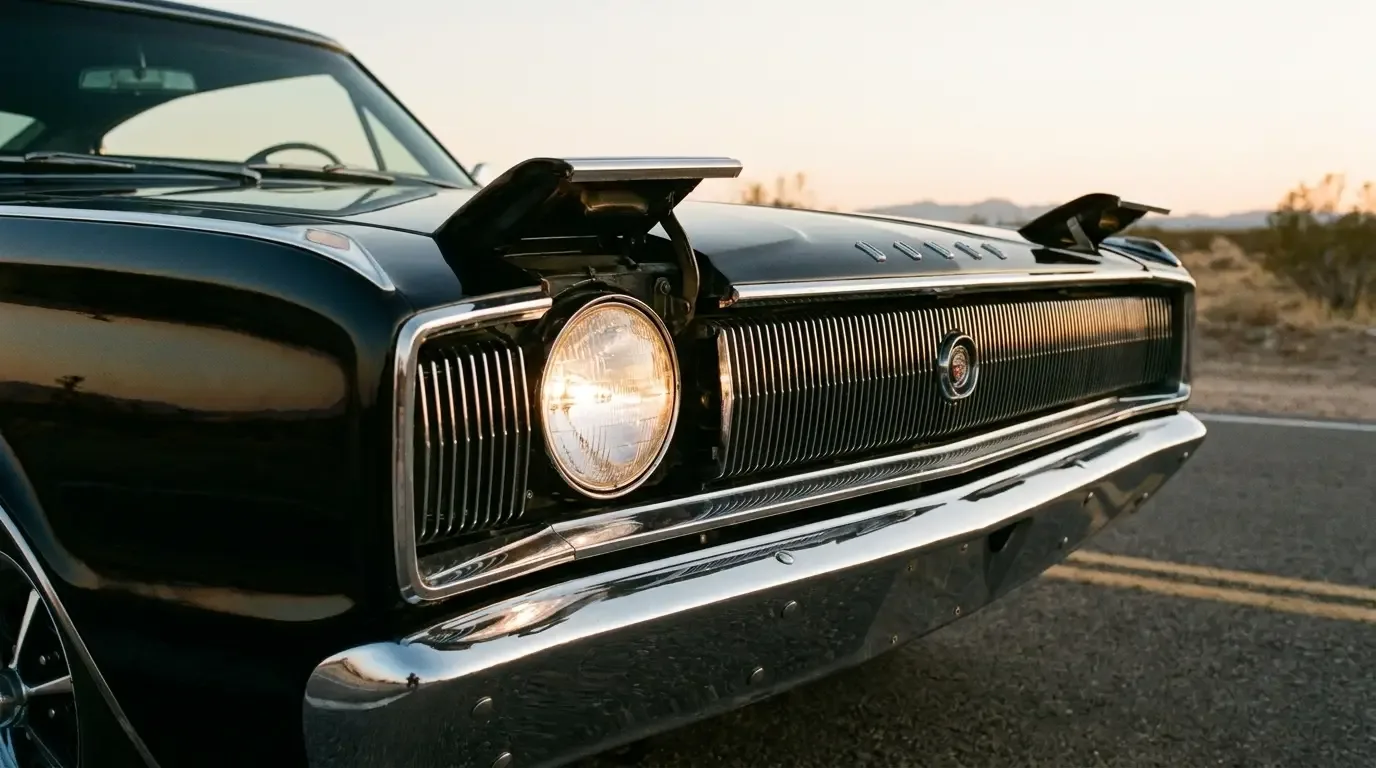
The dash rarely gets the attention the exterior does, but it is one of the clearest signs of how much thought went into the first Charger as a complete package rather than a Coronet with a new roof. Anyone cross-shopping the model should also read up on 1966 charger hidden headlights, since the two features were engineered around the same idea: making the car feel like nothing else Dodge had built before it.
Sources and notes
- Wikipedia - Dodge Charger (1966) - confirmed the electroluminescent lighting of the four chrome-ringed circular dash pods.
- Ate Up With Motor - Dodge's 1966-1967 Charger - corroborated the round gauge pods (including tachometer), console, bucket seats and fold-flat rear seat.
- ClassicCars.com Journal - 1966 Dodge Charger - notes the gauges run on high-voltage electroluminescence and glow blue-green in low light.
- Hagerty - Dodge's 1966-67 Charger Charts Its Own Path - context on originality and the interior's role in collector value.
- Conceptcarz - 1966 Dodge Charger - general specification and options reference for the first-year car.