
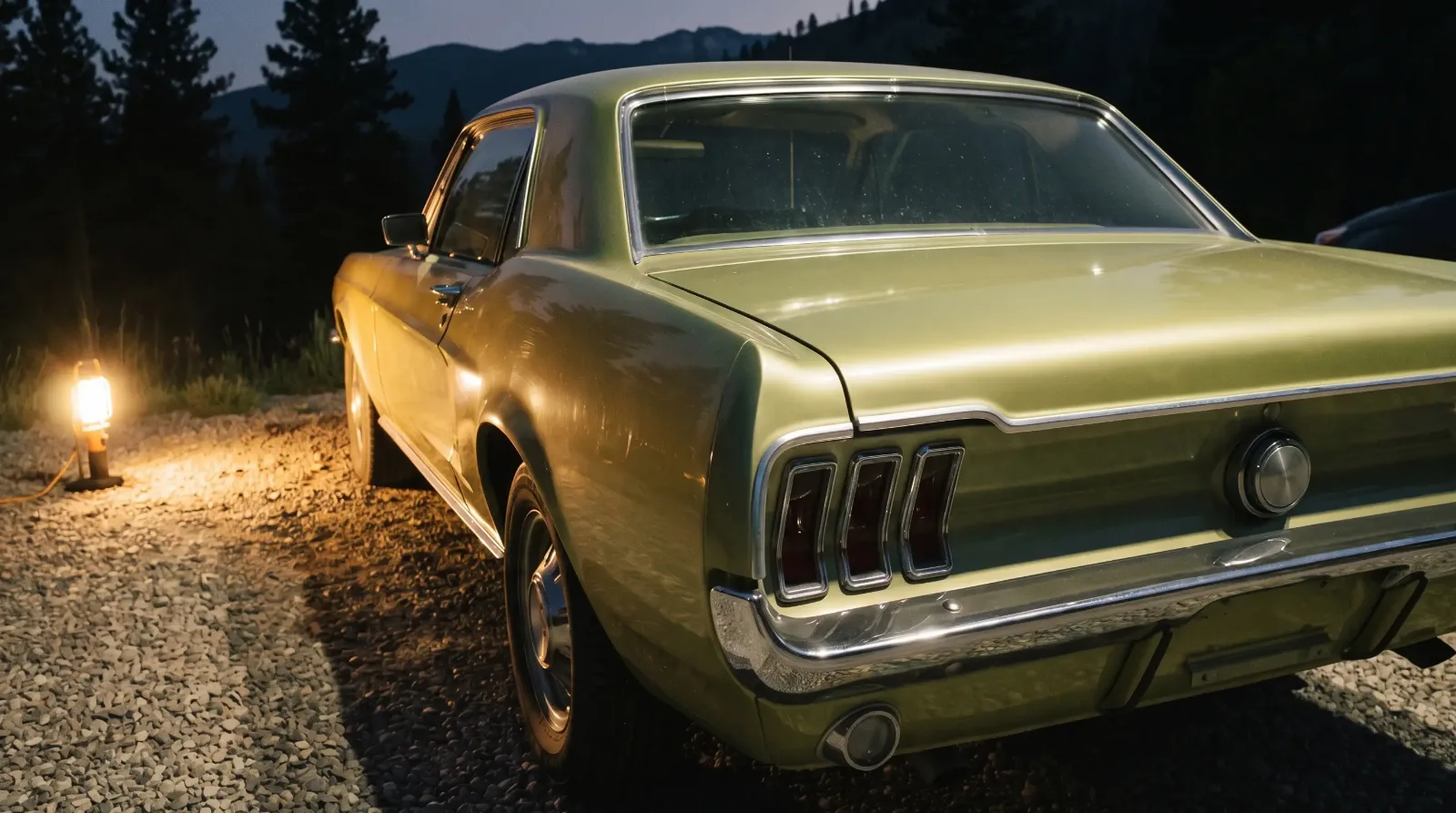
The Mustang Sprint 200 was a six-cylinder car that Ford dressed up because it had run short of V8s. That is not a knock on it. It is the whole reason it exists. In 1966 Ford built more Mustangs than in any other first-generation year, the 289 was the engine everybody wanted, and there were not enough of them to go around. What Ford did have was a pile of 200 cubic inch sixes. So it put chrome on them, added a console and some stripes, gave the package a name and sold it.
Car Features
8 min read
The 1966 Sprint 200 and the Six-Cylinder Mustangs
Short of 289 V8s and long on 200 sixes, Ford dressed up the six for 1966. What the Sprint 200 added, the A and B packages, and how to spot a real one.
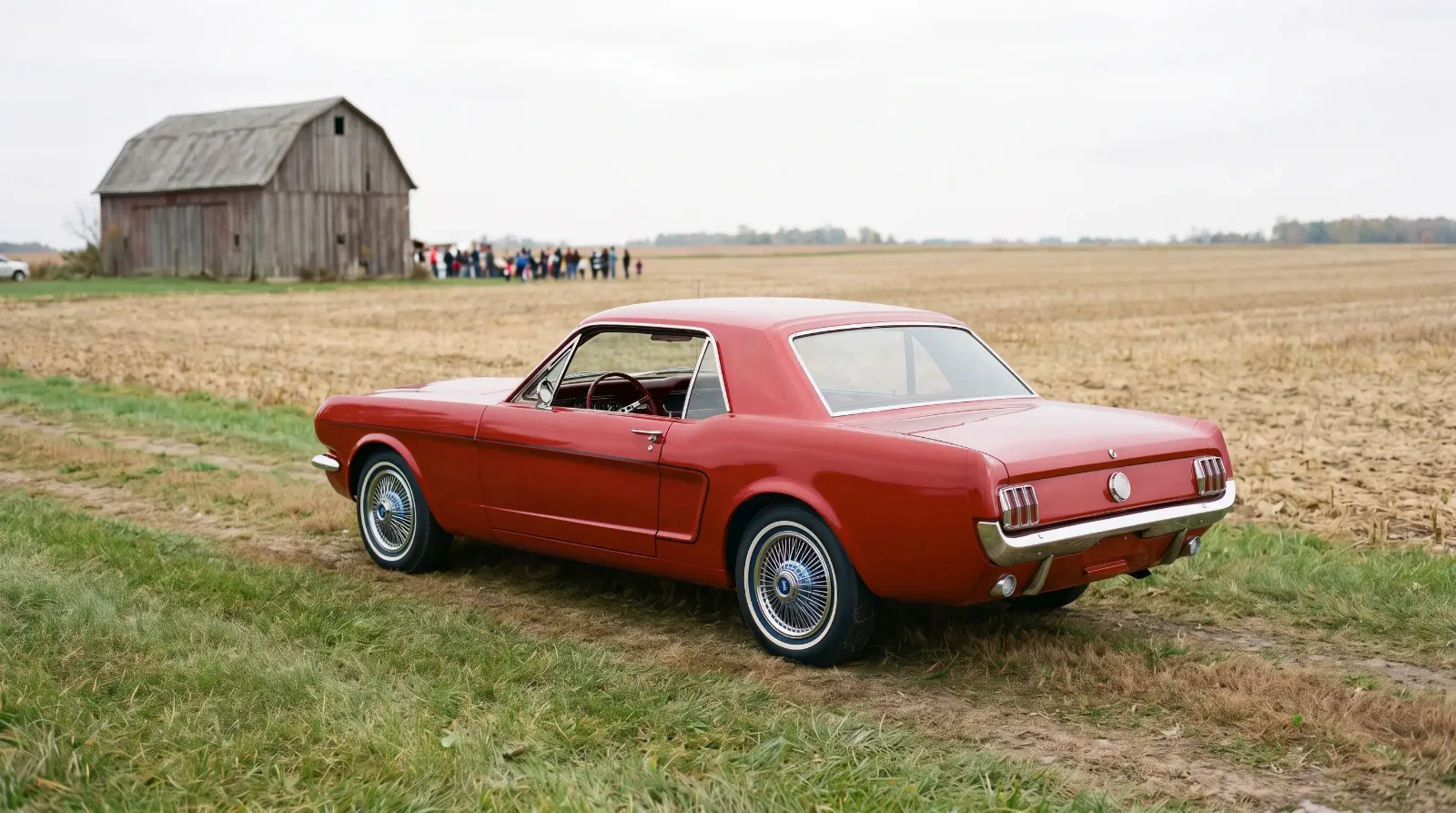
The first-generation car and how it grew from 1964½ to 1973 is covered in the full story. This one stays narrow. Why the Sprint 200 happened, what Ford actually put on the car, and how you tell a real one from a six that picked up some chrome at a swap meet.
Why Ford built a dressed-up six in 1966
The short answer is supply. The references agree that Ford was short of 289 V8s in 1966, and that weak Falcon sales that year had left the company holding surplus 200 sixes. The Falcon and the Mustang shared that engine. When one car stopped selling and the other could not get enough V8s, the arithmetic pointed one way.
Look at the 1966 price sheet and the problem gets clearer. The 200 hp 289 two-barrel cost $105.63 over the six. For a buyer already paying $2,416 for a base hardtop, that was not much money for two extra cylinders. People were going to keep asking for the V8. Ford needed a reason for them to take the six instead, and the reason it picked was trim.
The timing tied into the biggest number Ford had to brag about. On March 2, 1966, Ford celebrated its one-millionth Mustang in Dearborn. The mid-year sales push that followed was called the Million Mustang Sale, and the Sprint 200 was the six-cylinder car Ford sold under that banner. Production references put Sprint builds between roughly November 1965 and August 1966, so some cars were built before the sale had a name.
What the Mustang Sprint 200 package added
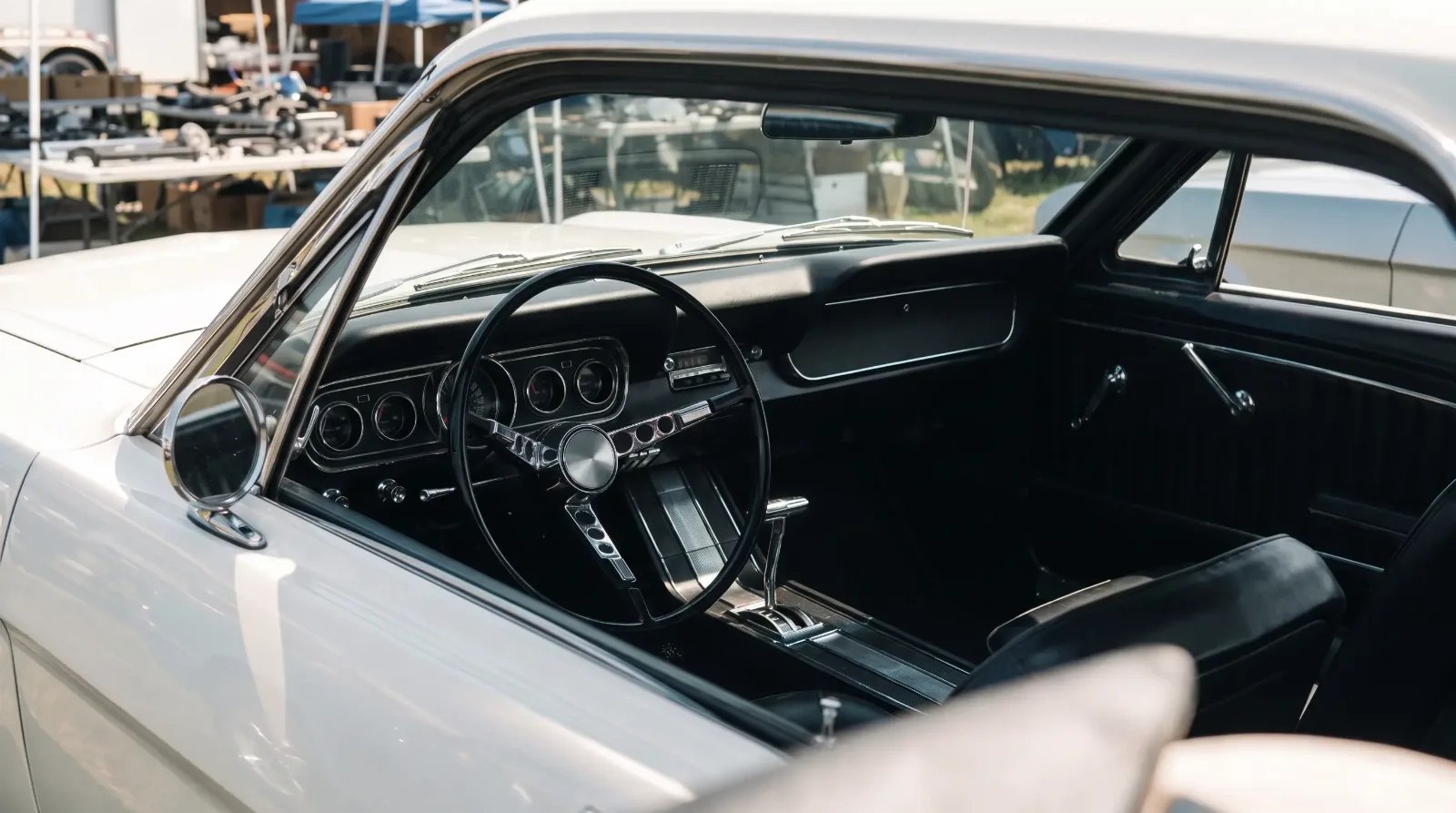
The Mustang Sprint 200 equipment list is short, and every item on it is something you can see.
- A chrome air cleaner lid wearing a "Sprint 200" decal
- A chrome oil-filler cap
- A center console with courtesy lights
- Side accent stripes
- 48-spoke wire wheel covers
- The rear quarter ornaments deleted
Notice what is missing. Nothing on that list touches the inside of the engine. The 200 in a Sprint was the same T-code six as in any other 1966 six-cylinder Mustang, rated at 120 hp at 4,400 rpm and 190 lb-ft at 2,400 rpm. The chrome lid sat on top of the same one-barrel carburetor. Ford sold the look of an upgrade and the reality of a standard six, and at a sale price that was a fair trade for a lot of people.
The deleted quarter ornaments matter more than they sound. On a regular 1966 car, a bare side cove can mean somebody lost the trim. On a Sprint, a bare cove is correct. That one detail has sent more than a few owners shopping for parts their car never had.
| Item | 1966 Sprint 200 | 1968 Sprint A | 1968 Sprint B |
|---|---|---|---|
| Sales promotion | Million Mustang Sale | "See the Light" spring sale | "See the Light" spring sale |
| Engine | 200 six (T-code), 120 hp | Six or V8 | V8 only |
| Exterior | Accent stripes, quarter ornaments deleted | C-stripe, wheel-lip moldings, pop-open gas cap | Sprint A items plus grille fog lamps |
| Wheels | 48-spoke wire wheel covers | Full wheel covers | Styled steel wheels, E70 tires |
| Production | No reliable count published | 25,012 (reported) | 15,106 (reported) |
The A and B packages and the 200 under the chrome
The Sprint came in two versions, and the letter told you the transmission. Package A was the manual car. Package B was the automatic. The estimate that gets repeated is that about three in four Sprints were B cars. Nobody has published a build-sheet count behind that figure, so take it as an estimate, but it fits what the car was. This was a comfortable six-cylinder Mustang for people who did not want to shift, and the Cruise-O-Matic cost $175.80 on a six that year.
The engine itself is a good one to have under the hood. I've had plenty of these sixes apart, and the 1966 200 is the version you want. It runs seven main bearings, one between every pair of cylinders, and you can confirm that from outside the car: a seven-main block shows four core plugs along the side. The intake is cast into the cylinder head, which keeps the parts count down and keeps anybody from making real power with a bolt-on manifold. It will run forever. It will not win anything.
The six was not a fringe choice in 1966. Ford built roughly 253,200 six-cylinder Mustangs that model year against about 354,400 V8s, so around four in ten new Mustangs had the six. The Sprint was not selling a rare engine. It was selling an ordinary one with a better outfit.
Telling a real Sprint 200 from a dressed-up six
Here is the problem. Every item on the Sprint list is a bolt-on part, and every one of them has been reproduced. So the parts on the car prove nothing by themselves. The car has to be a six-cylinder 1966 first, and the parts have to look like they have been there since the car left the plant.
None of that proves a car is a Sprint. There is no single code I can point to that settles it, and anybody who tells you otherwise should show you the document. What those checks will do is catch the cars that obviously are not. That covers a fair share of what turns up among 1966 Mustangs for sale wearing a Sprint 200 decal.
"Everybody wants the K-code story. The Sprint 200 is the other half of 1966. Ford ran out of V8s, put chrome on a six and sold it to people who were going to drive it every day. I've had more of those engines on my stand than Hi-Pos, and most of them were simply worn out from commuting, never abused."
Mike Sullivan
After 1966: the Sprint name and the six-cylinder Mustang
The Sprint idea outlived the 1966 car. The Mustang got bigger for 1967, with room for a big-block, and the 1967 redesign moved the top of the order sheet a long way from a one-barrel six. But the bottom of the order sheet still needed selling.
For 1968 Ford brought the name back for a spring promotion called the "See the Light" sale. This time there were two packages that split by engine rather than transmission. Sprint A could be had with the six or a V8 and added the C-stripe, wheel-lip moldings, full wheel covers and a pop-open gas cap. Sprint B was V8 only and added styled steel wheels with E70 tires and grille fog lamps. The 1966 car had been a six that looked a little fancier. The 1968 Sprint B was a V8 car that looked a little faster. Same name, different job. Production references put the 1968 split at 25,012 Sprint A cars and 15,106 Sprint B cars, though I have not seen a Ford document behind those counts.
The 200 kept going too. It was rated at 115 hp for 1968, back to 120 hp for 1970, and was replaced as the base engine by the 250 six for 1971. By then the Mustang name sold on performance, and the cars people remember from those years are a different chapter, the Mach 1 Mustang story among them. The Sprint 200 never belonged in that company. It belonged in the driveways of people who bought a Mustang to get to work, and it got a lot of them there.
Sources and notes
- 1966 Ford Mustang Sprint 200 Limited Edition, MustangSpecs
- 1966 Ford Mustang history and Sprint 200 notes, Conceptcarz
- 1966 Ford Mustang fact sheet and option prices, Over Drive
- Ford straight-six engine (200 six, seven mains, integral intake), Wikipedia
- 1968 Ford Mustang Sprint A and B packages, MustangSpecs
- Vintage Mustang four to five lug conversion, Street Tech
Related Reading
Have a
Ford Mustang
for Sale?
Reach thousands of serious classic car collectors across the US.
Sell It Here →
Selling a classic? Here's how: sell my classic car
Are You a Classic Car Dealer?
List your full inventory and connect with targeted classic car buyers.
Join as a Dealer →
#Ford Mustang
#first generation Mustang
#200 six
#1966 Mustang
#Sprint 200
#six-cylinder Mustang
#Mustang special editions

About the author
Mike Sullivan
Detroit-area muscle car enthusiast and restoration specialist with three decades of hands-on experience working on American iron.
Related Listings - Ford Mustang
Comments
Be the first to comment on this article.