A retired assembly line worker told me once that in 1968 he didn't fully grasp what he was building. He just knew the orders kept coming faster than the year before, and the cars rolling down the line looked meaner every few months as engine options and trim packages multiplied. He put doors on Chargers for a living and had no idea one of them would end up on movie screens for the next fifty years.
1968 is the year the second-generation Charger arrived, and it landed in the exact middle of the muscle car era's steepest climb. Every domestic manufacturer was chasing the same buyer, a younger customer with more disposable income than their parents had at the same age, more interest in performance than practicality, and a genuine appetite for cars that looked as aggressive as they drove.
What was actually happening in Detroit that year
By 1968, the muscle car segment wasn't a niche experiment anymore. It was a full-blown sales category with every major manufacturer fielding multiple entries, each one trying to out-engine and out-style the competition from the previous model year. Chrysler had been building toward this with the Road Runner and GTX programs running alongside the Charger redesign, and the timing wasn't an accident. The whole corporation was leaning into performance as a brand identity, not just a single model's personality.
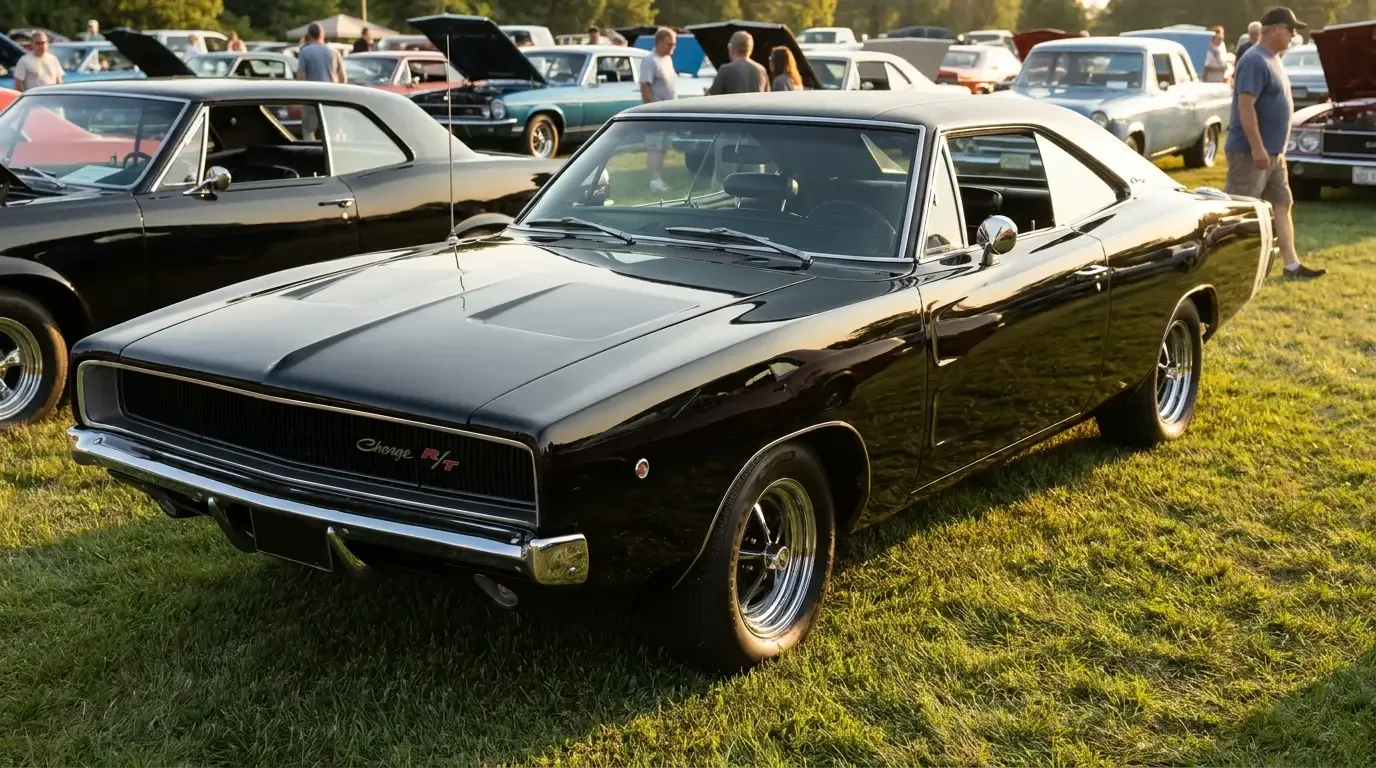
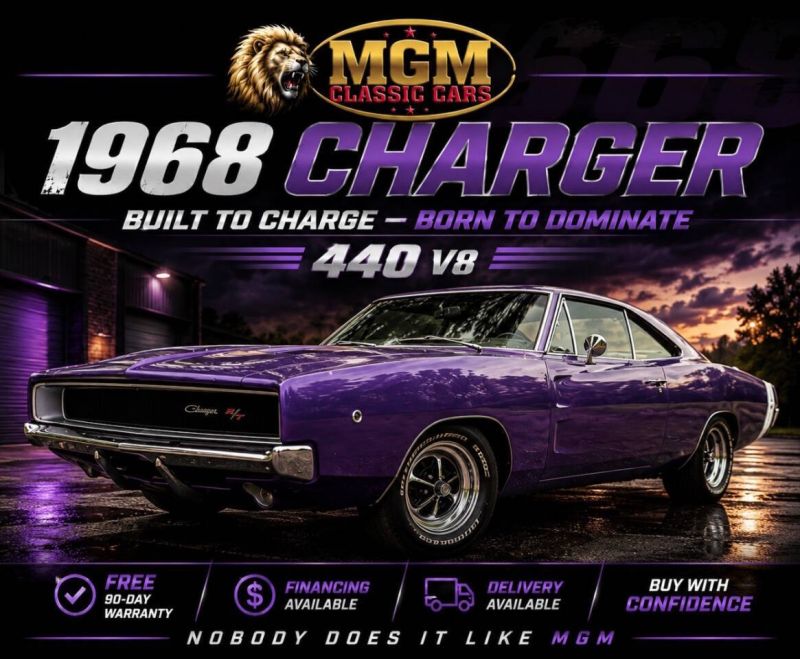
The Charger's redesign for this year dropped the fastback shape of the first generation entirely and introduced the coke-bottle body and tunnel-back rear window that would define the model for the next three years. That's a significant gamble for a manufacturer to take mid-cycle, replacing a shape that had only been on the market for two years with something completely different, but the sales results validated the bet almost immediately.
| Aspect | 1968 Charger status |
|---|---|
| Body redesign | Full second-generation restyle, coke-bottle body introduced |
| Top engine option | 426 Hemi available, alongside 440 Magnum and smaller displacement V8s |
| Market position | Direct competitor within an expanding Chrysler performance lineup |
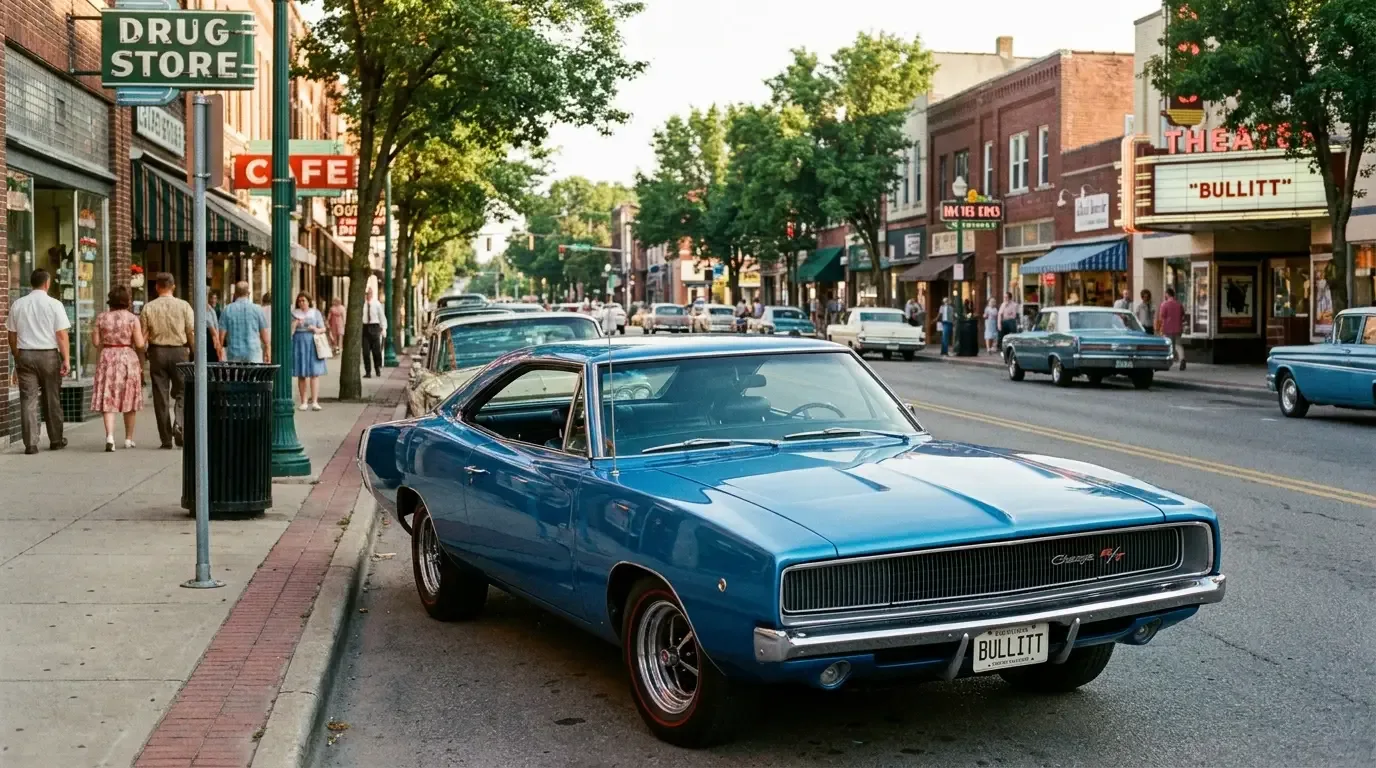
| Cultural entry point | Body style later associated with Bullitt and other era-defining media |
What made this particular year matter beyond the Charger itself is the broader context of an industry-wide arms race hitting its stride. Engine displacement kept climbing across nearly every manufacturer's lineup, options lists kept expanding, and dealers were ordering performance trim packages in numbers that would have seemed implausible just three or four years earlier. The 1968 Charger walked into that environment with a shape genuinely built to compete, rather than a warmed-over previous-generation body trying to hang on.
Why the timing mattered as much as the design
Cars arriving a few years earlier or later than 1968 tell a genuinely different story. A muscle car launched in 1966 was competing in a still-forming category, with buyers and dealers alike figuring out what this new breed of car even was. A car launched in 1972 or later was competing against rising insurance premiums targeting exactly these vehicles, tightening emissions rules that sapped real power from engines still advertised with big displacement numbers, and a buying public starting to shift its enthusiasm elsewhere.
1968 sat in the sweet spot between those two extremes. The category was fully established, buyers understood exactly what they wanted, and the regulatory and insurance pressures that would eventually strangle the segment hadn't fully arrived yet. The Charger's redesign landed inside that narrow window when a manufacturer could still build the most aggressive car it was capable of building without immediately running into the constraints that reshaped the entire industry within a handful of years.
- The 1968 redesign replaced the entire body style rather than refreshing the outgoing generation.
- Engine options that year included some of the largest displacement V8s Chrysler offered in this body.
- The broader muscle car segment was near its commercial peak, with manufacturers competing directly on performance branding.
- Regulatory and insurance pressures that would curb the segment within a few years hadn't yet taken hold.
"The guy I talked to at Carlisle had owned his car since 1974. Drove it there every single year, even the time the water pump let go outside Harrisburg."
— Patrick Walsh
Competing directly against the rest of Detroit
It's worth remembering the 1968 Charger wasn't operating in a vacuum. GM had its own performance lineup swelling that same year, and Ford was pushing its own entries into the same buyer's driveway. Dealerships across town were selling variations on the same basic pitch: a mid-size body wrapped around the biggest engine the manufacturer would fit, aimed at a customer who wanted to be noticed at a stoplight as much as they wanted to win the race that followed.
What separated the Charger from a lot of that competition wasn't a spec sheet advantage. Plenty of rivals matched or beat its numbers on paper in a given configuration. It was the shape, and the way that shape got absorbed into popular culture within just a couple of years of launch, turning a strong sales performer into something closer to an icon. That kind of staying power isn't something a manufacturer can plan for at the design stage. It happens or it doesn't, and in this case, it happened.
What that year left behind
The cars that survive from this specific model year carry a particular weight for collectors who care about historical context, not just condition or originality. A 1968 Charger represents the opening chapter of the shape that became the model's signature, built during the exact window when the muscle car category was operating at full commercial and cultural momentum. That combination of first-year status within the redesign and peak-era timing gives these cars a narrative that later model years within the same generation don't quite carry in the same way, even though the 1969 and 1970 cars refined various details and, in some cases, offered even more dramatic paint and trim options.
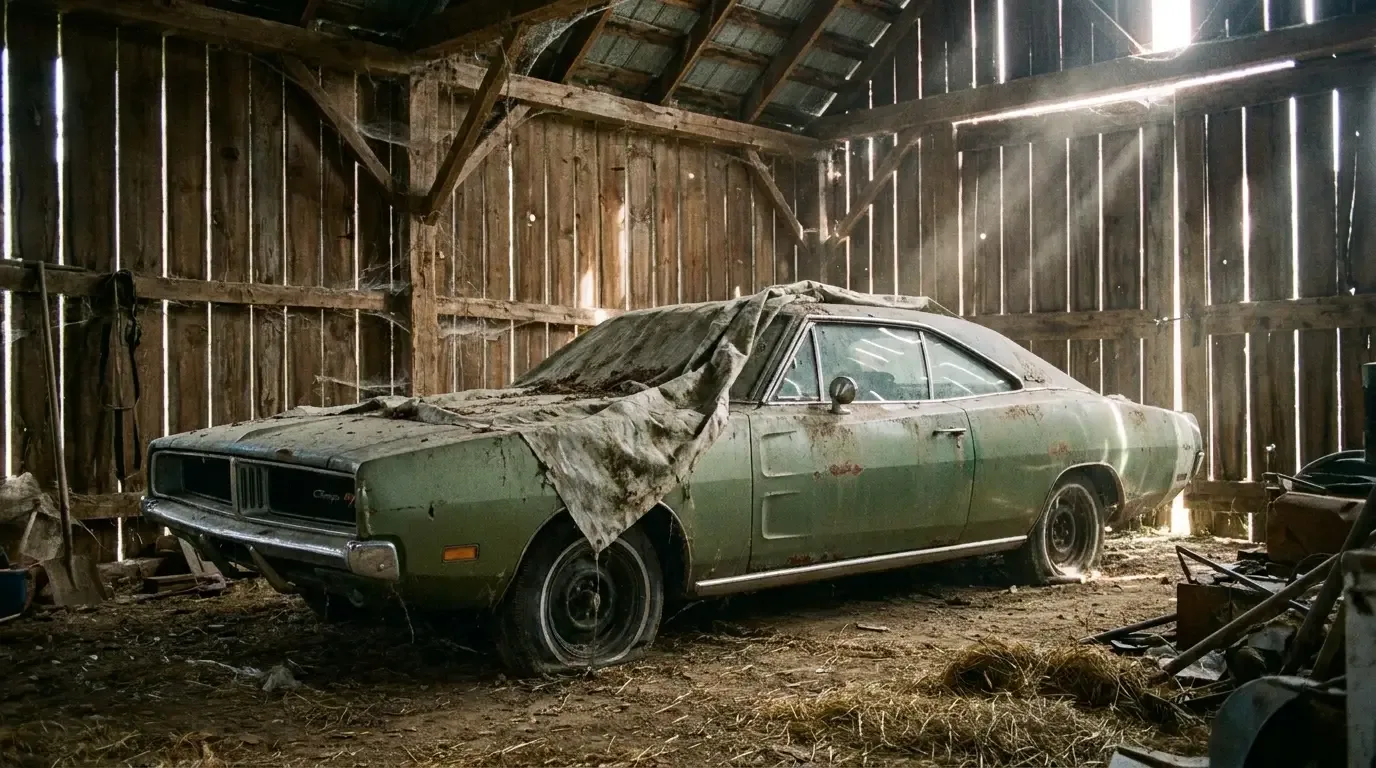
For a broader look at how the whole second-generation Charger played out across its full production run, the second-gen Charger story covers the years and changes that followed this opening chapter. And if barn-find stories and long-dormant survivors interest you as much as the history does, plenty of these early second-gen cars turn up that way, and barn find dodge charger covers exactly what that discovery process tends to look like and what buyers should watch for when a car surfaces after decades out of sight.
Sources and notes
- Wikipedia: Dodge Charger (1966 - 1978) - confirmed the 1968 second-generation redesign, coke-bottle body, and engine lineup.
- Allpar: Dodge Charger 1968 - 74 - verified the 1968 Charger R/T came standard with the 440 Magnum (375 hp) and offered the 426 Hemi as an option.
- Street Muscle: the Bullitt 1968 Charger R/T - confirmed the 1968 Charger's Bullitt cultural entry point.
- Hagerty: muscle-car era history - context on the pre-emissions performance peak and the market's later insurance/emissions pressures.
- Silodrome: 1969 Charger R/T 426 Hemi - reference on the top-tier engine options that anchored the generation.