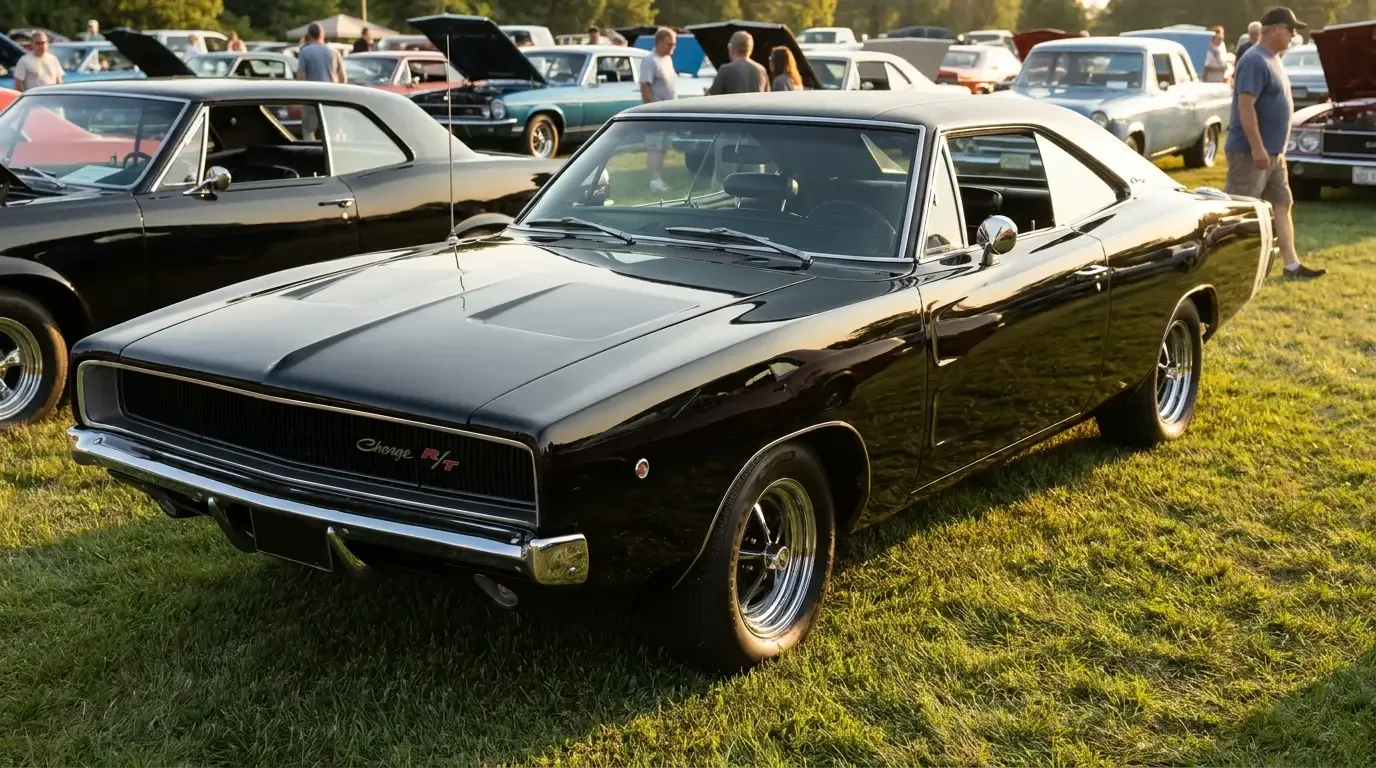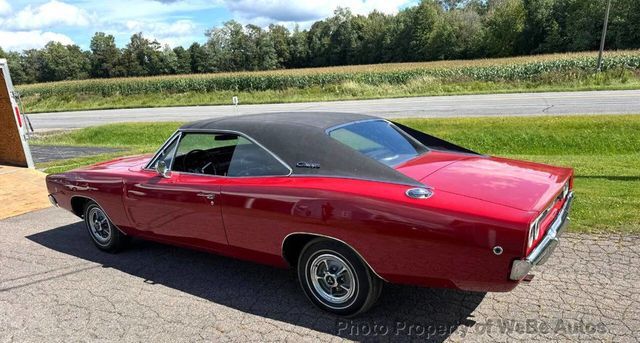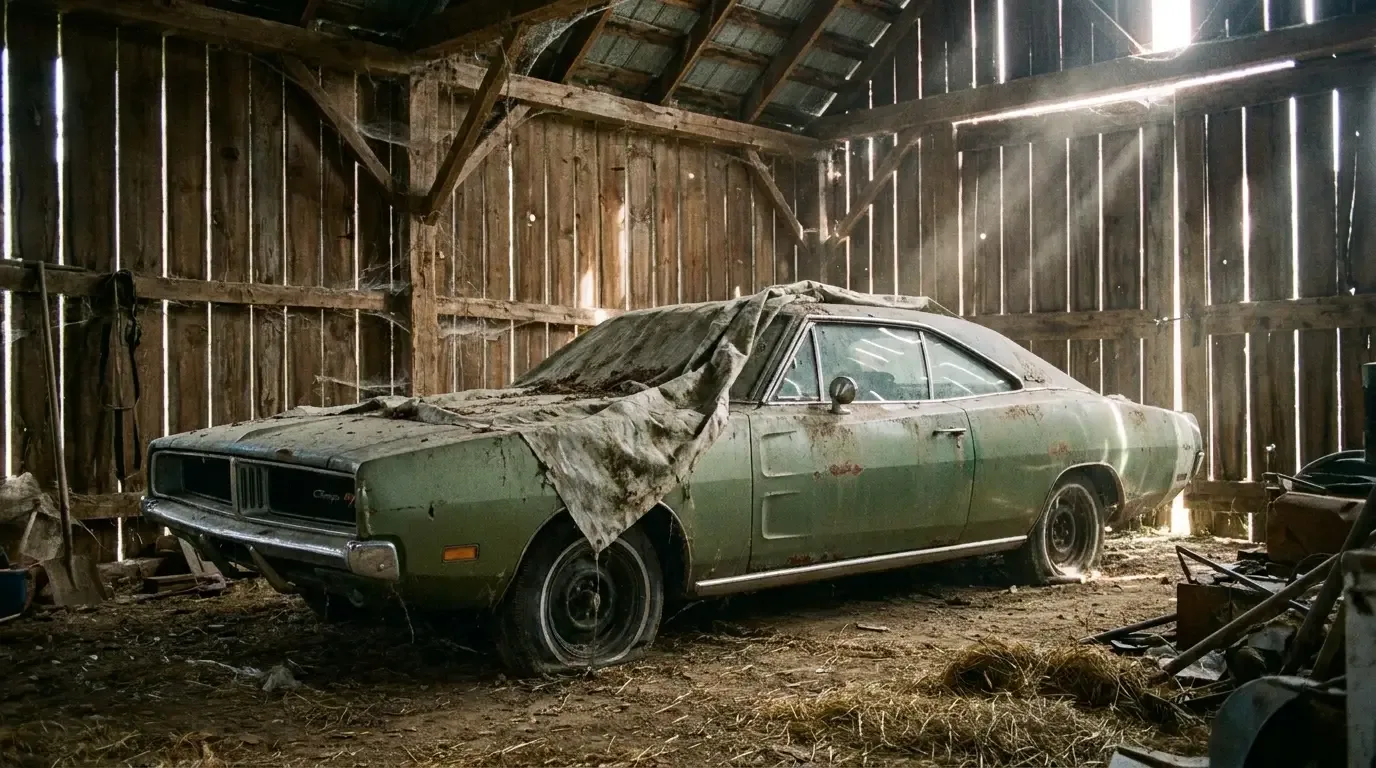
I get the same phone call three or four times a year. Somebody found a Charger under a tarp in a barn, a pole shed, or the back of a farm lot, and they want to know if it's worth pulling out. Half the time it's a 1968 to 1970 second-gen car, because that's the body style everybody remembers from the movies and the toy aisle. The other half is a Coronet with delusions of grandeur. Here's how I actually sort out a real find from a rust pile with a fastback roofline.
Second-gen Chargers, the 1968 through 1970 cars, sold well when new. Dodge moved well over 200,000 of them across those three years combined, roughly 96,000 in 1968 alone, which sounds like a lot until you remember that unibody cars from that era rot from the inside out, and most of the surviving barn cars were parked because something was already wrong with them. Nobody parks a car that's running right. If you want the full background on the body style before you go crawling around somebody's pole barn, this story covers the design and the model years in more depth.
Why these cars ended up parked in the first place
I've pulled apart enough of these to know the common reasons a Charger stops moving and just sits. It's rarely the engine. Small blocks and big blocks alike from this era will run for 200,000 miles if somebody bothers to change the oil. What kills a Charger's daily use is the transmission going out, a clutch failure on a manual car, or an electrical gremlin that the second or third owner didn't have the patience or the money to chase down. I've also seen plenty parked because of a fender bender that wasn't bad enough to total the car but was bad enough that fixing it wasn't worth it to a guy driving it to work every day in 1981.
The other big one is rust. These cars trap water in the trunk drop-offs, the torsion bar crossmember, and the rear quarter panels behind the wheel opening. A car that sat outside for even five winters in Ohio or Michigan before it went into the barn can look solid from ten feet away and be swiss cheese underneath the vinyl. I always tell people, don't trust what you can see. Trust what you can push a screwdriver through.
What to check before you get excited
First thing I do walking up on any barn find is look at the trunk floor and the area under the back window. Water gets in through bad weatherstripping and pools right there. Second, I check the torsion bar crossmember and the front frame rails where they meet the firewall. That's structural, and if it's rotted you're looking at a serious repair, not a patch job. Third, I pull the front seat and look at the floor pans underneath. Carpet hides a multitude of sins.
Numbers matter more on these cars than people think. A build sheet or a fender tag tells you what left the factory, and on a car that's been sitting for thirty years, more than one previous owner has probably swapped parts around or done a partial restoration that doesn't match what the car actually was. Don't take a seller's word for the engine unless the numbers back it up.
| Check point | What you're looking for | Red flag |
|---|---|---|
| Trunk floor / trunk drop-offs | Solid metal, no bubbling paint | Rust-through, patched with fiberglass |
| Torsion bar crossmember | No pitting, original coating intact | Flaking rust, soft when tapped |
| Cowl and firewall | Clean seams, no water staining | Bubbled paint at the cowl vent |
| Fender tag / build sheet | Matches engine, color, options claimed | Missing tag, mismatched broadcast sheet |
| Brake and fuel lines | Solid, minimal surface rust | Flaking scale, soft spots you can dent |
🔧 Inspection Priorities
- Torsion bar crossmember and frame rails. This is the single most expensive fix if it's gone. Budget several thousand dollars for a proper repair section if it's compromised.
- Trunk floor and quarter panel lower sections. Common rot spots. A patch panel job by a competent shop runs a few hundred to over a thousand dollars per panel depending on how bad it is.
- Fuel tank and lines. A tank that's sat with old gas in it for decades is usually junk. Replace it, don't try to clean it.
- Brake system, all of it. Master cylinder, wheel cylinders, lines. Everything rubber and everything that holds fluid needs to be assumed bad until proven otherwise.
- Wiring harness. Rodents love these cars. Check for chewed insulation before you ever turn a key.
Once you've got a Charger you think is worth saving, the temptation is to start comparing it to what a nice 1970 R/T brings at auction. Don't. A barn find is a project, not a finished car, and pricing it like one is how people get burned on both ends of the deal, buying too high or selling too low out of impatience. If you want to see what a properly sorted example of the body style looks like day to day, you can browse 1970 Chargers currently listed and get a real sense of the gap between a barn find and a driver.
"The paint looks right at fifteen feet. Under the hood there's a rebuilt carb on an engine that hasn't seen fresh oil in two years. Here's what to actually look at."
— Mike Sullivan
Getting it running versus getting it right
There's a difference between waking a car up and restoring it, and a lot of barn find owners confuse the two. Getting it running means fresh fuel, a battery, fluids changed, and a careful check of the brakes before you drive it anywhere. Getting it right means addressing the rust, the wiring, and anything structural before you put real miles on it. I've seen guys drive a barn find home on bald tires and a leaking master cylinder because they were excited, and that's how you total a survivor car in the first mile.
If the drivetrain turns over freely by hand at the crank pulley, that's a good sign. If it's seized, don't force it. Pull the plugs, squirt some oil in the cylinders, let it sit a few days, and try again gently. Forcing a seized engine over with a breaker bar is how you snap a piston ring land or bend a rod, and now your barn find project just got a lot more expensive before it's even moved.
What real barn find Chargers have actually sold for
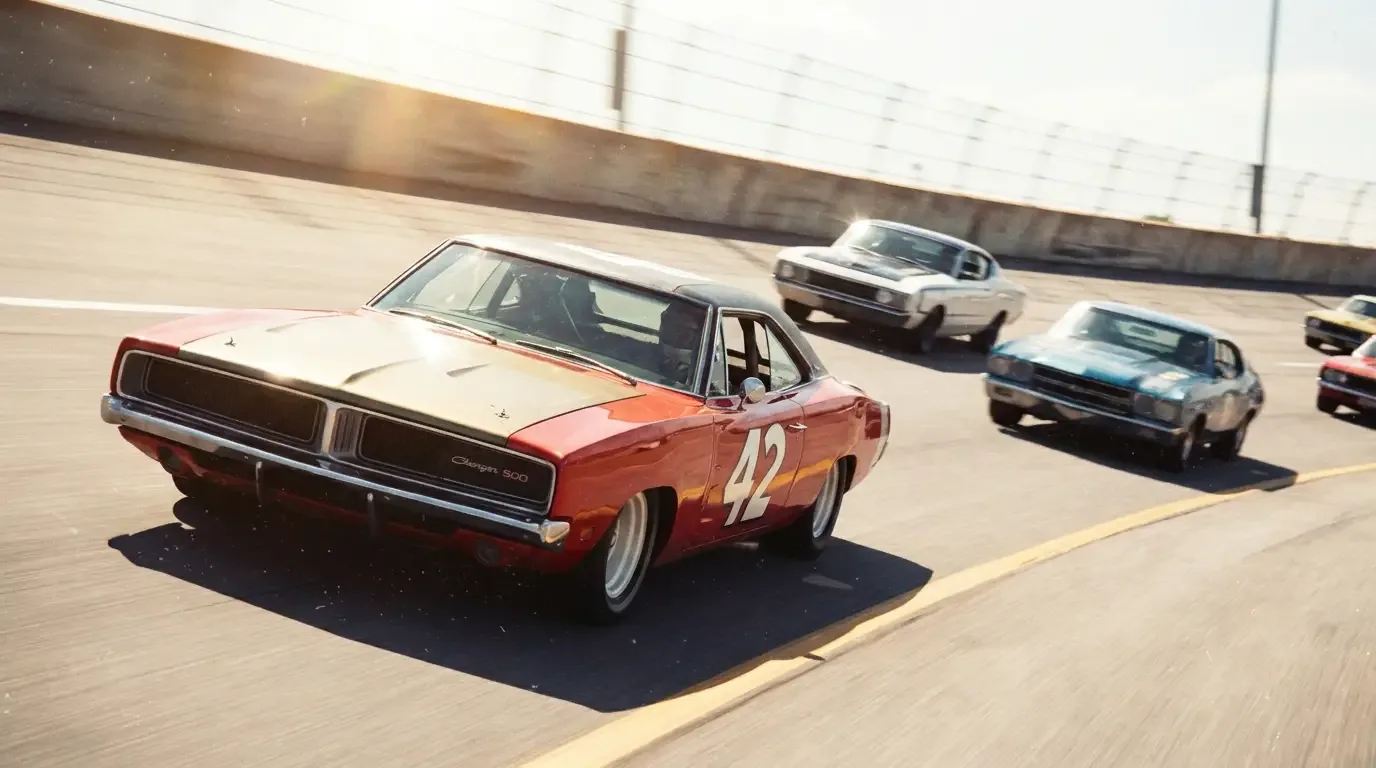
Rough, complete, non-running second-gen Chargers with solid floors and a title in hand have traded in roughly the 8,000 to 18,000 dollar range depending on trim and engine. Add a numbers-matching big block or an R/T package and that number climbs fast, often past 30,000 dollars for something still wearing barn dust, because buyers are paying for the potential of what's under the grime, not the condition it's in today. The catch is that a lot of sellers see those headline numbers from auction coverage of a documented R/T and think their plain-jane 318 car is worth the same. It isn't. The the 1969 Charger NASCAR story is a good reminder of why the RB-powered cars carry such a premium, but a small block barn find is still a real car with real value, just a different kind of value.
A barn find second-gen Charger is a gamble every time, even for guys who've done this for decades. The good ones are out there, sitting under decades of dust with a fender tag that tells a story nobody bothered to read. The bad ones are rust buckets wearing a fastback shape and not much else. Know which one you're looking at before you write the check.
Sources and notes
- Definitive 1968 - 70 Dodge Charger buyer's guide (Hagerty) - rust hot spots, drivetrain notes and buying cautions for the second-gen car.
- Dodge Charger 2nd-gen production data (automobile-catalog) - confirms the by-year production figures (96,108 in 1968; 89,199 in 1969; 49,768 in 1970).
- Dodge Charger B-body (Wikipedia) - background on the 1968 - 1970 body, fender-tag/build-sheet documentation and R/T trim.
- Dodge Charger 2nd-gen market data (Classic.com) - real transaction ranges for project and driver-grade second-gen Chargers.
- The legendary Dodge Charger, 1968 - 74 (Allpar) - model history and trim/engine context useful for verifying a barn find against its tag.