
Motor Trend named the 1968 Pontiac GTO its Car of the Year, and the citation is worth reading closely, because the magazine wasn't just praising a fast car. It was praising a redesigned car, one that had moved to GM's A-body platform update for 1968 with a shorter wheelbase, a new perimeter frame, and, most visibly, that Endura front end nobody else on the market had. The award recognized the total package: engineering, styling, and the kind of sales momentum that made the GTO the car other manufacturers were benchmarking against.
Car Features
7 min read
1968 GTO: Motor Trend Car of the Year and Why It Mattered
The 1968 GTO didn't just look new, it was built on a new platform. Here's why Motor Trend's editors called it Car of the Year.
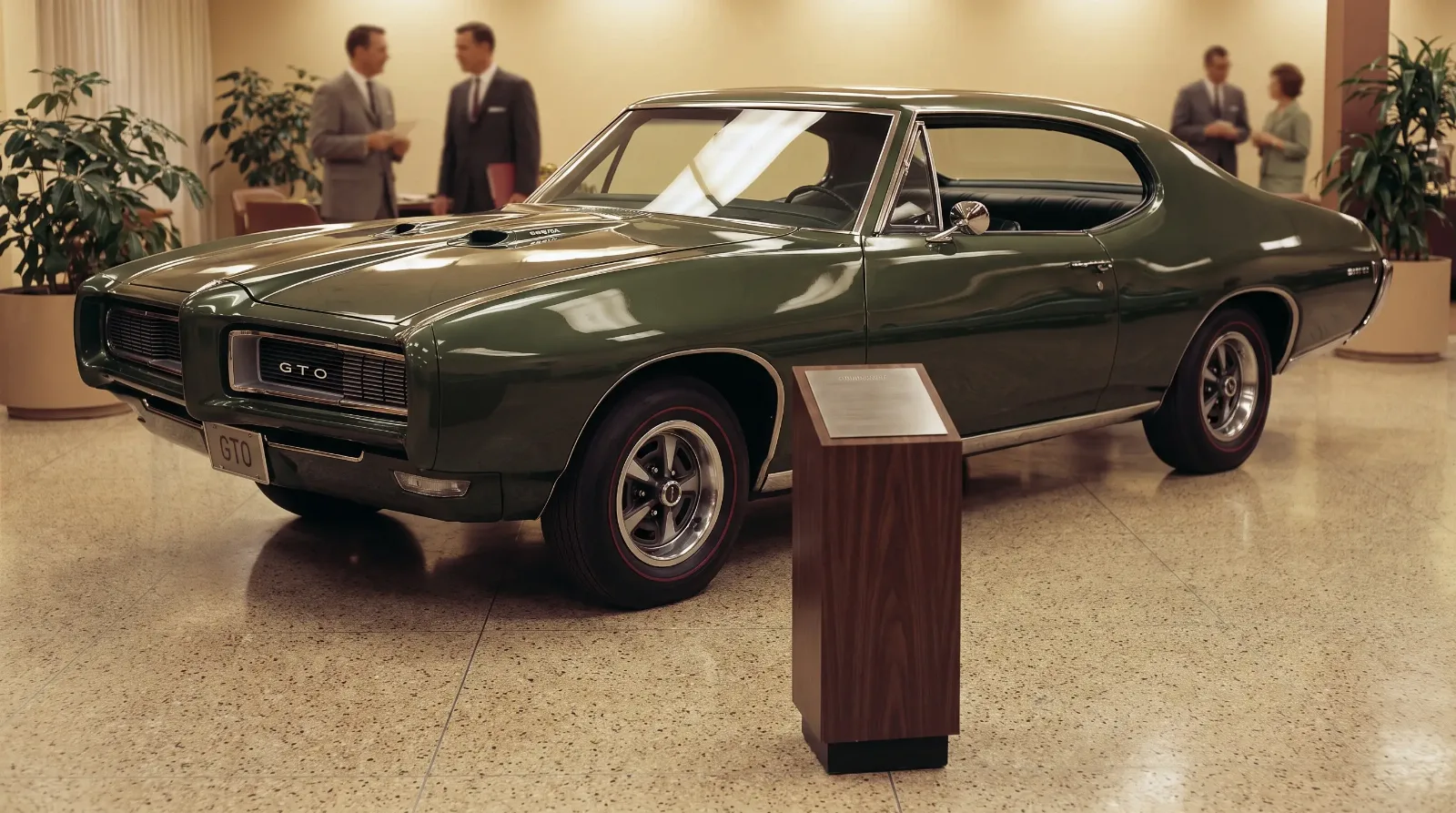
For a factory historian, awards are useful mainly as a checkpoint. They tell you what the engineering and design teams were trying to prove at that exact moment, and in the GTO's case, 1968 was the year Pontiac proved the formula it had built since 1964 could survive a full platform redesign without losing what made it work.
What the redesign actually changed
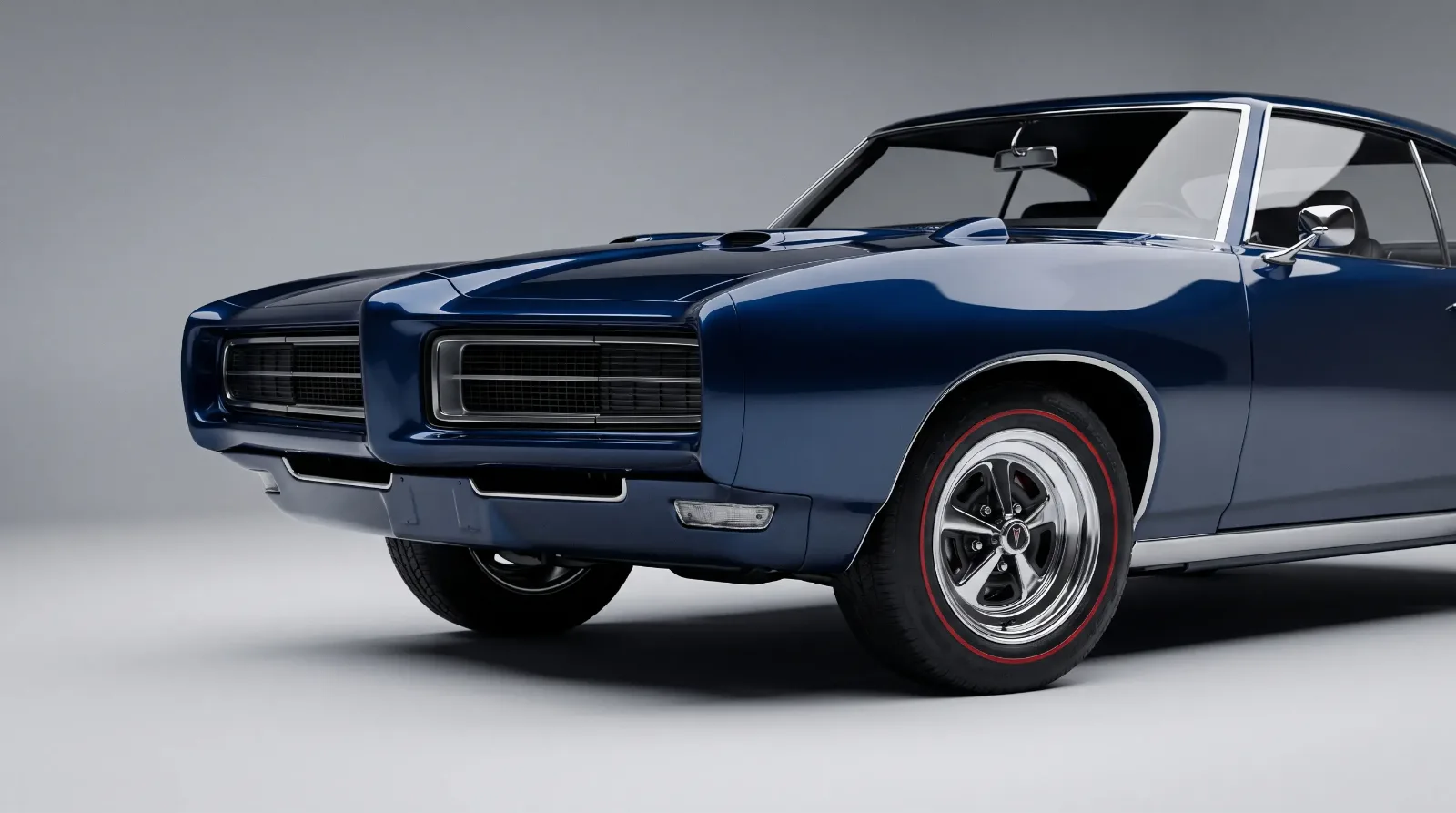
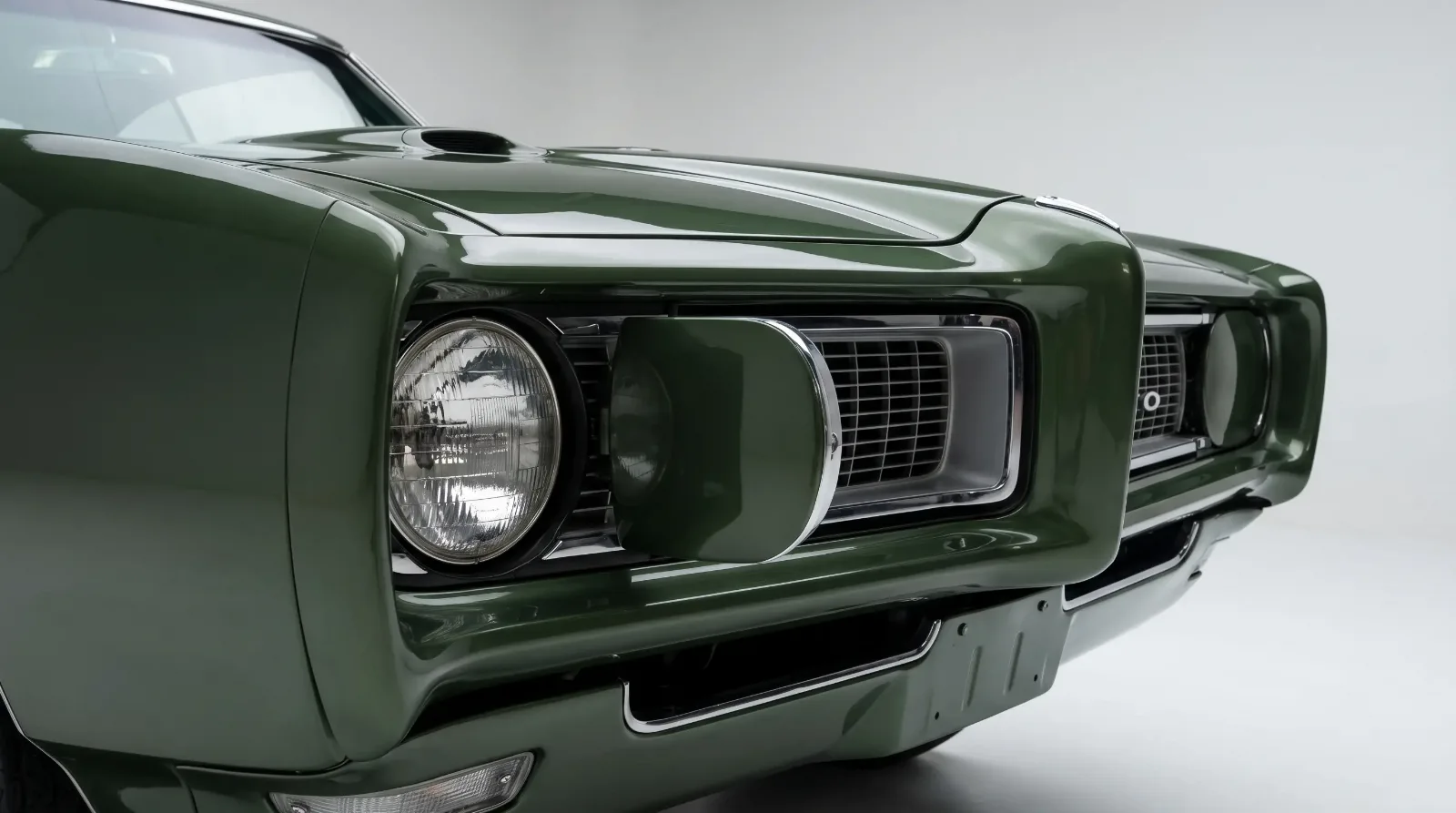
The 1968 GTO sat on a wheelbase that had been shortened from the prior generation, part of GM's broader A-body revision that year, and the body itself was all-new, with the semi-fastback roofline and the Endura nose as the visual signature. Concealed windshield wipers were part of the cleaner look Pontiac was chasing. Buyers could still order the hidden-headlight treatment, which added to the sense that this GTO was engineered to look like nothing else on the road, not just a facelift of the '67 car.
Underneath, the 400 cubic inch V8 continued as the standard engine, in various states of tune depending on options, with Ram Air becoming a more serious, factory-documented performance option as the model year went on. The standard four-barrel 400 was rated 350 hp, the HO version 360 hp, and the early Ram Air 400 also 360 hp before Pontiac swapped in the Ram Air II mid-year at 366 hp with revised cylinder heads and forged pistons.
The chassis work behind the redesign gets overlooked in most retrospectives, and it shouldn't. The new perimeter frame wasn't simply a stiffer version of the old ladder-style unit, it changed how the body mounted and how road noise and harshness transferred into the cabin, which was part of what let Pontiac market the '68 as a more refined car without giving up any of the drivetrain aggression buyers expected. Suspension geometry was revised to suit the shorter wheelbase, and the net effect, according to period road tests, was a car that felt noticeably more planted through a corner than the outgoing 1967 model, despite carrying essentially the same engine family under the hood.
| Detail | 1968 GTO |
|---|---|
| Platform | GM A-body, redesigned for 1968 |
| Standard engine | 400 cubic inch V8 |
| Notable front end | Endura color-keyed bumper/nose |
| Headlight option | Concealed (hidden) headlights available |
| Recognition | Motor Trend Car of the Year, 1968 |
Why Motor Trend's editors bought in
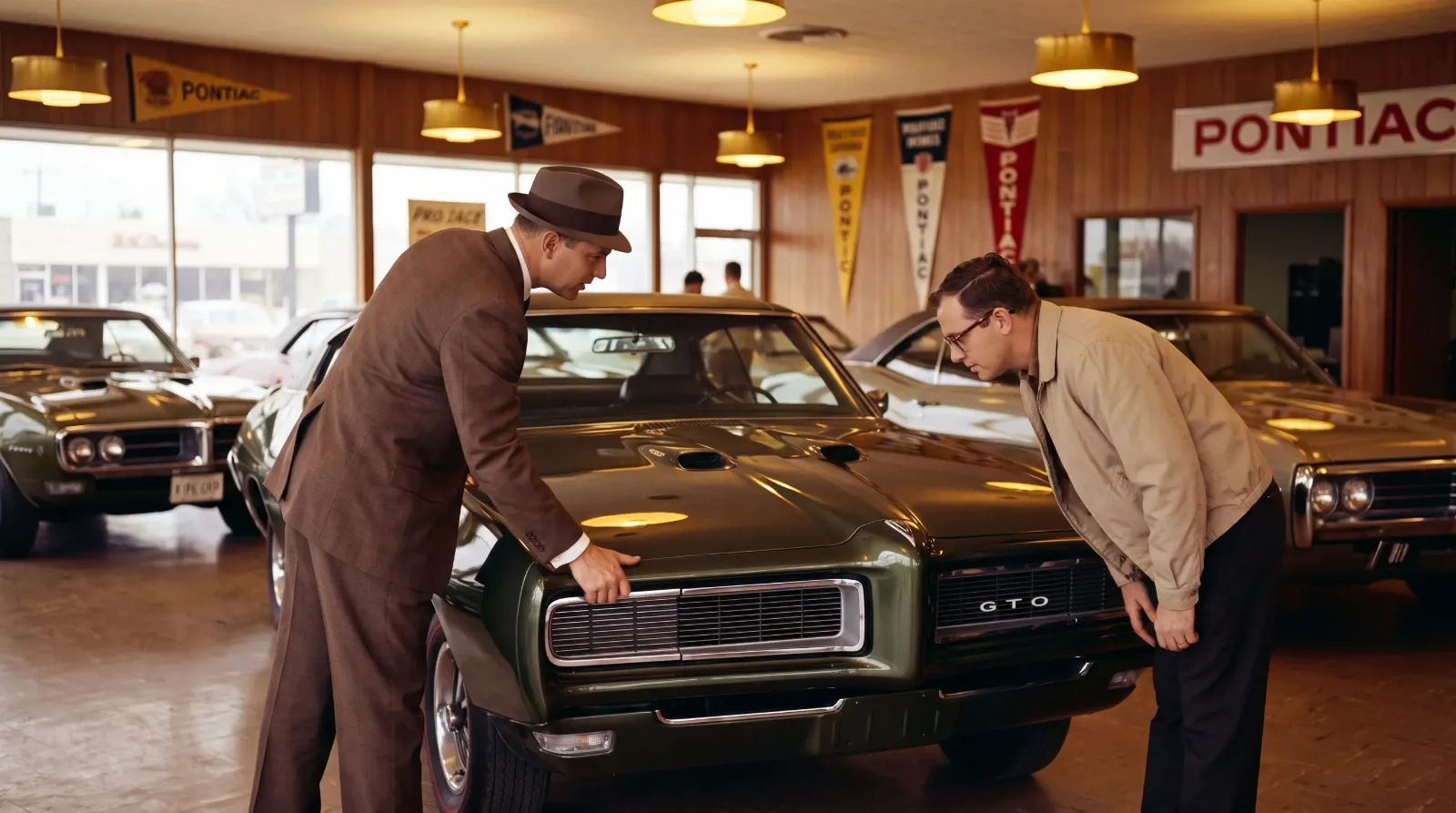
The magazine's staff at the time were weighing the GTO against a genuinely crowded field of intermediates and muscle cars, and the GTO's advantage wasn't raw horsepower alone. Every competitor in the segment was throwing big-inch V8s at the same buyer. What set the GTO apart in the judges' eyes was the coherence of the whole package: a car that looked like a clean-sheet design, rode on a chassis update that improved on the prior car, and still delivered the acceleration numbers that muscle car buyers demanded. That combination, styling leadership plus genuine engineering progress, is exactly what a Car of the Year award is supposed to reward.
It's also worth noting what the award was not rewarding. Motor Trend's Car of the Year selections in this era weren't drag-strip shootouts, and the GTO didn't win on quarter-mile numbers alone against every rival in its class. The citation leaned heavily on the totality of the engineering effort, the fact that Pontiac had managed a full platform changeover and a styling reinvention in the same model year without a corresponding drop in build quality or drivability. That's a harder thing to pull off than simply stuffing a bigger engine under an existing hood, and the period trade press understood the distinction even if buyers on the showroom floor were mostly there for the acceleration.
💡 Did You Know?
The 1968 win was the GTO's only Motor Trend Car of the Year award. Pontiac had won the honor once before, in 1959, but that award went to the entire redesigned Pontiac lineup rather than a single nameplate, which makes the 1968 GTO-specific win a distinct milestone Pontiac's PR department leaned on heavily in period advertising.
What the award meant for the model going forward
Winning Car of the Year in a redesign year mattered because it validated the bet Pontiac made moving away from the '67 body. It would have been easy for a totally new shape to alienate the buyers who'd made the hidden-headlight GTOs and the Endura nose into instant signatures of the brand. Instead, sales and press reception both confirmed the new direction worked, and Pontiac carried the formula largely intact into 1969, refining rather than reinventing it.
Internally, the win also gave Pontiac's engineering staff leverage they didn't always have. A Car of the Year citation from a widely read enthusiast magazine was the kind of external validation that made it easier to argue for continued investment in the GTO program at a time when GM corporate was watching insurance costs and safety regulation start to tighten around the entire muscle car category. The 1969 model year's refinements, more than a wholesale rework, reflect a division that felt it had gotten the formula right the first time and saw no reason to gamble on a second full redesign so soon.
"The documentation from that period shows Pontiac's engineering team treated the 1968 redesign as a genuine second act, not a reskin. The frame, the body mounts, the whole structure changed. That's the part the Car of the Year win actually validated, and it's easy to miss if you only look at the styling."
Tom Ramirez
How the win compared to the rest of the field
It helps to remember who the GTO was up against that year. The intermediate muscle car segment in 1968 was arguably as crowded as it would ever get, with the Chevelle SS, the Road Runner, and the Cyclone GT all fighting for the same buyer with their own big-inch engines and their own performance packages. None of them arrived with a fully reengineered chassis and an industry-first bumper material in the same model year. That's the context that makes the Motor Trend win more than a popularity contest. The judging panel had genuine alternatives, and they picked the car that had done the most engineering work to earn the trophy, not simply the one with the loudest advertising campaign.
Reading the award correctly today
Collectors sometimes treat the Car of the Year win as a marketing footnote, but it's a useful primary-source data point when you're researching a specific 1968 car. It confirms the period's own engineering press regarded the 400-cube, Endura-nosed GTO as a legitimately advanced product for its year, not simply a horsepower exercise. If you want the full arc of how the hidden-headlight treatment fit into that story, read on. For the complete history of the nameplate from its 1964 origins, see the broader Pontiac GTO history, and if you're shopping, you can browse GTO listings from the model year that earned this recognition.
Sources and notes
Related Reading
Have a
Pontiac GTO
for Sale?
Reach thousands of serious classic car collectors across the US.
Sell It Here →
Are You a Classic Car Dealer?
List your full inventory and connect with targeted classic car buyers.
Join as a Dealer →

About the author
Tom Ramirez
Corvette researcher and historian based in Bowling Green, Kentucky. Two decades documenting Corvette production history from original factory records.
Related Listings - Pontiac GTO




Comments
Be the first to comment on this article.