
I've had my hands on plenty of GTOs over the years, and the ones that stop people in a parking lot aren't the '65s or the '67s. It's the 1968 cars, the ones with that smooth, body-colored nose that looks like it was poured instead of stamped. That's Endura, and it's the single biggest styling change Pontiac made to the GTO in the car's whole run. Most people know it as "the bumper that isn't chrome." What they don't know is how much engineering it took to get a piece of flexible plastic to survive a Detroit winter and a low-speed parking lot bump without cracking, sagging, or peeling paint.
Car Features
7 min read
The Endura Bumper: How Pontiac Hid the Chrome and Changed Styling
Endura wasn't chrome. It was Pontiac's answer to a decade-old styling problem, and it's the hardest piece on a 1968-69 GTO to get right.
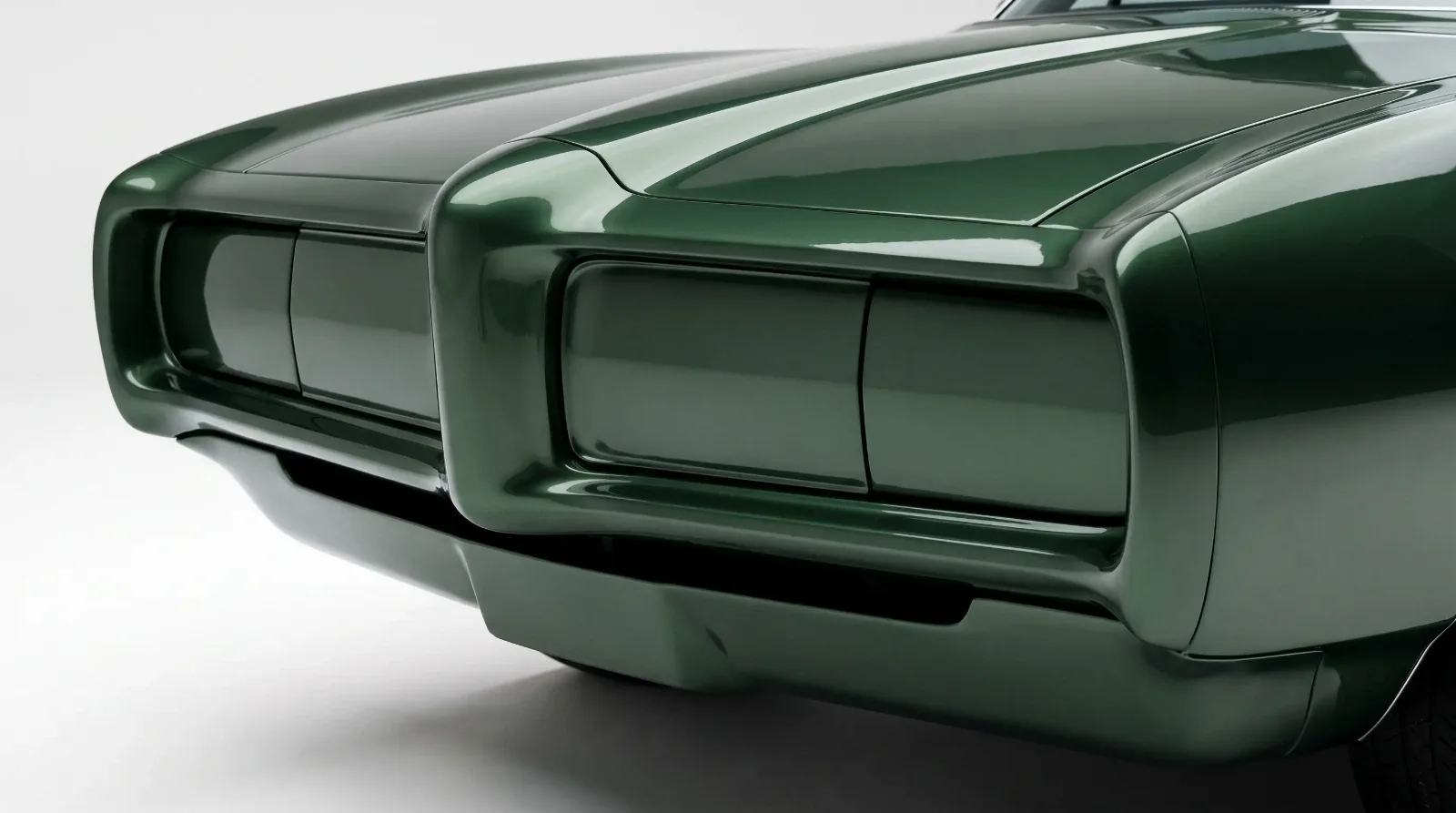
Understanding the Endura-era GTO means understanding that Pontiac wasn't just chasing a look. They were chasing a problem every stylist on the GM design staff had been fighting for a decade: how do you get a front bumper to blend into the body instead of sitting on top of it like an afterthought.
What Endura actually is
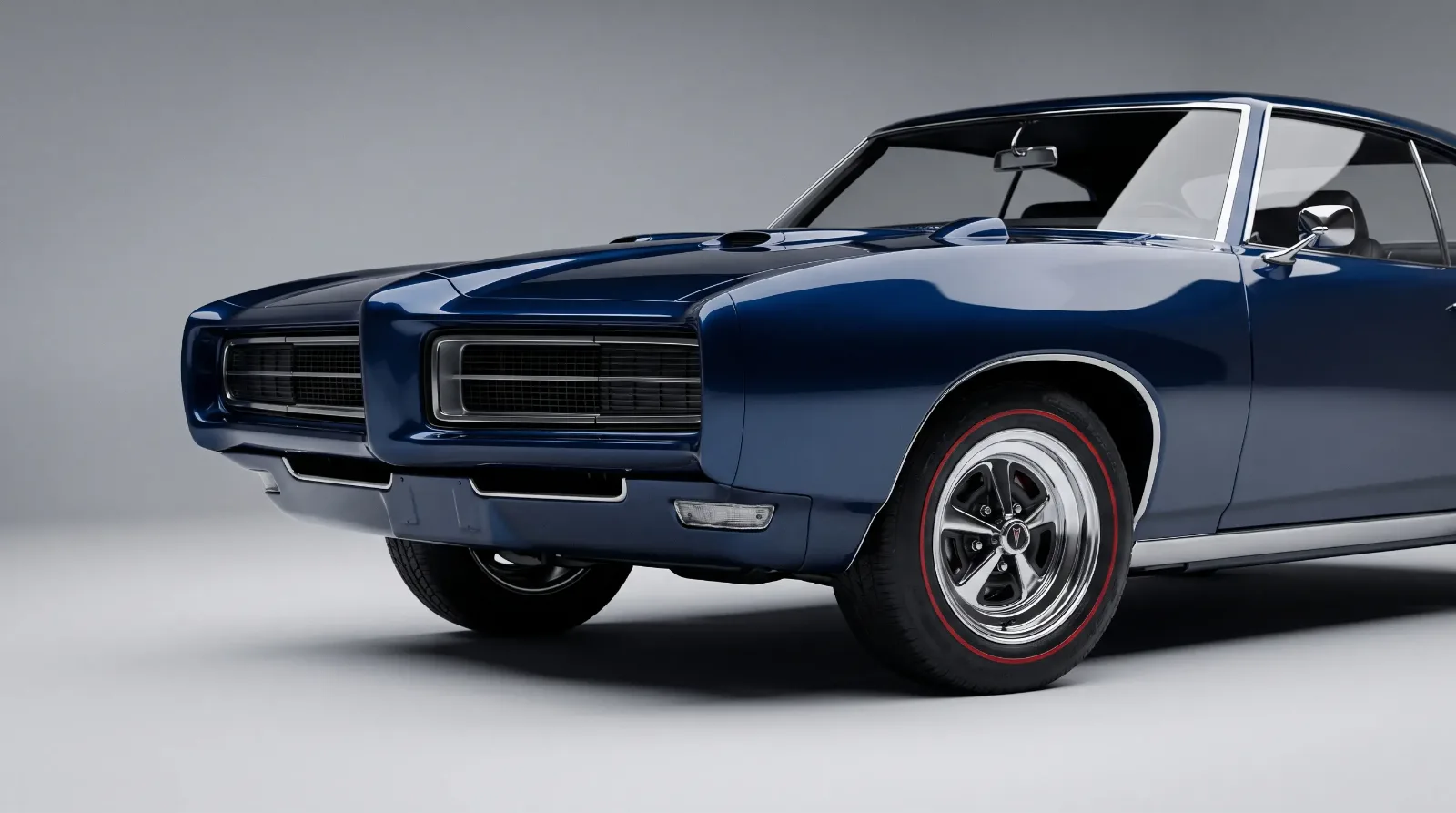
Endura wasn't chrome-plated steel. It was a semi-rigid urethane-based material, molded over a steel armature and bonded to the body structure, then color-matched and painted right along with the rest of the car. From ten feet away it read as one continuous surface, nose to fender, with no visible seam where sheet metal met bumper. That was the whole point. GM stylists had been sketching "bumperless" front ends since the early '60s, and the material science finally caught up around 1967, in time for the '68 GTO to be the car that put it into volume production.
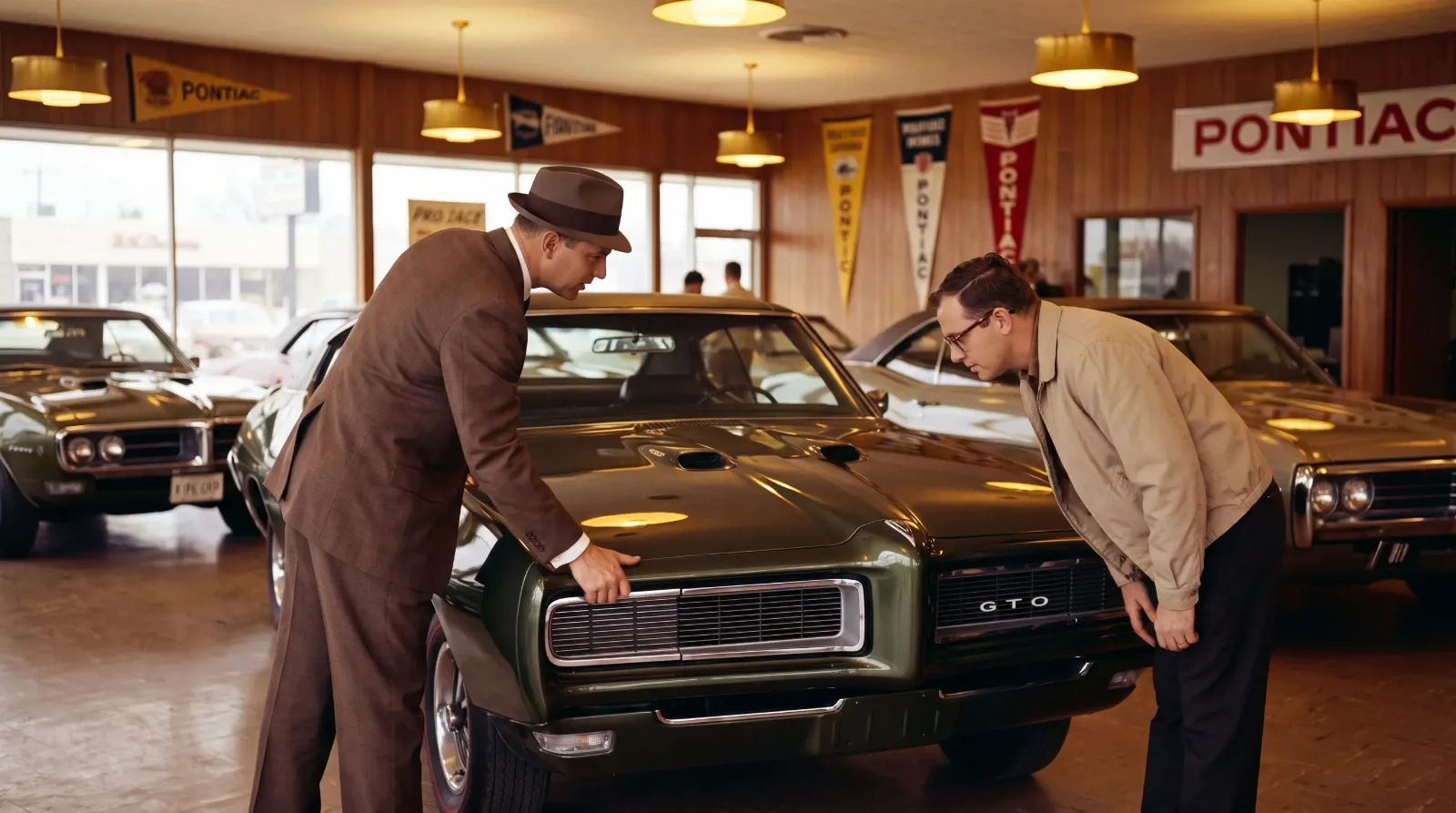
The material had some give to it. Not much, but enough that a shopping-cart-speed tap in a parking lot could dent it and have it pop back into shape, or close to it, without cracking the paint the way steel would crease. That was a real selling point, not just a styling gimmick, though Pontiac leaned hard into both angles in advertising. If you want the full pitch they used to prove it, read on for how far they took that demonstration.
How it actually got built onto the car
The manufacturing side of this is where I think most people's eyes glaze over, but it's the part that explains why Endura repairs are such specialized work today. The steel armature underneath wasn't just a mounting bracket, it was a structural skeleton that the urethane skin bonded to at specific points, engineered to let the outer material flex independently of the frame during a low-speed impact. Get that bonding wrong during a repair, and you end up with a nose that looks right sitting still but flexes unevenly under load, which is exactly what causes the paint cracking that plagues so many original and poorly repaired examples decades later.
Painting it correctly mattered just as much as molding it correctly. Standard body paint doesn't flex the way Endura does, so Pontiac's paint process for these noses used a flexible additive blended into the color coat, applied in a specific sequence that let the paint expand and contract along with the substrate underneath it. A shop that doesn't know this history and just shoots a standard basecoat over a repaired Endura nose is setting that car up to crack again within a season or two of real driving, regardless of how good the bodywork underneath looks on delivery day.
Why it looked so different from every other GM front end
Every other GM intermediate in 1968 still had a separate chrome bumper bolted in front of the grille, a visible break in the sheet metal. The GTO's Endura nose eliminated that break entirely. The grille openings sat inside the same molded piece as the bumper, and the whole assembly wrapped around the front fenders in a way steel simply couldn't. Pontiac's design staff, including GM veteran Warren Fitzgerald, who brought the Inland-developed bumper material to Pontiac's advanced studio, and stylist Jack Humbert, who reworked the '68 GTO's front end around it, had been pushing for this look on the GTO specifically because the car was already positioned as the technical leader of the division. Giving it a front end nothing else on the road had was exactly the kind of move that kept the GTO ahead of the Chevelle SS and the Road Runner in the showroom conversation.
"People ask me if the Endura nose is hard to find parts for now, and the honest answer is yes, it's the hardest piece on the whole car to source right. Everything else on a GTO you can buy reproduction. A straight, uncracked original Endura bumper that hasn't been over-restored is its own kind of hunt."
Mike Sullivan
💡 Did You Know?
Pontiac's development work on Endura actually traces back to 1964, when GM's Inland division built the first push bumpers out of the material for moving non-running cars around the engineering garage, years before it reached volume production on the '68 GTO. The long lead time gave engineers real exposure to the shrinkage and cold-weather brittleness that would later become the material's best-known long-term weakness anyway.
Living with it fifty-plus years later
Here's where the material's age catches up with it. Original Endura shrinks, and it shrinks unevenly. You'll see gaps open up at the edges where it meets the fenders, and the paint on old, unrestored examples tends to check and craze in a spiderweb pattern that's almost unique to this material. It's not rust, so it won't eat the car, but it's ugly, and it's expensive to fix right. A proper Endura repair means stripping it down, filling and reshaping the substrate, and repainting with a flexible additive in the paint so it doesn't crack again the first time it flexes.
🔧 Inspection Priorities
- Check for cracking at the fender-to-bumper seam. This is where flex stress concentrates. A car with paint cracking here needs a proper flex-paint respray, which is a specialist job, not a DIY rattle-can fix.
- Look for filler over old cracks. Cheap fixes bury the crack in body filler, which won't flex with the material and will crack again within a year or two of driving.
- Check panel gaps around the headlight doors. Endura shrinkage over decades can throw off the fit of the hidden headlight covers, which is its own headache on these cars.
- Ask if it's original Endura or a fiberglass reproduction. Reproduction noses exist and some are good, but they don't flex the same way, and that matters if you ever tap something in a parking lot.
- Feel for consistent flex across the whole nose. Press gently at several points along the bumper. A section that feels noticeably stiffer than the rest may indicate prior filler repair or a mismatched replacement panel underneath the paint.
Why it mattered beyond the GTO
Endura on the '68 GTO was Pontiac's proof of concept, and it worked well enough that the material philosophy spread. You'll see body-colored, energy-absorbing bumper materials become the industry standard by the late '70s, partly pushed there by federal bumper regulations, but Pontiac was doing it voluntarily, for styling reasons, a decade earlier. That's worth remembering when people call the GTO just a big engine in a mid-size body. The styling team was solving real problems too, and the Endura nose is the clearest example on the car.
It's also worth remembering how much of a gamble this was internally at Pontiac. Committing a high-volume model to an unproven material was the kind of decision that could have backfired badly if the urethane hadn't held up to real-world abuse, and division management had every reason to play it safe with a conventional chrome bumper instead. That they didn't, and that the material largely worked as promised, says something about how much confidence the GTO's success by 1968 had bought the engineering team within GM's larger, more conservative structure.
If you're new to this generation of GTO and want the full arc of how the car got here, from the 1964 option package to the standalone model it became, the Pontiac GTO story covers that ground in full.
Sources and notes
- Mac's Motor City Garage - Soft Revolution: the 1968 GTO Endura nose
- Wikipedia - Pontiac GTO
- Dean's Garage - interview with Bill Porter on Pontiac design in the 60s
- MotorCities - the record-breaking 1968 Pontiacs
- OPGI - Endura bumper reference, 1968-69 GTO
- Hagerty - definitive Pontiac GTO buyer's guide
Related Reading
Have a
Pontiac GTO
for Sale?
Reach thousands of serious classic car collectors across the US.
Sell It Here →
Are You a Classic Car Dealer?
List your full inventory and connect with targeted classic car buyers.
Join as a Dealer →

About the author
Mike Sullivan
Detroit-area muscle car enthusiast and restoration specialist with three decades of hands-on experience working on American iron.
Related Listings - Pontiac GTO
Comments (1)
S
Sal Giordano
1 month ago
Great breakdown of the different years. Most people just want 'one of these' without realizing how much varies between model years.