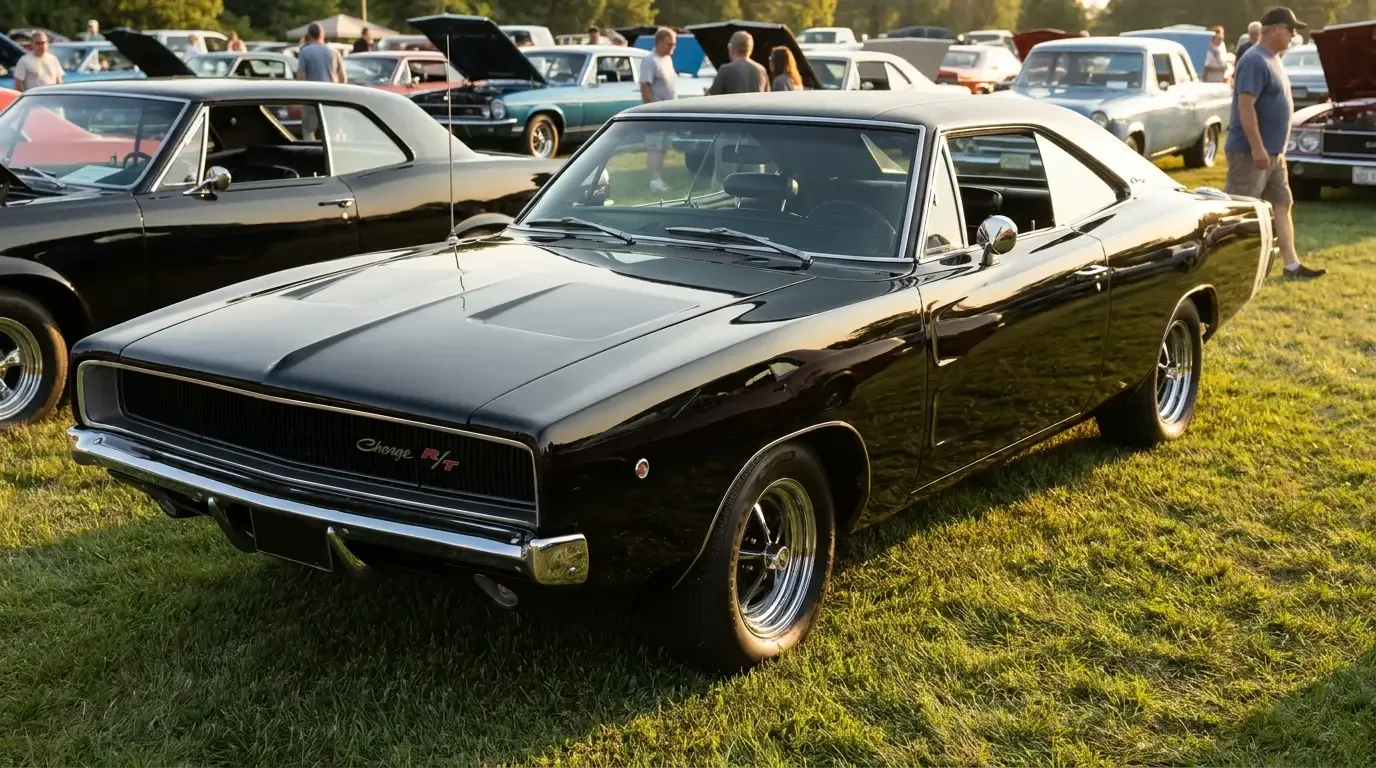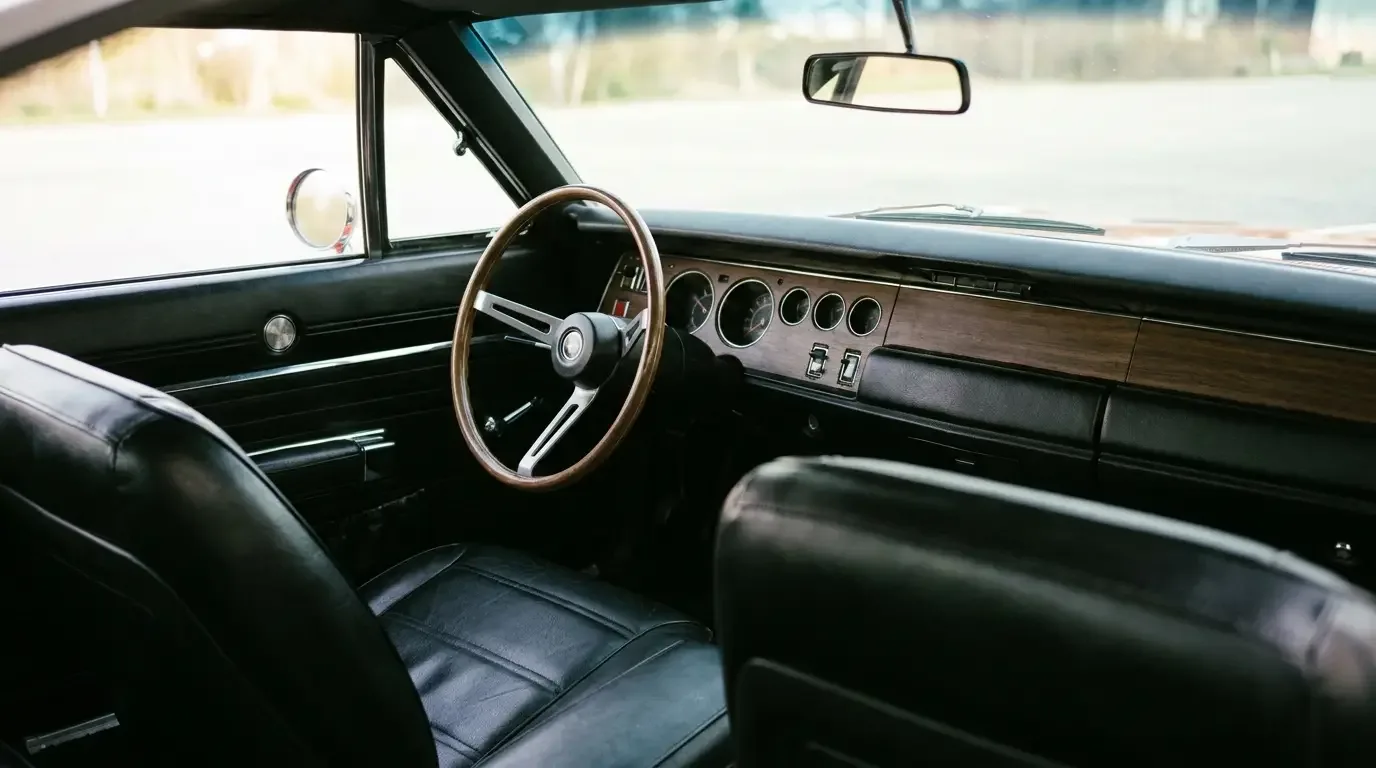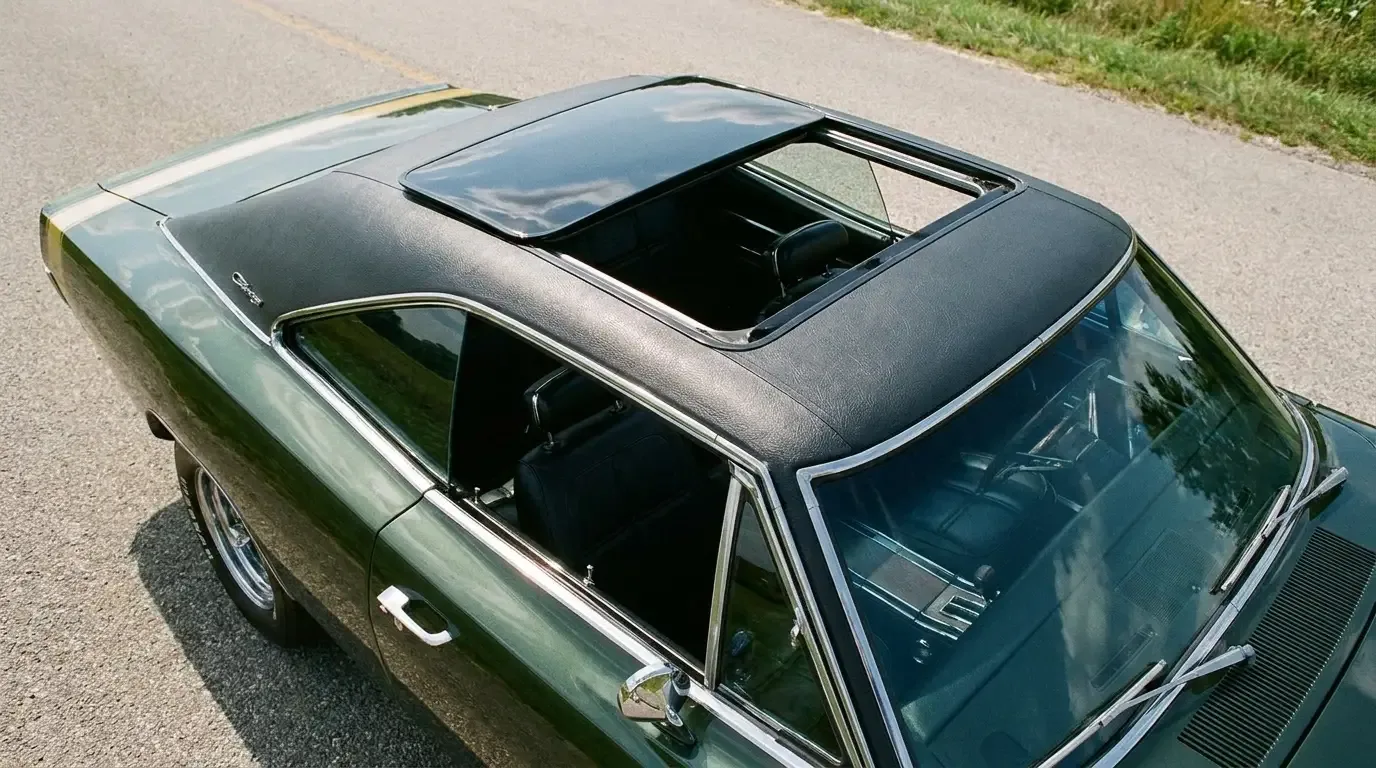
Every year I get a call about a "numbers matching Hemi Charger" that turns out to be a mid-year clone built from a documented 383 or 440 car with a period-correct engine swap done sometime in the last thirty years. The swap itself isn't the problem. It's the seller who doesn't mention it, or worse, doesn't know it, and lists the car at a genuine Hemi price without the documentation to support that claim.
The production figure everyone quotes, and why it's not the whole picture
The most commonly cited figure for 1969 Charger 426 Hemi production is around 432 cars, a number that gets repeated across enthusiast forums and auction descriptions, generally split into roughly 208 automatics and 224 four-speed manuals. That number, however you slice the automatic-versus-manual and R/T-versus-non-R/T breakdown, represents total Hemi installations across the model year, not a single clean category. It splits further by transmission choice, by R/T versus non-R/T trim, and by hardtop versus other body configurations that were far less common with the Hemi option to begin with.
A #2 car with a thin paper trail isn't a #2 car when the check clears. It's a #3 with a good story, and the appraisal has to say so. That principle applies doubly to Hemi production claims. A specific number floating around a forum thread is not documentation. It's a starting point for asking better questions, and the actual number that matters for any individual car is whether that specific VIN shows up in Chrysler's own broadcast sheet and build record system as a genuine Hemi installation from the factory.
| Documentation source | What it confirms | Reliability |
|---|---|---|
| Fender tag engine code | Engine originally ordered for that VIN | High, if tag is unaltered and legible |
| Broadcast sheet | Full factory build specification | High, when an original surviving document |
| Chrysler Historical Services report | Factory records cross-reference | High, considered the industry standard |
| Forum production estimates | General rarity context only | Low, treat as background, not proof |
Why Hemi verification is worth the money
A Chrysler Historical Services report costs real money and takes real time to process, and I've had clients balk at the expense on a car they're about to spend six figures on. That math never made sense to me. The report is a rounding error against the purchase price, and it's the single piece of documentation that separates a defensible investment from a story you're hoping nobody scrutinizes too closely later.
The risk isn't just that you overpay today. It's that the next buyer, or the appraiser they hire, runs the same check you skipped and the value gap shows up as a liquidity problem when you go to sell. A car with a documented, verified Hemi build commands a real premium and sells relatively fast to the right buyer. A car with an undocumented Hemi claim sits on the market longer, draws lowball offers from buyers who've done their homework, and eventually sells at a discount that reflects the uncertainty, not the car's actual condition or quality.
What the price gap actually looks like in practice
The spread between a documented, verified Hemi Charger and a comparable non-Hemi car with a similar trim level and condition isn't a modest percentage. It's a multiple, and it has been for a long time in this market. That gap is precisely what motivates bad actors to manufacture the appearance of a Hemi car where none genuinely existed, because the financial incentive dwarfs the cost and effort of pulling off a convincing fake, at least until someone runs the paperwork.
I've seen the gap play out both directions at auction. A properly documented car with a Chrysler Historical Services report in hand routinely brings a stronger final bid than a comparable car without one, even when the undocumented car's seller insists the history is solid and just hasn't been formally verified yet. Buyers with real money on the table have learned to discount for uncertainty, and that discount can run into six figures on the right car. Documentation isn't a formality in this segment. It's a direct line item in the final sale price.
Common ways a non-Hemi car gets dressed up
The most straightforward version is a straight engine swap, where a correct date-coded Hemi block gets installed in a car that left the factory with a smaller displacement engine. Done with a genuine period-correct block and done honestly, that's a legitimate build, and a lot of enthusiasts have built exactly this kind of car because a documented original was out of their price range. The dishonesty only enters when that history gets omitted from a sale.
The second version, and the one that costs buyers the most money, is a fender tag or VIN tag that's been altered or replaced entirely to show Hemi engine codes on a car that never had one. This is harder to pull off convincingly and easier to catch with a trained eye, since tag stampings, rivet patterns, and metal aging leave evidence when a tag's been swapped or re-stamped. It's exactly the kind of thing a Chrysler Historical Services report and a physical inspection by someone who's handled a lot of these tags will catch.
- Request a Chrysler Historical Services report before finalizing any purchase claimed as a genuine Hemi car.
- Have the fender tag physically inspected for rivet pattern consistency and stamping alignment.
- Ask directly whether any engine swap has occurred, even a period-correct one, and get it in writing.
- Treat forum-quoted production numbers as general context, not proof for any specific car.
None of this is meant to discourage buying a well-documented tribute or resto-mod built around a period-correct Hemi swap. Those cars have their own market and their own honest value. The problem only exists when the line between a genuine factory Hemi and a well-built clone gets blurred in a listing, whether through omission or outright misrepresentation. For the fuller context on how the second-gen Charger's model lineup and options fit together across the years this body style ran, the full write-up covers the broader production picture beyond just the Hemi question.
And if you're trying to understand rarity beyond the Hemi specifically, since plenty of other genuinely scarce option combinations exist on these cars that don't get the same forum attention, it's worth looking at rare 1969 charger options to understand where real scarcity sits on this model versus where the hype tends to concentrate.
Sources and notes
- Silodrome: 1969 Charger R/T 426 Hemi - confirmed the roughly 432 total 1969 Hemi Chargers figure widely cited by the hobby.
- 1969 Dodge Charger Production Numbers - cross-checked the automatic (about 208) versus four-speed (about 224) Hemi split.
- Automobile Catalog: 1969 Charger R/T 426 Hemi - verified the 426 Hemi's 425 hp gross rating for the R/T.
- Wikipedia: Dodge Charger (1966 - 1978) - background on R/T production totals and engine availability for 1969.
- American Muscle Car Museum: 1969 Hemi Charger 500 - reference on how the Hemi count splits across Charger body/trim variants.