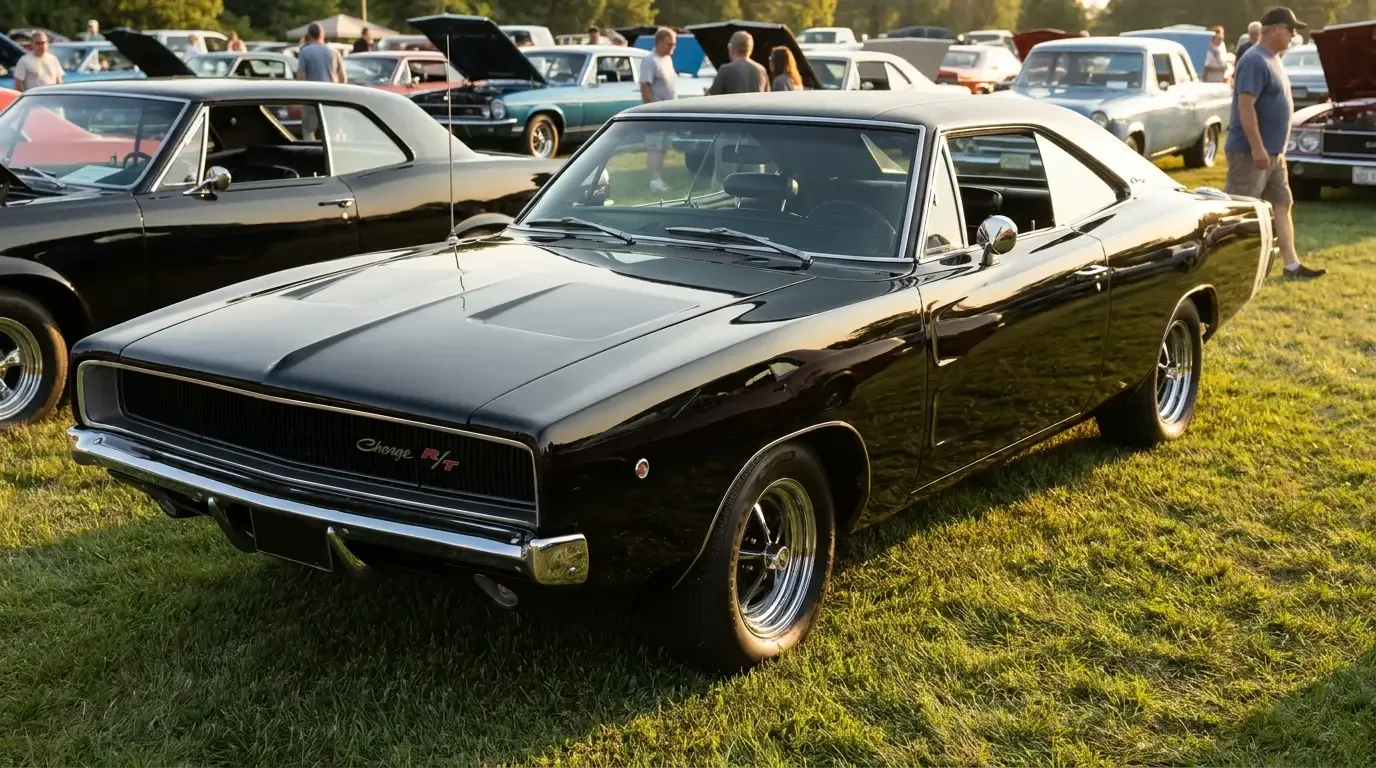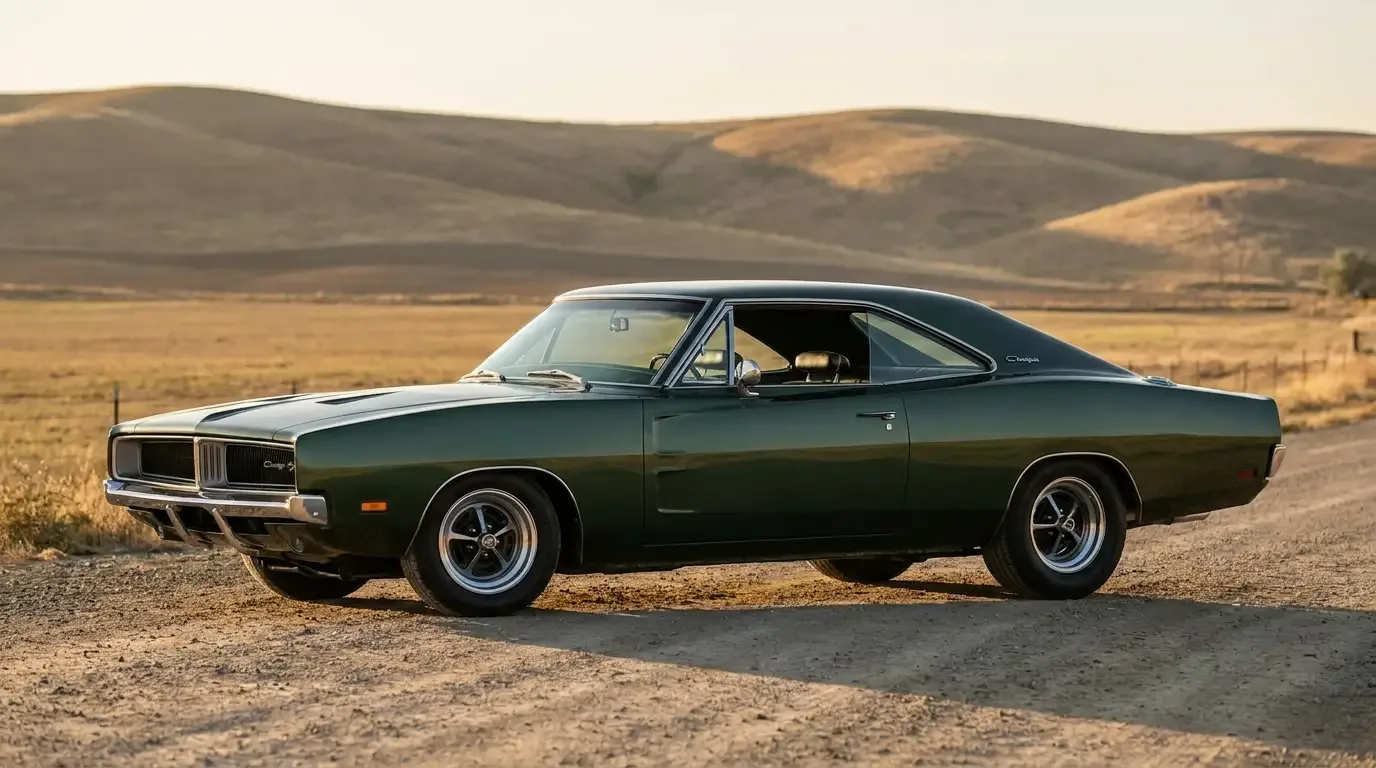
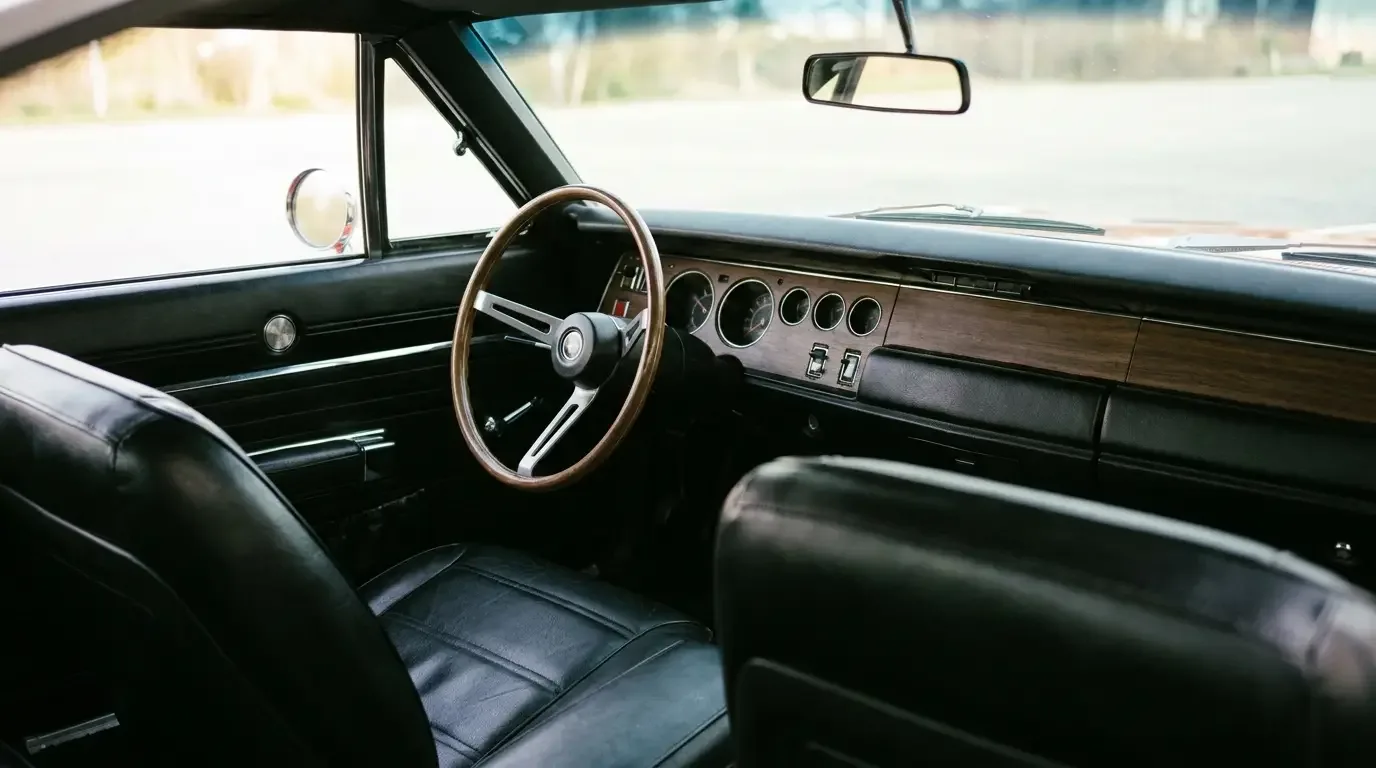
Everybody wants to talk about the sheet metal on these cars. Nobody asks me about the dash until they're already sitting in one, and then it's the first thing they comment on. The cockpit layout in a second-gen Charger doesn't feel like most other cars from 1968 through 1970. It feels like somebody actually thought about where a driver's hands and eyes need to be, instead of just filling a dashboard-shaped hole with gauges.
The four-pod gauge cluster and why it matters
The instrument panel on these cars used a deep-set, four-pod gauge design that wrapped the cluster toward the driver rather than laying flat across the dash. It's a small geometric choice that changes how the car feels to sit in. Instead of glancing down and to the side at a strip of gauges, the whole cluster angles toward you, and the recessed pods give each gauge some visual depth instead of a flat printed face staring back.
Full instrumentation, meaning an actual tachometer and oil pressure and battery gauges rather than idiot lights, was available depending on trim and options, and cars that got the full gauge package are noticeably more desirable to buyers today than ones running a speedometer and a fuel gauge with warning lights doing the rest of the work. If you're evaluating a car, check whether the gauge cluster is the full package or the base setup, because the difference isn't always obvious from a distance and it affects both usability and value.
| Interior element | Base setup | Upgraded option |
|---|---|---|
| Gauge cluster | Speedometer, fuel, idiot lights | Full instrumentation with tach, oil pressure, battery gauge |
| Console | Bench seat, no console | Full-length console with bucket seats |
| Steering wheel | Standard rim | Wood-grain wheel offered with the SE package; Rallye cluster optional |
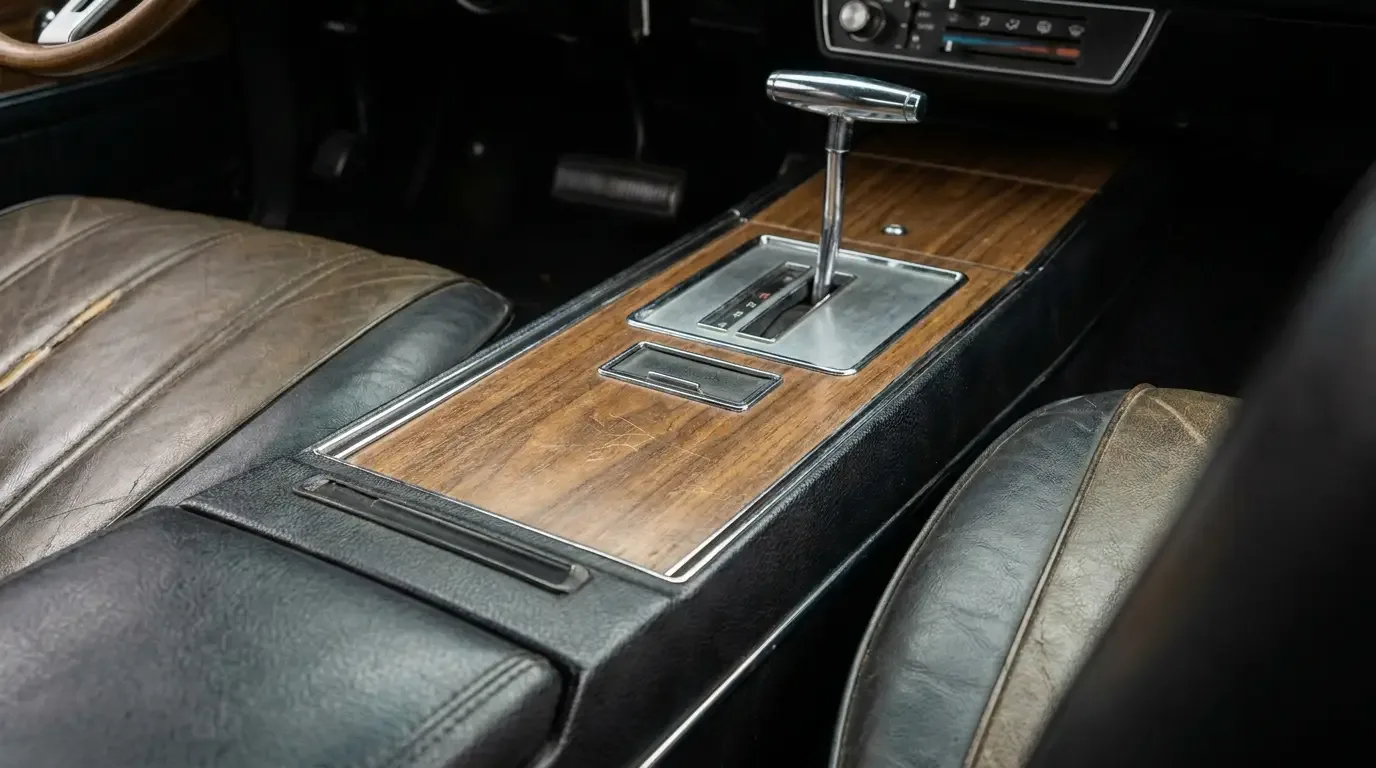
The bucket seats and full console option turned the cabin into something closer to a proper cockpit, which is honestly where the "cockpit dashboard" description these cars get comes from. A bench-seat car with no console is a different driving experience entirely, less isolated between driver and passenger, more of a traditional American sedan layout even with the same performance running gear underneath.
Where these interiors actually fail over time
I've pulled apart enough of these cars to know where the cabin gives up first. The dash pad cracks. Every one of these cars from this era will crack given enough sun exposure and enough decades, and a perfectly uncracked original dash pad on a driver-quality car is rare enough that I'd want to know why before assuming it's original. Most surviving cars have either a cracked original pad, a replaced reproduction pad, or a dash cap installed over the original to hide the damage without a full replacement.
Reproduction pads have improved a lot over the years, but early reproduction parts from decades back were notorious for fitting poorly around the vents and gauge cluster bezel, leaving gaps that a trained eye picks up on immediately. If you're looking at a car with a dash cap, ask what's underneath it, because a cap installed over serious cracking and warping is a cosmetic fix, not a repair, and it can hide worse problems with the dash structure itself.
The console veneer and shift surround are another common failure point. Factory wood-grain appliqué, which was actually a printed vinyl material rather than real wood, delaminates and bubbles with age and sun exposure. Reproduction console kits exist, and the good ones match the factory grain pattern closely, but cheap kits use a grain pattern that's noticeably off if you've seen an original side by side.
- Check for dash pad cracking and ask directly whether a dash cap has been installed over the original.
- Inspect console veneer for delamination or bubbling, and compare reproduction grain patterns against known originals if a kit's been installed.
- Confirm whether the car has the full gauge package or the base cluster, since it affects both value and usability.
- Look at door panel and armrest condition, since these use the same recessed styling theme and wear at similar rates to the dash.
What a correct restoration actually costs
A full interior restoration on one of these cars, done right, isn't cheap, and it's not a weekend job. Dash pad replacement alone requires removing the instrument cluster and often the steering column to get proper access, and doing it without cracking a still-good original pad in the process takes patience most home restorers underestimate. Add in console veneer, seat upholstery if it's not original or in poor shape, and carpet, and you're looking at a real chunk of a restoration budget going into a part of the car most buyers only glance at during a walk-around.
That's exactly why sellers who've done the interior work properly should be showing it off in detail, with close-up photos of the gauge cluster, the console, and the dash pad condition. If those photos are conspicuously absent from a listing that otherwise looks thorough, that's worth asking about directly before you go look at the car in person.
"The paint looks right at fifteen feet. Under the hood there's a rebuilt carb on an engine that hasn't seen fresh oil in two years. Here's what to actually look at."
— Mike Sullivan
The cabin's condition tells you almost as much about how a car's been treated as the engine bay does, sometimes more, because a lot of owners who neglect maintenance also let a cracked dash and a delaminating console sit for years without addressing them. If you want the full context on how this generation's 1969 dodge charger came together as a complete package, that's a good place to start. And if the production side of things interests you as much as the interior details do, the 1969 Hemi Charger Production story digs into how rare the genuine top-tier cars actually are.
Sources and notes
- Allpar: Dodge Charger 1968 - 74 - confirmed the SE package added a wood-grain steering wheel and wood-grain instrument-panel inserts.
- Performance Car Graphics: 1968 - 70 B-body Rallye dash - verified the optional Rallye instrument cluster with tachometer and full gauges.
- Classic Industries: 1969 Charger clusters - reference on base versus Rallye gauge cluster hardware and reproduction parts.
- Wikipedia: Dodge Charger (1966 - 1978) - background on interior trim levels and the bucket-seat/console option.
- Performance Car Graphics: standard B-body dash ID - confirmed the standard (non-Rallye) cluster layout and warning-light setup.