
The 1969 Mustang is the one where Ford stopped refining the original shape and started stretching it. Same 108-inch wheelbase the car had carried since 1965, but almost four more inches of sheet metal hung off the ends, the roof came down, and the face got four headlights for the only time in the first generation. If you want the 1969 Mustang design history in one sentence, that is it: the platform stayed put and the body around it got longer, lower and meaner.
Car Features
7 min read
The 1969 Mustang Restyle: Longer, Wider, Four Headlights
The 1969 Mustang kept its 108-inch wheelbase but grew 3.8 inches, sat lower and got four headlights for one year only.
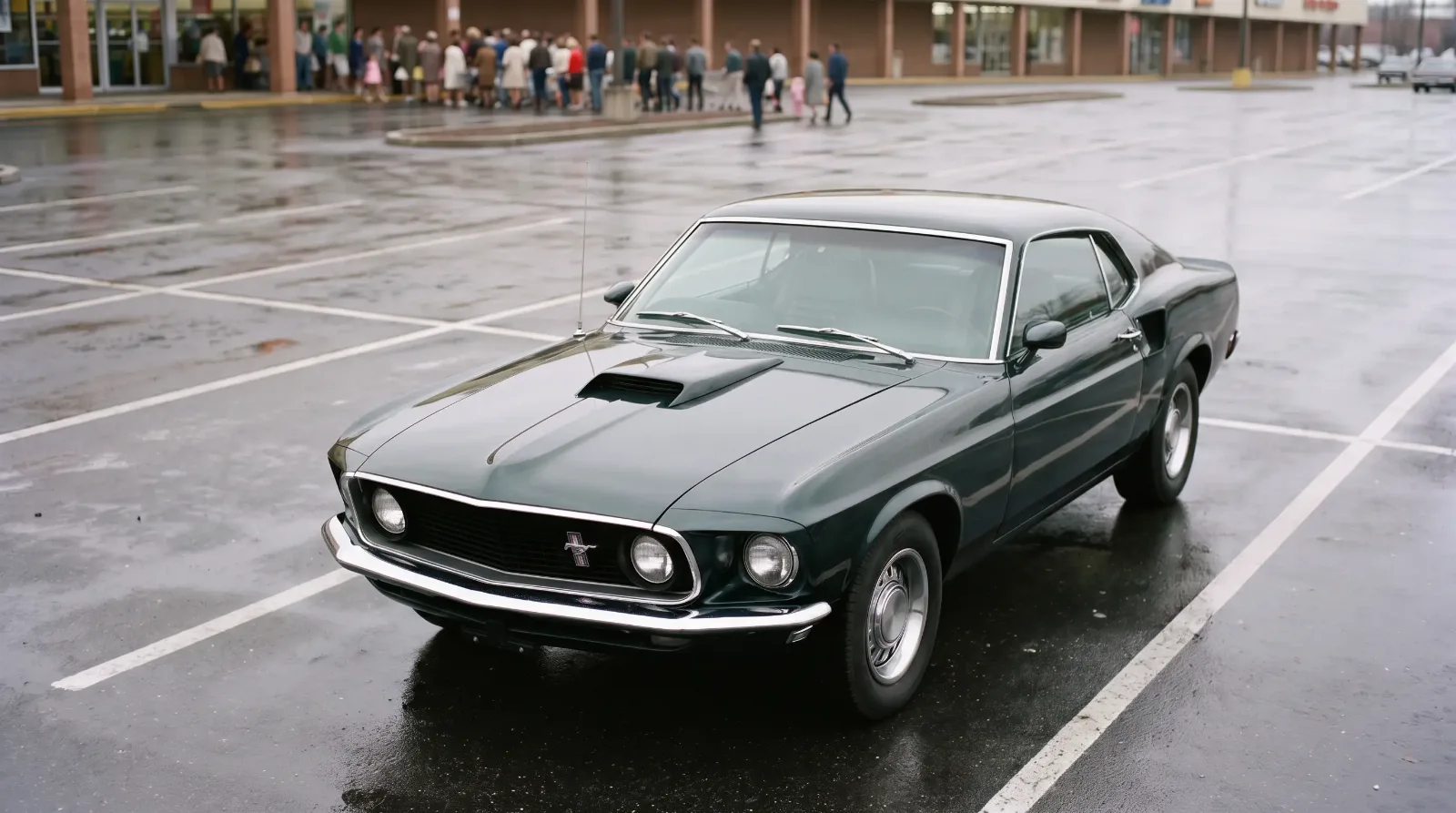
This is not the whole first generation Mustang story. It is the 1969 body specifically, panel by panel, and why it looks the way it does. I look at these cars the way a body man does. Where did the metal go, what is real and what is decoration, and which of the many 1969 personalities wears the shape best.
Where the 1969 Mustang design history starts
The new look did not arrive out of nowhere in 1968. Ford designers prepared the Mustang Mach 1 concept in late 1966 to preview styling for the 1969 model year, and it toured the auto shows from late 1966 into 1967, the Detroit show among them. So the public had seen the direction more than a year before the car was built. Show cars exaggerate, and this one did, but the low, long attitude was already there.
The car also kept the bones it had. The 1967 redesign had already widened the body to take big-block V8s while holding the wheelbase at 108 inches, and 1969 held it again. That decision drives everything you see. When you cannot move the axles, the only places to add length are the overhangs: the nose and the deck. That is exactly where the 1969 car grew. For a wider look at how the shape evolved from 1965 on, see our piece on classic Mustang styling.
One timing detail is worth getting straight, because it gets muddled. Larry Shinoda came over to Ford from GM in May 1968, following Bunkie Knudsen. By then the 1969 body was already headed for production, so the basic sheet metal was almost certainly settled before he arrived. What Shinoda did put his name on was the Boss 302, and that car tells you a lot about how he read the 1969 shape. More on that below.
Longer, lower and barely wider
The numbers line up with what your eye tells you. The 1969 car is 187.4 inches long against 183.6 inches for 1968, a gain of 3.8 inches with no change in wheelbase. It sits lower, roughly 50.5 inches tall against about 51.6. Width is where the change gets small: sources disagree on the absolute figure, and the commonly quoted gain is only about half an inch side to side. Wider, yes. You would need a tape measure to prove it.
| Item | 1968 Mustang | 1969 Mustang |
|---|---|---|
| Wheelbase | 108 in | 108 in |
| Overall length | 183.6 in | 187.4 in (+3.8 in) |
| Width | Base figure | About 0.4 to 0.5 in wider |
| Height | About 51.6 in | About 50.5 in |
| Headlamps | Two | Four |
| Fastback name in Ford literature | Fastback | SportsRoof |
| Grille emblem | Pony and corral, centered | Pony and tri-bar, off-center on the driver's side |
What those numbers do to the stance is the real story. Pull the nose out, push the tail back, drop the roof an inch, and the car stops looking like a compact with a long hood and starts looking like a long car. The 1965 Mustang was famous for proportions that worked at a small size. The 1969 traded some of that tidiness for presence. I think the SportsRoof carries it best, because the roofline runs all the way back and uses the extra deck length. On the hardtop the added length can read a little heavy in the rear.
Four headlights and an off-center pony
The face is where 1969 parts company with every other first-generation car. It was the first Mustang with four headlamps, two inside the grille opening and two outside it. The corral that had framed the running horse since launch went away. In its place, the pony and a tri-bar emblem moved off center, toward the driver's side of the grille.
That off-center emblem is the detail people forget when they restore or rebuild a nose. Get it wrong and anyone who knows these cars will spot it from across a parking lot. The outer lamps also change how the fenders read. They push the visual width of the car out to the corners, which is part of why the 1969 looks wider than the half inch it actually gained.
It did not last. For 1970 Ford went back to two headlights, set inside the grille, with simulated intakes in the outer positions where the extra lamps had been. That one-year run is a big reason the 1969 face is so easy to identify.
Down the sides and across the tail
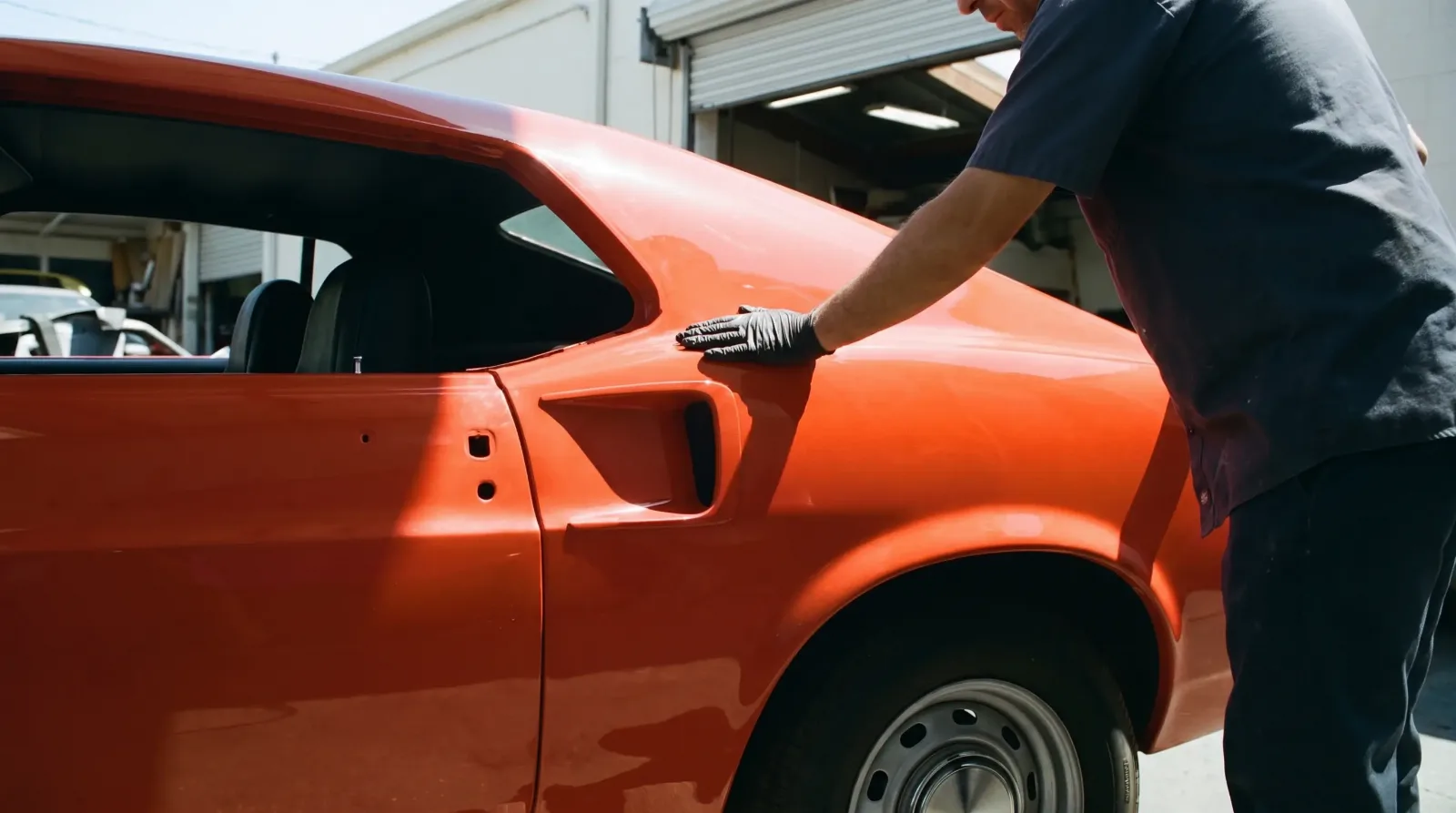
Behind the doors, the SportsRoof got a scoop set high on the rear quarter panel, while the hardtop and convertible used rear-facing scoops of their own. None of them fed anything. They were styling. I do not hold that against the car, because 1960s Detroit put fake scoops on everything, but it is worth knowing that the Boss 302 deleted them. Shinoda pulled the planned chrome, side cladding, rocker moldings and fake quarter scoops off that car and added a C-stripe, a blacked-out hood, a front air dam, a rear spoiler and rear window slats. That is a designer telling you which parts of the 1969 body he thought were noise.
The tail kept the three-element taillights, but on 1969 they are separate units set into a concave rear panel. For 1970 the panel went flat with recessed lamps, which is one of the quickest ways to tell the two years apart from behind. And the fastback got a new name. Ford's literature called it the SportsRoof from 1969, and that word stuck to the body style for the rest of the first generation.
"Three point eight inches, and every bit of it went into the nose and the deck. That is how you make a car look longer without touching the frame. The 1969 is the best-looking of the big first-generation cars when it is a SportsRoof with the stripes and wheels Ford meant it to have. Stick the wrong grille emblem on it and the whole face is off."
Jim Vasquez
One body, many personalities
The restyle came with a wider spread of models than any Mustang year before it. The Mach 1, Boss 302, Boss 429 and Grandé were all new for 1969, and each one dressed the same body differently.
The Mach 1 was the SportsRoof with attitude: reflective side striping, a matte-black hood with hood pins, and an optional Shaker scoop that in 1969 came with the 351, 390 and 428 Cobra Jet. It and the Boss 302 introduced the Magnum 500 wheel, which went on to define the look of these years. Buyers liked the formula. Ford built 72,458 Mach 1s for 1969, against 5,396 cars with the GT package, which was dropped after that year.
At the other end sat the Grandé, a hardtop-only luxury version with wire-style wheel covers, Teakwood-grain interior trim, dual pinstripes and an optional vinyl roof. Same body, quieter clothes. Ford built 22,182 of them in the first year. The Boss cars were the rare ones: 1,628 Boss 302s and 859 Boss 429s.
Engines ran from the 200 six at 115 hp to the Boss 429 at 375 hp gross, with the new 351 Windsor in between. Total production for 1969 came to 299,824, including 128,458 hardtops, 61,980 SportsRoofs counting the Boss cars, and 14,746 convertibles, with the Grandés and Mach 1s counted separately. That spread is the real legacy of the restyle. One stretched body carried a luxury coupe, a road-race Boss and a drag-strip Cobra Jet in the same showroom, and it looked right as all of them.
If you are studying the year closely, the surviving cars are the best textbook there is. Look at the 1969 Mustangs for sale and check the details covered here: count the headlamps, find the pony on the driver's side, look at the quarter scoop and the concave tail panel. The body tells you the year before the paperwork does.
Sources and notes
- Ford Mustang (first generation), Wikipedia: 1969 dimensions, quad headlamps, off-center pony, SportsRoof
- MustangSpecs: 1969 Ford Mustang models, length and production
- MustangSpecs: 1969 Mustang production numbers by body style
- CJ Pony Parts: 1968 vs 1969 Mustang, width and height
- Dean's Garage: Larry Shinoda, part 2, on joining Ford and the Boss 302
- SlashGear: the Magnum 500 and other iconic Mustang wheels
Related Reading
Have a
Ford Mustang
for Sale?
Reach thousands of serious classic car collectors across the US.
Sell It Here →
Selling a classic? Here's how: sell my classic car
Are You a Classic Car Dealer?
List your full inventory and connect with targeted classic car buyers.
Join as a Dealer →

About the author
Jim Vasquez
Southern California hot rod and custom car builder with roots in the traditional kustom kulture scene.
Related Listings - Ford Mustang




Comments
Be the first to comment on this article.