
The 1970 Camaro SS is the car people mean when they say "a real big-block second gen." It had three model years, a badge that lied about displacement, and a horsepower curve that went one way. Down. It was also the last factory big-block Camaro until the classic run ended, which is why every other '70 to '72 coupe at a car show now seems to wear SS 396 emblems. Some of them earned the badges. Plenty did not. Here is what Chevrolet actually built, year by year, and what to look for before you pay big-block money. If you need the wider picture of the 2nd gen Camaro first, start there and come back.
Car Features
6 min read
The 1970 to 1972 Camaro SS 396
The 1970 Camaro SS 396 was really a 402, and it lost power every year until 1972. What Chevrolet built and how to spot a real one.
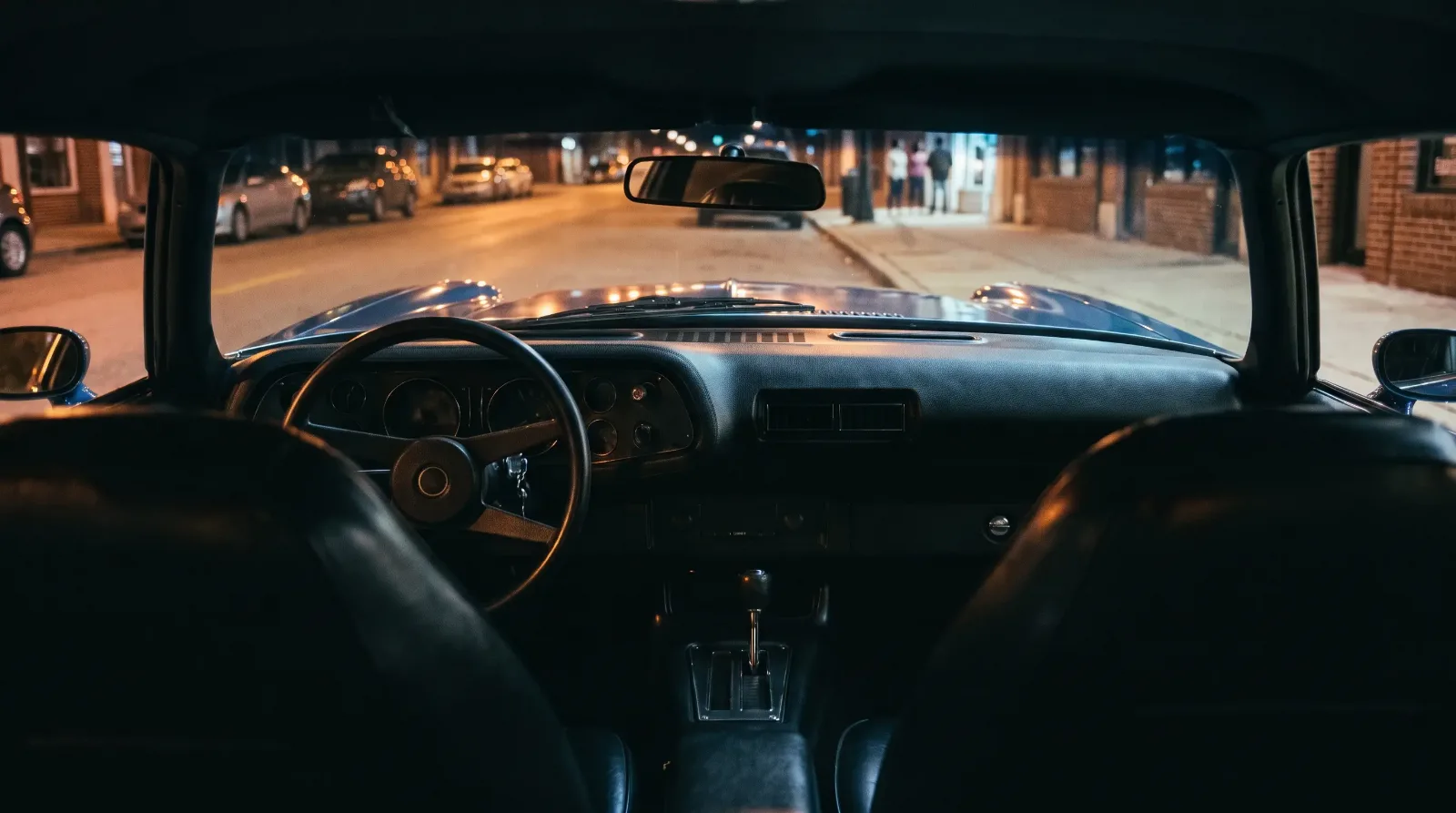
What the 1970 Camaro SS package really included
The Super Sport was option RPO Z27. In 1970 it cost $289.65. That bought a 300-horsepower L48 350 four-barrel as the standard engine, dual exhaust, power disc brakes, a black grille and 7-inch Rally wheels. So the base SS was a small-block car. The big-block was an extra line on the order form.
Two 396 engines were offered in 1970. The L34 added $152.75 and was rated at 350 horsepower. The L78 added $385.50 and was rated at 375 horsepower. Both were gross ratings, and both engines were credited with 415 lb-ft of torque. The 396 option also added a rear stabilizer bar, which is a useful detail later when you are lying under a car with a flashlight.
The other hot 1970 Camaro was the Z28 with the LT-1 350, rated at 360 horsepower gross and priced at $572.95 as an option. Different tool for a different job. The Z28 was a high-revving road racer for the street. The SS 396 was torque in a nice suit. If your interest runs to the small-block side, the Camaro Z28 has its own story.
The 396 that was really a 402
Here is the first thing people get wrong. The "396" in a 1970 to 1972 Camaro was not a 396. Chevrolet had bored the engine .030 inch, which brought it to 402 cubic inches. It kept the 396 name on the emblem because the name sold cars. From 1971 Chevrolet started marketing the engine as a 402, but buyers and the trade kept calling the car an SS 396. Nobody seemed bothered. A few extra cubes never hurt anyone.
The 1970 L78 is the peak. At 375 horsepower and 415 lb-ft gross, it was the most powerful engine any second-generation Camaro offered from 1970 to 1981. It was also rare. Collector guides and dealers put 1970 L78 production at about 600 cars, but that figure is repeated far more often than it is documented, and no reliable total for 1970 SS 396 cars has been published at all. One published count puts all 1970 SS cars, small-block and big-block together, at 12,476. Treat any "one of 600" claim as a sales pitch until a document backs it.
Every 1970 to 1972 SS was a coupe, by the way. Chevrolet never built a second-generation convertible, so a drop-top SS 396 from these years is a conversion, full stop. The reasons behind the missing convertible are worth knowing before someone tries to sell you one.
1971 and 1972: the numbers go down
For 1971 the big-block became the LS3. It was rated at 300 horsepower gross, or 260 net. The Z27 package rose to $313.90. Chevrolet built 8,377 SS cars that year, and only 1,533 of them had the 396. The other 6,844 used the 350, which by then made 270 horsepower gross. The SS 350 still had fans: Road & Track named the 1971 Camaro SS 350 one of the world's 10 best cars in August 1971.
Then came 1972. Ratings switched to SAE net, and the LS3 was listed at 240 horsepower. That number looks worse than the drop in real power, because net ratings measure the engine as installed. Still, the trend was obvious. Worse, a 174-day UAW strike at the Norwood plant shut down production, and about 1,100 unfinished cars were scrapped. Chevrolet built 6,562 SS cars for 1972, and only 970 of them had the 396.
| Model year | Big-block | Rating | SS 396 built |
|---|---|---|---|
| 1970 | L34 / L78 | 350 hp / 375 hp (gross) | Not published (L78 about 600) |
| 1971 | LS3 | 300 hp gross, 260 hp net | 1,533 |
| 1972 | LS3 | 240 hp net | 970 |
That was the end. 1972 was the last year for the SS 350, the SS 396 and any factory big-block Camaro. For 1973 the Super Sport package was dropped and replaced by the Type LT, and the SS name stayed off the car until 1996.
"Badges are cheap. A real SS 396 is not. Before I believe the emblem, I want to see the rear sway bar, the right engine, and paperwork that wasn't printed last Tuesday."
Mike Sullivan
Checking a 1970 to 1972 SS 396 before you buy
A clone is not a crime. Selling one as real is the problem, and the gap in price is big enough to tempt people. The checks below will not prove a car is real on their own. They will tell you quickly when it is not.
Condition still matters more than anything on the order form. These cars rust in the usual second-gen places, and a rotten real SS 396 can cost more to save than a clean clone costs to buy. Decide which one you want before you start shopping. Drive it. A healthy 402 pulls hard from low rpm, idles with a lope you can feel in the seat, and should not smoke at startup or under load.
Price follows proof. A documented 1970 L78 car sits at the top of the second-gen market, a 1972 SS 396 with matching paperwork is rarer still by count, and a well-built tribute is a good driver at a fraction of either. When you are ready to look, browse Camaro SS cars for sale with a flashlight in one hand and the numbers above in the other.
Sources and notes
- Chevrolet Camaro (second generation), Wikipedia: 402 displacement, 1972 SS 396 count and the Norwood strike
- Collector Car Market: 1970 to 1974 Chevrolet Camaro profile, L78 and SS production
- Silodrome: the Chevrolet Camaro Z27 SS, 1971 package price and SS split
- Over-Drive Magazine: 1970 Chevrolet Camaro fact sheet, Z27 and engine option prices
- Hagerty: 1970 to 1981 Chevrolet Camaro buyer's guide, SS contents, ratings and values
- Chevy Hardcore: Camaro engines through the years, second generation
Related Reading
Have a
Chevrolet Camaro
for Sale?
Reach thousands of serious classic car collectors across the US.
Sell It Here →
Selling a classic? Here's how: where to sell your classic car online
Are You a Classic Car Dealer?
List your full inventory and connect with targeted classic car buyers.
Join as a Dealer →

About the author
Mike Sullivan
Detroit-area muscle car enthusiast and restoration specialist with three decades of hands-on experience working on American iron.
Related Listings - Chevrolet Camaro




Comments
Be the first to comment on this article.