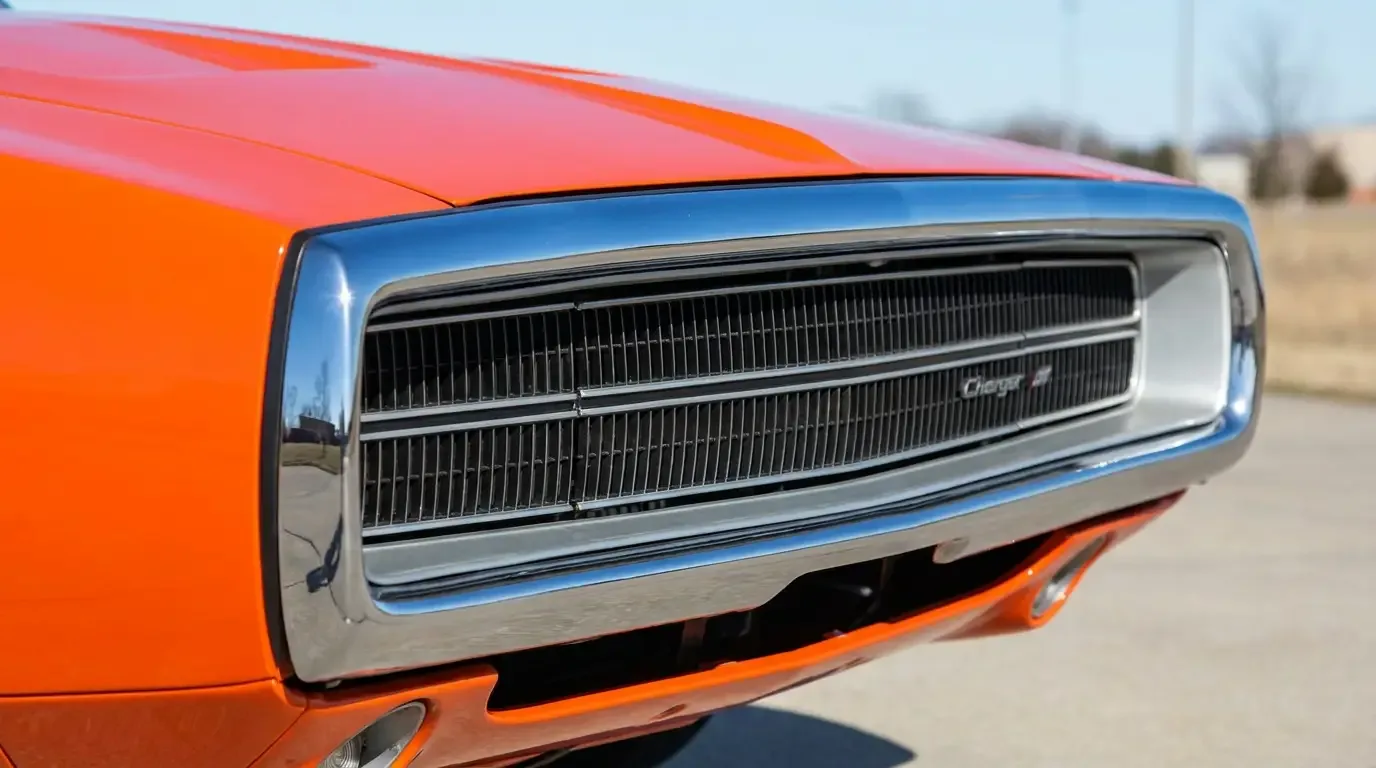
The build record doesn't say much about styling decisions, but the parts books and production changes tell you plenty if you know how to read them. For 1970, Dodge revised the Charger's front end again, the third distinct nose treatment in three model years, and the centerpiece of that change was a bumper design that wrapped up and around the grille opening instead of sitting as a separate horizontal bar beneath it. Collectors call it the loop bumper, and it's one of the fastest, most reliable ways to identify a 1970 car at a glance.
I don't think the loop bumper gets discussed carefully enough. People know it when they see it, but the reasoning behind it, and what it replaced, matters if you're trying to understand this generation's yearly evolution rather than just memorize a trivia fact.
What changed structurally for 1970
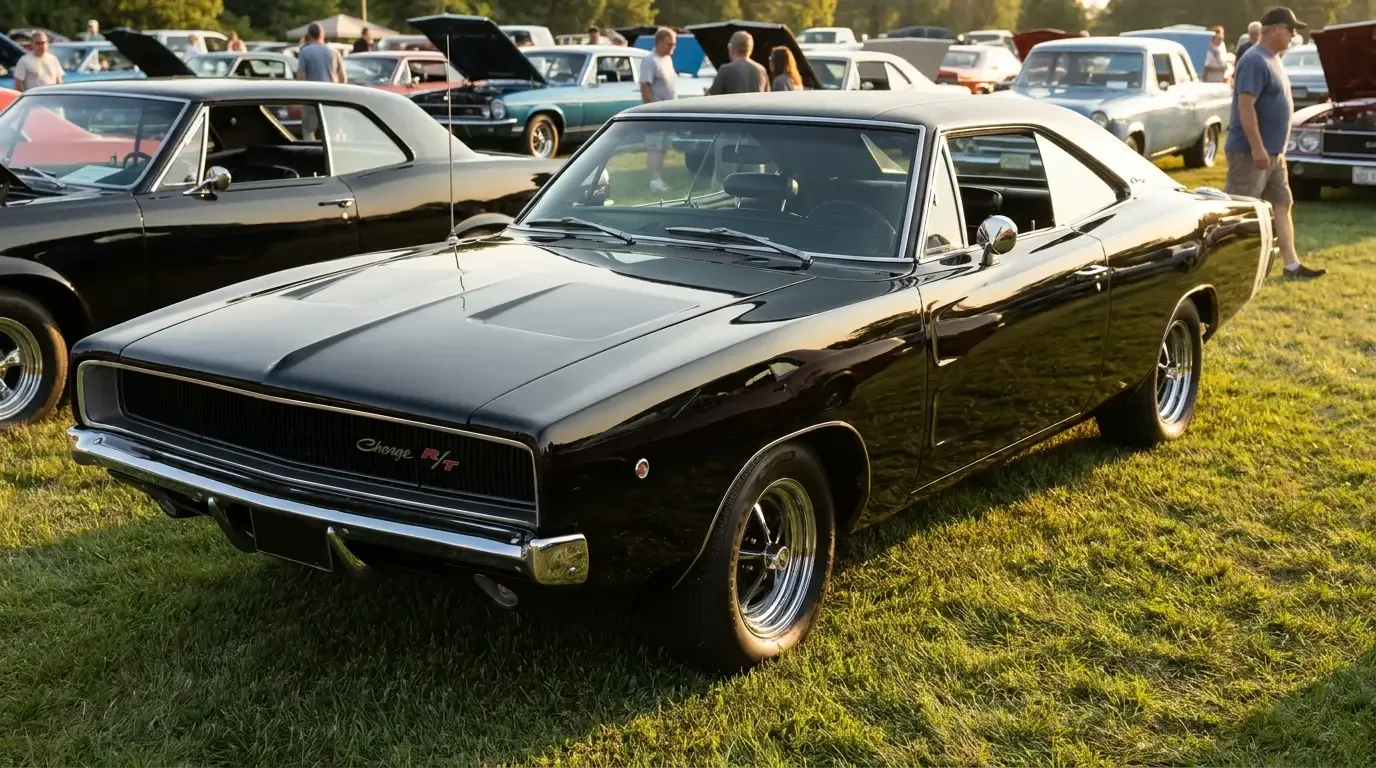
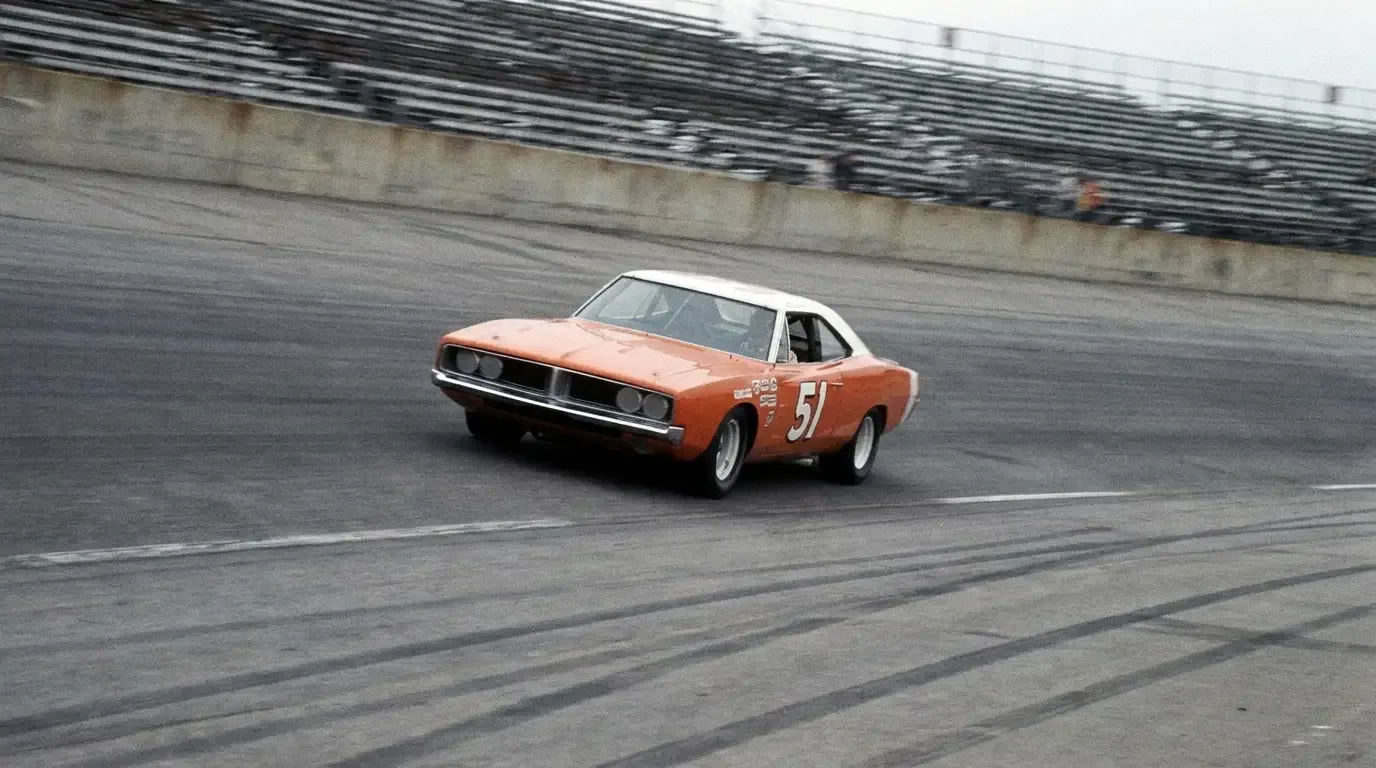
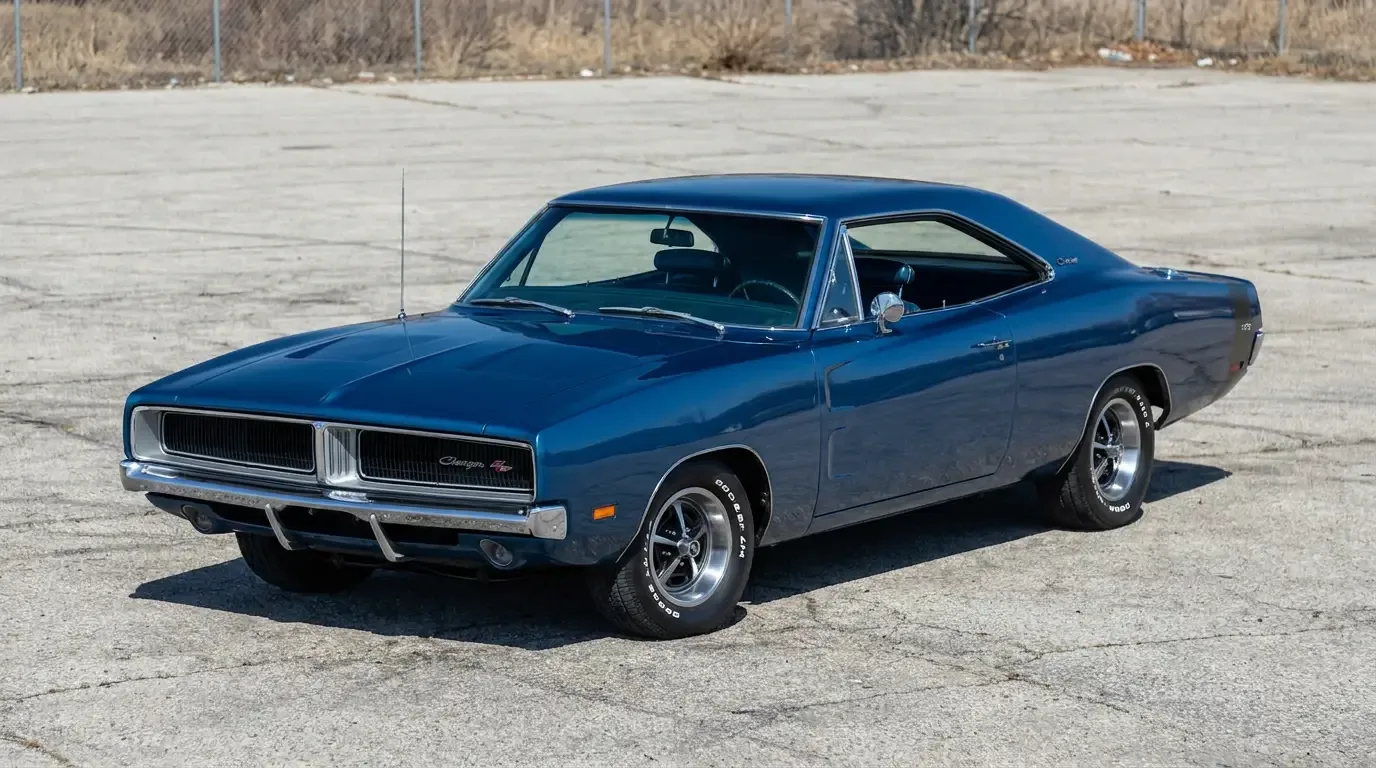
On the 1968 and 1969 dodge charger, the front bumper was a conventional chrome bar, mounted below and separate from the grille opening, doing the job bumpers had done on American cars for decades, a horizontal piece of protective chrome with the grille sitting above it as its own distinct element. For 1970, Dodge redesigned the nose so the bumper itself curved up and around the outer edges of the grille opening, forming a loop that framed the grille on both sides rather than sitting apart from it underneath. This wasn't a bolt-on change to an existing nose. It required a new front fascia, new fender caps where the bumper met the body, and a grille shape designed specifically to sit inside that loop rather than spanning the full width of the car independently the way the 1968 and 1969 grilles had. The record shows this as a genuine engineering revision tied to the annual model changeover, not a mid-year running change or a dealer-installed option.
Why Dodge made this change
Some of this is straightforward yearly product differentiation, the same reason any manufacturer refreshes a front clip on a model that's carrying over its basic body for a third year. A 1970 buyer needed to be able to tell their new car apart from a two-year-old 1968 at a glance, and a completely different bumper and grille integration accomplished that without the expense of an all-new body. There's also a design logic to it that's worth stating plainly. Wrapping the bumper around the grille opening gives the nose a more integrated, sculpted look than a separate bar sitting below a grille, which was becoming a common styling direction industry-wide by 1970. The loop treatment also let Dodge simplify the grille itself into a single mesh insert sitting inside a body-colored surround, a cleaner and arguably less fussy face than the split, two-piece grille the 1969 car wore.
How to identify a genuine 1970 nose
If you're trying to confirm a car's model year from photos or in person, the loop bumper is one of the more reliable markers, because unlike trim badges or interior details, it's a structural body panel that's expensive and impractical to swap between years. Look for the bumper's chrome continuing up and around the outer grille edges rather than stopping as a straight horizontal bar. The grille itself sits recessed within that loop, generally as a single mesh unit rather than the divided, two-section grille of 1969 or the unbroken single opening of 1968. For a full breakdown of how the grille, bumper, and taillight details differ across all three years of this body, the 1968 1969 1970 Charger Differences story lays out the complete comparison side by side. That's the resource I'd point anyone to if they're trying to date a car with uncertain paperwork, because the loop bumper alone rules out 1968 and 1969 with a fair degree of confidence.
Condition and originality notes for the 1970 nose
The wraparound bumper design is a more complex chrome piece than the straight bars used in 1968 and 1969, curved in two dimensions rather than one, and that complexity shows up in restoration costs. Rechroming a 1970 loop bumper correctly, without visible waves or pitting in the curved sections, is a specialized job, and I'd want documentation of who did that work if a car I was considering had a bumper that had clearly been redone. Reproduction bumpers exist, but fitment against the fender caps varies between suppliers, and a poorly fitted loop bumper shows as an inconsistent gap where the chrome meets the sheet metal, most visible at the corners where the loop transitions into the fender. The grille mesh itself is a simpler, less expensive piece to source and replace than the bumper, so I wouldn't weight grille condition as heavily in a purchase decision. It's the bumper's fit and finish that tells you the most about how carefully a restoration was done.
Placing the 1970 nose in the record
The factory record treats the 1968, 1969, and 1970 front-end designs as three distinct production changes within a single body generation, each tied to its model year rather than introduced mid-year. That matters for provenance research, because a car with mismatched front-end components, a 1970 bumper on a car with a 1969 fender tag, for instance, tells you either a repair using whatever parts were available, or a car that's been reassembled from more than one donor vehicle. Neither is necessarily disqualifying, plenty of honest repairs happened this way over fifty years, but it's information a buyer should have before agreeing to a price that assumes full originality. I'd rather tell a buyer "this car has a mismatched nose, here's what that likely means" than let them find out later and feel misled. The loop bumper is distinctive enough that there's rarely genuine ambiguity about what year it belongs to, which makes it one of the more useful, honest checkpoints in this whole generation's history.
If you're specifically looking to buy, 1970 Dodge Chargers for sale is worth browsing with this nose treatment fresh in mind, since it's the fastest visual filter for confirming you're looking at what the listing claims."I had a car come across my desk once with a 1970 nose and a 1969 build sheet. Everybody wanted to argue about which one was 'right.' The paperwork doesn't lie, but it also doesn't tell you what happened in some parts department in 1974. Both things can be true."
— Tom Ramirez
Sources and notes
- ConceptCarz: Dodge Charger - confirms the 1970 "one-year-only wraparound chrome front bumper" and revised grille.
- Wikipedia: Dodge Charger (1966) - the 1970 front-end restyle within the shared 1968-70 body and the timing of federal 5-mph bumper rules for 1973.
- Classic Industries: Mopar production numbers - 1970 Charger production totals.
- Muscle Car Facts: 1968 Charger - the 1968 grille-below-bumper baseline the 1970 loop bumper departed from.
- American Muscle Car Museum: 1969 Charger 500 - context on the second-generation front-end evolution.