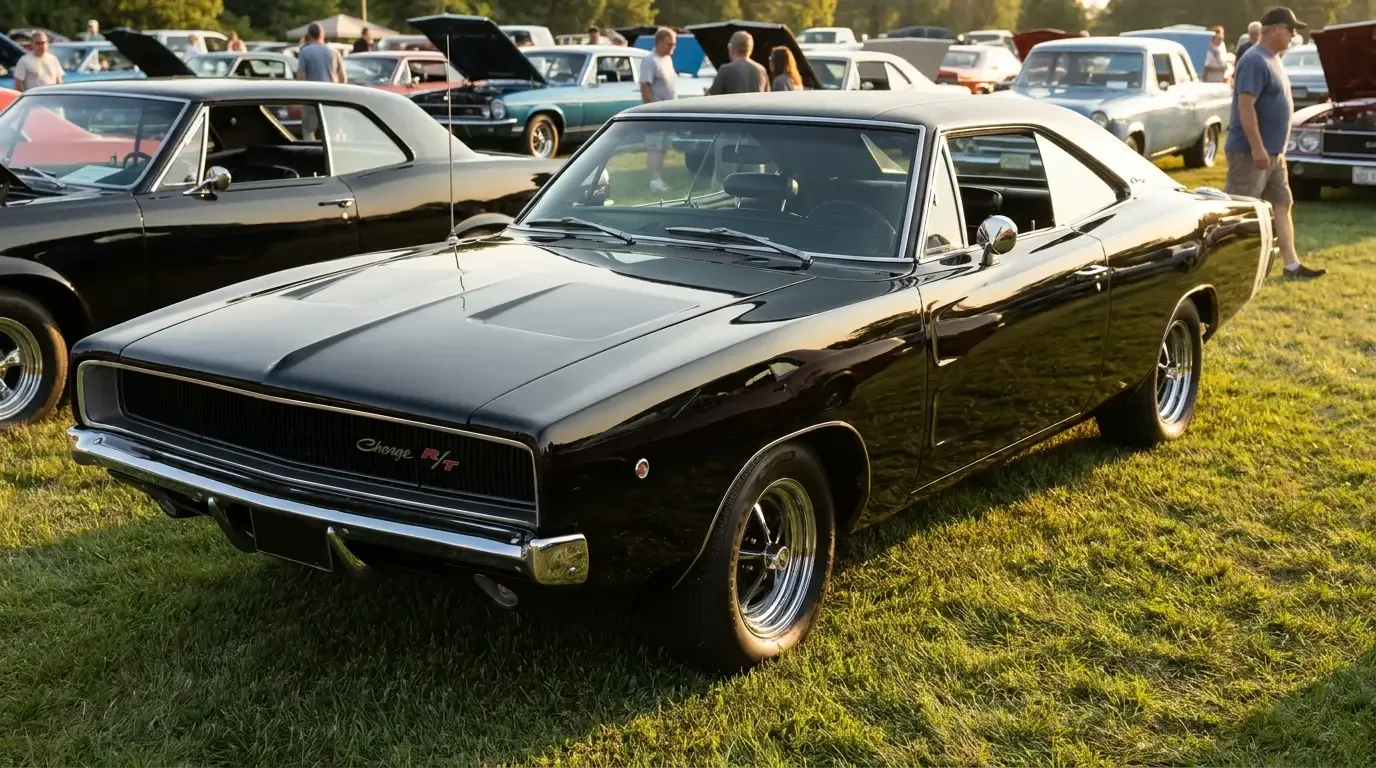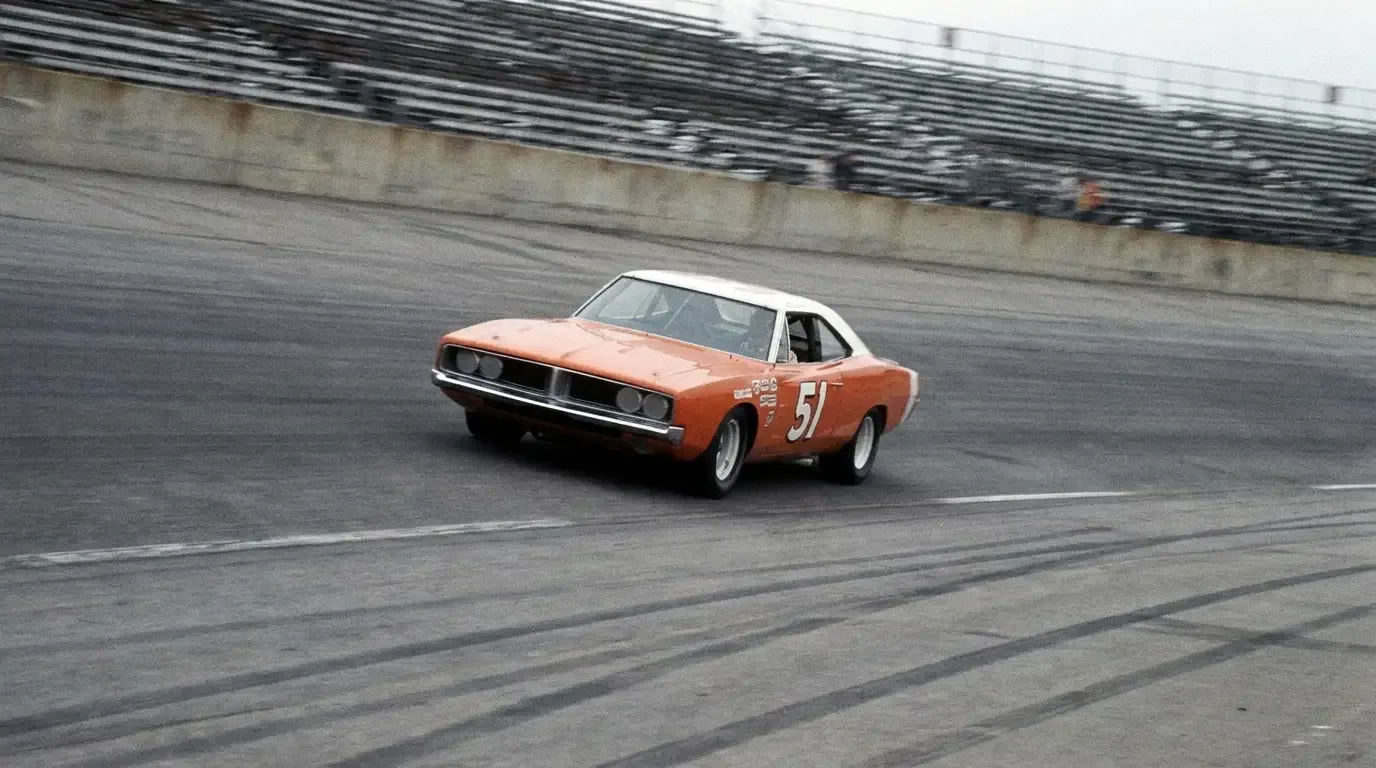
Somewhere in the middle of the 1968 NASCAR season, Dodge's engineers had a problem no amount of horsepower could fix. Their 1969 dodge charger, the car that looked so right in the showroom with its recessed grille and tucked-in fastback roof, was getting beaten at Daytona and Talladega by cars that looked less dramatic but cut through the air with far less drag. The Charger's own styling, the thing that made it a hit on the street, was working against it on the high banks.
A car built to fix an aerodynamics problem
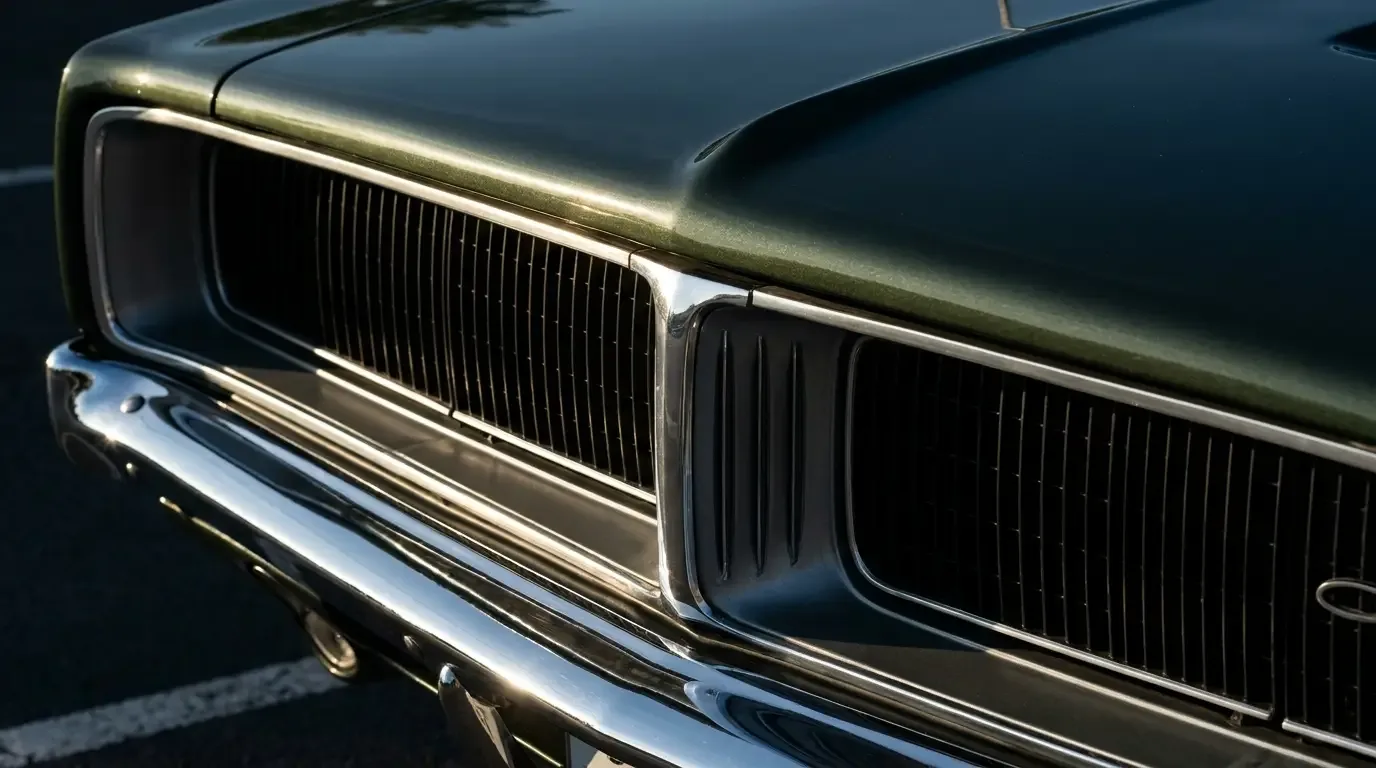
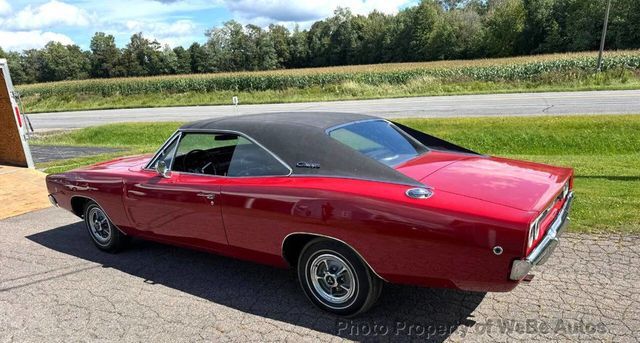
The recessed grille that gave the standard Charger its aggressive face was, at 190 miles an hour, an air scoop that didn't need to be there. Same story with the fastback roof and its flying-buttress rear window, gorgeous in a parking lot, but the tucked-in backlight created turbulence at the rear of the car exactly where NASCAR's aerodynamicists wanted clean airflow. Ford's Torino and Mercury Cyclone were slipperier shapes, plainer to look at but faster on the straights, and Dodge was losing races it had the horsepower to win. Chrysler's answer was the Charger 500, a name that referenced the 500 units NASCAR required a manufacturer to build for homologation, the rule that a race car had to be a genuine production model available to the public, not a one-off special. Dodge took the standard Charger and made two specific changes aimed squarely at the aero problem: a flush-mounted grille that filled in the recessed opening so air couldn't get trapped in it, and a rear window borrowed from the Coronet, a flatter, more conventional backlight that replaced the flying-buttress fastback glass entirely.
Why the rear window swap mattered so much
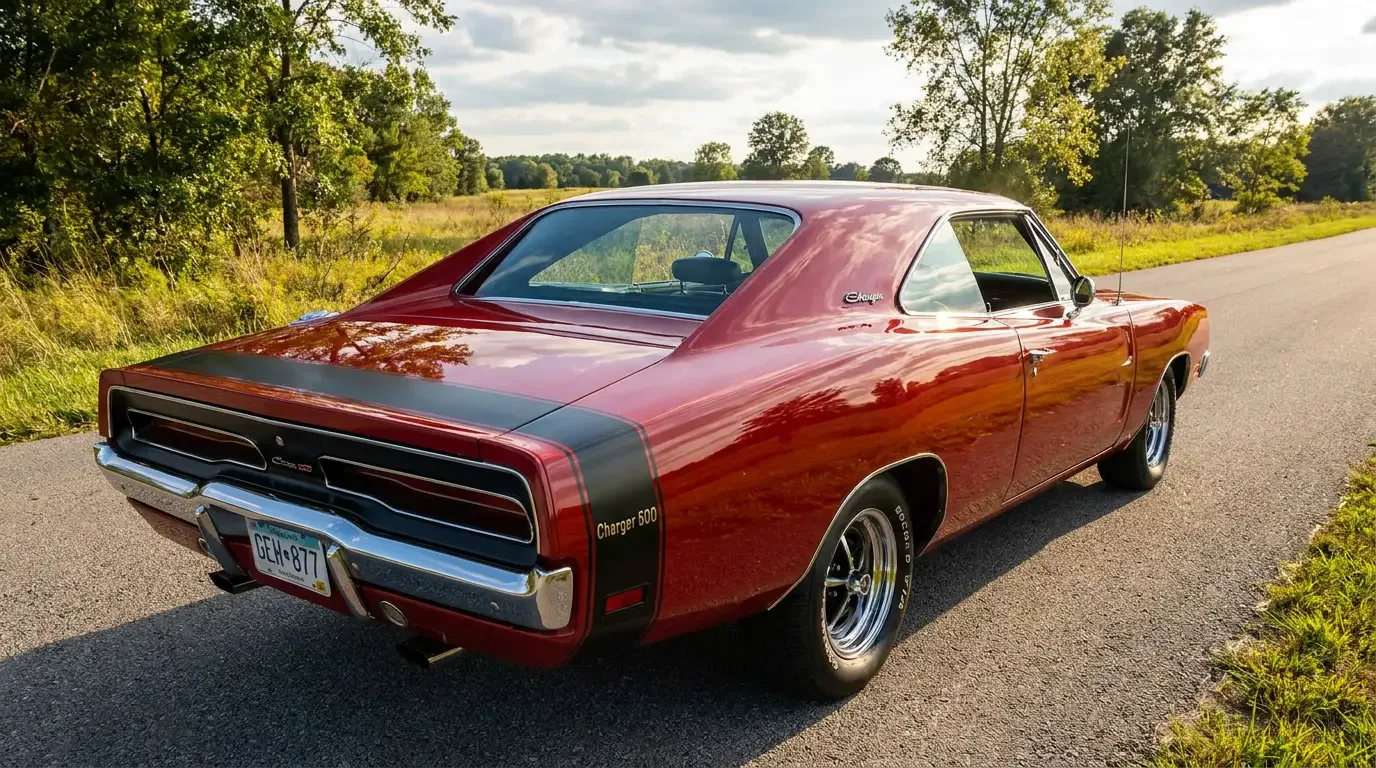
That second change tells you how serious Dodge was about this. The flying-buttress roof was one of the signature design elements of the whole second-generation Charger, discussed at length in the Charger's origins, and Dodge's engineers were willing to throw it out entirely on the 500 to gain a few critical points of aerodynamic efficiency. They pulled a standard Coronet backlight, flatter and set closer to flush with the roof, and grafted it onto the Charger body specifically to smooth the airflow off the roof and reduce the low-pressure pocket that was dragging at the rear of the standard fastback car at speed. The flush grille was the more visible change, a body-colored panel that filled the recessed opening and mounted the headlights in a more forward, flush position rather than behind hidden doors set back in a scoop-like grille cavity. Gone was the split, recessed face that made the standard 1969 car so distinctive, replaced by a smoother, simpler nose built entirely in service of a stopwatch.
The story didn't end with the 500
Here's the part that always gets me when I think about this car. The Charger 500 helped, but not enough. It was competitive, a real improvement over the standard Charger's numbers on the high banks, but Ford and Mercury's cars were still slipperier, and Dodge's engineers went back to the wind tunnel almost immediately. What came out of that second round of work was the Charger Daytona, the car with the pointed nose cone and the towering rear wing that most people picture when they hear "aero warrior." the full write-up covers that next chapter in detail, but it's worth understanding that the Daytona doesn't exist without the 500 coming first and falling short. Dodge learned what didn't work by building the 500, and every lesson from that flush grille and flat backlight fed directly into the more radical shape that followed a year later.
"A guy who raced Modifieds back in the day told me the 500 was the car nobody remembers because the Daytona stole all the attention. He said that's backwards. The 500 is the car that proved Dodge was willing to sacrifice the thing that made the Charger beautiful just to go faster. That's a bigger decision than bolting on a wing."
— Patrick Walsh
What the Charger 500 means for buyers and historians now
For anyone researching or shopping this era, the Charger 500 sits in an unusual spot. It's rarer than the standard 1969 Charger by a wide margin, built specifically to satisfy NASCAR's homologation rule rather than to move volume on dealer lots, and it carries a very specific set of visual identifiers, the flush grille and the flat Coronet-sourced backlight, that separate it instantly from a standard R/T once you know to look for them. That rarity and the specific engineering story behind it are exactly why the 500 commands serious attention from collectors who care about motorsport history rather than just muscle car aesthetics. It's not the prettiest Charger of 1969 in the conventional sense, the standard car's recessed grille and buttress roof are more dramatic to look at. But the 500 tells a more interesting story, a car built by engineers who were willing to make the Charger a little less striking so it could go a lot faster where it actually mattered.
Where the 500 fits in the bigger Charger picture
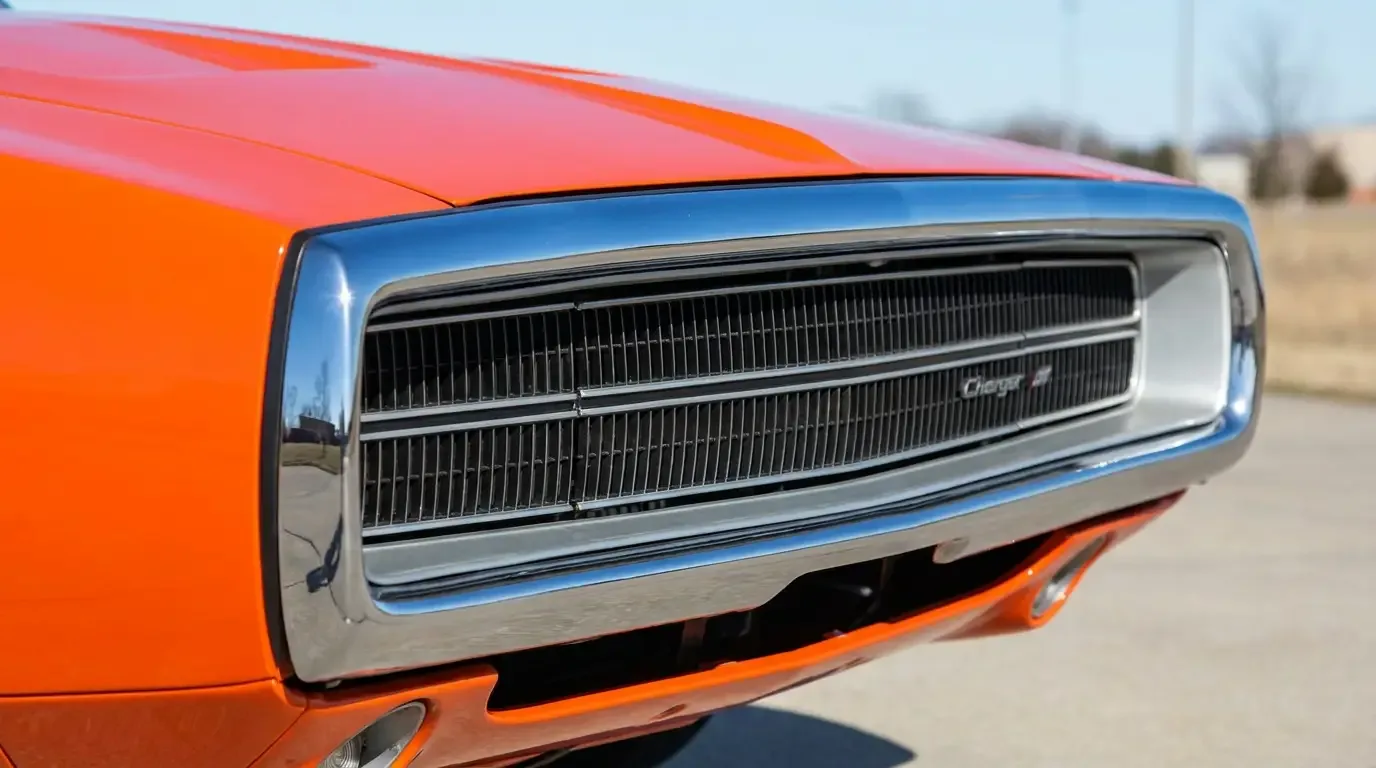
If you're trying to place the 500 in context against the rest of the second-generation run, the changes Dodge made to the standard car's nose and rear glass across 1968 through 1970, from the 1969 split grille to the 1970 loop-bumper restyle, followed their own separate path, driven by styling refreshes rather than aerodynamics. The 500's changes were a detour from that path, purpose-built and short-lived, gone from the lineup once the Daytona and its more radical aero package took over the homologation job for 1969's closing stretch and into 1970. Understanding that distinction, styling changes made for the showroom versus engineering changes made for the racetrack, is the difference between appreciating the Charger 500 as a footnote and understanding it as the hinge point where Dodge's prettiest car became, briefly, its most purpose-built one.
Sources and notes
- Wikipedia: Dodge Charger (1966) - 392 Charger 500s built, of which 67 had the 426 Hemi, plus the flush grille and flush rear-window aero changes.
- American Muscle Car Museum: 1969 Charger 500 - 392 total production, the flush Coronet grille and flush rear window, and the NASCAR homologation purpose.
- TopSpeed: 426 Street Hemi production figures - the rarity of Hemi-equipped 1969 cars and the 425 hp rating.
- ConceptCarz: Dodge Charger - the standard car's yearly front-end changes that ran separate from the 500's aero work.
- Classic Industries: Mopar production numbers - 1969 Charger production totals for context on the 500's rarity.