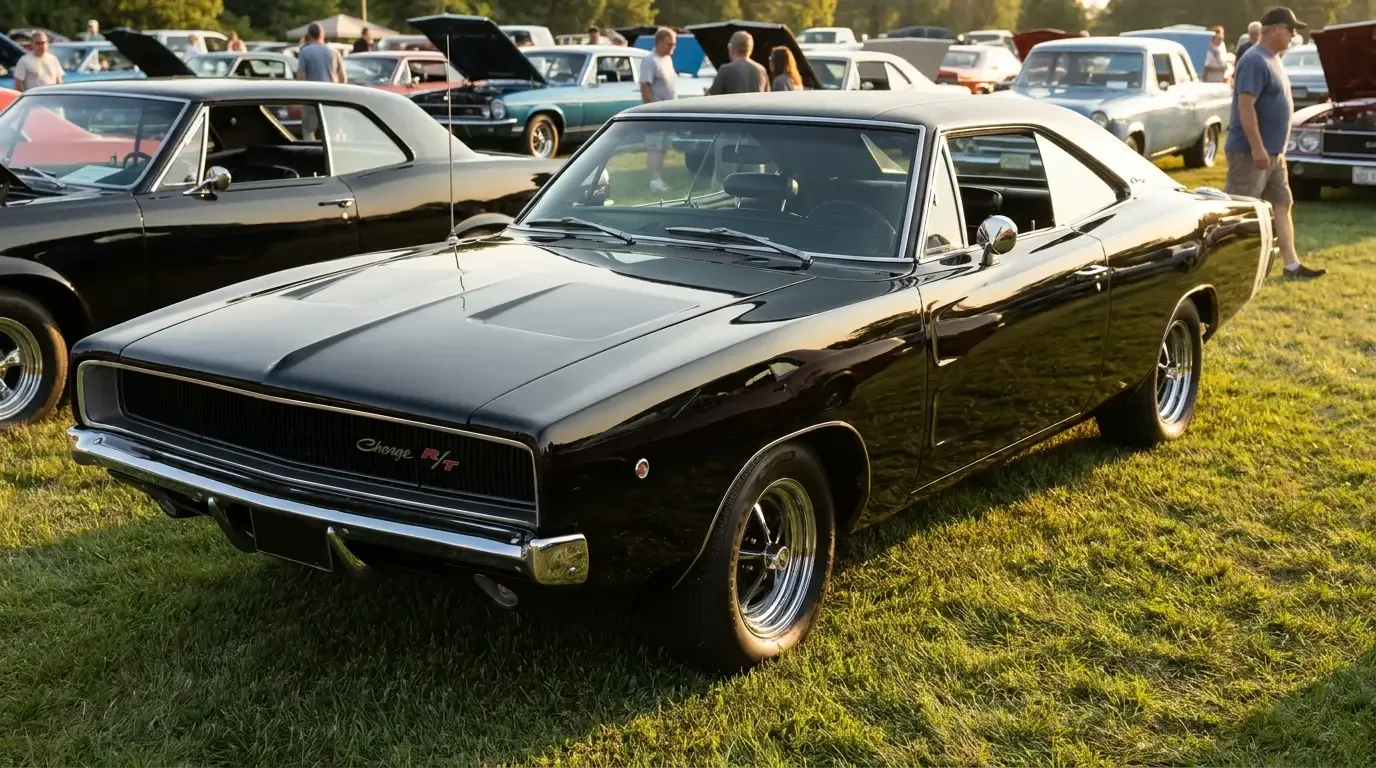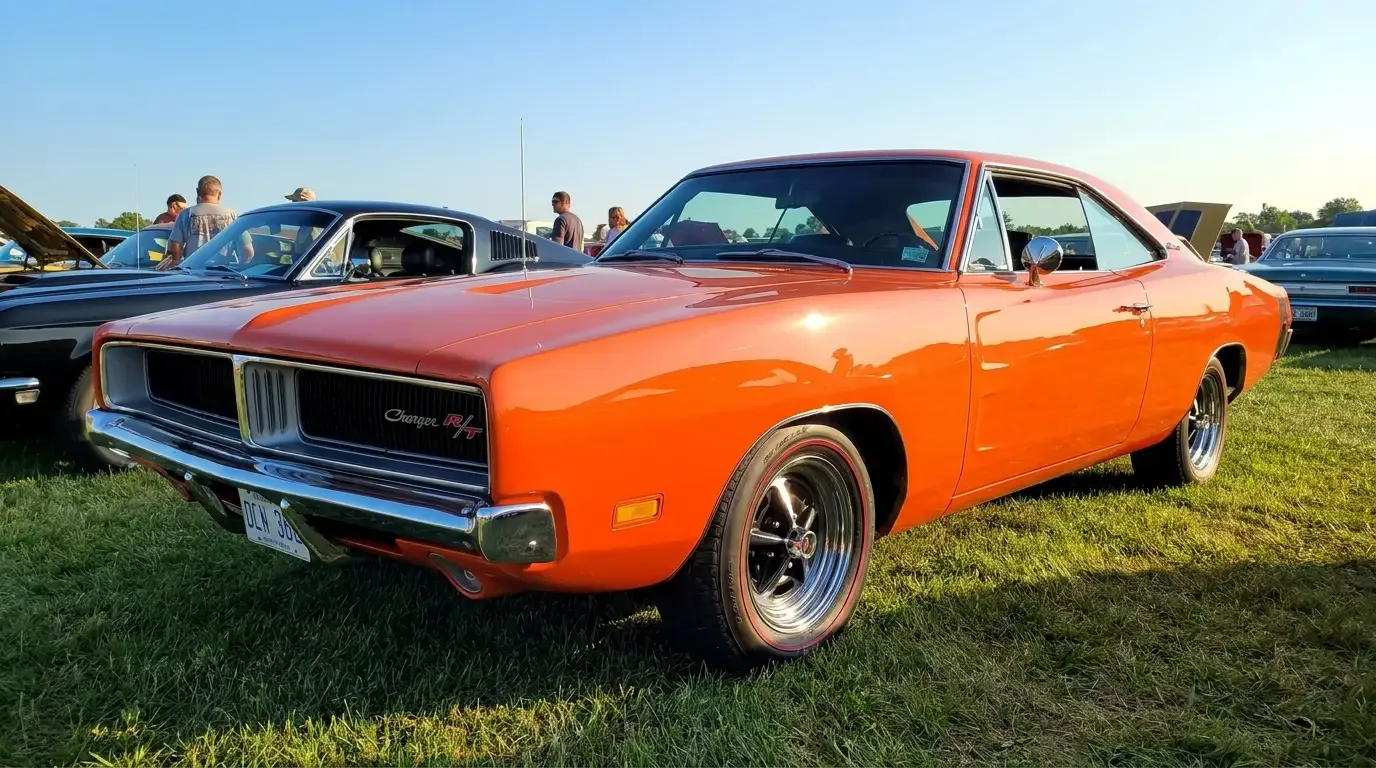
She still has the receipt from the leather shop, tucked into a folder with the original window sticker, a little brittle now, the ink gone soft brown instead of black. Her father ordered the car new in the spring of 1970, a Charger with the R/T package and something called the SE option, and she remembers him telling the salesman he wanted "the fast one, but nice," like that was a category Dodge had built specifically for men who couldn't decide between two kinds of pride.
A car built for people who wanted both things
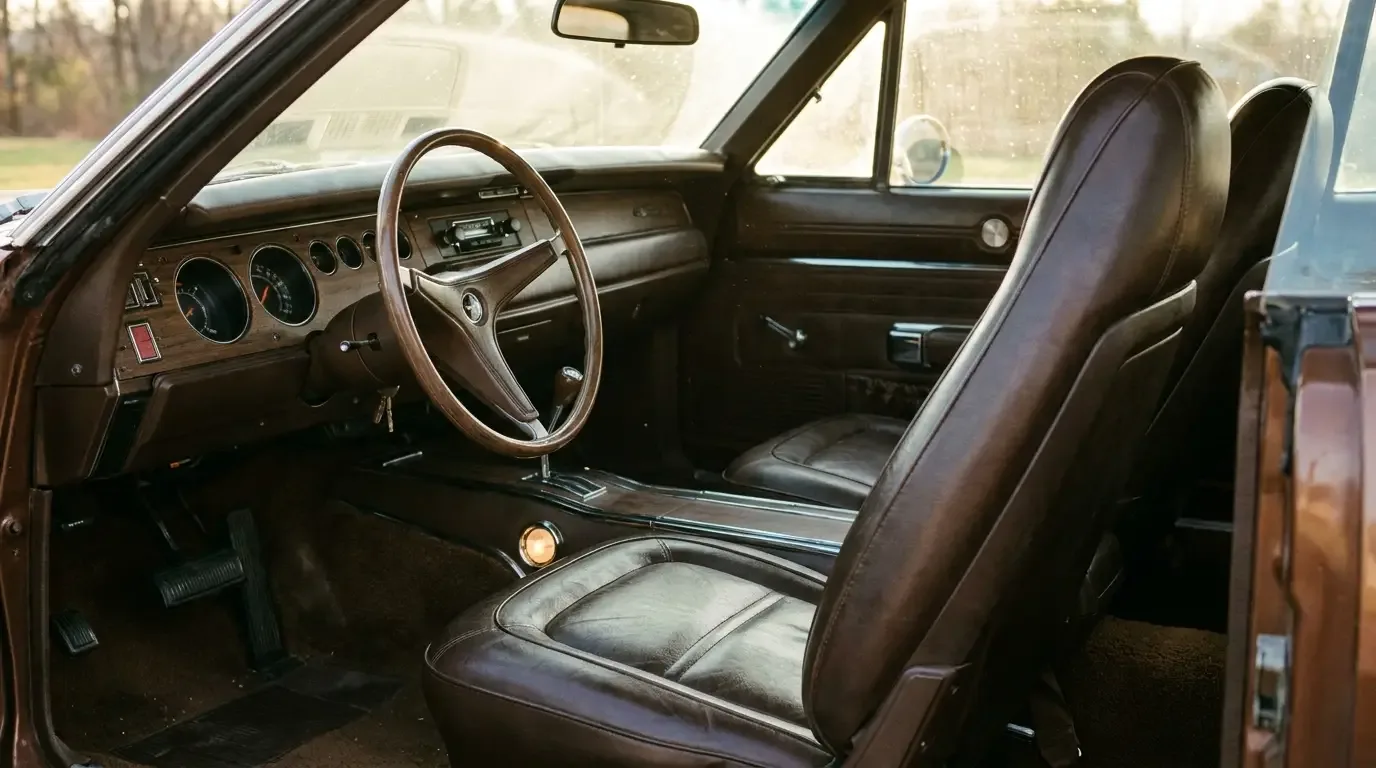
The 1969 dodge charger and its 1970 successor came from a moment when Dodge understood that not every performance buyer wanted a stripped-down strip car. The R/T package brought the big-block performance credentials, the suspension, the badging, the reputation. The SE option, Special Edition, layered something else on top of it: leather-and-vinyl bucket seats, a wood-grain instrument panel appliqué, extra sound insulation, and small luxury touches that had nothing to do with quarter-mile times and everything to do with making a fast car feel like it belonged in a driveway next to a nice house, not just a drag strip parking lot. It's easy, looking back from now, to treat these two options as a contradiction. Performance and comfort weren't supposed to be the same purchase in 1970. But the R/T SE combination sold to real people who wanted exactly that, and her father's folder of paperwork is proof one of them was ordering not a statement car, but a car for actual life.
What SE actually added to the car
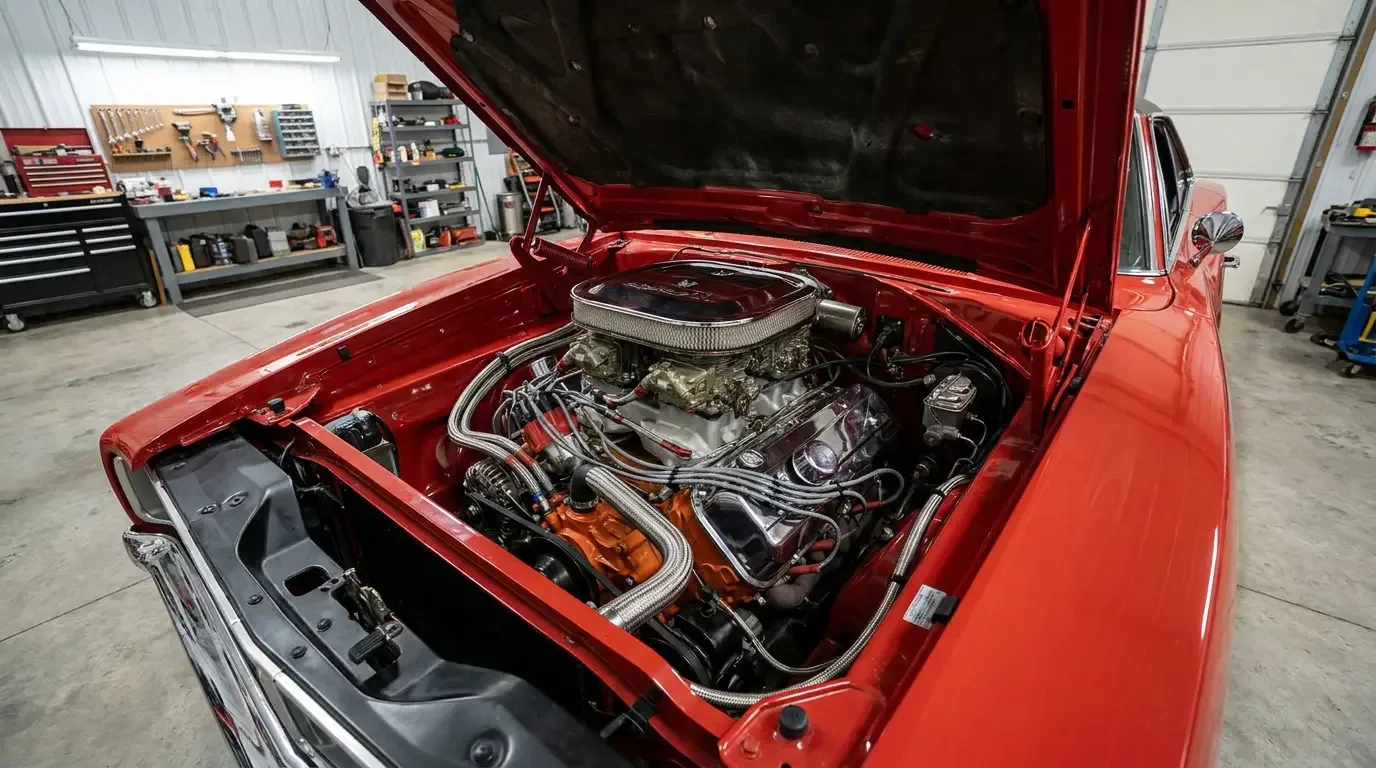
Underneath the sentiment, the SE package was a specific, itemized set of upgrades. The leather seating surfaces were the most visible change, a genuine step up from the standard vinyl bench or bucket seats most Chargers carried, and the wood-grain dash trim gave the interior a warmer, more finished look than the painted metal dash of a base car. Additional sound deadening material meant a quieter cabin at highway speed, a detail that mattered enormously to a family that, her mother told her once, drove that car on a real vacation, all the way to a lake three states away, the summer after they bought it. None of this luxury content touched the engine bay. The R/T's performance hardware, its standard big-block and heavy-duty suspension, carried over unchanged whether or not a buyer checked the SE box. That separation is what made the combination work, a car could be ordered as fast as any other R/T and still arrive with a cabin that felt considered rather than utilitarian.
The color and paint story that went with it
Her father's car came in one of the era's high-impact colors, the kind of shade that looked almost aggressive in direct sun and settled into something quieter under clouds. Dodge's paint options for this period are their own chapter, and read more here covers the specific shades and the marketing push behind them if you want the fuller picture. What she remembers isn't the paint code, it's her mother saying the car looked like it belonged to someone younger than her father actually was, and him grinning every time she said it.
Where the R/T SE sits in the Charger's performance history
The R/T badge itself carries a longer story than any single option package, stretching back to the R/T's introduction as Dodge's performance flagship trim, and the Charger R/T era traces that fuller arc if you want to understand how the SE fits into it. What matters for the 1970 car specifically is that it represents close to the final word on this body style's R/T offering, since the Charger moved to a new generation for 1971, and the R/T SE combination didn't carry forward in quite the same form once the redesign arrived.
That kind of memory is the part production numbers and option codes can't capture, but it's exactly what makes a car like this worth more to a family than any appraisal could reflect."She told me the day her father finally let her drive it alone, she pulled into the school parking lot and just sat there for a minute before turning the engine off, like she needed a second to believe it was hers to drive that day."
— Nora Beckett
What buyers should look for in an R/T SE today
For anyone shopping this specific combination now, decades removed from the showroom, the wood-grain dash appliqué and leather seating are the fastest visual confirmation of the SE content, since a base R/T interior looks noticeably plainer without them. Beyond visual inspection, the build sheet or fender tag decode remains the only way to confirm the factory actually built the car this way rather than having it upgraded later with reproduction or salvaged interior parts, a common enough practice among owners over the decades who wanted the nicer cabin without paying original-SE prices. Her father's car eventually left the family, sold sometime in the eighties when money was tight and nobody thought yet about what these cars would become. She still has the receipt, though, and the window sticker, kept for no practical reason at all except that some part of her always hoped the paperwork might matter again someday. It does now, just not in the way she expected. It's not proof of value. It's proof that somebody, once, wanted a car that could be both things at once, fast and nice, and Dodge, for one model year, built exactly that.
Why families like hers still go looking for these cars
She has spent years now searching auction listings and forum posts, not really expecting to find her father's exact car, but looking anyway, the way people do when a memory has a specific shape they'd know instantly if they saw it again. What she's learned in that search is how many other people are doing the same thing, adult children and grandchildren trying to track down a car that meant something to a parent, armed with nothing but a color memory and maybe a partial VIN copied off an old insurance card. That's part of why documentation matters so much with a car like the R/T SE. It isn't only about resale value or bragging rights at a show. For a certain number of buyers circling this exact combination of options, what they actually want is proof, some thread connecting the car in front of them to the one their family owned decades ago. A build sheet or a fender tag can't replace a memory, but it can at least confirm the shape of one, which for some families turns out to be worth more than any auction estimate.
Sources and notes
- ClassicCars.com Journal: 1970 Charger R/T-SE - the SE package (code A47) with leather buckets and wood-grain trim, offered on the R/T and Charger 500.
- ConceptCarz: Dodge Charger - the 1970 SE luxury content (leather bucket seats, wood-grain wheel and dash) and R/T details.
- Wikipedia: Dodge Charger (1966) - the R/T performance flagship and the second-generation run ending with 1970.
- Muscle Car Facts: 1968 Charger - the R/T package standard hardware (440 Magnum, heavy-duty suspension) carried into the SE cars.
- Classic Industries: Mopar production numbers - 1970 Charger production context for the rarity of the R/T SE combination.