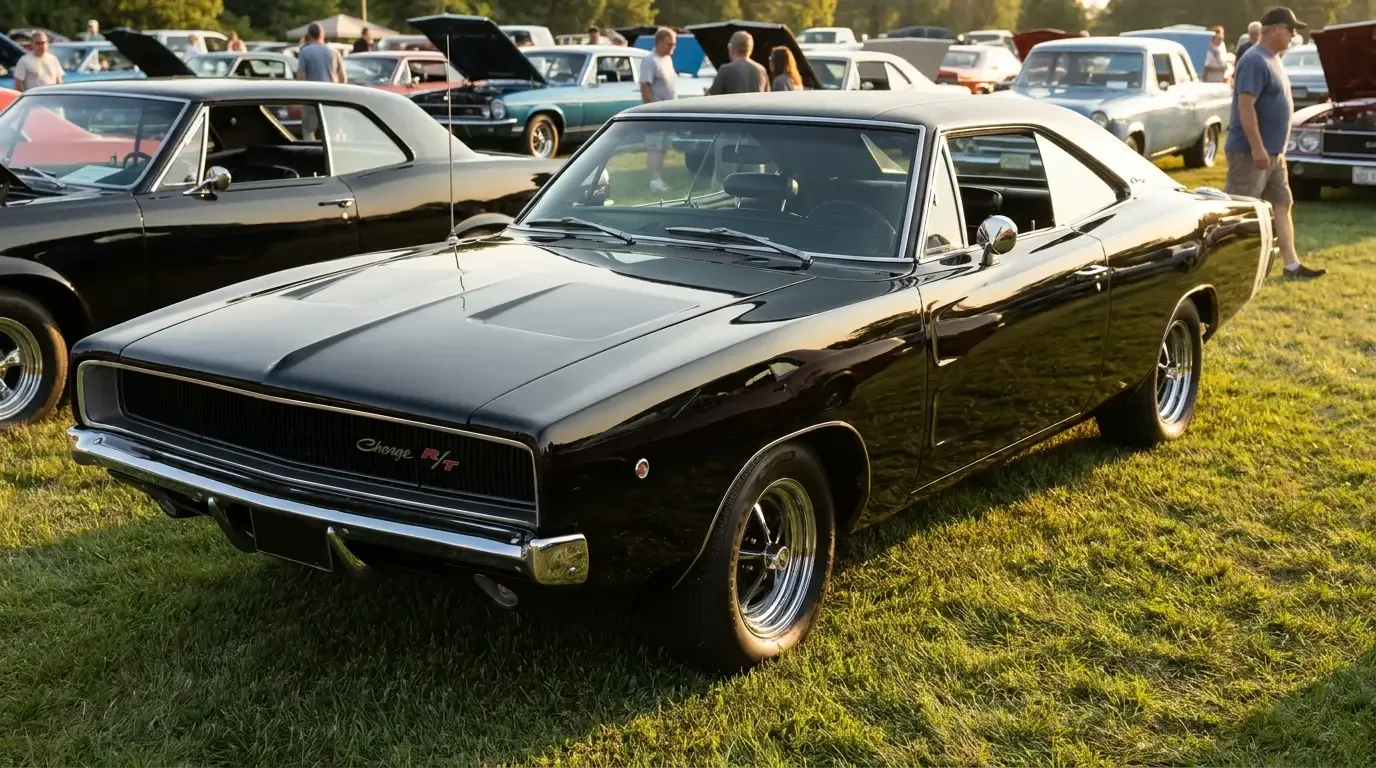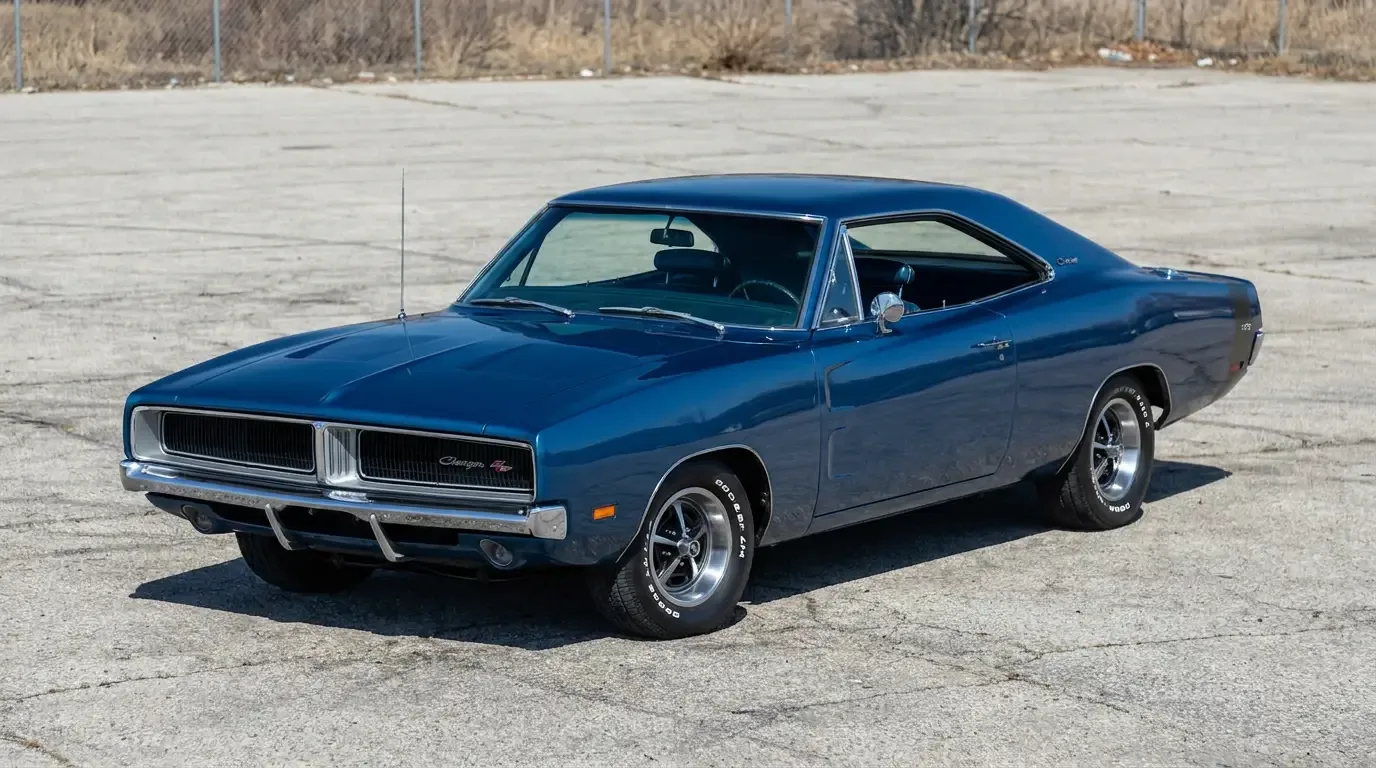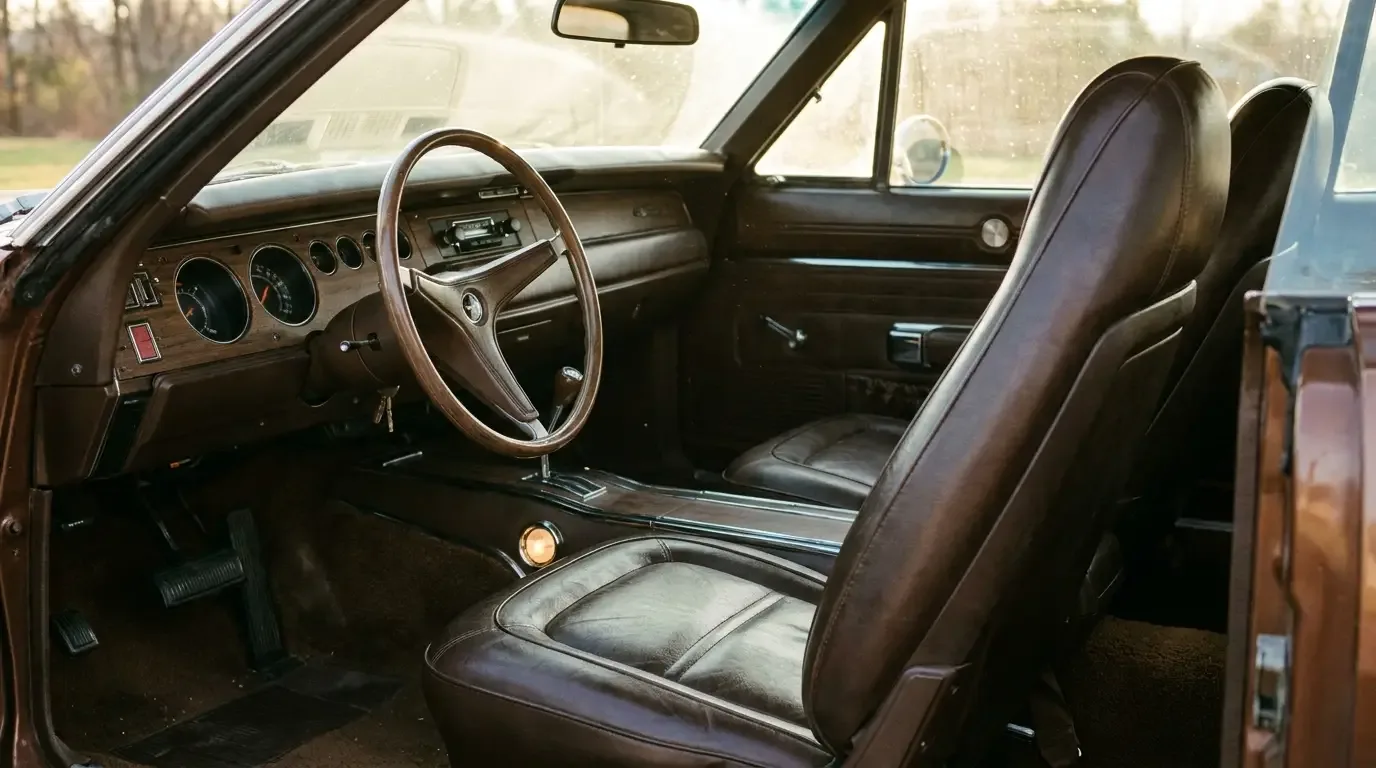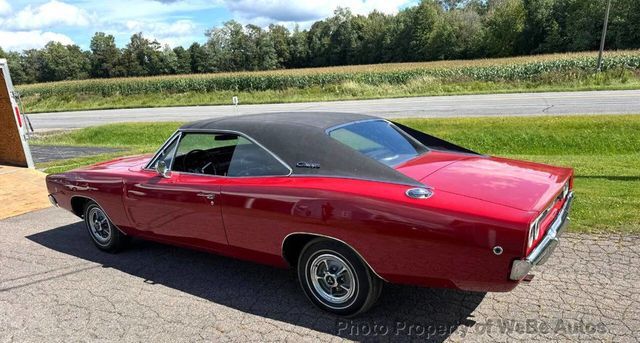
The Hemi Charger gets talked about like it was everywhere in 1969. It wasn't. The 426 Hemi was a low-volume, expensive option on a car that was already a specialty model, and the actual production numbers across 1968, 1969, and 1970 tell a much smaller, much more interesting story than the legend does.
The number that matters: how few were actually built
Across the entire second-generation run, 1968 through 1970, Hemi-equipped Chargers represent a small fraction of total production, with combined figures across all three years numbering in the hundreds rather than the thousands: roughly 475 for 1968, a few hundred for 1969, and just 112 R/T cars for 1970. Compare that against total Charger production of roughly 96,000 units for 1968 alone, and the Hemi's actual market share of the model comes into focus fast. It was never the volume seller. It was the halo option that justified the R/T badge and the magazine covers, bought by a small number of buyers who wanted the most engine Dodge would sell them in this body. That scarcity is the real story, not the horsepower rating on the option sheet. A 425 hp gross rating sounds impressive until you remember every manufacturer's gross numbers from this era ran optimistic compared to what the engine actually delivered at the rear wheels. The number that actually separates the Hemi Charger from the rest of the lineup is the build count, not the dyno sheet.
What the Hemi option actually cost buyers in 1969
The 426 Hemi option carried a price premium that, relative to a base Charger, was substantial enough to filter out casual buyers immediately. This wasn't an impulse box to check on the order form. It came bundled with heavier-duty suspension components, a stronger transmission, and cooling upgrades required to keep the engine alive, which pushed the total cost of a Hemi-optioned car meaningfully higher than the sticker price difference on the engine alone might suggest. That combination, high price and a genuinely difficult engine to live with day to day, dual four-barrel carburetion that needed regular attention, a compression ratio that wanted premium fuel, and a state of tune that was happier on a strip than in stop-and-go traffic, kept Hemi order rates low even among buyers who could afford the engine option itself. The car that resulted was fast in a straight line and demanding everywhere else, and Dodge's own sales figures reflect buyers understood that tradeoff and mostly declined it.
Separating real numbers from catalog fantasy
The factory horsepower rating for the 426 Hemi in this era is commonly quoted at 425 hp gross, a figure that was consistent across the engine's various applications in Chrysler's lineup during these years, not something the Charger got a unique tune for. What actually varied car to car was how well that power made it to the ground, and axle ratio, transmission choice, and tire selection did more to determine a given Hemi Charger's real-world performance than the engine's rated output ever did. I'd tell anyone chasing period quarter-mile numbers on these cars to treat magazine test figures from 1969 with some skepticism. Factory drivers, prepped cars, and favorable conditions produced numbers that a stock car bought off a dealer lot rarely matched in private hands. The gap between what a factory test car ran and what an average owner's Hemi Charger actually did at the local strip is real, and it's a gap that inflated the model's reputation well beyond what most buyers experienced.
Why so few survive in original condition today
Low production numbers to begin with mean the surviving pool of genuine, numbers-matching Hemi Chargers is smaller still. Decades of hard use, drag strip abuse in period, and the simple attrition every high-performance car from this era suffered before values recovered in the 1980s and 1990s all thinned the herd further. Add to that a well-documented history of engine swaps and clone builds, cars built up decades later with a Hemi installed and dressed to look period-correct, and verifying an actual numbers-matching original becomes the single most important step in any purchase decision involving this option. The build sheet and fender tag matter more here than on almost any other Charger configuration, because the financial gap between a genuine Hemi car and a well-executed clone is enormous, and the visual differences between the two can be close to invisible without documentation to settle the question.
What this means for buyers today
If you're evaluating a car represented as an original Hemi Charger, the production numbers should inform your skepticism, not your excitement. Genuine cars are rare enough that any seller claiming one needs to back the claim with a broadcast sheet, fender tag decode, or Chrysler historical documentation, not just a story about what the previous owner told them. see the details on the broader second-generation Charger to understand how the Hemi option fit into the wider model lineup, and cross-reference any specific claims against the Charger's full history if you want the complete production picture across all body generations. For a related, better-documented luxury-performance combination from this same run, the Charger feature on Classic Cars Arena covers the R/T SE package, a different but equally low-volume way Dodge built a special car on this same body. The number that should drive your buying decision isn't the horsepower figure on the window sticker. It's the production count, the documentation trail, and whether the seller can prove both hold up. That's the number that matters.
"Everybody quotes the 425 horsepower number. Nobody quotes the production count. One of those numbers tells you what the engine could do on a good day. The other tells you how rare the car actually is. Only one of them should set the price."
— Dan Reeves
If you're actively shopping the platform this engine lived in, browse 1970 Chargers for a sense of current asking prices across trim levels, keeping in mind that a documented Hemi car sits in an entirely different price bracket than a standard R/T with a similar exterior.
Sources and notes
- TopSpeed: 426 Street Hemi production figures - Charger R/T Hemi counts by year (1968, 1969, 1970) and the 425 hp / 490 lb-ft rating.
- Wikipedia: Dodge Charger (1966) - 426 Street Hemi rated 425 bhp with hemispherical combustion chambers, and the engine's low take rate.
- Muscle Car Facts: 1968 Charger - 1968 engine chart confirming the 426 Hemi at 425 hp against the rest of the lineup.
- ConceptCarz: Dodge Charger - only 112 R/T models carried the 426 Hemi in 1970.
- American Muscle Car Museum: 1969 Charger 500 - the 426/425 hp Hemi as a rare, low-volume option in this era.