
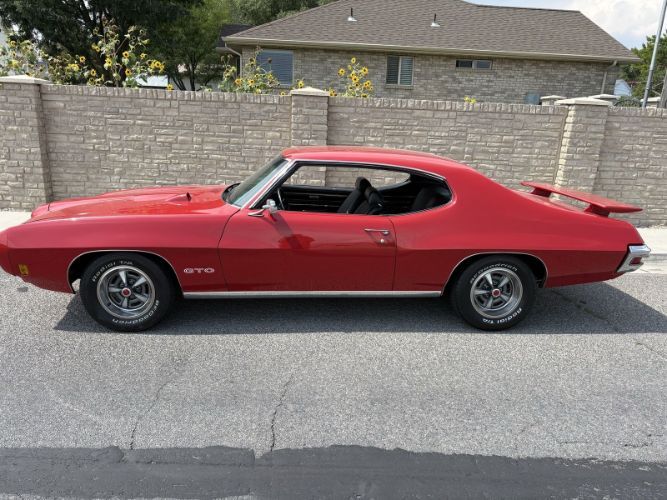
Picture a living room on January 11, 1970, the TV tuned to CBS for Super Bowl IV, and a Pontiac commercial rolling that most people watching had never seen before and would never see again. That's the world "The Humbler" was born into. It aired exactly once, during the biggest broadcast audience of the year, and it wasn't a vague swagger campaign for the GTO in general. It was built around one specific piece of hardware: the Vacuum Operated Exhaust option, a dash-mounted lever that opened a louder, freer-flowing exhaust bypass on demand. Pontiac wasn't being subtle in 1970. Nobody in Detroit was, honestly, but this ad leaned into the swagger harder than almost anything else the division ran, and it got yanked for it.
Car Features
7 min read
'The Humbler': The Commercial and the Car That Broke the Rules
Pontiac's 1970 'The Humbler' campaign sold the GTO on street-racing bravado at the exact moment the muscle car era's confidence was about to run out.
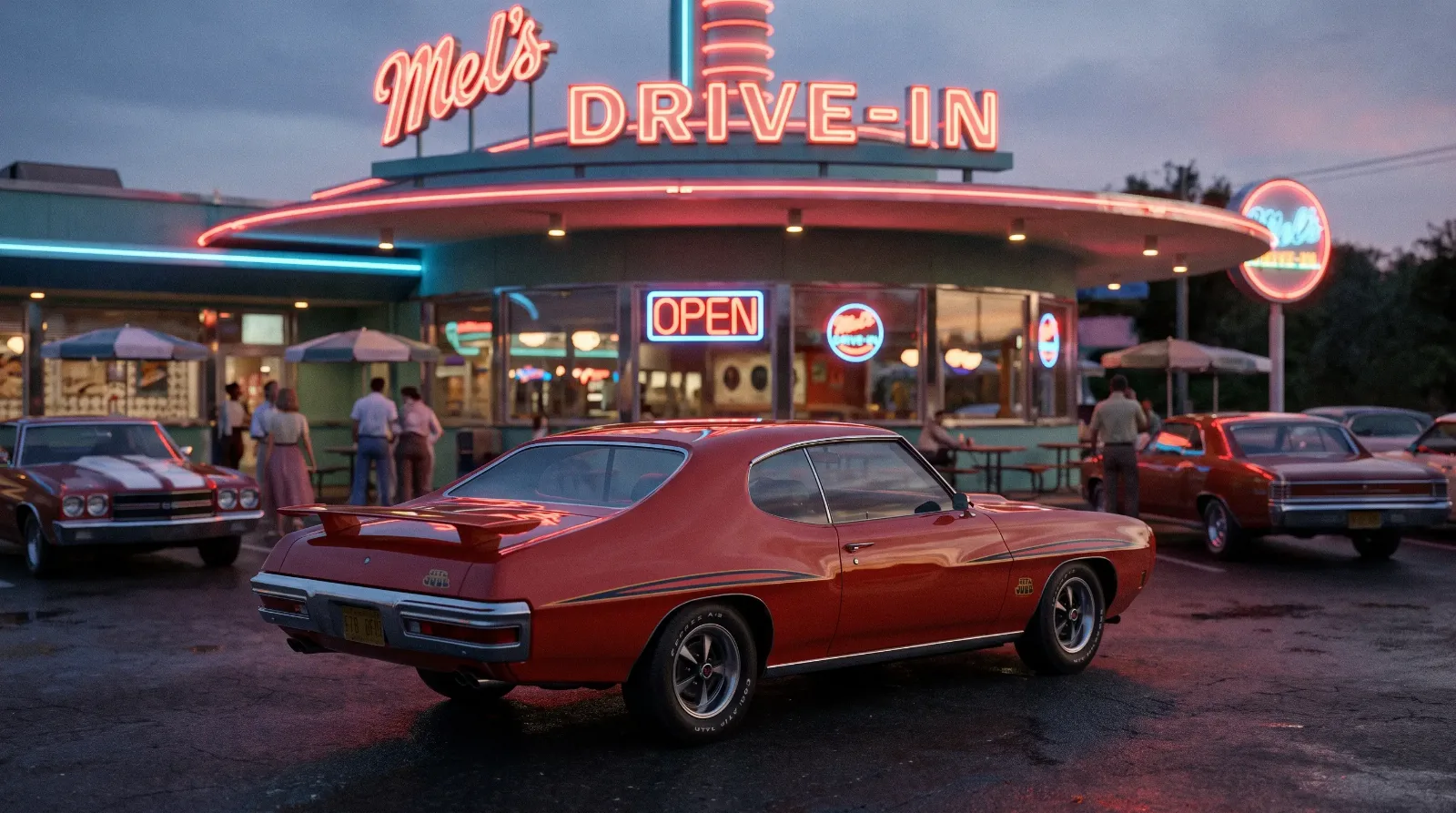
The pitch behind the ad
The commercial follows a young guy pulling his GTO into a drive-in, hoping to draw a street-racing challenge. He reaches under the dash and pulls the VOE lever, the exhaust note opens up loud enough to turn heads across the lot, and nobody takes the bait. A voiceover closes the spot with a line built for exactly this moment: "The Humbler is here. This is the way it's going to be, baby." The jingle behind it hammered the same theme in verse, chest-thumping bravado, chrome wheels, an open exhaust that "can't get no-one talkin' back." It's a two-minute distillation of everything Pontiac's marketing department believed about its target buyer, aimed straight at a young guy who wanted a car that could win a street race and let everyone at the drive-in know about it afterward.
What's not in dispute is the cultural moment this ad was speaking to. By 1970, the muscle car wars had been running hot for the better part of five years, and every manufacturer was chasing the same eighteen-to-twenty-five-year-old male buyer with disposable income and a taste for quarter-mile bragging rights. Chevrolet had the Chevelle SS and the Camaro Z/28. Plymouth had the Road Runner and the Superbird's aerodynamic spectacle. Ford had the Torino Cobra and the Boss Mustang. Pontiac's answer wasn't a new engineering trick so much as a marketing posture wrapped around one clever piece of hardware, and "The Humbler" captured that posture in two syllables.
Why the timing matters
Here's what makes this ad worth understanding in the context of the whole GTO story rather than just as a curiosity. 1970 was the peak. Compression ratios were still high, the 455 had just arrived on the option sheet, and Pontiac was selling a car that could genuinely back up the swagger in the commercial. A year later, in 1971, the entire industry started walking back compression ratios in preparation for unleaded fuel and tightening emissions rules, and the kind of chest-thumping marketing "The Humbler" represented started to feel increasingly disconnected from what the cars could actually deliver on paper. You can draw a fairly straight line from ads like this one to the insurance industry crackdown that started squeezing muscle car premiums through the early '70s, which in turn squeezed manufacturers into detuning the very cars these ads were built to sell.
I think about it as the last confident shout before the room went quiet. Insurance surcharges on high-performance options were already becoming a real cost consideration for buyers by 1970, and dealers were starting to notice young customers walking away from a GTO not because they didn't want it, but because their parents couldn't stomach the insurance bill. An ad campaign built entirely around street-racing bravado was already, whether Pontiac's marketing department fully realized it or not, selling a fantasy that the broader market was starting to price out of reach for a meaningful slice of its own target customer.
| Factor | 1970 context | Shift by 1971-72 |
|---|---|---|
| Compression ratios | High, tuned for leaded premium fuel | Lowered ahead of unleaded fuel mandates |
| Insurance climate | Rising surcharges on high-performance options | Continued escalation, pricing out younger buyers |
| Marketing tone | Aggressive, street-racing framed | Shift toward broader appeal, less overt bravado |
"There's something almost poignant about watching a 1970 Pontiac commercial now. Everybody in that room, the ad men, the engineers, the guy signing off on the script, they were all working from a set of assumptions about how long the party would last. None of them were wrong to believe it in the moment. They just didn't know how close the end of the runway actually was."
Patrick Walsh
How it fit into the broader Pontiac sales floor
A television spot is only half the story. The other half happened on the actual dealer lot, where salesmen were trained to lean into exactly the same swagger the commercial promised. Period accounts from Pontiac dealer training materials of this general era describe an emphasis on letting the car do the talking, on getting a young prospect behind the wheel for a test drive rather than relying on brochure specs alone, because Pontiac's own internal data understood that this specific customer bought on feeling as much as on horsepower figures. "The Humbler" wasn't really an isolated ad, it was the television face of a whole sales approach built around performance-as-identity, and that approach ran through everything from the showroom floor to the dealer's own local print advertising, which frequently echoed the same aggressive language in smaller regional campaigns built off the national concept.
What's easy to miss looking back is how much competitive pressure was actually behind the bravado. Pontiac wasn't the sales leader in the muscle car segment by 1970, not against Chevrolet's sheer production volume advantage, and an ad this aggressive reads differently once you understand it as an underdog's marketing move rather than a market leader's victory lap. Pontiac needed the GTO to punch above its weight in the cultural conversation because it couldn't out-produce or out-discount Chevrolet on volume alone. A campaign built around psychological dominance, embarrassing the other guy at the light, was a cheaper and arguably more effective lever to pull than a straight price war Pontiac was never going to win against GM's own larger sister division.
I talked to a longtime GTO owner at a show in Tennessee a few years back who remembered seeing "The Humbler" spot as a teenager and saving up for two years to buy a used '70 GTO off a local lot because of exactly that ad. He told me the car never quite lived up to the commercial's promise of humbling everything on the road, no street car ever does, but the feeling of pulling into a parking lot in that car at nineteen years old was worth every dollar he'd saved. That's the honest legacy of a campaign like this. It wasn't really selling horsepower figures. It was selling a version of yourself you got to be for a few years before real life caught up with you, and for a lot of guys who bought GTOs off the strength of that ad, that trade was worth it.
This ad sits right at the hinge point of the second-generation GTO's story, the moment before everything started tightening down. To see exactly how quickly that shift happened mechanically, with compression ratios dropping the very next year, read on. And if you want the full arc of how the GTO got here in the first place, from a 1964 option package to the car this commercial was built to sell, Pontiac GTO history covers the whole run.
Sources and notes
- Jalopnik - 50 years ago, Pontiac's GTO Super Bowl ad humbled us all
- BangShift - the 1970 GTO Humbler Super Bowl spot that got an option package killed
- The Autopian - Pontiac's Super Bowl ad for an option cancelled almost immediately
- Autoevolution - the story of the 1970 GTO Humbler that angered GM management
- eBay Motors Blog - the 1970 Pontiac GTO with a dashboard-controlled exhaust cutout
- Wikipedia - Pontiac GTO
Related Reading
Have a
Pontiac GTO
for Sale?
Reach thousands of serious classic car collectors across the US.
Sell It Here →
Are You a Classic Car Dealer?
List your full inventory and connect with targeted classic car buyers.
Join as a Dealer →

About the author
Patrick Walsh
Automotive journalist covering classic car shows, events, and the enthusiast community across North America.
Related Listings - Pontiac GTO
Comments (1)
G
Gene Przybylski
2 months ago
Great breakdown of the different years. Most people just want 'one of these' without realizing how much varies between model years.