
I've had my hands inside more GTO engine bays than I can count, and the 1970 car is the one I tell people to pay attention to if they actually want to know what Pontiac was capable of before the government and the insurance companies started squeezing the life out of these things. This is the year the body got reshaped around a new Endura nose, the option sheet got a 455 on it for the first time, and the whole package hit a ceiling that nothing after it would touch. Call it the high-water mark. I don't say that lightly about any model year, but with the 1970 GTO I mean it.
Car Features
7 min read
1970 GTO: The 455, the Peak, and the Endura Twist
1970 was the year Pontiac put a 455 under the GTO's hood and reshaped the Endura nose, marking the model's high-water mark before compression ratios started falling.
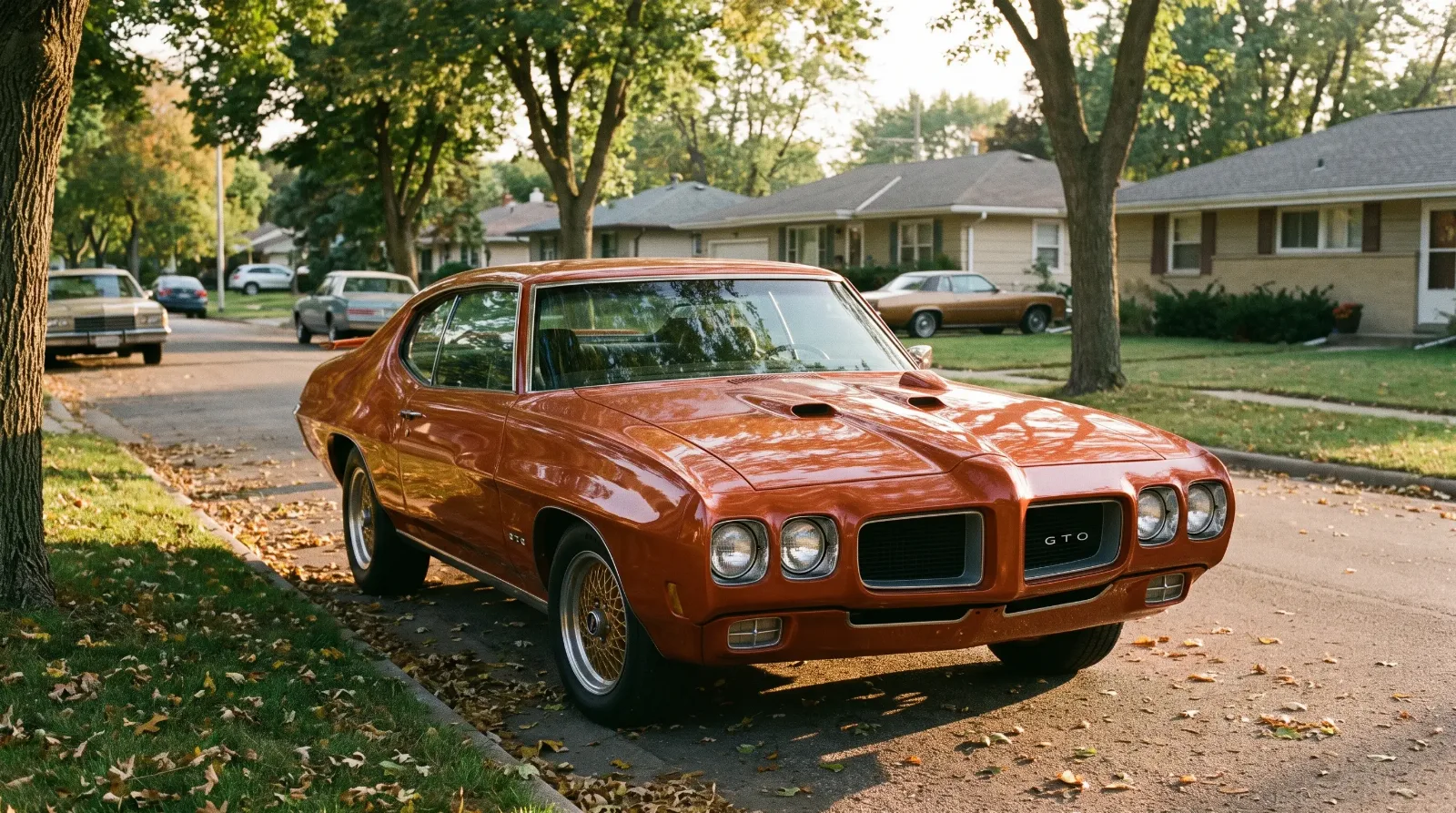
Start with the sheet metal, because that's the first thing anybody notices in a parking lot. Pontiac reskinned the A-body for 1970. The fenders got fuller, the rear haunches got more pronounced, and the Endura nose, which had debuted back in 1968 as a rubber-clad single-piece front cap, got restyled into a more aggressive split-grille face with four exposed round headlamps set outboard of the grille openings. That's a real departure from the hidden-headlight look of 1968-69, and it's the front-end treatment that most people picture when they think "1970 GTO," carried consistently through the model year.
The 455 finally shows up
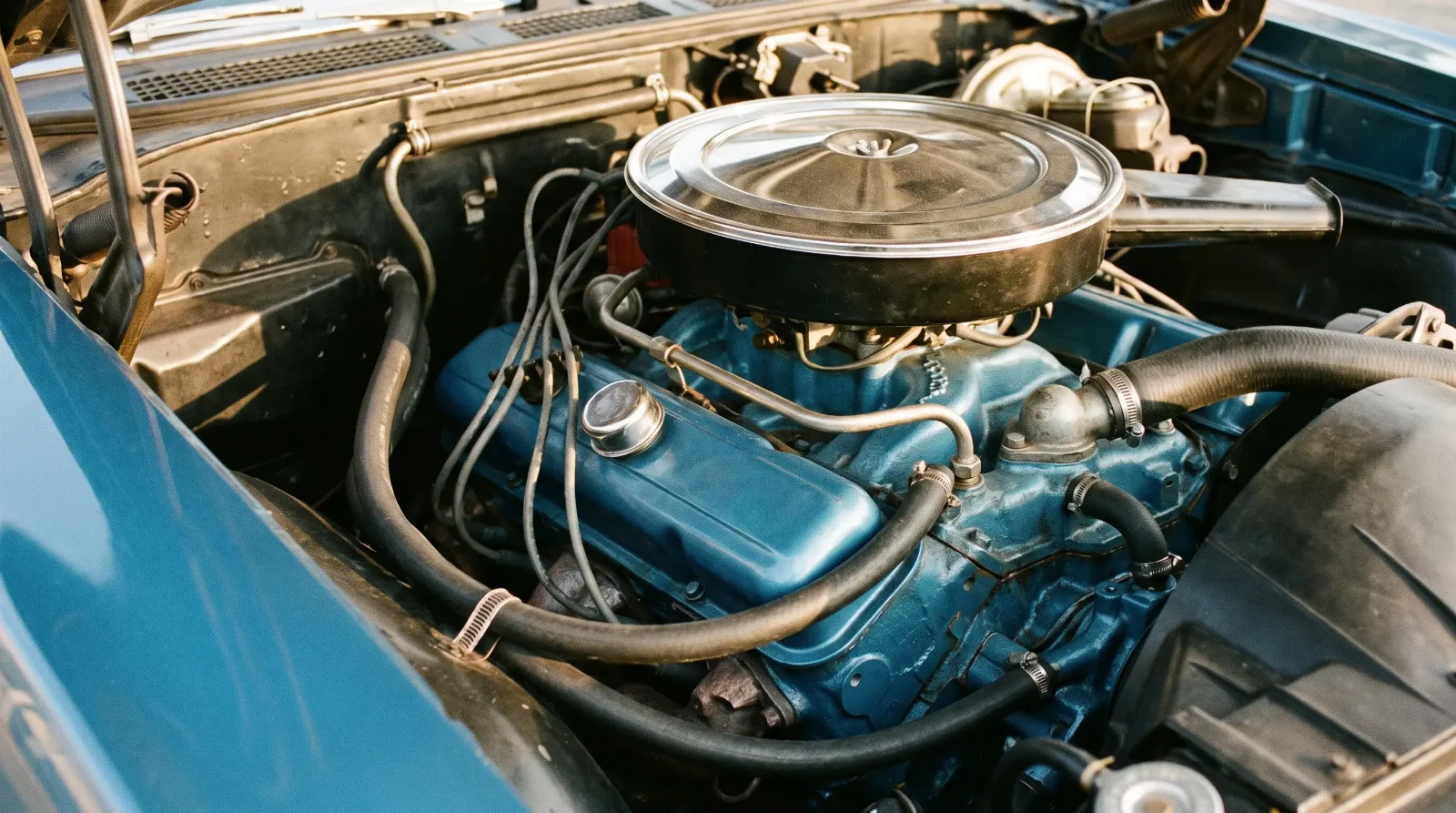
Here's the part that actually changes how the car drives. For 1970, Pontiac put the 455 cubic inch V8 on the GTO option sheet for the first time, sitting above the standard 400. This wasn't a high-winding screamer like the Ram Air engines. It was a torque monster, built to move a heavy car off the line without drama, and it's the engine I point people toward if they tell me they want to actually drive the car and not just trailer it to shows. The 455 in standard GTO trim wasn't the exotic piece, but it moved the car with a shove that the 400 just couldn't match down low.
The real performance halo that year was still the Ram Air engines, specifically the Ram Air IV, built in genuinely small numbers and treated by Pontiac as the serious end of the lineup. Round-port heads, a hotter cam, and a factory rating of 370 gross horsepower at 5,500 rpm with 445 lb-ft of torque, a figure that undersold what these things actually made once you got them on a dyno. It's widely believed Pontiac underrated the Ram Air IV on paper, and cars have dyno'd well north of that printed number.
| Engine | Displacement | Induction | Notes |
|---|---|---|---|
| Standard 400 | 400 cid | Single 4-barrel | Base GTO engine, carryover architecture |
| Ram Air III 400 | 400 cid | Single 4-barrel | Performance cam, round-port heads |
| Ram Air IV 400 | 400 cid | Single 4-barrel | Low-volume, highest-output 400 offered |
| 455 | 455 cid | Single 4-barrel | New for 1970, torque-focused big-block |
The thing I want buyers to understand is that the 455 and the Ram Air 400s were built for completely different jobs. The 455 wasn't chasing quarter-mile glory, it was there for people who wanted to mash the pedal from a stoplight and feel the car dig in immediately. The Ram Air cars wanted revs. If you're cross-shopping a 455 car against a Ram Air IV car, you're not comparing two versions of the same thing, you're comparing two different philosophies Pontiac was running side by side on the same body.
What to check before you buy a '70
I've pulled apart enough of these to know where the money hides. Rust is the first thing, same as any GM A-body of the era. Lower quarters, trunk floor, and the frame rails near the rear leaf spring perches are where these cars rot from the inside out. The Endura nose is its own headache. That flexible urethane-over-steel-frame front cap ages differently than sheet metal, and a lot of them have been repainted with the wrong flex additive in the paint, which means it cracks within a year or two of a fresh respray. If a seller tells you the nose was "just redone," ask what paint system they used. If they don't know, assume it's going to crack.
🔧 Inspection Priorities
- Endura nose condition and repair history. A cracked or poorly repaired nose can run into real money to correct properly, and cheap fiberglass patch jobs are common.
- Cowl and trunk floor rust. Water sits in the cowl area on these cars and works its way down; a rusted cowl is a structural problem, not cosmetic.
- Engine-to-build-sheet matching. With four distinct engine options on the table, verify the block casting and date codes match what the documentation claims before you pay a premium for a Ram Air IV.
- Rear leaf spring perch rust. This area takes structural load and rusts quietly under the car where nobody looks.
The Judge package carried into 1970 as well, riding on top of either the Ram Air III or Ram Air IV engine, and it's worth remembering that "Judge" was a stripe-and-spoiler package layered onto the GTO, not a separate model with its own drivetrain. A 1970 Judge is a GTO with the Judge option box checked, which matters when you're trying to figure out what you're actually looking at versus what a seller has decided to call it after the fact.
"People walk up to a 1970 GTO expecting it to feel like a modern muscle car and it doesn't, it feels like a heavy American sedan that somebody dropped a torque monster into. That's not a criticism. That's exactly what it is, and once you understand that, the car makes a lot more sense on the road."
Mike Sullivan
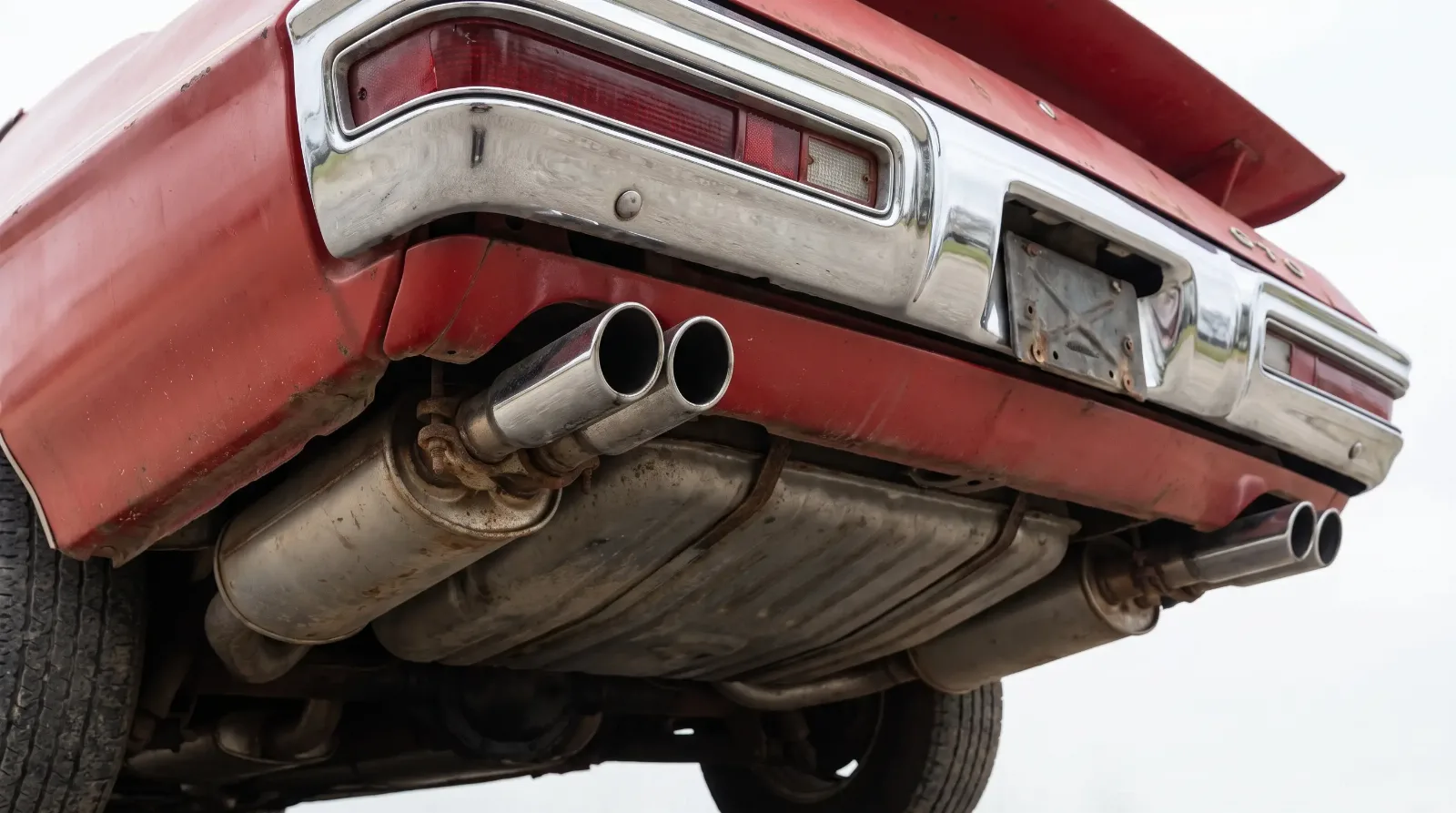
This car sits at the center of the 1970-72 GTO story, the three years where Pontiac pushed displacement and power right up against the wall before compression ratios started coming down for 1971. If you want the fuller picture of how Pontiac engineered around emissions equipment during this window, including a genuinely strange one-year-only exhaust system that showed up on some of these cars, read on. And if you want to understand how this generation fits into the whole arc of the model from its 1964 debut forward, the Pontiac GTO story covers that ground.
On price, I'm seeing driver-quality 1970 GTOs with the base 400 land in a moderate range, with 455 cars commanding a step up, and documented Ram Air IV or Judge cars pulling well ahead of both. Collector car pricing moves enough year to year that I'd rather point you to current listings than lock a stale dollar figure into print. What I will say without hedging is that a solid, honestly represented 1970 GTO with correct documentation is one of the better values in the muscle car world right now relative to what a Chevelle SS or Road Runner in similar condition commands. If you're shopping this specific year, browse GTO listings and pay close attention to which engine you're actually looking at before you fall in love with the photos.
Sources and notes
- Wikipedia - Pontiac GTO
- Hagerty - Pontiac Ram Air GTOs through the years
- Automobile Catalog - 1970 Pontiac GTO Ram Air IV specs
- MotorCities - the 1970 Pontiac GTO was a great American design
- SlashGear - what made the 1970 Pontiac GTO legendary
- MotoGallery - 1969-1970 Pontiac GTO Ram Air IV definitive guide
Related Reading
Have a
Pontiac GTO
for Sale?
Reach thousands of serious classic car collectors across the US.
Sell It Here →
Are You a Classic Car Dealer?
List your full inventory and connect with targeted classic car buyers.
Join as a Dealer →

About the author
Mike Sullivan
Detroit-area muscle car enthusiast and restoration specialist with three decades of hands-on experience working on American iron.
Related Listings - Pontiac GTO




Comments
Be the first to comment on this article.