
There's a reason every conversation about Chevrolet muscle at the drag strip eventually circles back to one specific car: the 1970 Chevelle SS454. Not the '68, not the '71, the 1970 model, the one year Chevrolet let the big-block breathe without General Motors' corporate displacement cap getting in the way first. For one model year, the Chevelle wore the biggest engine GM would allow in an intermediate, and it went to the strip in numbers that still show up at bracket races and cruise nights more than five decades later.
Car Features
7 min read
The 1970 SS454 at the Drag Strip
Why the 1970 Chevelle SS454, LS5 and LS6 alike, became the Chevelle that defined a whole era of factory big-block drag racing.
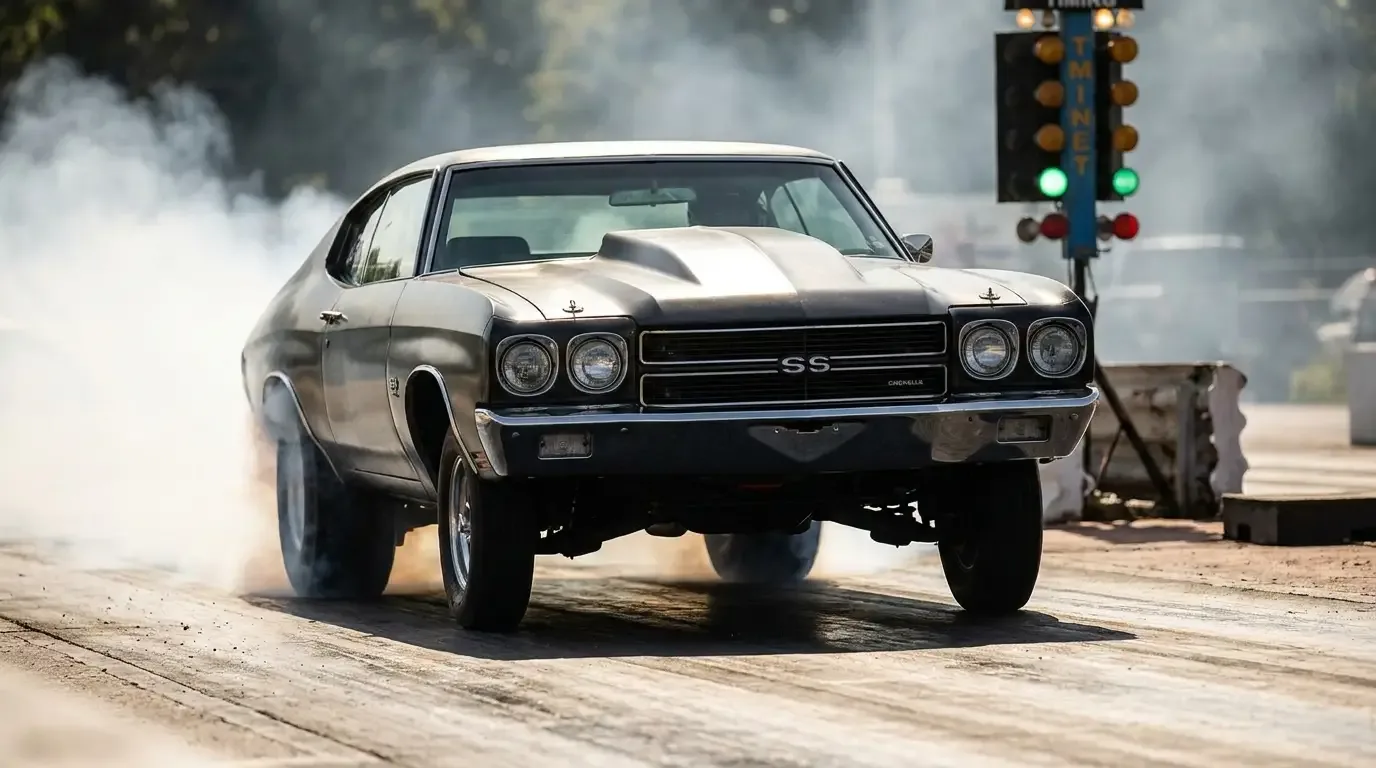
To understand why that one year matters so much, you have to understand what came before it. GM had a corporate rule limiting intermediate-size cars to 400 cubic inches through the late 1960s, which is part of why the LS6 and LS5 454s didn't show up until the rule was lifted for 1970. When it was, Chevrolet wasted no time. The SS454 became the headline car in the Chevelle's competition history, and it did it from the factory, not from a dealer conversion.
Two 454s, two very different personalities
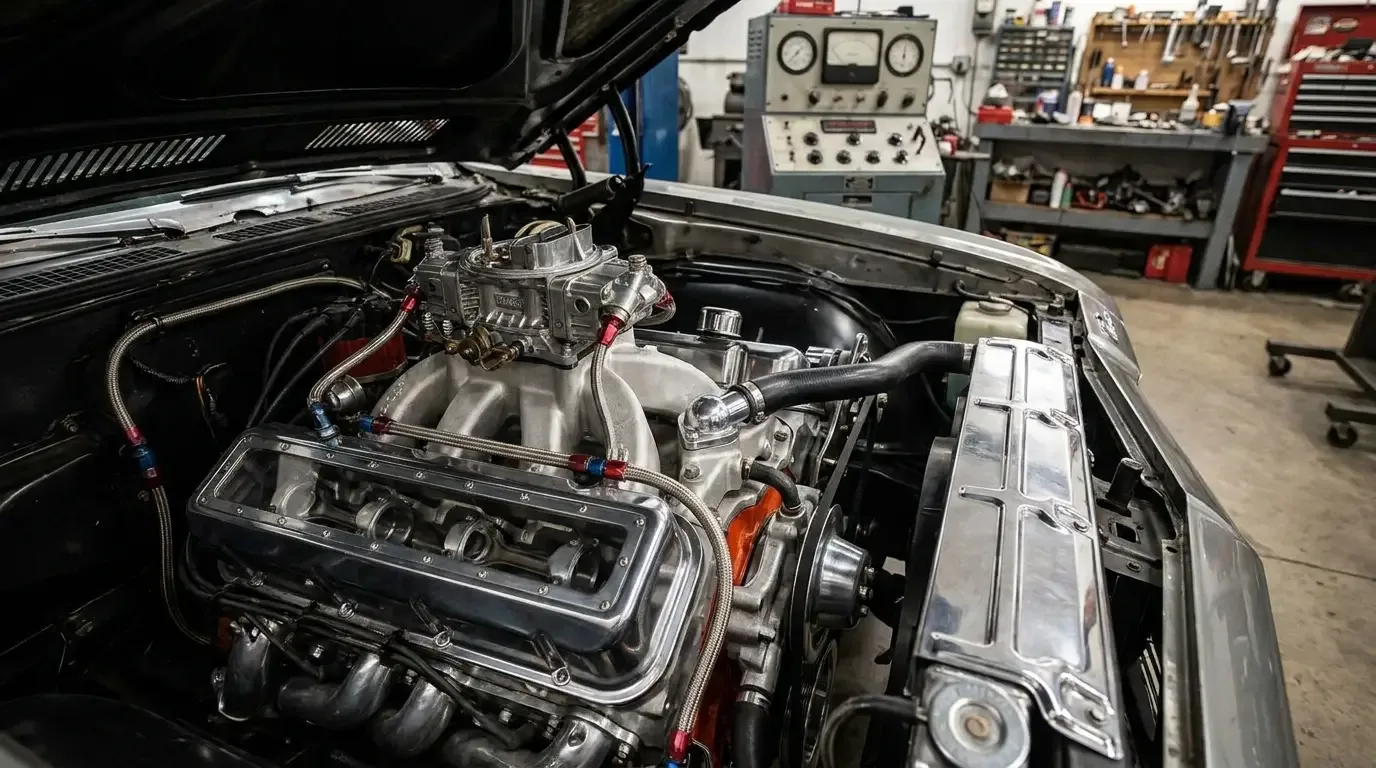
Chevrolet offered the 1970 SS454 with a choice of two 454 cubic inch big-blocks, and the gap between them defined how the car got used at the strip. The LS5 came factory rated around 360 horsepower, a strong number but a comparatively tame one for the displacement, tuned more for broad street torque than for peak power. The LS6 was the one builders and racers actually chased: factory rated at 450 horsepower, with a solid-lifter cam, forged pistons, and a Holley four-barrel that made it, on paper, the most powerful factory muscle car engine Chevrolet had ever offered in a mid-size car.
Those factory numbers were gross ratings by the standards of the era, and real-world dyno results have always run a range around them depending on tune. What isn't in dispute is the quarter-mile performance: period magazine testing put a bone-stock LS6 Chevelle in the 13.1 to 13.4-second range, with Car Craft recording 13.12 seconds at 107 mph and Hot Rod running a stock car to 13.44 seconds, all on the factory F70-14 tires, numbers that put it ahead of most anything else GM sold that year.
| Engine | Factory rating | Character at the strip |
|---|---|---|
| LS5 454 | Around 360 hp (gross) | Strong street torque, more forgiving, less strip-focused tune |
| LS6 454 | Around 450 hp (gross) | Solid-lifter cam, forged internals, the strip-focused option |
How it actually ran at the track
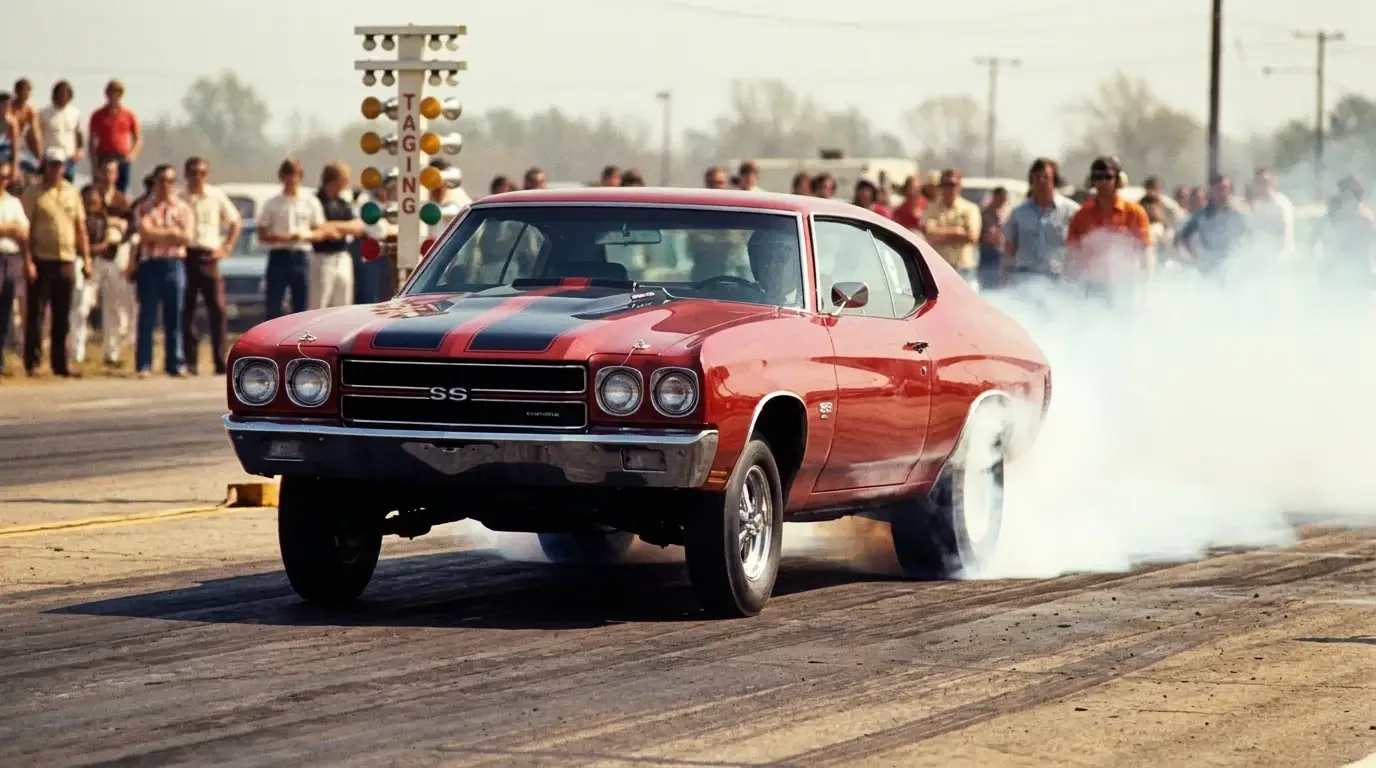
The LS6 Chevelle's advantage at the strip came from more than just the headline horsepower number. The combination of a stiff M22 four-speed or a Turbo 400 automatic, factory 4.10 or numerically higher rear gears on cars ordered for it, and a chassis that was already lighter than a full-size Chevy meant the power actually got to the ground. Drag racers of the day picked the SS454 apart looking for anything that could shave tenths, from the factory cowl induction hood that fed cold air to the carburetor, to how well the factory 12-bolt rear end held up under repeated hard launches.
The cowl induction system deserves specific mention because it wasn't just a styling cue. On cars ordered with it, a vacuum-operated flap opened at wide-open throttle to draw cooler, denser air from the base of the windshield rather than from the hot engine bay, a real functional advantage at the strip and not just a scoop for looks.
What it costs to own one today
Values for real, documented 1970 SS454 Chevelles have climbed hard over the past two decades, and the gap between an LS5 car and a genuine, numbers-matching LS6 is significant. A driver-quality LS5 SS454 can still be found in the mid five figures, while a documented LS6 car, particularly one with the cowl induction hood and a manual transmission, regularly brings well into six figures at major auctions, with exceptional examples going higher still. Because the option was popular enough to fake, cowl tag decoding and confirming the original engine casting numbers against the car's build sheet matters more here than on almost any other Chevelle variant. If you're shopping this segment, start with 1970 SS454 Chevelles that come with real documentation, not just a seller's word that it's numbers matching.
Transmission and gearing choices that mattered at the strip
The transmission and rear gear combination a buyer checked on the order sheet had almost as much effect on strip performance as which 454 they picked. The M22 close-ratio four-speed, nicknamed the "rock crusher" for the gear whine it made under load, let a driver keep the solid-lifter LS6 in its narrow power band through each shift, something the smoother Turbo 400 automatic couldn't quite match on paper even though plenty of racers preferred the automatic for consistency at the tree. Rear gear options ran from a relatively tall 3.31 for cars ordered with more street manners up through 4.10 and, on some combinations, numerically higher sets meant almost entirely for the strip.
None of those combinations came free. A 4.10-geared LS6 four-speed car was quick off the line and miserable on a long highway drive, buzzing at high RPM at anything approaching interstate speed, which is part of why so many original owners traded strip performance for a milder gear set and lived with a slightly slower quarter mile in exchange for a car that didn't beat itself to death on the way to work. Original build sheets and tank stickers, where they survive, are the only reliable way to confirm which combination a specific car actually left the factory with.
Why this one year still matters
Muscle car horsepower ratings started dropping almost immediately after 1970, first as insurance companies leaned on manufacturers and then as emissions regulations tightened through the following few years. That makes the 1970 SS454 something close to a high-water mark, the year GM let an intermediate car carry the biggest engine it had without much apology. For anyone tracing the full Chevelle story, this is the chapter where the car's reputation at the drag strip got permanently written into the record, a reputation dealer-tuned cars like the ones covered in Baldwin-Motion Phase III would go on to push even further past what the factory itself was willing to build.
"Ask anyone who was actually at the strip in 1970 what car everyone wanted to see line up, and the SS454 comes up before half the other options even get mentioned. It wasn't the fastest car built that decade. It was just the one that made the biggest promise and mostly kept it."
Patrick Walsh
Sources and notes
- Heacock Classic, "The Ultimate Muscle Car – The 1970 LS6 Chevelle Was America's King Of The Streets"
- Chevy Hardcore, "Muscle Cars You Should Know: 1970 Chevelle SS 454 LS6"
- Silodrome, "A Rare 450 BHP Chevrolet 454 LS-6 V8"
- Street Muscle Mag, "Rare Rides: The 1970 Chevrolet Chevelle SS454 LS6 Convertible"
- Sports Car Market, 1970 Chevrolet Chevelle SS 454 LS6 profile
Related Reading
Have a
Chevrolet Chevelle
for Sale?
Reach thousands of serious classic car collectors across the US.
Sell It Here →
Are You a Classic Car Dealer?
List your full inventory and connect with targeted classic car buyers.
Join as a Dealer →

About the author
Patrick Walsh
Automotive journalist covering classic car shows, events, and the enthusiast community across North America.
Related Listings - Chevrolet Chevelle




Comments
Be the first to comment on this article.