
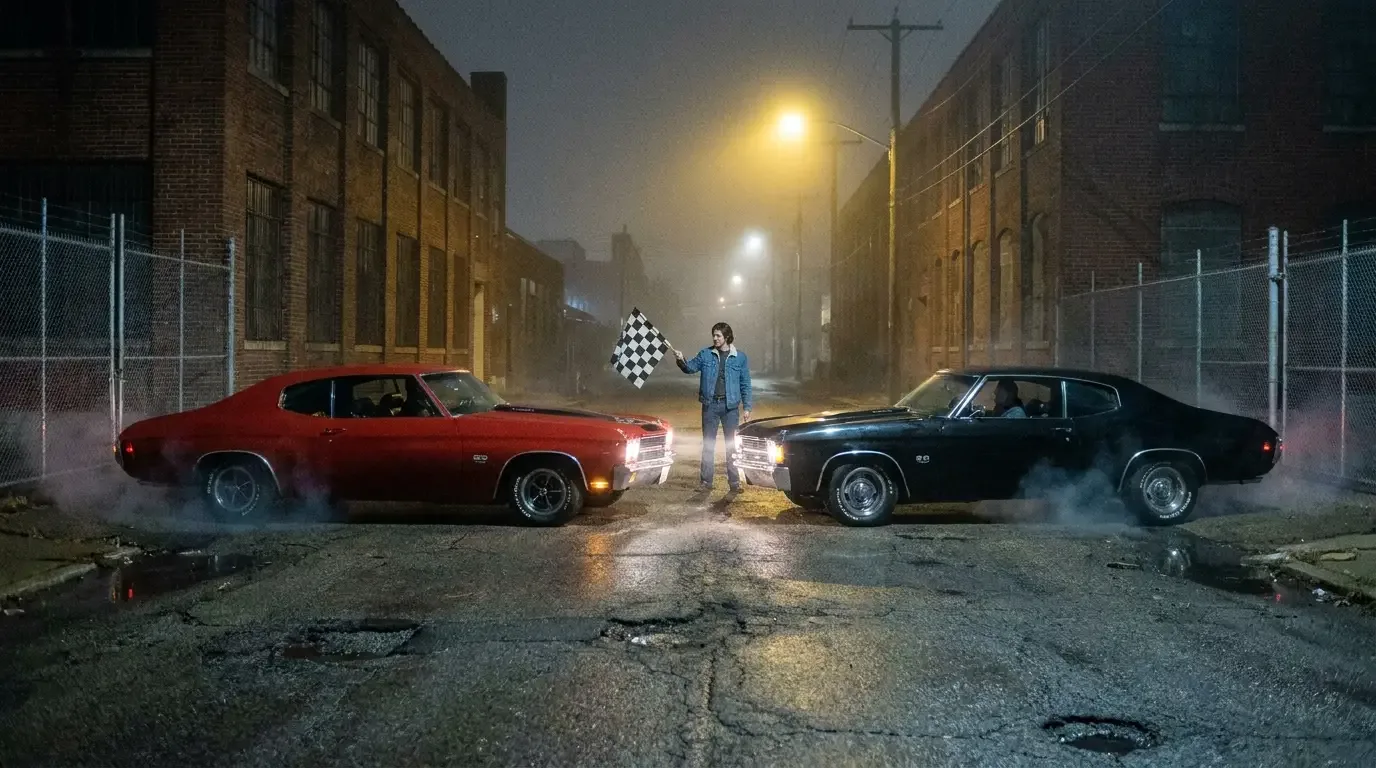
I've pulled apart enough dealer-built cars over the years to know the difference between a shop that bolted on parts for a brochure photo and a shop that actually built something. Baldwin-Motion was the second kind. This wasn't some Chevy dealer slapping a decal package on a stock SS396 and calling it special. Baldwin Chevrolet, out on Long Island, teamed up with Joel Rosen's Motion Performance shop in Baldwin, New York, and between them they built Chevelles that left the factory line looking like anything else and left the dealership looking like nothing else on the road.
Car Features
7 min read
Baldwin-Motion Phase III: The Dealer-Tuned Drag Chevelles
How Baldwin Chevrolet and Motion Performance built Phase III Chevelles that went further than any factory SS454, and what to check before buying one.
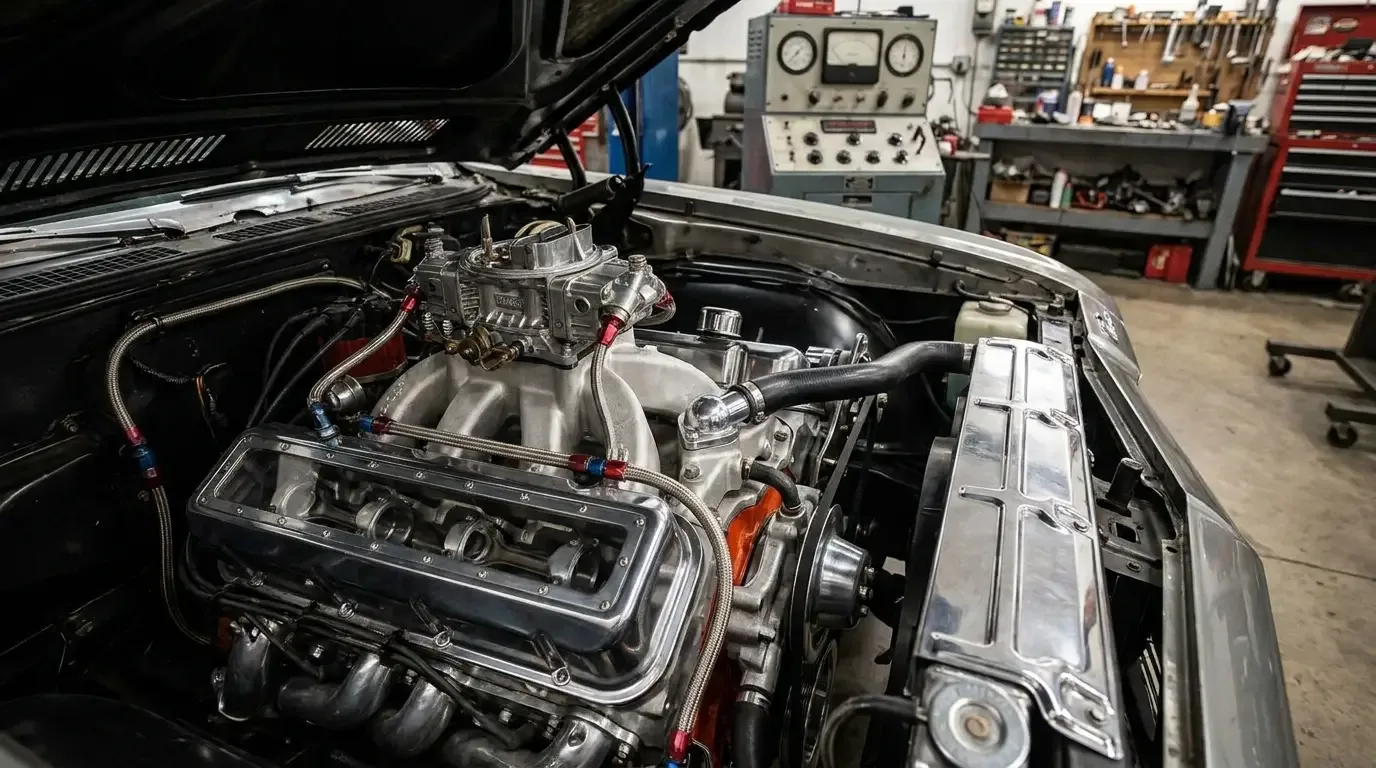
The Phase III designation was Motion's way of telling you exactly how far a car had been pushed. Phase I and Phase II covered milder combinations. Phase III was the top of the ladder, and on a Chevelle that meant a built big-block, usually a warmed-over 427 in the earlier years and later a 454, worked over by a shop that already had a reputation from building supercars on Camaro and Corvette platforms before they ever touched an intermediate.
What actually separated a Phase III from a factory SS454
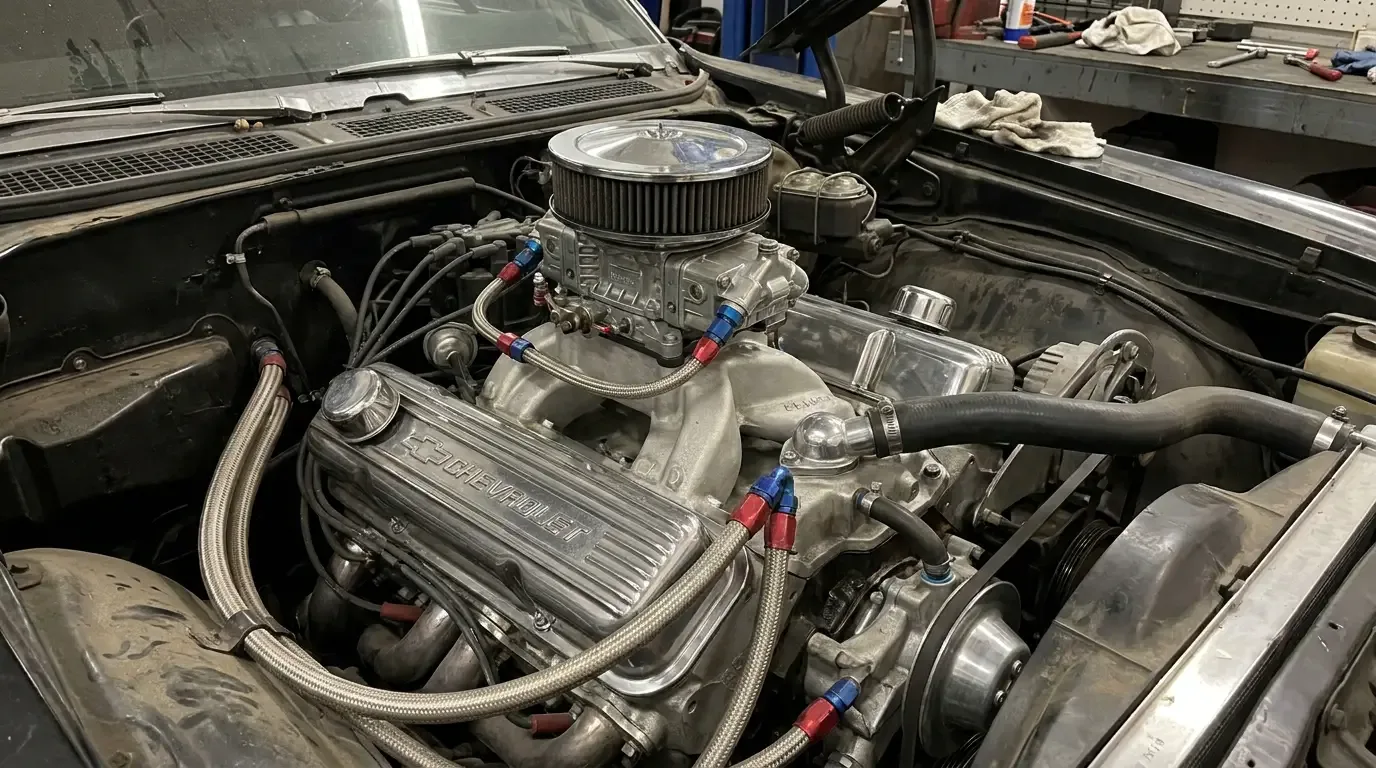
Here's the thing most people get wrong about dealer-tuned muscle: they assume it's just a factory car with an aftermarket intake and a set of headers thrown on. That's not what Motion was doing. A Phase III Chevelle got a genuinely built engine, forged internals, a stronger cam profile than anything GM would warranty from the factory, and carburetion sized to actually use the extra compression and cam duration Motion was running. Rosen had a chassis dynamometer running at his shop as far back as 1963, years before Baldwin-Motion existed, and dyno-tuning was central to how Motion built these combinations, not standard practice at most dealerships doing "performance packages" in that era.
The factory 454 options, the LS5 and LS6 covered in depth over in the piece on the Chevelle's racing legacy, were themselves strong engines. What Motion did was treat the factory LS6 as a starting point rather than a finished product, then build past it in ways GM's engineering department and its warranty department would never have signed off on.
| Build element | Factory SS454 (LS6) | Motion Phase III |
|---|---|---|
| Engine block | Factory 454, forged internals | Factory block, built and blueprinted by Motion |
| Camshaft | Solid-lifter, factory grind | Custom grind sized to the rest of the combination |
| Testing | Assembly-line quality control | Dyno-tuned at Rosen's Baldwin, NY shop |
| Warranty | Standard GM new-car warranty | Dealer-backed, outside factory warranty terms |
Why a Chevy dealer was allowed to do this at all
Baldwin Chevrolet could sell these cars because the paperwork ran through the dealership. A customer walked in, ordered a Chevelle, and the car went to Motion's shop as an outside modification before delivery, the same basic arrangement other performance dealers around the country used with their own tuning partners. It kept the car's title clean and the sale legitimate while letting the engine work happen somewhere GM's own assembly-line rules didn't apply. That loophole, dealer-installed performance work done after the car left the factory floor but before it reached the customer, is exactly how a handful of shops across the country built reputations that outlasted the muscle car era itself.
I've seen guys argue for hours over whether a Motion car should even be judged against factory-original standards at a show, and honestly that argument misses the point. These cars were never trying to be factory original. They were trying to be something better than what the factory would build, sold through a factory-authorized dealer with the paperwork to prove it.
Motion's own performance claims, and why they raised eyebrows
Motion's advertising for these cars leaned hard into big numbers, and part of the shop's reputation came from claims that were aggressive even by the standards of an era where every manufacturer's brochure exaggerated a little. I'd treat any specific quarter-mile time or horsepower figure attached to a period Motion advertisement as marketing copy first and a verified dyno result second, unless there's independent documentation backing it up. That doesn't mean the cars weren't fast. Phase III cars actually came with a written, money-back quarter-mile performance guarantee from Rosen himself, which is a different thing entirely from an inflated ad number: a shop doesn't put its own cash behind a claim it can't back up. It means the honest way to evaluate one today is by what the parts combination and the build quality actually support, not by whatever number appeared in a magazine ad forty-plus years ago.
What I can say without hedging is that Motion's reputation among period racers and dealers held up over years of repeat business, which tells you something a single advertised number never could. A shop selling exaggerated performance claims to a customer base that included actual drag racers doesn't stay in business and doesn't keep getting repeat orders from guys who'd find out fast if the car didn't run like it was supposed to.
What survives, and what to look for buying one
Genuine Baldwin-Motion cars are rare, and that rarity has created a real problem for buyers: plenty of ordinary Chevelles have been dressed up with Motion-style decals and sold as something they're never were. There's no substitute here for paper trail. A real Phase III should have documentation tying it back to Motion's build records where they survive, or at minimum a verifiable chain of ownership back toward the original sale through Baldwin Chevrolet. Don't trust a decal package alone, and don't trust a seller who can't explain where the car's history comes from before about 1985.
Mechanically, look at this like any other built big-block. Check for a rebuilt bottom end that matches the compression and cam specs claimed, verify the carburetor and intake combination make sense together instead of looking like parts bin leftovers, and get someone who actually knows Motion's history to look over any paperwork before you write a check. A misrepresented Phase III costs the same to buy as a real one and is worth a fraction as much.
Dealer-built performance cars like these are a different animal from the pure street and grudge machines covered in Chevelle Street and Grudge Racing Lore, but they come from the same instinct: somebody looking at what the factory was willing to sell and deciding it wasn't enough. Motion just had the shop, the reputation, and the dealer relationship to build that instinct into a business.
"A factory LS6 is a strong engine straight off the line. What Motion did was take that same block and refuse to stop where GM's engineers had to stop. That's the whole story of these cars, right there."
Mike Sullivan
Sources and notes
Related Reading
Have a
Chevrolet Chevelle
for Sale?
Reach thousands of serious classic car collectors across the US.
Sell It Here →
Are You a Classic Car Dealer?
List your full inventory and connect with targeted classic car buyers.
Join as a Dealer →
#Chevelle
#baldwin motion
#454 big-block
#Motion Performance
#dealer tuned muscle cars
#427 big-block

About the author
Mike Sullivan
Detroit-area muscle car enthusiast and restoration specialist with three decades of hands-on experience working on American iron.
Related Listings - Chevrolet Chevelle
Comments
Be the first to comment on this article.