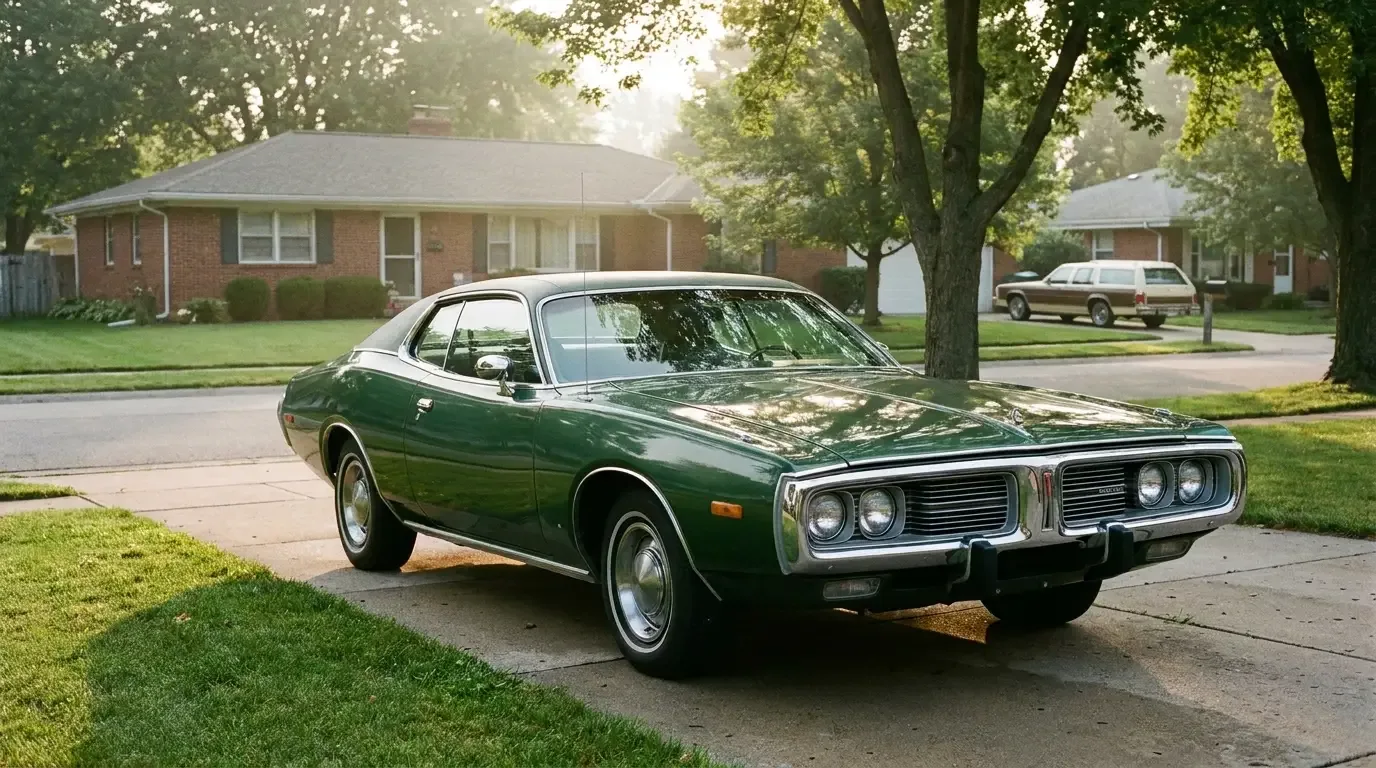
She bought the 1973 Charger secondhand in 1979, a graduation gift to herself after a job offer she hadn't expected to get. It wasn't the fast one. She knew that even then, standing in the driveway with the keys still warm from the previous owner's pocket. It was the comfortable one, the one with a vinyl roof and a quiet ride, and for the next eleven years it took her to work and back without asking much of her in return. That's the car this generation was built to be, and it's worth understanding it on those terms rather than measuring it against a 1969 R/T it was never trying to become.
Bigger bumpers, a different intention
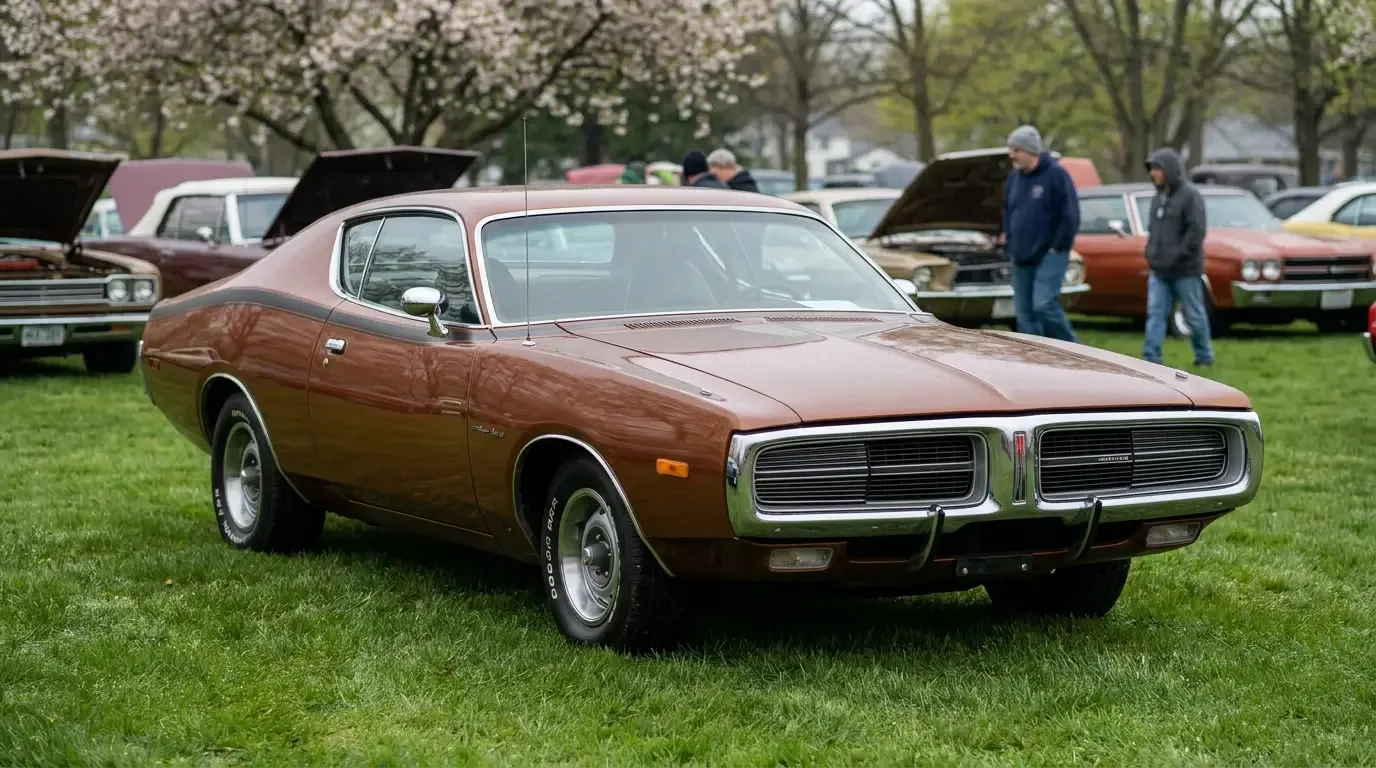
Federal regulations mandated stronger front bumpers starting with the 1973 model year, capable of absorbing a 5 mph impact without damage to safety equipment, and every domestic manufacturer had to design around that requirement. The Charger's front end grew heavier and more substantial looking as a result, the split grille from the 1971 dodge charger pushed forward and framed by chrome that did real structural work, not just decoration.
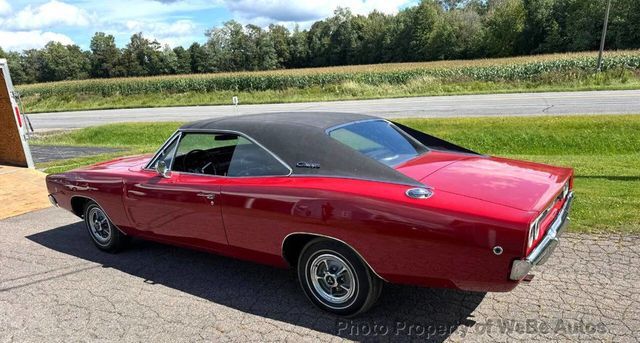
The rear bumper followed the same logic for 1974, growing again to meet the next phase of the same federal standard. Purists sometimes describe these bumpers as a compromise on the car's original lines, and there's truth in that. But they were also a genuine safety improvement, and the added mass, however unwelcome aesthetically, reflected priorities that had shifted since the Charger's muscle car debut years earlier.
A softer image, sold on purpose
Dodge's advertising for the Charger by 1973 leaned toward comfort and style rather than quarter-mile numbers. The SE trim, with its formal roofline and plush interior options, outsold the performance-oriented versions by a wide margin, a pattern that had started developing a few years earlier and only deepened as insurance costs and emissions rules made outright performance a harder sell.
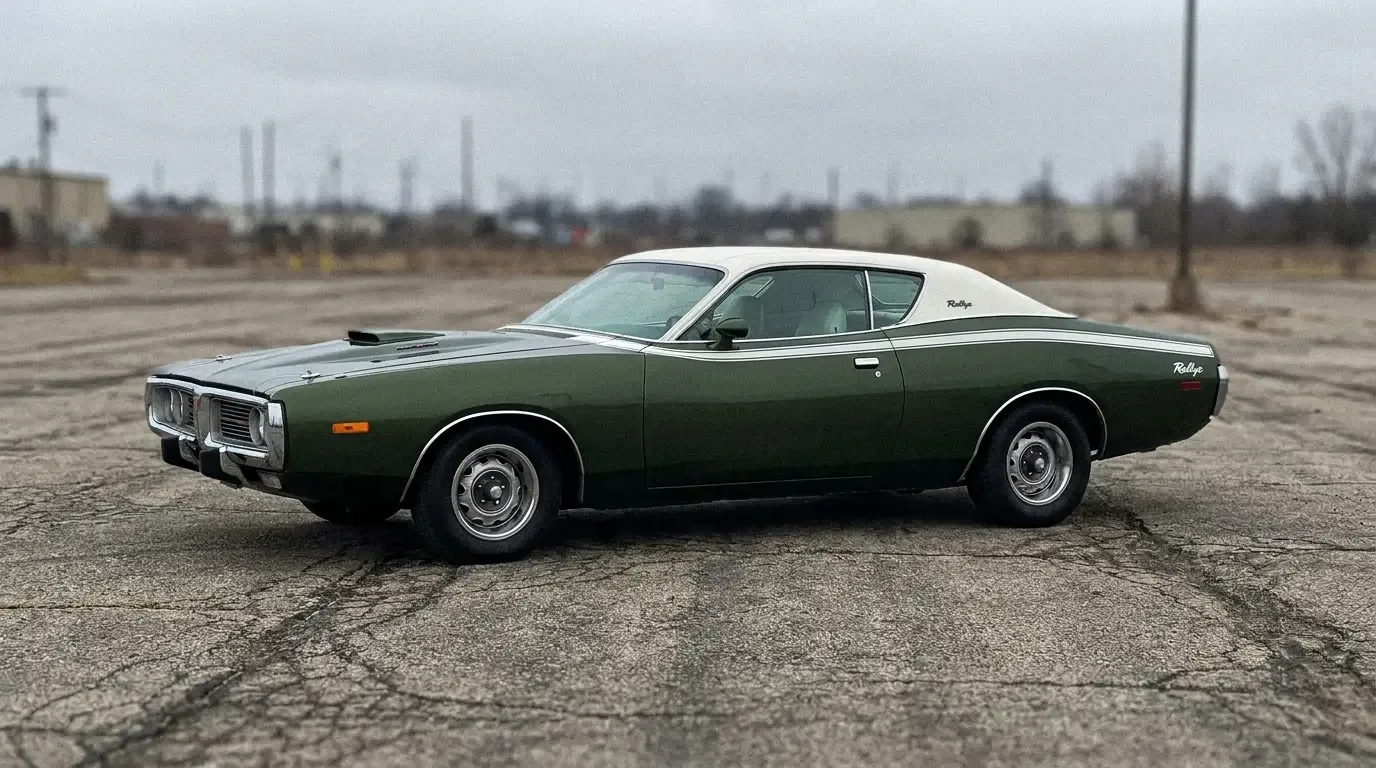
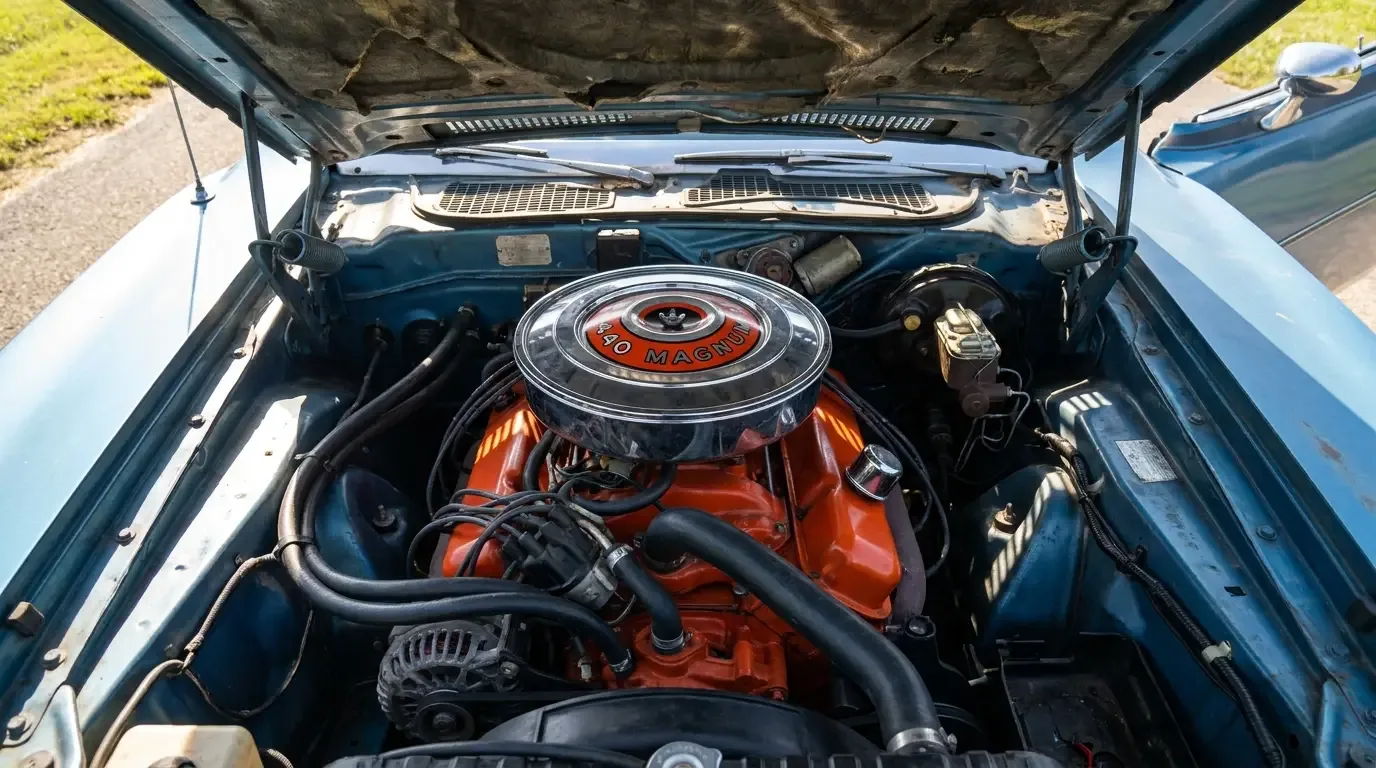
The Rallye package carried what remained of the performance identity, and the 440 was still technically available through 1973, though power ratings continued their downward drift under net measurement standards and tightening emissions equipment. By 1974, the available engines reflected a lineup built for smooth, comfortable driving more than stoplight drama, and that wasn't a failure of the car. It was simply what the market was asking Dodge to build.
"She kept the car in the barn for eleven years before she could sell it. When the new owner started it, she cried in the driveway."
— Nora Beckett
What these cars are like to own now
There's a quiet appeal to a 1973 or 1974 Charger that doesn't come up in most muscle car conversations. These cars ride softer, weigh more, and don't pretend to be something they aren't. For an owner who wants a comfortable classic to drive on weekends rather than chase a quarter-mile time, that's not a downside. It's exactly the point, and it's part of why these later Chargers have found their own quiet following among people who lived through the era and remember what these cars actually felt like to drive every day, not just what they looked like on a magazine cover.
The engine most commonly found under the hood by this point is a small-block V8, and the 440 remains a documented option for those who go looking, detailed further in the 1971 Charger 440 story. Rust remains the biggest practical concern, particularly around the rear quarters and the trunk floor, where these bigger, heavier cars trapped moisture the same way their earlier siblings did.
| Model Year | Bumper Change | Dominant Trim |
|---|---|---|
| 1973 | Federally mandated front bumper | SE |
| 1974 | Federally mandated rear bumper added | SE |
Interior and daily comfort changes
Inside, the 1973 and 1974 cars pushed further into the comfort direction the SE trim had already established. Thicker seat padding, added sound insulation, and available options like a tilt steering wheel and better climate control equipment made these cars noticeably quieter and more relaxed to drive than their 1971 counterparts. For someone using the car as actual transportation rather than a garage-kept collectible, that mattered more than a spec sheet ever could.
These weren't luxury cars in the way a contemporary Cadillac was a luxury car, but relative to where the Charger started in 1966, the distance traveled by 1974 is significant. The same nameplate that once meant a stripped-down fastback built for straight-line speed had become, by its final fuselage years, a genuinely comfortable mid-size coupe that just happened to still offer a big-block engine if you specifically asked for one.
The last chapter of the fuselage story
These two model years close out the body style Dodge introduced with such confidence in 1971. For the full picture of how that generation started, including the styling that made the earlier cars so distinctive, 1971 dodge charger is where that story really begins. And if you're curious what a comparable Charger looked like a year earlier, before the second round of bumper regulations landed, browse 1972 Chargers shows the transition in progress.
The woman with the 1973 Charger in the barn wasn't chasing a legend. She just liked how the car felt on a Sunday drive, and eleven years later, when she finally let it go, that feeling was still there for the next owner to find.
That's the thing about these later fuselage cars that gets lost in conversations dominated by horsepower and quarter-mile times. Somebody owned every single one of them, drove it to a job, parked it in a driveway through a decade of ordinary weather, and eventually handed it off to someone else who saw something worth keeping. The 1973 and 1974 Chargers weren't built to win arguments about which Mopar was fastest. They were built to be lived with, and fifty years later, the ones that survived did so because somebody cared enough to keep them running through years when nobody else was paying attention.
Sources and notes
- Wikipedia - Dodge Charger (B-body) - confirmed the 1973 front and 1974 rear 5 mph bumper mandates and 1975 redesign.
- Conceptcarz - Dodge Charger - confirmed the SE trim's dominance and comfort-oriented lineup.
- Indie Auto - 1971-74 Charger analysis - background on the fuselage era closing with the 1973-74 cars.
- autoevolution - Dodge Charger - context on declining performance ratings under net measurement and emissions equipment.
- Muscle Car Facts - Charger - confirmed the 440 remained a documented option through the period.