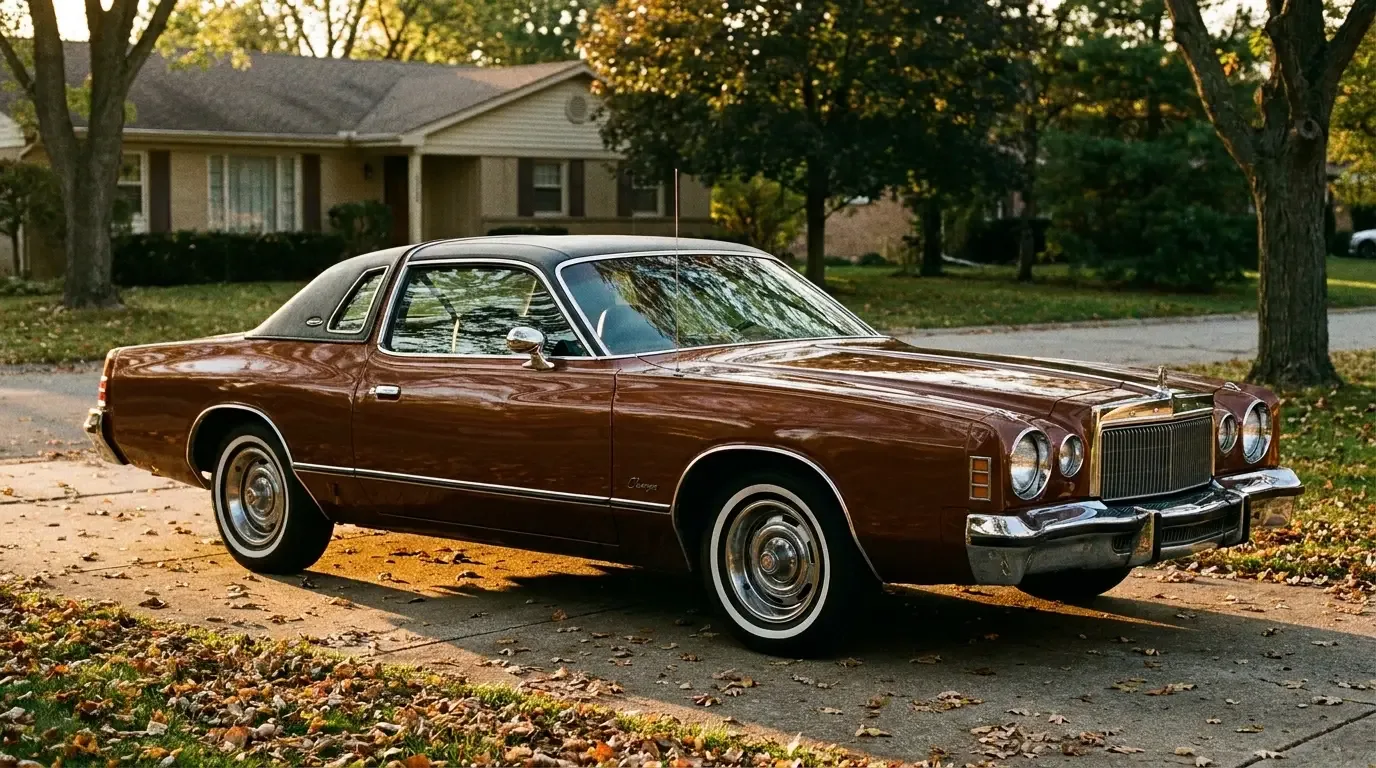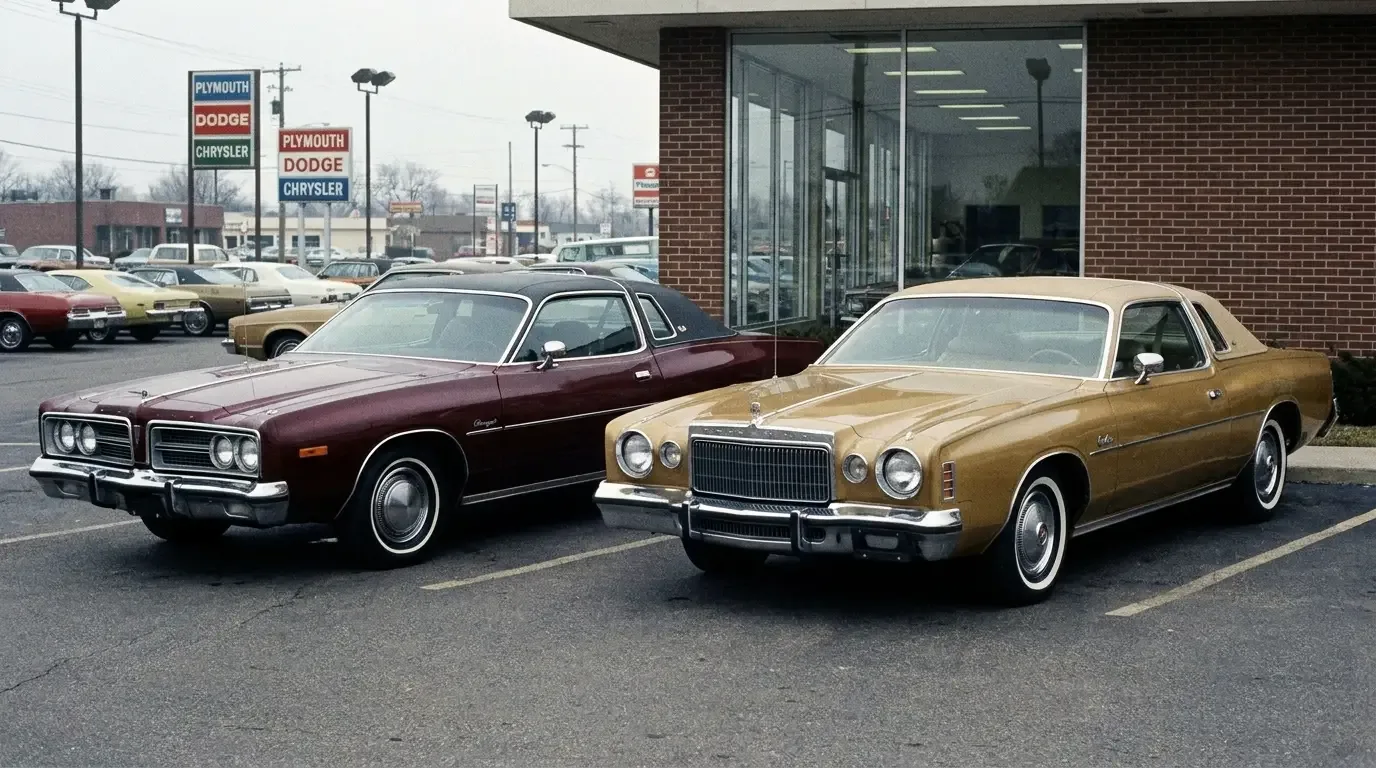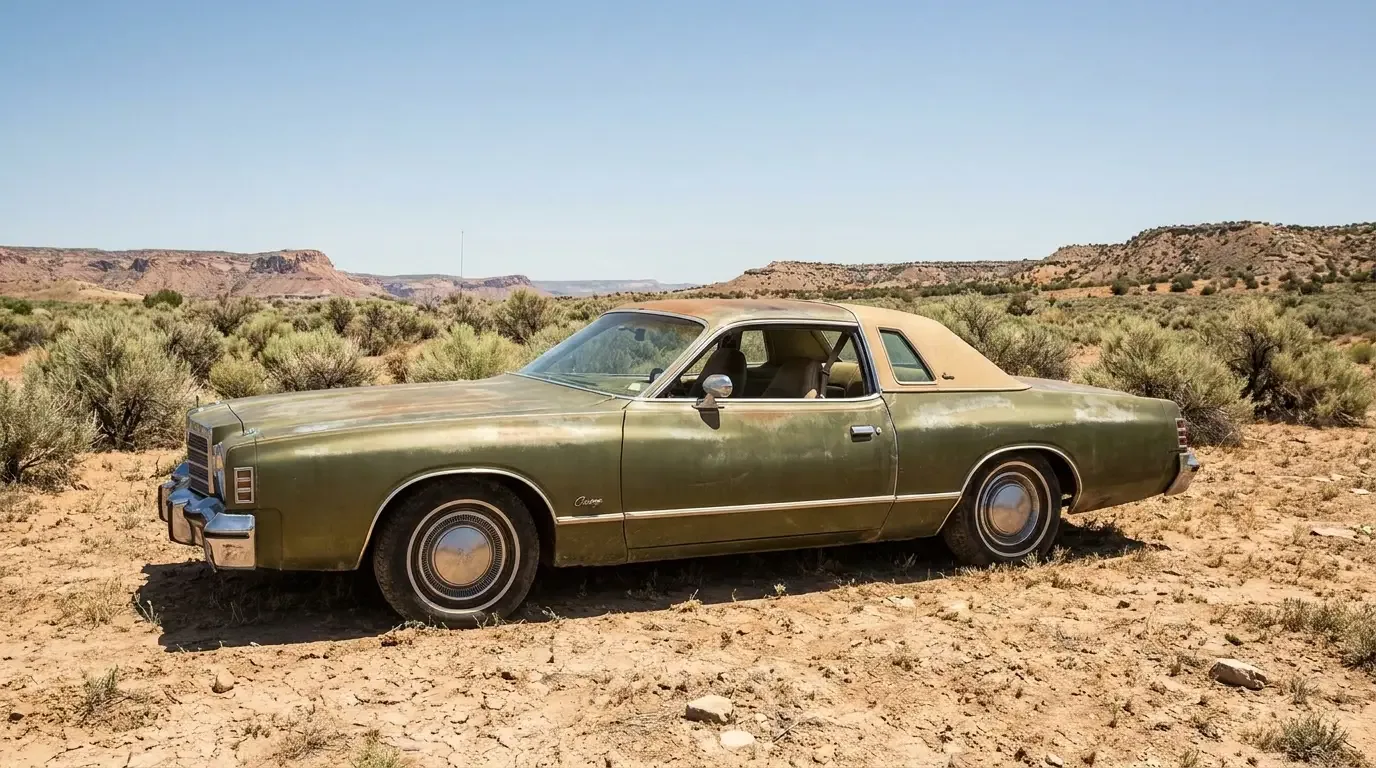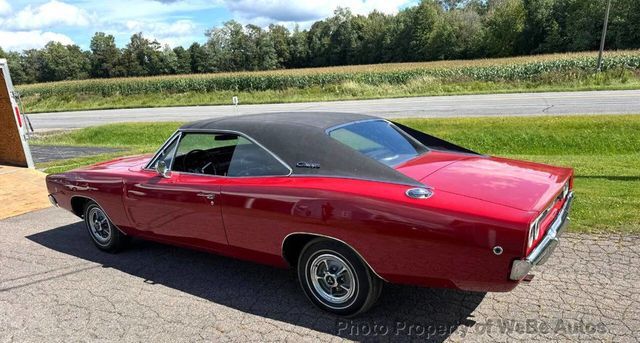
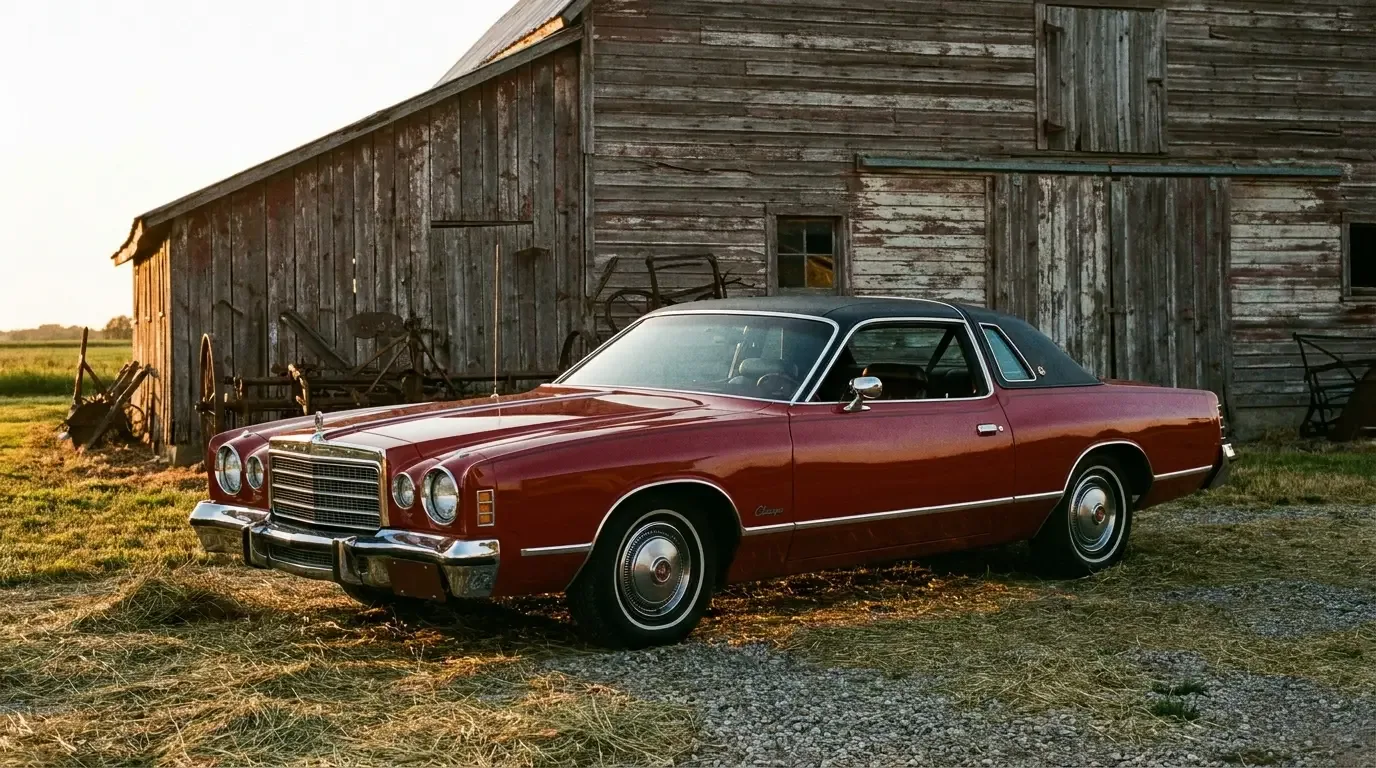
The barn smelled like cut hay and old motor oil, and the car underneath the cover was not the Charger anyone expected. No scoop punching through the hood, no bumblebee stripe circling the tail. Just a long, low, unmistakably formal shape in Vintage Red with a half vinyl roof and opera lamps set into the C pillars like something borrowed from a Thunderbird brochure. This was a 1975 Charger SE, and it was never supposed to remind you of Bo and Luke Duke. It was supposed to remind you of your accountant's Cordoba.
By 1975 Dodge had made a decision that still splits rooms at car shows: the Charger name would carry a personal luxury coupe instead of a muscle car. For a full account of how that decision unfolded across the whole B body lineup, the personal-luxury Charger story lays out the corporate reasoning year by year. This piece stays close to one car and one moment: the SE trim as it left the showroom floor in its debut year, and why a woman who never cared about quarter mile times fell for it anyway.
A name detached from its history
The Charger that mattered to drag strip regulars died quietly after 1974. What replaced it shared a platform with the Chrysler Cordoba, the car credited with saving Chrysler's corporate bacon that year, and the resemblance was not an accident. Dodge needed a version of that formula wearing its own badge, and the Charger nameplate, sitting unused and available, got the assignment. The SE trim sat at the top of that new lineup, above the base Charger and the Daytona appearance package, and it existed to be looked at from across a parking lot, not timed at a dragway.
Standard equipment told the story before you opened a door. Opera windows, a padded half vinyl roof, wide rocker moldings, and a hood ornament that looked lifted from something twice the price. Inside, the SE offered a choice of cloth or vinyl bench or bucket seating, woodgrain trim on the dash and door panels, and a level of sound deadening that made the old Charger's raw exhaust note feel like a memory from a different decade. Dodge wasn't chasing the same buyer anymore. It was chasing the buyer who wanted quiet.
What sat under that long hood
Engine choices ran from a 318 cubic inch V8 as the entry point up through a 360 and a 400 at the top of the range. The 440 that had powered earlier Chargers was gone, dropped from the nameplate after the 1974 model year, so the 400 was the largest engine a 1975 SE buyer could order. Horsepower numbers had fallen hard from the muscle car peak, a combination of emissions equipment, lower compression ratios, and the industry wide shift to net rather than gross power ratings. A 400 four barrel in this era made around 190 hp net, numbers that would have embarrassed a 1969 R/T buyer but suited exactly what the SE was built to do: pull smoothly away from a stoplight, cruise a highway without strain, and never demand a second thought from the person behind the wheel.
That's worth sitting with for a second, because it explains the whole car. The SE was never underpowered for its mission. It was correctly powered for a mission that had changed.
The interior as the actual selling point
Sit inside one of these and the engineering priorities become obvious. The dash sweeps in a single unbroken arc, trimmed in simulated wood that catches afternoon light without looking cheap up close. Optional 60/40 split bench seating let a driver and one passenger each set their own position, a small comfort that mattered enormously to buyers cross shopping a Monte Carlo or a Grand Prix. Air conditioning, once an option that marked a car as fully loaded, became something close to expected on an SE by the middle of the decade.
The quiet inside the cabin wasn't accidental either. Additional insulation in the floor pan and firewall, softer bushings in the suspension, and a numerically lower rear axle ratio all worked toward the same goal: a car that felt expensive at idle and unhurried at speed. Ride quality over a rough county road was genuinely better than the earlier R/T generation, a trade almost every SE buyer was happy to make.
"She kept the car in the barn for eleven years before she could sell it. When the new owner started it, she cried in the driveway."
— Nora Beckett
That quote belongs to a different Charger and a different owner, but it fits this one too. Personal luxury cars from this era get inherited more often than they get bought outright. They sit in garages attached to houses their original owners no longer live in, waiting for a grandchild or a nephew to decide whether to sell or restore. read more here covers exactly how tangled that Cordoba relationship became by the time production wound down, and it's a thread worth following if the platform sharing story interests you.
Why collectors are circling back now
For decades the SE sat at the bottom of the Charger hierarchy in collector interest, well behind the R/T and Daytona cars from the muscle era. That's shifting, slowly. Original, unmolested SE cars with factory paint and intact vinyl roofs are getting harder to find precisely because nobody thought to preserve them when they were simply used cars. A clean example with documented mileage and its original interior now draws attention it wouldn't have gotten fifteen years ago, mostly from buyers who remember these cars from childhood rather than buyers chasing horsepower numbers.
The market logic is straightforward. Muscle era Chargers got restored, cloned, and sometimes faked in enormous numbers because the money justified the effort. Nobody bothered doing that to a 1975 SE, which means the surviving cars are more likely to be honest, unmodified originals. That's a real advantage for anyone shopping this generation who wants a car with an intact factory history rather than a restoration built on guesswork.
| Spec | 1975 Charger SE |
|---|---|
| Base engine | 318 cu in V8 |
| Optional engines | 360, 400 cu in V8 (440 dropped after 1974) |
| Approx. curb weight | around 4,100 lb |
| Wheelbase | 115 in |
| Notable features | Opera windows, half vinyl roof, woodgrain interior trim |
Buying one today
The mechanicals on an SE are simple and well documented, shared broadly across Chrysler's B body lineup of the period, so parts availability for engine and drivetrain components is genuinely good. The harder finds are trim specific: opera window trim rings, the correct woodgrain dash inserts, and factory upholstery patterns are the pieces that stall a restoration for months. Rust in the trunk floor, lower quarters, and around the vinyl roof mounting points deserves close inspection before any offer, since moisture trapped under that padded roof did real damage to cars that weren't garaged.
Anyone building a broader picture of this generation should start with dodge charger history, which traces the nameplate from its 1966 debut through the personal luxury years and beyond. For those ready to shop, current listings turn over regularly, and buyers can browse classic Chargers to see what condition and pricing look like in today's market before committing to a purchase.
The 1975 SE will never satisfy someone hunting a 440 Magnum and a shaker hood. It was never built to. What it offers instead is a genuine, honestly built time capsule of a very specific American moment, when comfort mattered more than conquest and a coupe could be beautiful without being fast.
Sources and notes
- Dodge Charger (B-body), Wikipedia - confirmed the 1975 SE shared the B body with the Cordoba, the 318/360/400 engine lineup, the 115 in wheelbase, and that the 440 was dropped after 1974.
- Chrysler Cordoba, Wikipedia - confirmed the shared 115 in B body platform and the 318/360/400 engine range.
- Mac's Motor City Garage: Cordoba Clone - confirmed the SE base price (~$4,900) and roughly 30,000 units sold in 1975.
- Hagerty: 1976 Dodge Charger SE - confirmed the personal-luxury positioning and the Cordoba sales gap.
- Automobile Catalog: 1975 Charger SE 318 V-8 - confirmed the 318 net rating of 150 hp and the 400 four-barrel at 190 hp.