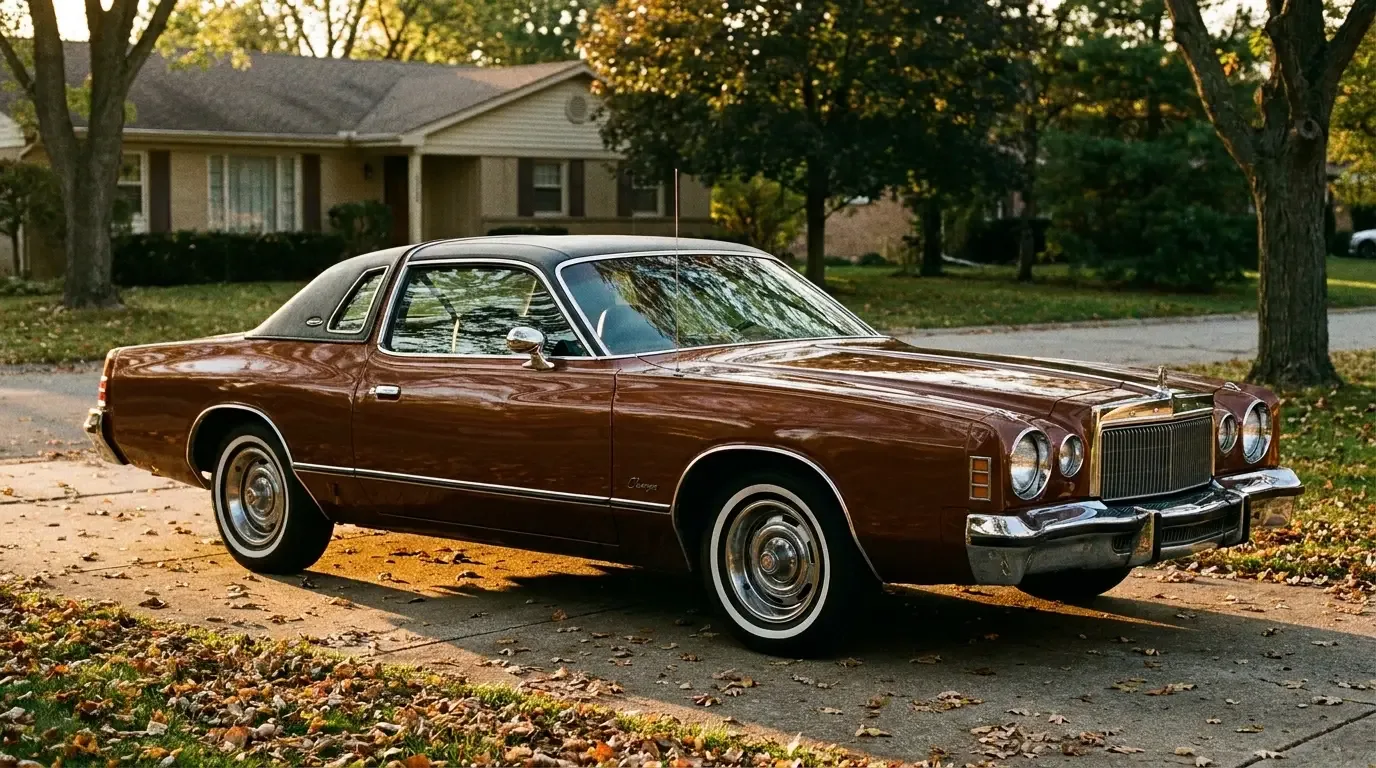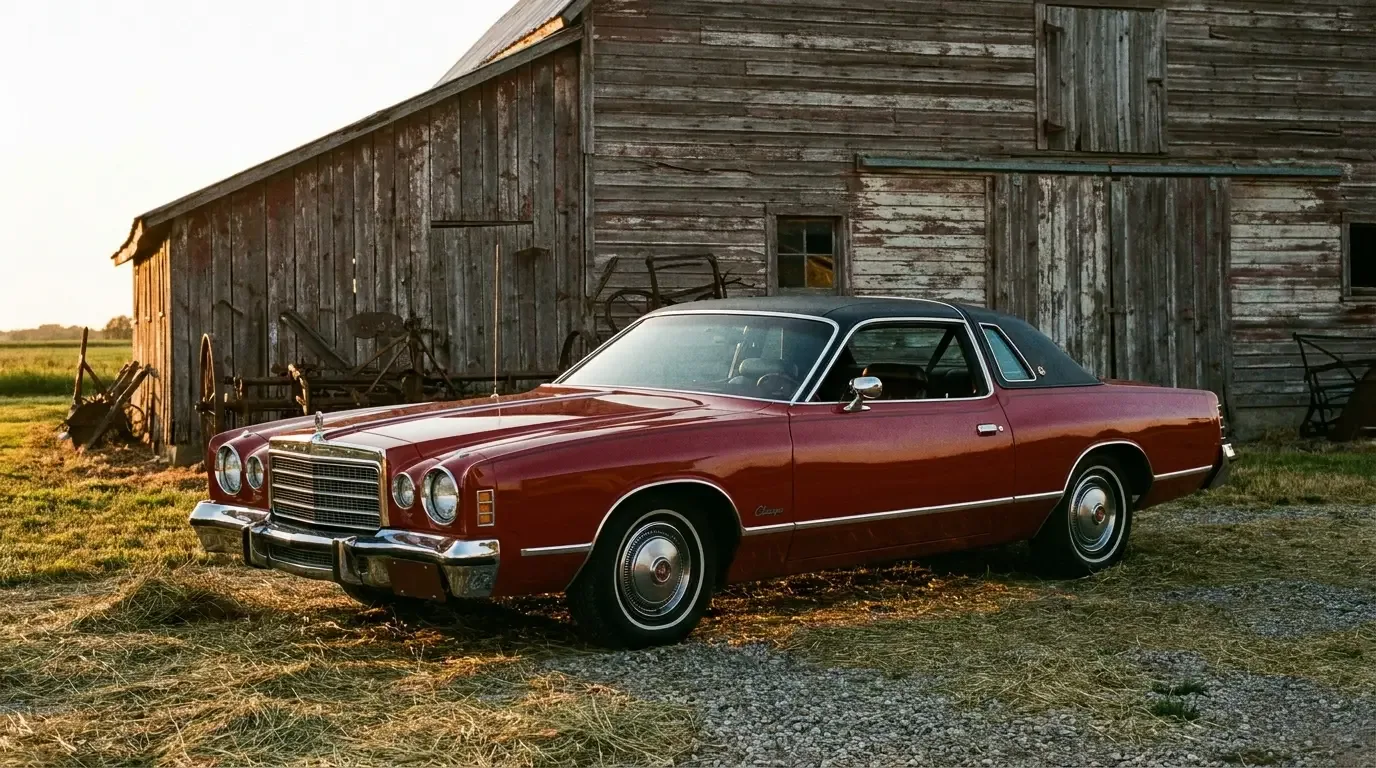
Pull the fender tag on a 1975 Charger and a 1975 Cordoba side by side, and the body codes tell you something the badges won't: these two cars started life on the same drawing board. The Charger SE and the Chrysler Cordoba shared a platform, a basic structure, and a great deal of sheet metal, a fact Chrysler Corporation was in no hurry to advertise at the time. The build record matters here, not because it tells you everything, but because it's the factory's own account of what actually left the line, and in this case the factory's account is more interesting than the marketing.
Two names, one platform
Chrysler's B body platform underwent a significant redesign for the 1975 model year, and the corporation made a decision that reshaped both nameplates involved. Rather than developing entirely separate personal luxury coupes for Dodge and Chrysler, the corporation built one core structure and dressed it two ways. The Chrysler version became the Cordoba, launched with its own advertising push and, notably, without the corporate wreath, an unusual move that let Chrysler market it as something closer to an independent brand statement. The Dodge version inherited the Charger name, a nameplate that had spent nine years building an entirely different reputation.
This wasn't an accident of parts bin engineering. It reflected a deliberate strategy inside Chrysler product planning. The corporation needed a personal luxury coupe to compete against the Monte Carlo, the Grand Prix, and the Thunderbird, all of which were selling in numbers that dwarfed anything the muscle car segment still produced by the mid 1970s. Rather than risk two failures, Chrysler concentrated its engineering resources on one platform and let sales data, not nostalgia, decide which badge got top billing.
Reading the differences in the build sheet
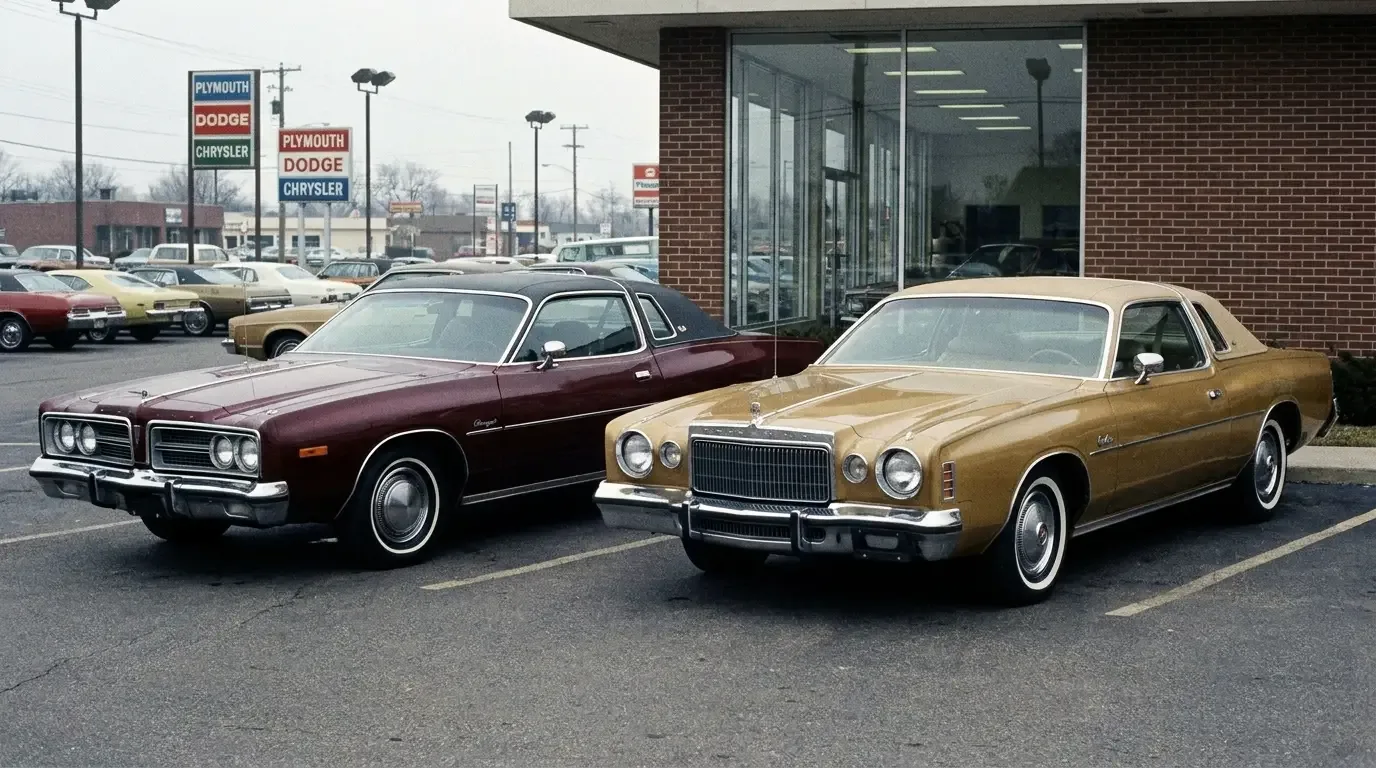
Where the cars diverge is in the details a factory historian actually cares about. Grille design, taillight treatment, interior trim packages, and badge placement separated the two, along with some differences in standard equipment levels between comparable trims. The Cordoba carried a more overtly formal grille with stacked headlights in most configurations, while the Charger SE's front clip retained a few visual cues meant to connect it, however loosely, to the nameplate's muscle car past. Neither car fooled anyone who looked closely, but the styling teams clearly worked to give each brand its own face on a shared body.
Interior trim levels tell a similar story. Chrysler positioned the Cordoba as the more upscale offering within the shared platform, with certain premium trim and upholstery options either exclusive to the Cordoba or introduced there first before trickling down to the Charger SE a model year later. This is the kind of detail that only shows up clearly when you compare build sheets across both cars from the same production year, and it's the sort of research that separates documented history from dealer floor mythology.
"The build record matters. Not because it tells you everything, but because it's the factory's own account of what left the line."
— Tom Ramirez
Why the pairing worked, commercially
From a corporate standpoint the strategy succeeded. The Cordoba became a genuine sales success for Chrysler, credited by many accounts with helping stabilize the corporation's finances during a difficult stretch in the mid 1970s. The Charger SE never matched those numbers, but it didn't need to. Its job was to give Dodge dealers a competitive product in a hot segment without requiring Chrysler to fund a second ground up development program. Shared engineering costs made a marginal product line profitable that would have struggled to justify its own dedicated platform.
The tradeoff for enthusiasts came later, once the muscle car nostalgia market matured in the 1980s and 1990s. Charger buyers who wanted a 1966 through 1974 car found a well documented, heavily collected segment. Buyers interested in the 1975 through 1978 Charger found a car whose identity was permanently tangled with a Chrysler sibling that most people, understandably, remember more fondly. That tangled identity is a large part of why the personal-luxury Charger era gets glossed over so often in broader Charger retrospectives, when it deserves its own careful accounting.
Distinguishing an original Charger SE from a converted Cordoba
Because the two cars share so much structure, and because Charger badges have always carried more resale value than Cordoba badges among casual buyers, verifying authenticity matters more here than on most classic Mopar purchases. The fender tag remains the definitive source. Body codes, trim codes, and the VIN itself will confirm whether a car left the factory as a Charger or a Cordoba, and no amount of badge swapping changes what's stamped into the metal.
| Detail | Charger SE | Cordoba |
|---|---|---|
| Brand | Dodge | Chrysler |
| Platform | Shared B body | Shared B body |
| Positioning | Dodge's personal luxury entry | Chrysler's flagship personal luxury coupe |
| Approx. production, debut year | ~30,800 (1975) | ~150,100 (1975) |
Anyone chasing this generation should approach a listing with the same skepticism they'd apply to any Mopar with a complicated parts history. Ask for the fender tag decode before anything else. A seller who can't produce one, or who gets vague about which trim codes correspond to which options, is a seller who may not fully understand what they're selling either.
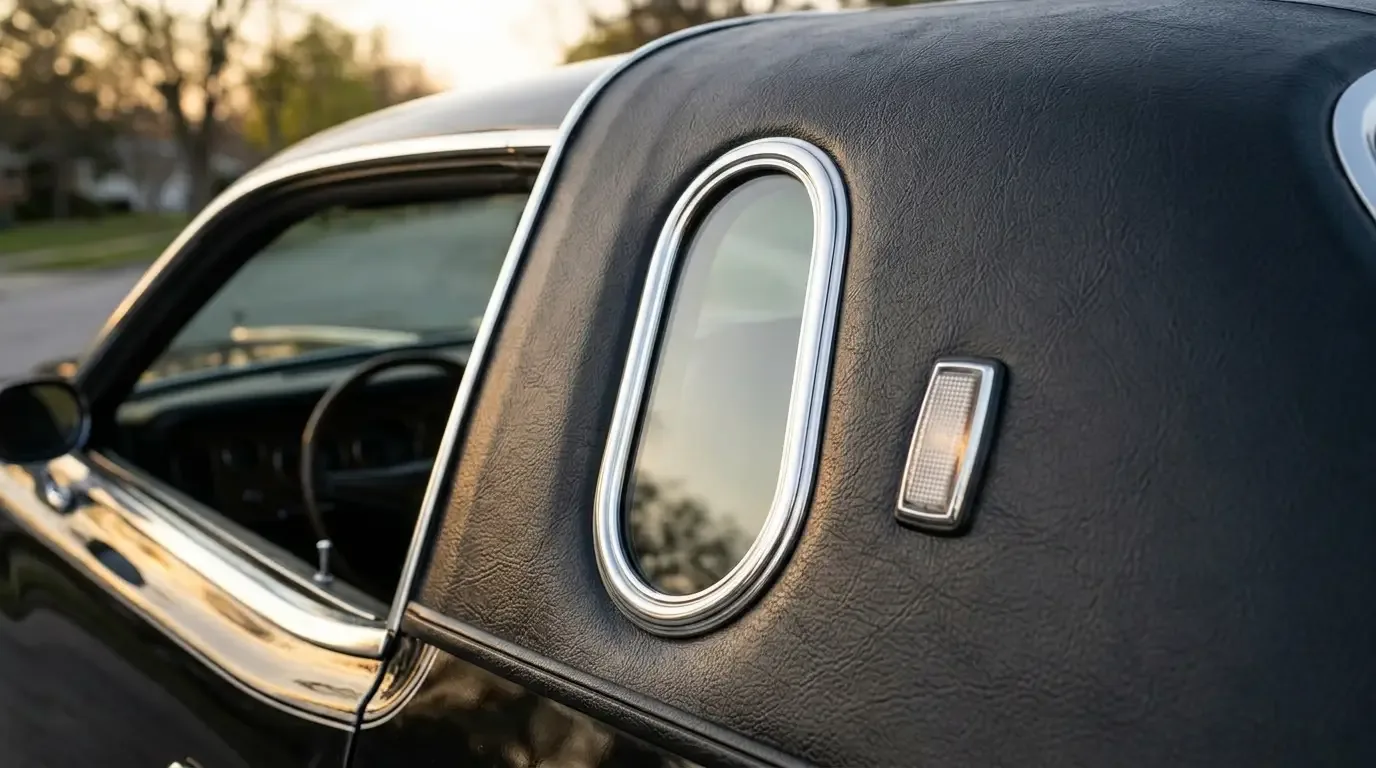
read more here covers the styling details that defined this era's exterior look in more depth, including the opera windows and vinyl roof treatments that became the visual shorthand for the entire personal luxury Charger generation.
The historical verdict
Time has been kinder to the Cordoba's reputation than to the Charger SE's, mostly because Chrysler's own marketing built the Cordoba as a standalone success story while the Charger name carried baggage from a very different era. That's a marketing outcome, not an engineering one. Underneath the badges, these were two well built, competently engineered personal luxury coupes sharing a platform that did exactly what Chrysler needed it to do in a genuinely difficult decade for the American auto industry. The historical record supports treating both cars as what they were: siblings, not imitations, each earning its badge in its own market.
Sources and notes
- Chrysler Cordoba, Wikipedia - confirmed the shared B body platform with the Charger SE and the Cordoba's own coin-derived medallion rather than a corporate wreath.
- Dodge Charger (B-body), Wikipedia - confirmed the 1975 platform redesign and 1975 Charger SE production of 30,812 units.
- Mac's Motor City Garage: Cordoba Clone - confirmed the two cars were near-identical apart from grille, taillights and badging, and the price/sales gap.
- Hagerty: 1976 Dodge Charger SE - confirmed the Cordoba's ~150,000 units versus the Charger SE's ~31,000 in 1975.
- Motales: 1975 Dodge Charger SE - confirmed the shared engineering and positioning of the two nameplates.