
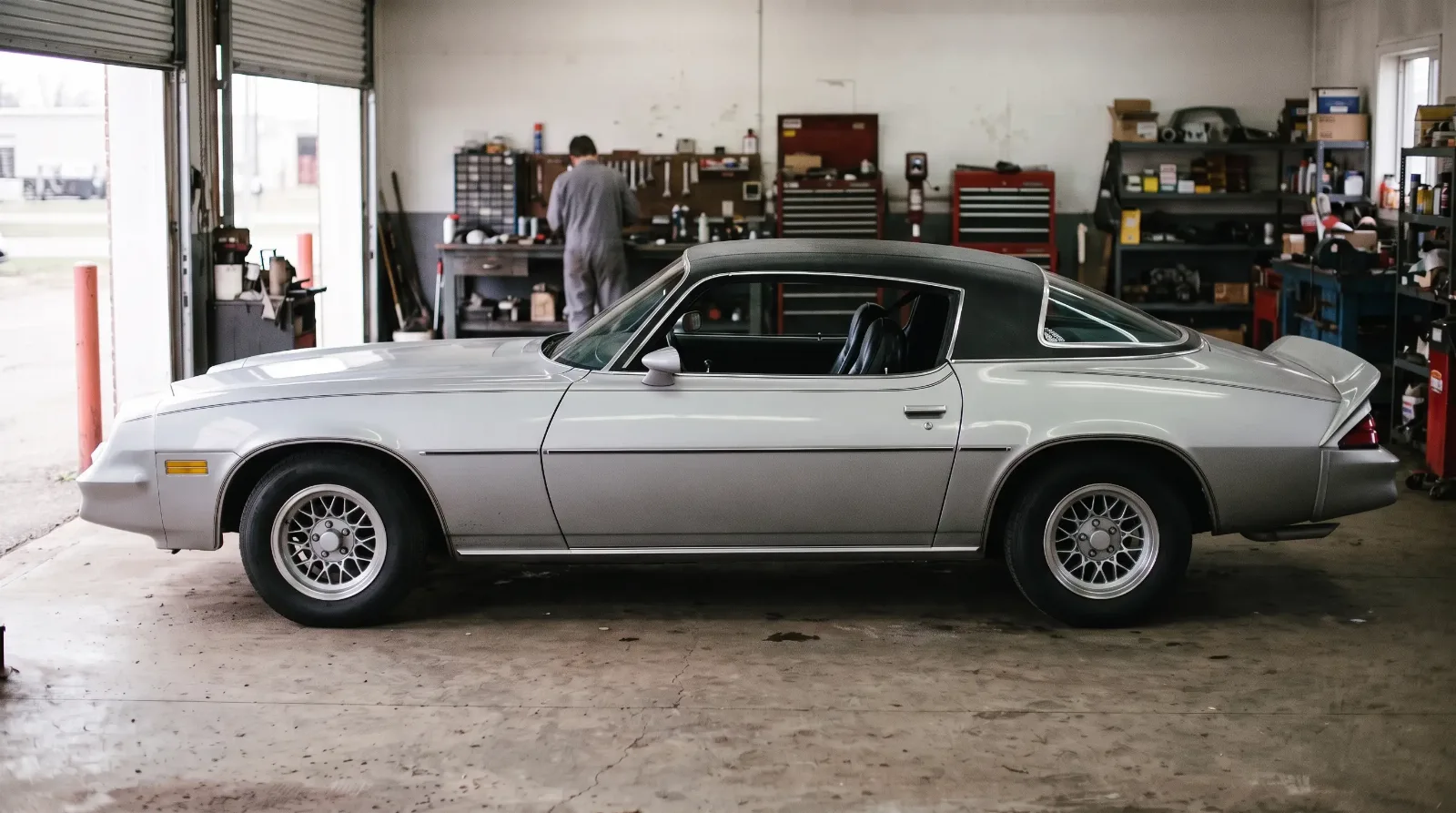
The 1978 Camaro Z28 is the year the second generation finally looked finished. For four seasons the car had worn a nose and bumpers designed around a federal rule, and you could see the compromise from across the street. For 1978 Chevrolet wrapped both ends in body-color urethane, added lift-out glass roof panels to the option list, and gave the Z28 a scoop, louvers and a spoiler that made it look like it meant business. Under the skin, it was the same car. On the surface, it was a new one.
Car Features
7 min read
The 1978 Camaro Z28: Urethane Nose, T-Tops and a New Face
For 1978 the Camaro got body-color urethane bumpers and its first T-tops, and the Z28 got a scoop, louvers and a spoiler. How to read and keep one right.
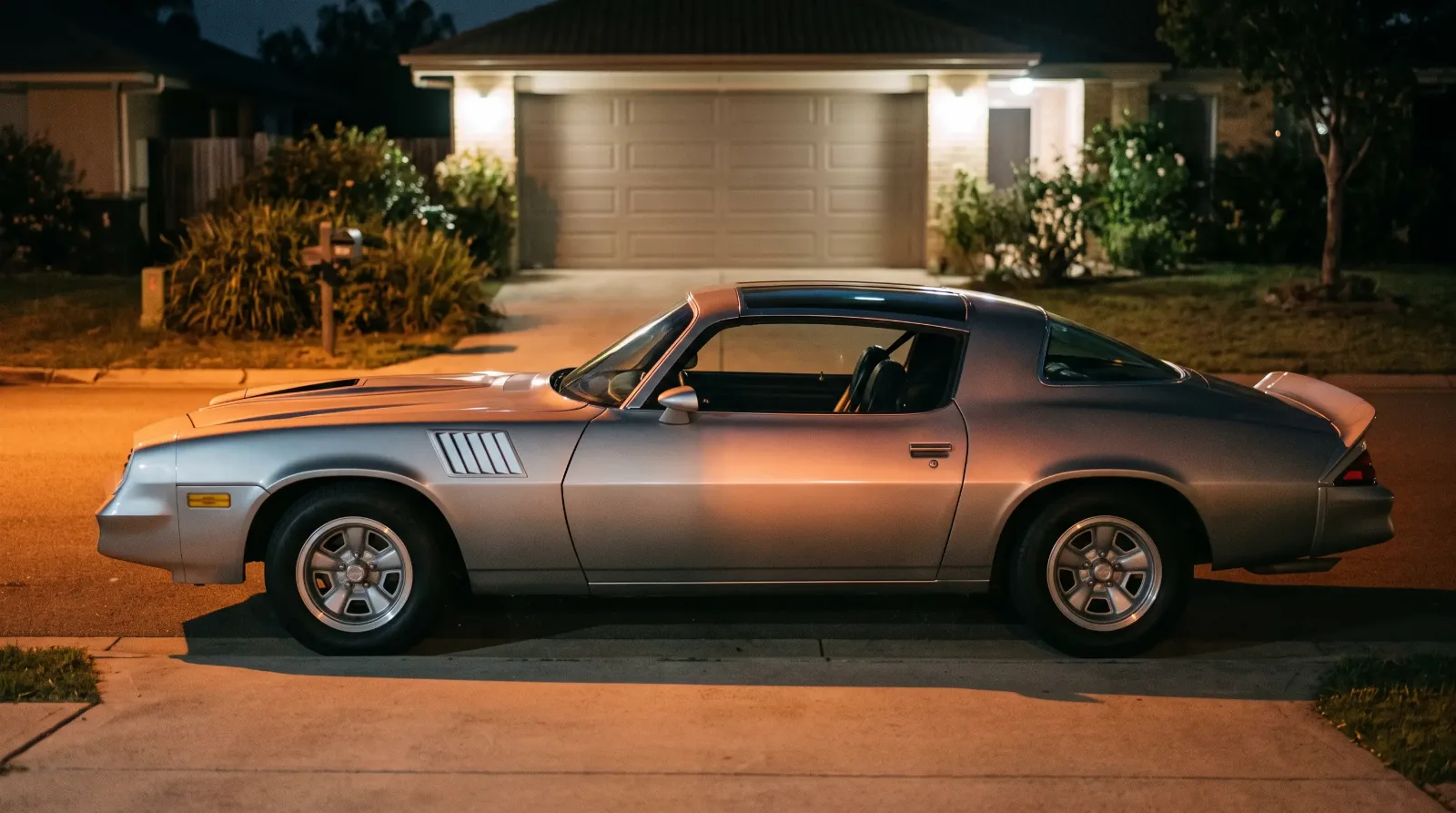
The way to read a 1978 is panel by panel, seam by seam. That is where its story is. If you want the whole twelve-year arc of the second generation, the platform and the engines, the details are in the main history. Here we stay on what changed in 1978, why it mattered, and how to keep one honest.
What the urethane nose fixed
Go back to 1974. To meet the new federal bumper rules, Chevrolet hung aluminum bumpers front and rear, built a new fiberglass nose with deep headlamp buckets and a forward-sloping grille, and the car grew 7 inches. It worked. It also looked bolted on, because it was. The bumper read as a separate part sitting in front of the body.
The 1978 fix was to stop pretending the bumper was a separate part. Front and rear got body-color urethane covers, the same cellular urethane idea Chevrolet had used on the Corvette. The bumper was still there in function. You just did not see it as a bar anymore. Paint ran right over the nose and the tail, and the shape read as one piece from the windshield forward.
From the inside of a restoration, that change is bigger than it looks in a brochure. The 1978 covers are one of the reasons the second-gen panel catalog splits by year. A 1974 to 1977 bumper is a different set of parts from a 1978 to 1981 one, and they do not swap without work. At the back, the tail lamps were revised too, with amber turn signals. Put a 1977 next to a 1978 from behind and you can tell them apart in a second.
T-tops arrive on the Camaro
The second-generation Camaro never had a convertible. That was a decision, not an oversight, and it left buyers with nowhere to go if they wanted the sky. For 1978 they got an answer: the first T-top option on a Camaro, with tinted glass lift-out panels.
Chevrolet was not first in the family. The T-top had shown up on the 1976 Trans Am 50th Anniversary car and was a regular Firebird option for 1977. The Camaro got it one year later. Fine by me. The glass panels suit the long, low roof, and a T-top 1978 still looks right with the panels in or out.
Builder's note: a T-top car is a different car to restore. Seals, weatherstrip channels and the drain paths all need attention, and a T-top body that sat outside for twenty years usually tells you about it in the floor pans. Check before you fall in love.
How the 1978 Camaro Z28 dressed the part
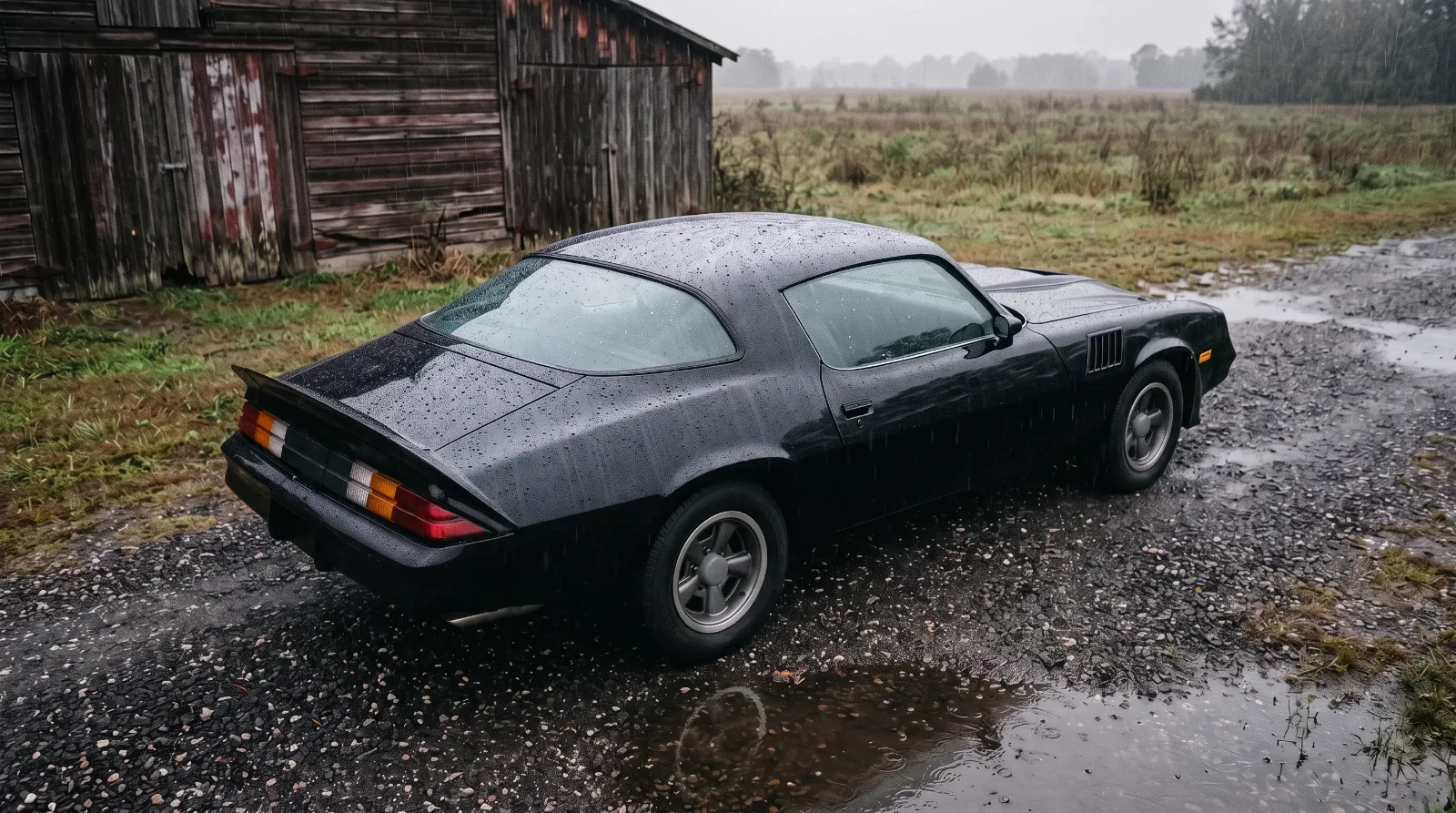
The Z28 had come back as a 1977½ model in the spring of 1977. For 1978 it got the full benefit of the new body, plus its own set of details. A NACA-style hood scoop. Slanted louvers on the front fenders. A body-color rear spoiler. The scoop was not functional, and sources disagree on whether the fender louvers were. Treat them as styling and you will not be wrong.
The engine was the LM1 350 four-barrel, rated at 185 hp and 280 lb-ft. Nobody bought a 1978 Z28 to win a drag race against a 1970 car, and anyone telling you otherwise is selling something. What it delivered was a well-sorted package that looked right, and buyers responded: 54,907 Z28s were built for 1978. The whole Camaro line built 272,631 cars that year, more than any second-gen year before it.
At $5,600 the Z28 sat at the top of the 1978 Camaro price range. The RS that year became a separate model with standard two-tone paint, and the LT was still on the sheet. The upscale job changed hands the next year, when the Berlinetta arrived for 1979.
Telling a 1978 from a 1977 and a 1979
This is where people get caught. The three years share a lot, and a car can be "converted" from one to another with a few parts and a confident seller. Use the body, not the badge.
| Detail | 1977½ Z28 | 1978 Z28 | 1979 Z28 |
|---|---|---|---|
| Bumpers | Aluminum, separate from body | Body-color urethane covers | Body-color urethane covers |
| Lower front end | Aluminum bumper, no air dam | Urethane nose, no air dam or flares | Front air dam and fender flares |
| Tail lamps | Earlier style | Revised, amber turn signals | Same tri-color lenses as 1978 |
| T-tops | Not offered | First year | Offered |
| Engine rating | 185 hp (175 hp California) | 185 hp | 175 hp |
| Z28s built | 14,349 | 54,907 | 84,877 |
The giveaway for a 1979 is the front air dam and the fender flares, with Z28 decals running from the flares down to the door bottoms. A 1978 has a cleaner lower nose. If a "1978" shows up with flares, it has been updated, or it is a 1979. If a "1978" has aluminum bumpers, somebody has a lot of explaining to do.
"The 1978 is the clean one. No flares, no air dam, just the urethane nose and the scoop. Put 1979 flares on it and you have not upgraded anything; you have erased the year."
Jim Vasquez
Keeping a 1978 Z28 period-correct
The fastest way to ruin one is to fix what was never broken. The scoop does not need to be opened. The louvers do not need to be cut through. The spoiler should stay body color. The original look was a set of choices, and they hold together.
Original paperwork matters a great deal on a car like this, because so many of the parts interchange inside the 1978 to 1981 run. A build sheet, a window sticker or a dealer invoice turns a "1978 Z28" into a documented one. Without it, the body has to do the talking, and you need to know how to read it.
If you are shopping, compare carefully, look at the nose and the lower valance first, and spend some time with 1978 Camaros for sale before you settle. The good ones still wear the year on their face, and once you know what to look for, you will spot the pretenders fast.
Sources and notes
Related Reading
Have a
Chevrolet Camaro
for Sale?
Reach thousands of serious classic car collectors across the US.
Sell It Here →
Selling a classic? Here's how: where to sell your classic car online
Are You a Classic Car Dealer?
List your full inventory and connect with targeted classic car buyers.
Join as a Dealer →

About the author
Jim Vasquez
Southern California hot rod and custom car builder with roots in the traditional kustom kulture scene.
Related Listings - Chevrolet Camaro




Comments
Be the first to comment on this article.