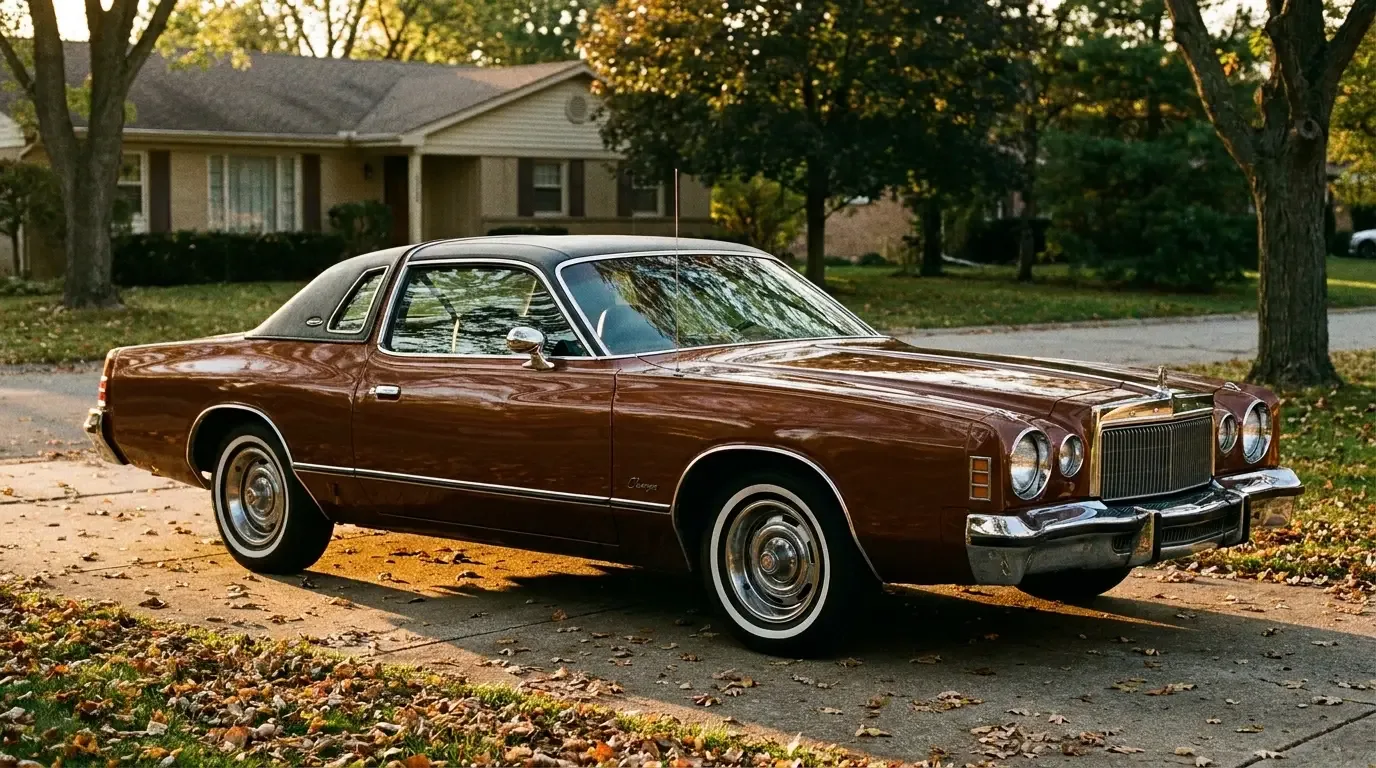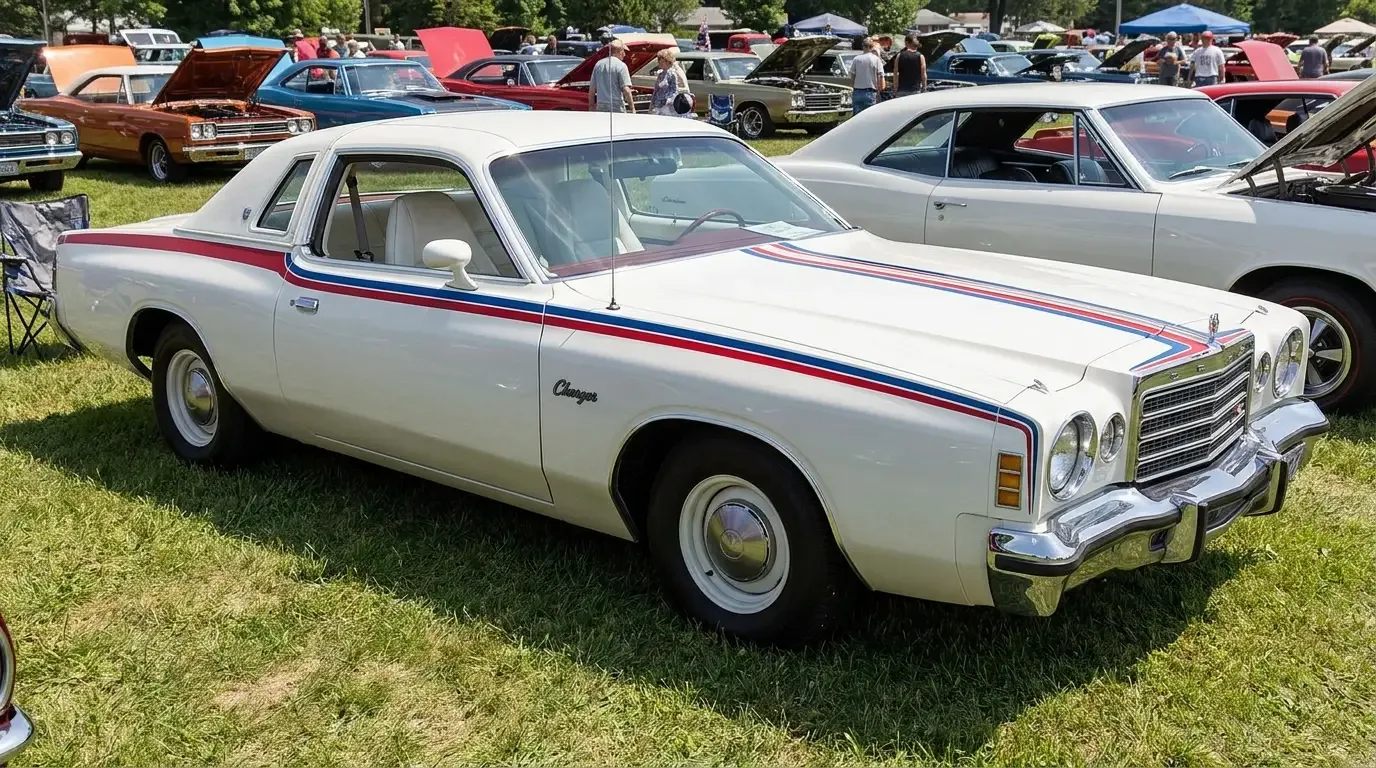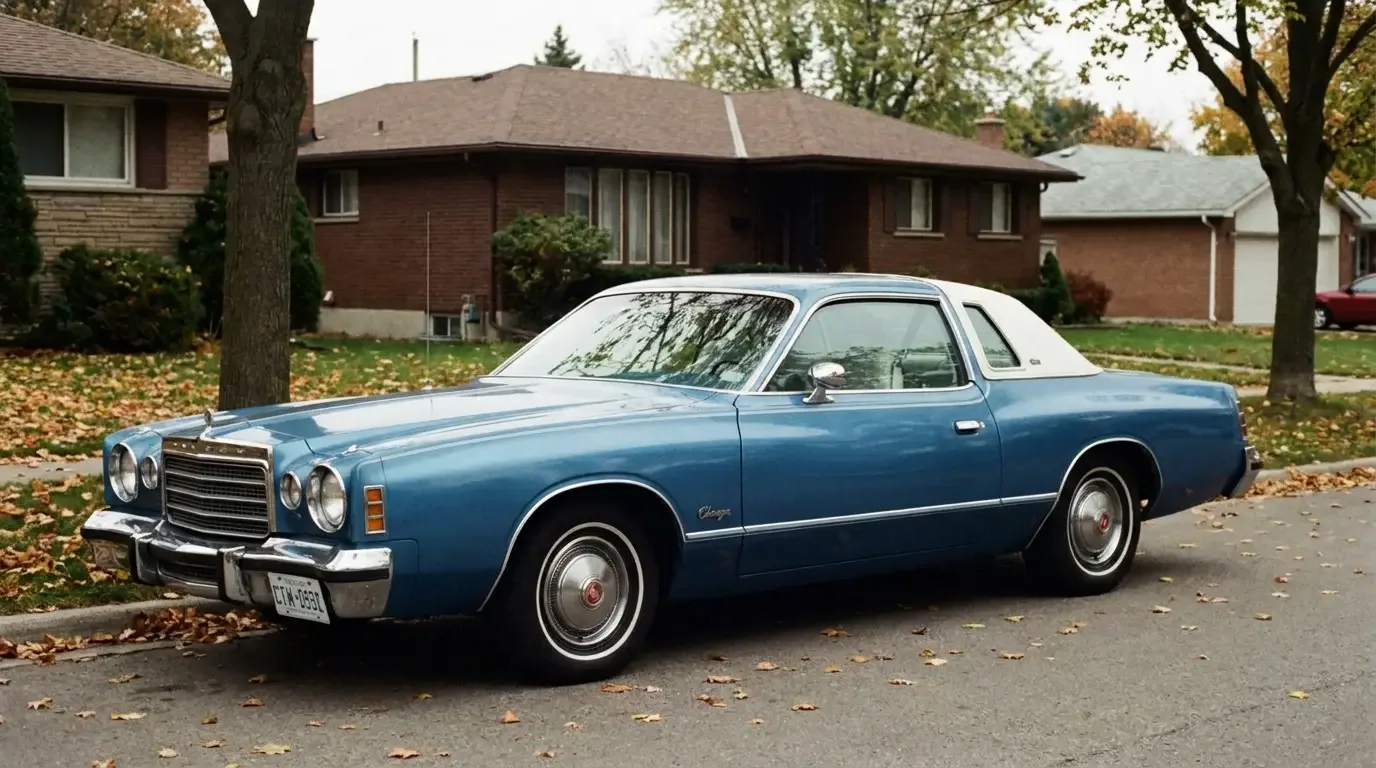
Here's the number that matters: a 1975 Charger SE with the top available engine made around 225 hp net, a fraction of what a big block Charger delivered just six years earlier. Everything else about this engine lineup is commentary. The horsepower war ended, emissions rules won, and Dodge built a Charger for a completely different set of priorities. Understanding what these engines actually delivered, cylinder by cylinder, is more useful than any nostalgia about what came before them.
The lineup, plainly stated
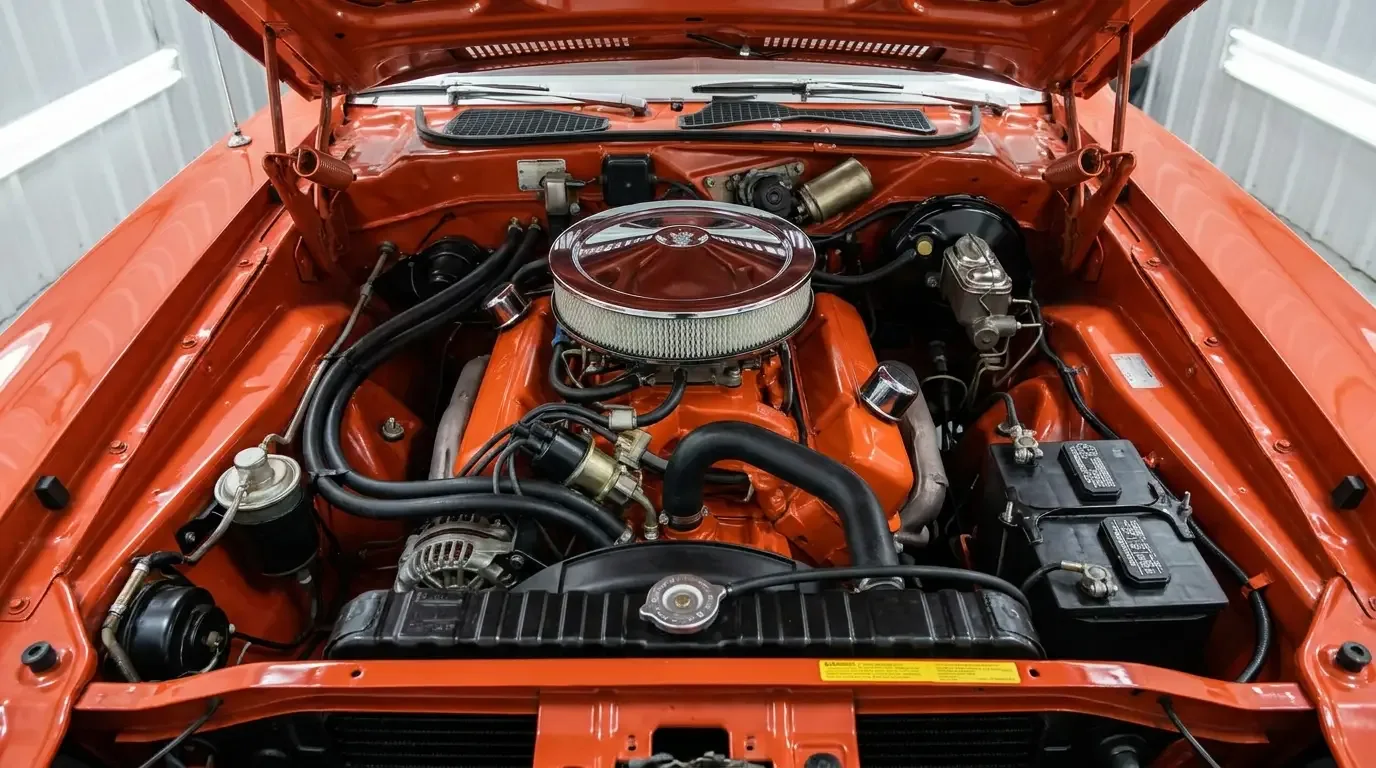
Three engines carried the fourth generation Charger through most of its production run: a 318 cubic inch V8 as the standard entry point, a 360 cubic inch V8 as the mid tier option, and a 400 cubic inch V8 as the upper tier choice. The 440 big block that had crowned earlier Chargers did not carry into this generation, having been dropped from the nameplate after 1974, so the 400 was as large as it got. That's the whole story. No six cylinder option, no small displacement economy engine trying to chase fuel crisis buyers. Dodge kept this car firmly in V8 territory even as the numbers those V8s produced kept shrinking.
The 318 made around 150 hp in two barrel form, adequate for a comfortable cruiser and nothing more. The 360 split the difference, offered in two barrel and four barrel configurations with outputs landing in the 180 to 225 hp range depending on year and carburetion, the high-output E58 four barrel version sitting at the top of that spread. The 400 four barrel made around 190 hp, a number that moved around more than buyers expected due to compression ratio changes and evolving emissions equipment. Oddly enough, that meant the hottest small block 360 could outrate the larger 400 on paper by the mid 1970s, a quirk of how emissions tuning fell on each engine.
Why the numbers dropped so hard
Three forces did the damage, and none of them had anything to do with engineering incompetence. First, the federally mandated switch to net horsepower ratings, measured with all accessories and exhaust systems installed rather than on a bare test stand, immediately made every engine look weaker on paper even without a single mechanical change. Second, compression ratios fell across the board to accommodate unleaded fuel and emissions equipment, directly reducing an engine's ability to make power. Third, emissions control hardware itself, including early catalytic converters and exhaust gas recirculation systems, restricted airflow and retarded ignition timing in ways that cost real, measurable power.
Put those three factors together and a 400 cubic inch engine making 190 hp in 1975 wasn't a failure of engineering. It was an engine doing everything asked of it under a completely different rulebook than the one that governed the 1969 440 Magnum.
"The blower looks great on the invoice. On the dyno it made twelve more horsepower than the combo that cost a third as much. That's the number that matters."
— Dan Reeves
Real world driving impact
What these numbers meant on the road was straightforward. Zero to sixty times in the roughly eleven to thirteen second range were typical across this engine lineup, numbers that would have been embarrassing on a muscle car a few years earlier but felt entirely reasonable in a personal luxury coupe competing against a Monte Carlo or a Grand Prix, neither of which was quick either. These cars weren't built to win stoplight contests. They were built to merge onto a highway without drama and cruise there comfortably, and every one of these engines did that job competently.
Fuel economy, ironically, didn't improve much despite the reduced power output. Weight had climbed with additional insulation, emissions hardware, and safety equipment, offsetting most of the gains that lower compression and smaller displacement might otherwise have delivered. A 400 four barrel Charger SE in 1976 returned roughly the same real world mileage as a comparable big block car from years earlier, just with a lot less power on tap to show for it.
| Engine | Approx. hp | Notes |
|---|---|---|
| 318 cu in V8 | ~150 hp | Standard, two barrel |
| 360 cu in V8 | ~180-225 hp | Two or four barrel; E58 four barrel was the hottest |
| 400 cu in V8 | ~175-190 hp | Largest engine offered, two or four barrel |
What actually breaks, and what to check
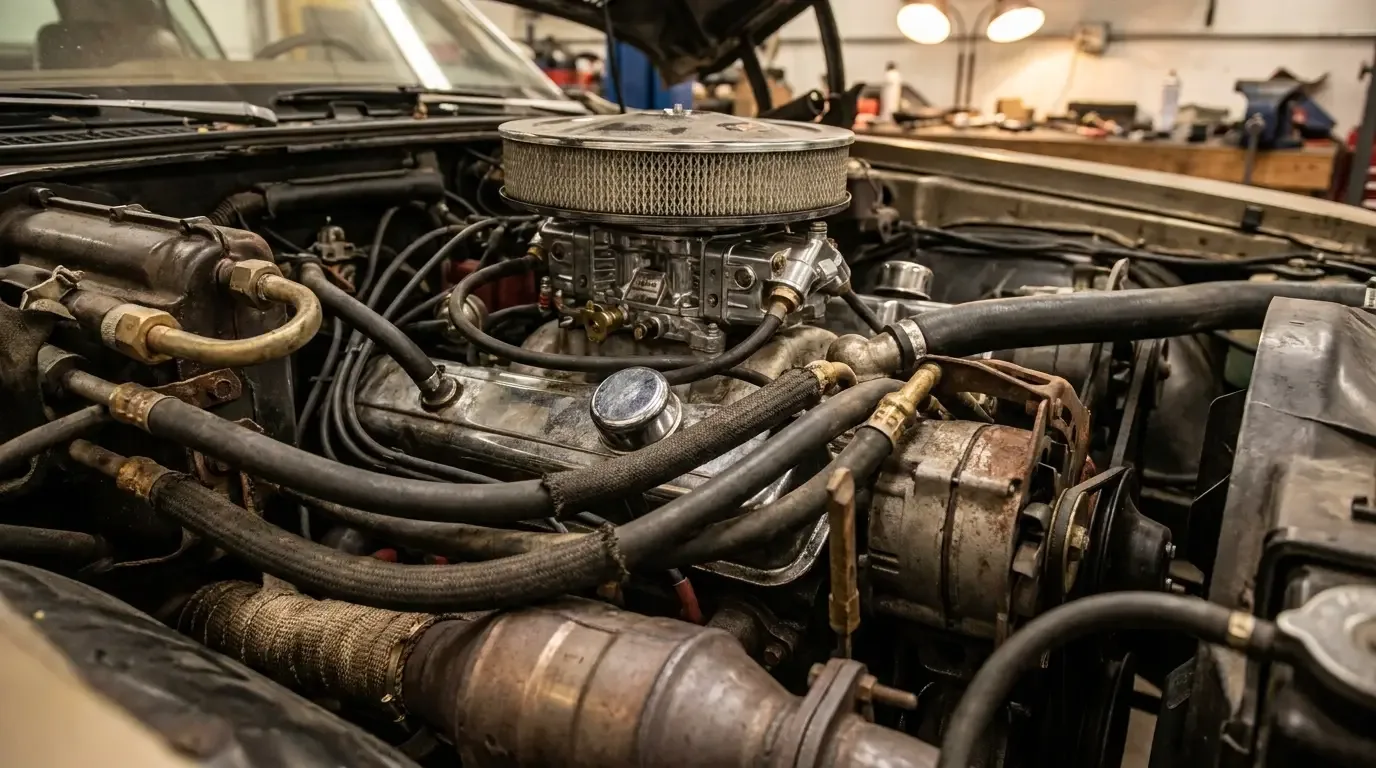
Mechanically these engines are simple, well understood, and generally durable when maintained. The bigger concern for buyers isn't the engine itself but the emissions hardware wrapped around it. Early catalytic converter systems, vacuum operated emissions controls, and the wiring associated with them are frequently missing, disconnected, or crudely bypassed on surviving cars, sometimes by well meaning previous owners chasing a bit more performance and sometimes just from decades of deferred maintenance. A numbers matching engine with intact original emissions equipment is genuinely uncommon today and commands a real premium among buyers who care about factory correctness.
Carburetor condition matters more than most buyers expect. These engines ran lean by design to meet emissions targets, and a worn or improperly rebuilt carburetor causes drivability problems that get misdiagnosed as engine weakness when the actual issue is fuel delivery. A poorly executed carb rebuild can cost more real world driveability than the eighty or so horsepower separating a 318 from a 400 in the first place.
For the fuller picture of how this generation's engineering priorities connect to the styling decisions made around the same time, 1975 dodge charger lays out the whole personal luxury pivot in context.
The bottom line on buying one today
Don't chase these engines expecting muscle car performance, because you won't find it and the car was never built to deliver it. Chase honest condition instead: intact emissions equipment, a carburetor that's been properly rebuilt rather than crudely modified, and documentation confirming the engine matches what left the factory. That's where the real value sits in this generation, and it's a very different calculation than shopping a 1969 R/T.
Anyone weighing whether this generation is worth pursuing at all should read the 1978 Charger story, which covers how these engines and this platform reached the end of the line entirely by the close of the decade.
Sources and notes
- Dodge Charger (B-body), Wikipedia - confirmed the 318/360/400 engine lineup, that the 440 was dropped after 1974, and the 360 E58 four-barrel's 225 hp rating.
- Automobile Catalog: 1975 Charger SE 318 V-8 - confirmed the 318 net rating of 150 hp.
- Automobile Catalog: 1975 Charger SE 360-2 V-8 - confirmed the 360 two-barrel net rating of 180 hp.
- Automobile Catalog: 1978 Charger SE 400-4 V-8 - confirmed the 400 four-barrel net rating of 190 hp.
- Hagerty: 1976 Dodge Charger SE - confirmed the emissions-era power drop and the car's relaxed cruising character.