
Anybody who has bolted a set of ported heads and a bigger throttle body onto a Fox 5.0 has followed a recipe that was sold as a finished car in 1989. That car was the Saleen SSC Mustang. It was the first Saleen where the engine stopped being Ford's business and became Saleen's. It was also built for a single model year, on top of the best version of the 5.0 Ford had made up to that point.
Car Features
8 min read
The 1989 Saleen SSC
The 1989 Saleen SSC was the first Saleen with Saleen engine work: a breathing package on the mass-air 5.0. What the record shows and what it does not.
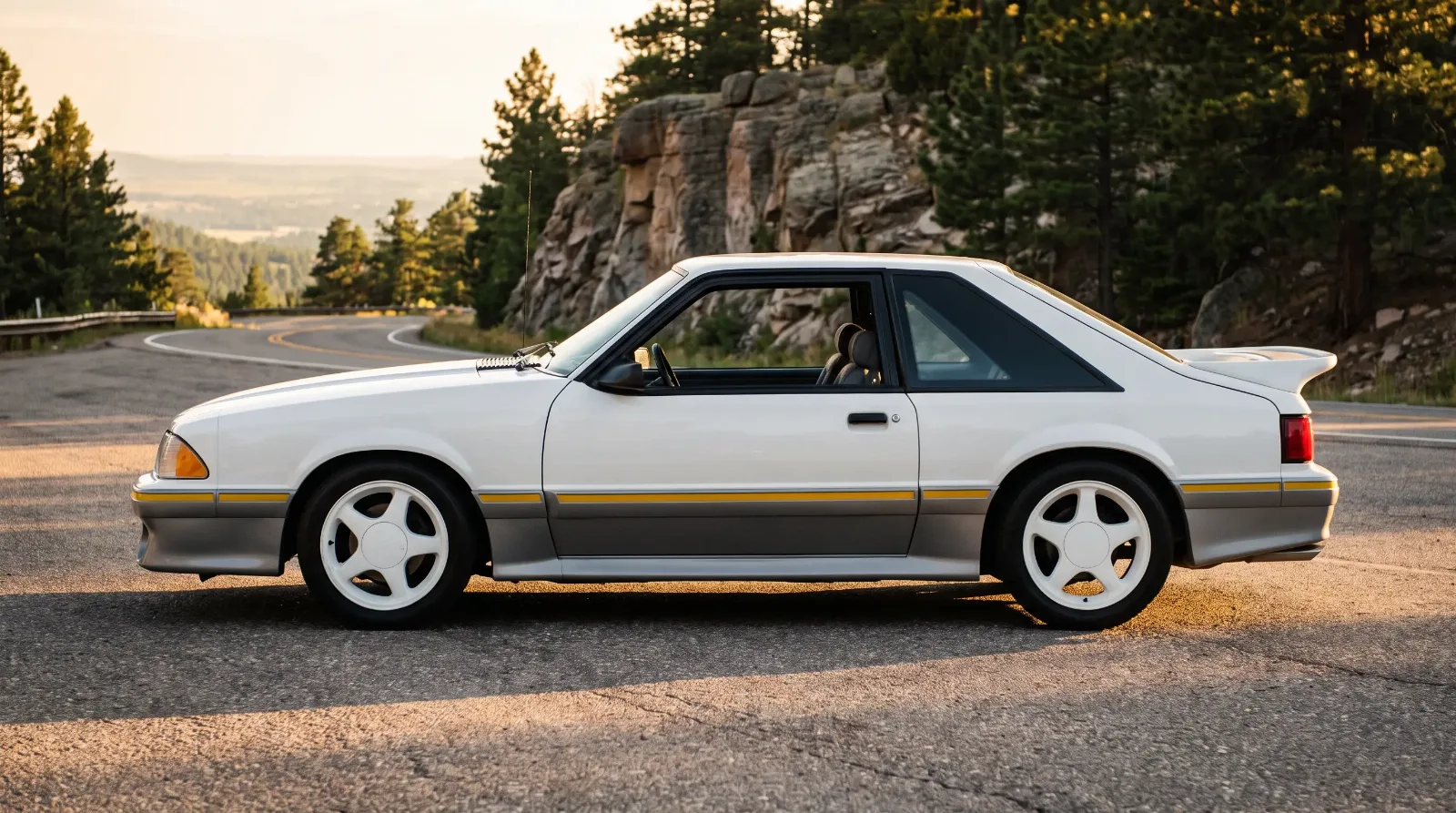
Saleen had been selling Mustangs since 1984, but for the first few years those cars wore aero, suspension and interior pieces over stock Ford engines. The SSC turned that order around. The wider story of Ford's own special-vehicle programs and the outside tuners who worked next to them gets its own article, and there is more on that here. This one stays with a single car and a single year.
Where the SSC came from
The short version of the Saleen timeline goes like this. Saleen Autosport was formed in 1983. The first three cars, all hatchbacks, came out in 1984 with stock engines. In 1985 a Saleen Mustang got its first certified supercharger. Then the race program took over the headlines: a win at the 24 Hours of Mosport in the SCCA Endurance series in 1986, and in 1987 the SCCA Drivers', Team, Manufacturer and Tire championships, with Steve Saleen, Parnelli Jones and George Follmer driving.
By 1989 the lineup listed a production model called the SSC, short for Saleen Super Car. It also happened to be the year the Mustang turned 25, since Ford had introduced the car on April 17, 1964. Collector write-ups tie the SSC to that anniversary, and one calls it the 25th anniversary Mustang that Ford never made. Ford's own nod that year was a dash emblem, not a special model.
What matters more is what changed in the shop. For five years Saleen had sold handling and looks. The SSC was where it started selling horsepower it had built itself.
What made the Saleen SSC Mustang different under the hood
Start with what Ford delivered. The 1989 5.0 HO carried the E engine code in the eighth VIN position, and Ford rated it at 225 hp and 300 lb-ft, the same numbers it used from 1987 through 1992. Those 1987 numbers came with E7TE cylinder heads, and anyone who has had a pair of E7TE heads on the bench knows where the trouble is. The ports are small, and the engine runs out of breath well before the bottom end is in any danger.
So Saleen went after breathing. The SSC list reads like a weekend parts order somebody finished: ported cylinder heads, roller rocker arms, a 65 mm throttle body, modified intake manifolds, and tubular headers into a Walker Dynomax dual exhaust. Saleen rated the finished engine at 292 hp and 325 lb-ft. That is 67 hp over Ford's rating for the same engine, which is a big jump for parts that were all bolt-on.
Here is the part that should get a Fox guy's attention. Four years later Ford's own team built the 1993 SVT Cobra, and its 5.0 got GT-40 heads, a Cobra upper intake, a unique cam, larger injectors and a 65 mm throttle body, for a rating of 235 hp. Different heads and a different rating, but the same basic thinking: the 302 bottom end was fine, the top end was the restriction. Saleen sold that idea to customers before Ford put its own name on it.
One caution on that 292: it is the number Saleen published, not a dyno sheet you can hold in your hand. Treat it the way you would treat any maker's rating from that era.
Why 1989 was the year to do it
Timing helped, and the reason is under the intake. Through 1988 the 5.0 ran a speed-density system, which works out how much air the engine is taking in from rpm and manifold pressure. That estimate is built around the stock combination. Change the heads, the rockers or the throttle body and the computer is still doing math for an engine that no longer exists. The result is a car that runs rich, lean or rough depending on the day.
A mass-air system measures what is coming through the meter, so it copes far better when the engine breathes harder than Ford intended. That is a big part of why 1989 and later 5.0s became the favorite base for bolt-on builds, and it made a package like the SSC much easier to live with on the street. Saleen picked the right year to start touching the engine.
Chassis, cabin and the missing back seat
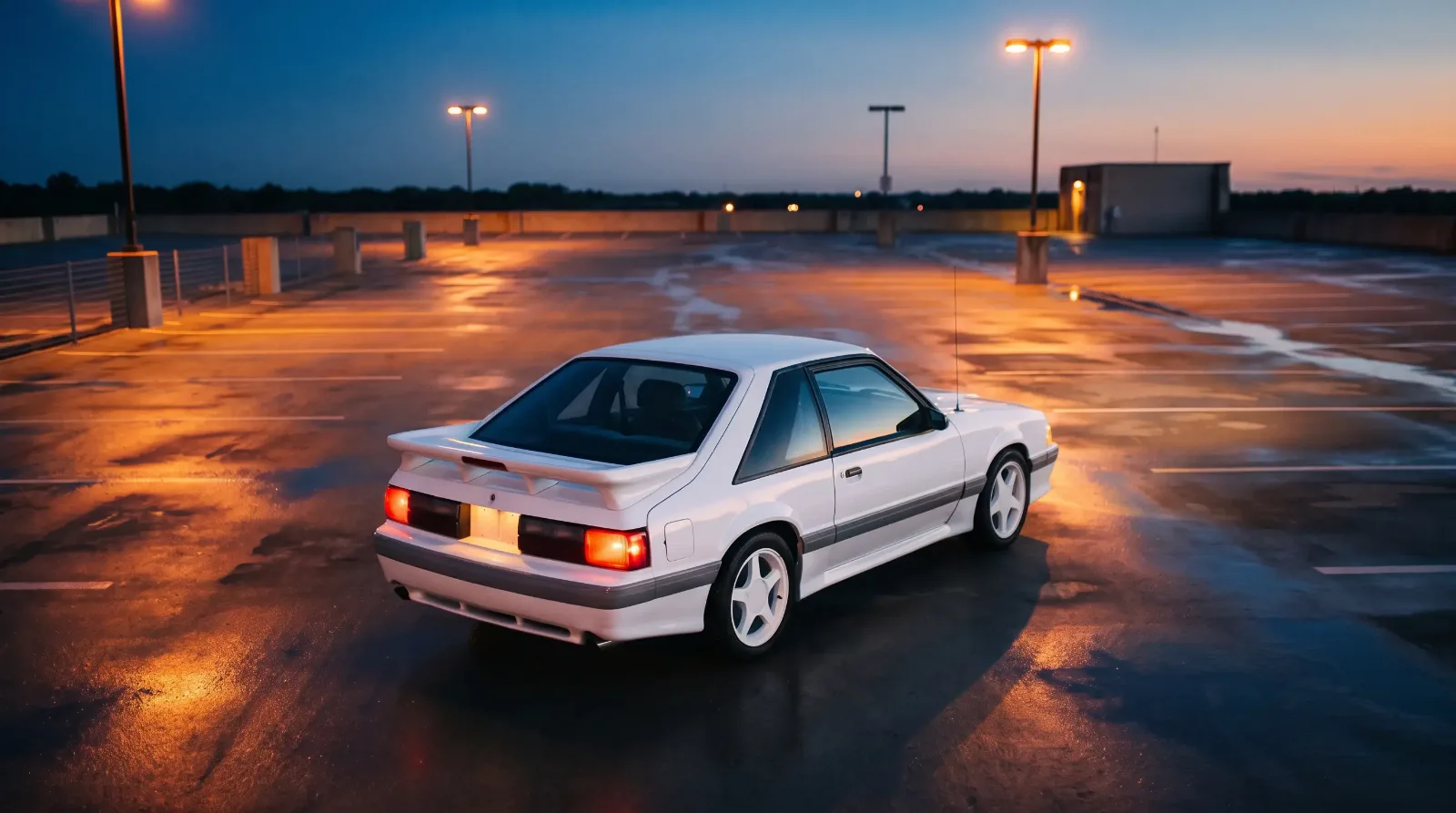
The SSC was not only an engine job. It started life as a 5.0 hatchback, and Saleen kept working the chassis the way it had since 1984. The suspension used Monroe Formula GP struts and shocks, adjustable from the cockpit to three positions, with redesigned coil springs front and rear. The car rode on white 16-inch five-spoke wheels over a 3.55 Traction-Lok rear axle. The paint was Oxford White with gray trim and stripes.
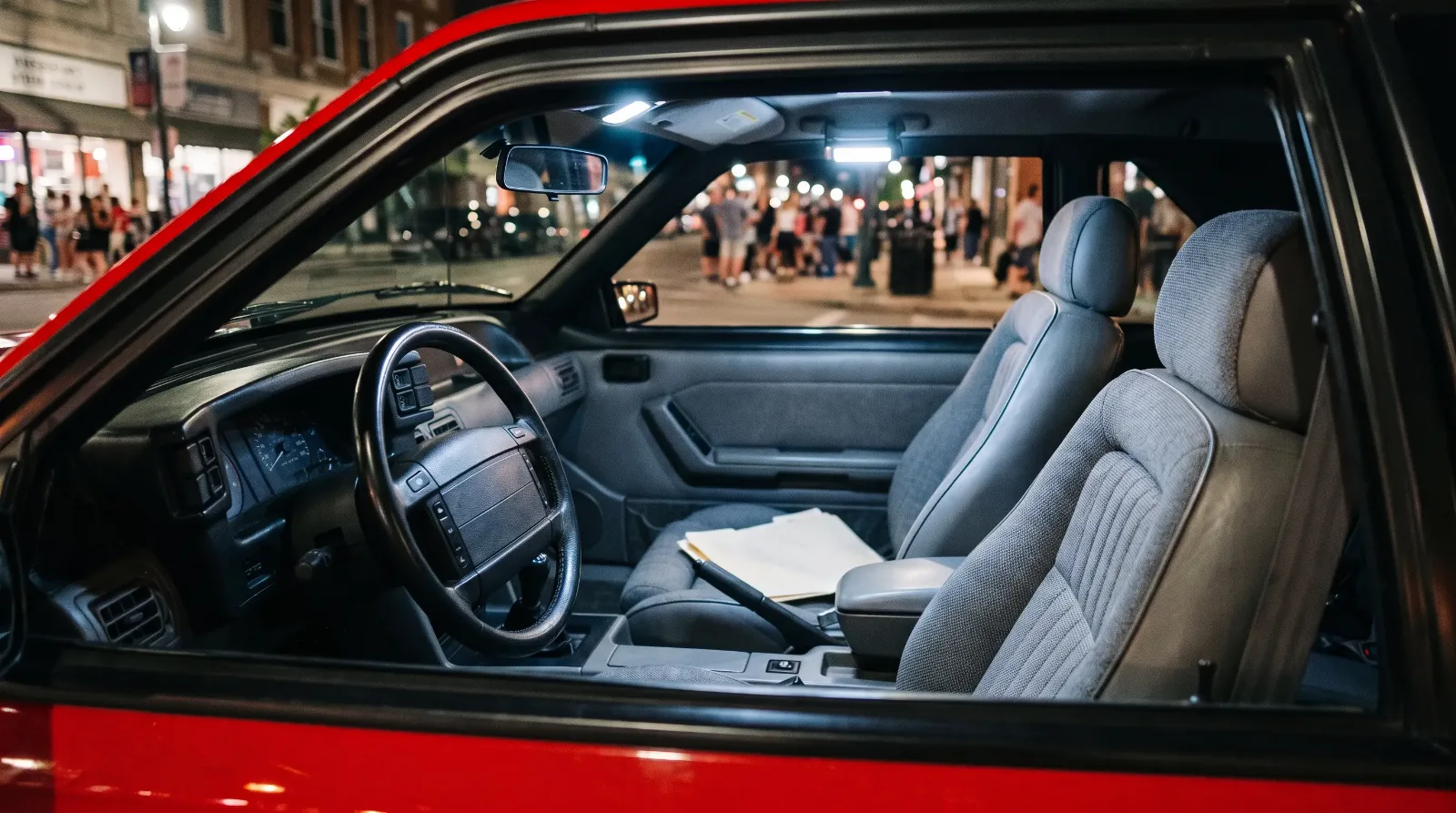
The interior is where the SSC gets odd. The rear seat was deleted and a four-point brace went in behind the front seats, and the front seats were swapped for adjustable FloFit buckets. You lose two seats you probably never used. You do not gain as much stiffness as it looks, either. A brace behind the front seats helps, but the Fox unibody flexes at the subframes and the cowl, and nothing bolted into the cargo area fixes that. Subframe connectors would have done more for the chassis than the seat delete did.
Then there is the drivetrain. The car used the Borg-Warner T-5 five-speed manual, and the T-5 was already the part Fox owners worried about once power went up. Sixty-plus extra horsepower going through a gearbox sized for a stock 5.0 is not a recipe for a long, quiet life.
What the record shows
The firm part is short and now well covered. Saleen listed the SSC as a production model for 1989, built 161 of them, and put a sticker of $36,500 on the car at a time when a 5.0 LX sold for about $15,000. The power rating and the parts list come from Saleen and from the cars themselves as they have come up for sale, so read the table with that in mind.
| Item | 1989 Mustang 5.0 (Ford) | 1989 Saleen SSC |
|---|---|---|
| Engine | 5.0 HO V8, mass-air EFI, VIN code E | Same engine with ported heads, roller rockers, 65 mm throttle body, tubular headers |
| Rated output | 225 hp, 300 lb-ft | 292 hp, 325 lb-ft (Saleen rating) |
| Body | Notchback, hatchback, convertible | Hatchback |
| Rear seat | Yes | Deleted, four-point brace |
| Color | Full Ford range | Oxford White with gray |
| Production | Regular Ford volume | 161 |
| Original price | About $15,000 for a 5.0 LX | $36,500 |
At 161 cars, the SSC is a small run by any measure. That also means the usual rule for any rare Mustang applies with extra force. A Saleen carries its own Saleen serial number alongside the Ford VIN, and 1989 cars use an 89- prefix. A car without matching Saleen documentation is a Fox hatchback with nice parts, nothing more.
"Strip the badges off and the SSC is a parts list any Fox owner could read off a catalog page. The difference is that Saleen put it all on one car, made it run on the street, and did it before Ford's own engineers got around to the same idea. That is the part that deserves the credit, not the horsepower number."
Mike Sullivan
What came after the SSC
The SSC was a one-year car, and Saleen moved on quickly. In 1990 the company set up Saleen Performance Parts, which sold the hardware separately to owners who wanted the upgrades without buying a whole car.
Ford was paying attention to the tuner market by then. Its Special Vehicle Team showed its first car at the 1992 Chicago Auto Show, and the 1993 Cobra that followed took the same top-end approach as a regular Ford product. If you want the factory side of that story, start with the birth of SVT. Saleen kept building on the Mustang through the next generation, and in 1996 Steve Saleen went into the Mustang Club of America Hall of Fame alongside Carroll Shelby.
The SSC itself is a short chapter: one year and a small run of hatchbacks with no back seat. But it is the chapter where a Saleen stopped being a Mustang that handled better and became a Mustang that went faster, and the 5.0 crowd spent the next decade buying their way down the same road one box at a time.
Sources and notes
- Silodrome: Dennis Rodman's Saleen Mustang SSC (equipment, Oxford White, 3.55 axle, FloFit seats)
- Conceptcarz: 1989 Saleen SSC specifications, production and price
- AutoGuide: 1989 Saleen Mustang SSC with 7,918 miles (no rear seat, four-point brace)
- Yahoo Autos: the Saleen SSC (Saleen Super Car) and its white-on-gray scheme
- RM Sotheby's: 1989 Saleen Mustang, Saleen registry number and Ford VIN
- Wikipedia: Saleen company history
Related Reading
Have a
Ford Mustang
for Sale?
Reach thousands of serious classic car collectors across the US.
Sell It Here →
Selling a classic? Here's how: sell my classic car
Are You a Classic Car Dealer?
List your full inventory and connect with targeted classic car buyers.
Join as a Dealer →

About the author
Mike Sullivan
Detroit-area muscle car enthusiast and restoration specialist with three decades of hands-on experience working on American iron.
Related Listings - Ford Mustang




Comments
Be the first to comment on this article.