
The Special Vehicle Team was not Ford's first in-house performance group, and its founding date is not as settled as the badge makes it look. What the record does show clearly is the moment it went public: the 1993 Mustang Cobra, shown at the 1992 Chicago Auto Show as the first vehicle of a newly established SVT. Ford SVT history is really the story of what came after that car, and of the question it answered: could Ford build a limited, factory-engineered performance car, sell it as a regular production car, and stand behind the numbers on the window sticker?
Car Features
7 min read
The Birth of SVT: Ford's Special Vehicle Team
How Ford's Special Vehicle Team took over from SVO, launched the 1993 Cobra and Lightning, and faced the 1999 horsepower recall.
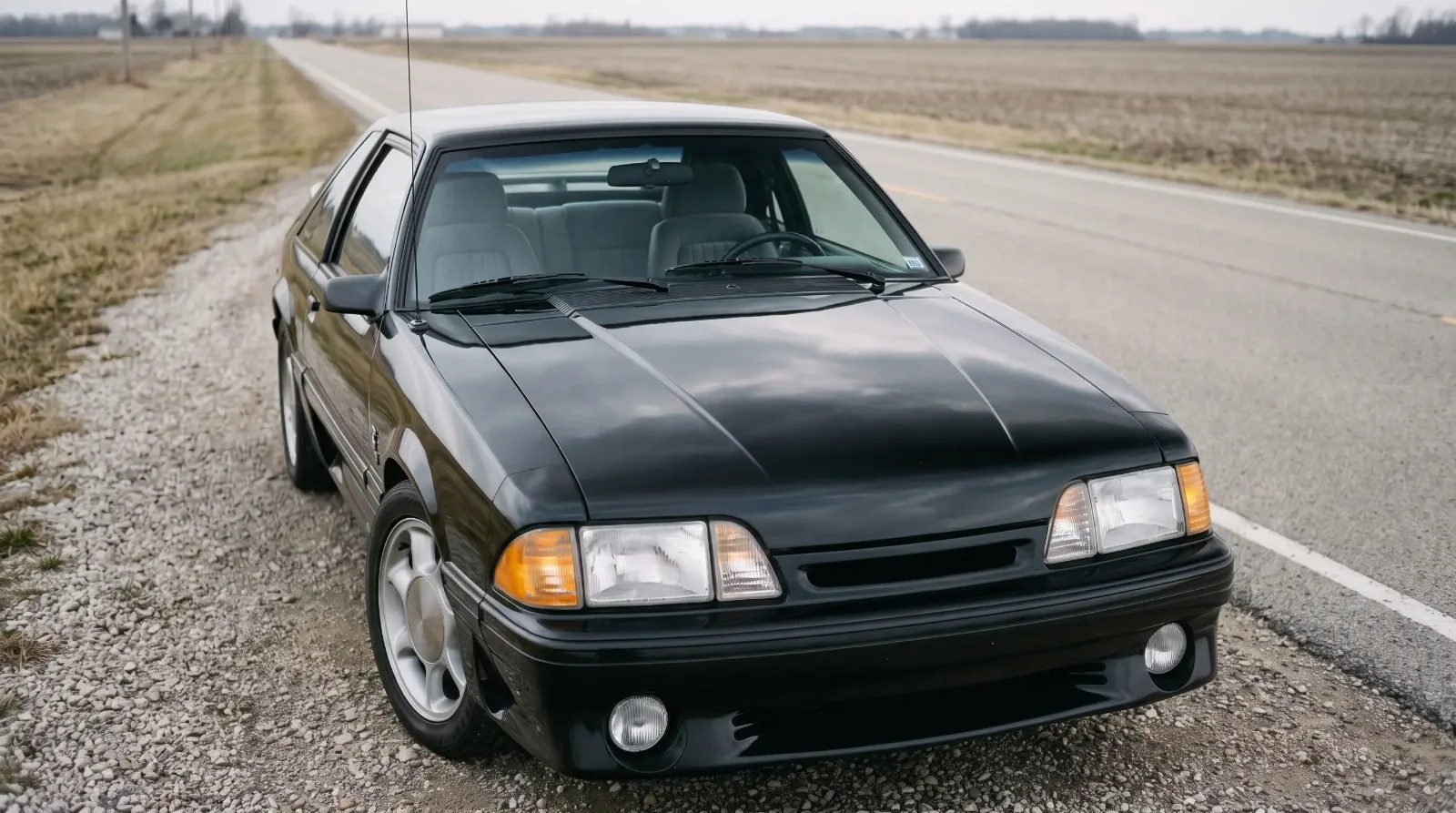
The short answer is yes, mostly, for about a decade, which is a short chapter in Ford Mustang history but a busy one. The longer answer starts with the group SVT replaced.
Before SVT: Special Vehicle Operations
Ford decided late in 1979 to form Special Vehicle Operations, and by 1981 SVO was up and running as the company's racing division under Michael Kranefuss (sources differ on whether it opened in 1980 or 1981). Its job was motorsport first. Road cars came second, and they came in small numbers.
The McLaren M81 is often listed as the first, but it was an outside program run for Ford by Marketing Corporation of America, with a 2.3 turbo prepared by McLaren Engines whose boost could be adjusted from the cabin. It listed at $25,000. About 250 were planned and 10 were built. SVO's own road car was far more serious: the 1984½ to 1986 Mustang SVO, with an intercooled 2.3 turbo, four-wheel disc brakes and Koni dampers. It cost $15,585 in 1984, more than double a base Mustang, and 9,844 were built over three model years.
The SVO Mustang was a good car that lost to a cheaper V8. That lesson mattered. When Ford set up a team to build production performance cars, the job of tuning road cars moved from SVO to SVT, and the new group did not start with a four-cylinder.
Ford SVT history starts with a disputed date
Here is where I have to be careful. Most accounts put SVT's founding in 1991, which fits the record: its first car was on a stand in Chicago within months. The reference most people check gives 1991 in one place, but its text says the team was founded in 1983 by John Plant of Ford Marketing, Janine Bay of Mustang program management and Robert Burnham of truck program management. Those two dates cannot both be right, and 1983 sits in the middle of the SVO years, which makes it hard to accept without a primary document. The names are not settled either: another account credits the 1991 start to sales and marketing executive Robert Rewey together with Neil Ressler. I have not seen a Ford document that settles it, so treat any exact founding date with care.
What holds up is this. Neil W. Ressler, Ford's executive director of vehicle engineering, is credited as one of SVT's founding fathers. The team's first product was shown at the Chicago Auto Show in 1992. And from 1993 to 2004 SVT was run by John Coletti, the engineer who had led the 1989 skunkworks effort that kept a rear-drive Mustang alive and turned into the 1994 SN95.
"Corporate histories get written after the fact, and the dates drift. When two versions of the founding disagree, the first car on the stand is the date I trust. For SVT that car is a 1993 Cobra in Chicago."
Tom Ramirez
Coletti's earlier fight is part of why SVT had a Mustang to work on at all. In the late 1980s Ford had planned a front-drive, Mazda-based car as the next Mustang. It became the Probe instead, and Coletti was on record that he would rather see the Mustang name die than put it on that car. The Mustang Club of America inducted him into its Hall of Fame in its first class, in 1995, listed under Special Vehicle Engineering.
The first two SVT products: a Cobra and a pickup
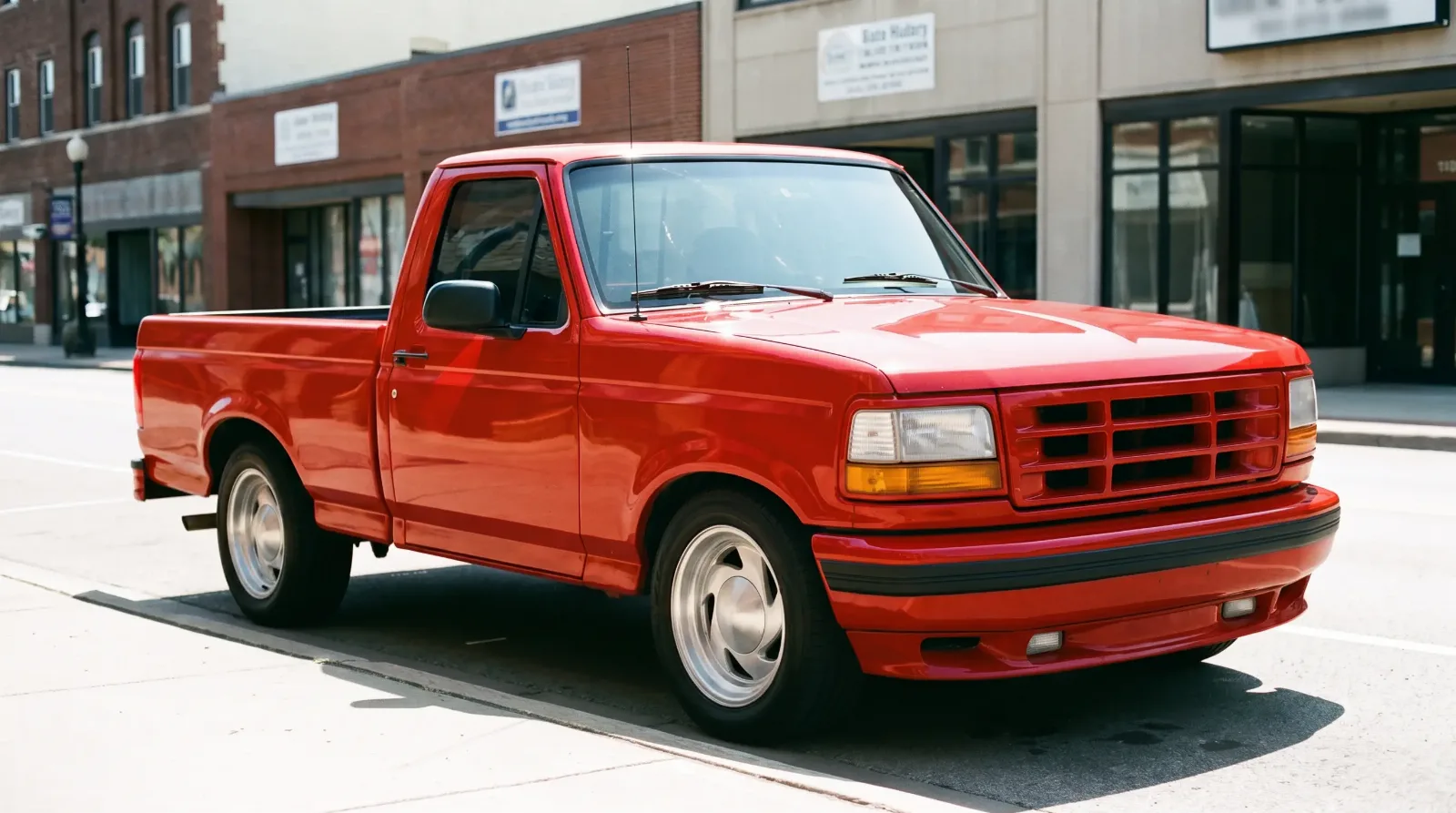
SVT launched with two vehicles for 1993, and only one of them was a Mustang. The other was the SVT F-150 Lightning, a pickup with a 240 hp 5.8 V8. Putting a truck next to a pony car told dealers and buyers that SVT was a method, not a single model.
The Mustang half of the launch was the 1993 Cobra. It used the 5.0 HO with GT-40 heads, a Cobra upper intake, its own cam, larger injectors and a 65 mm throttle body, for 235 hp at 4,600 rpm. It had rear disc brakes, Tokico dampers and 17-inch wheels, the first on a factory Mustang. It came only with the T-5 manual, cost $18,505 and was built 4,993 times. Road & Track timed it at 5.9 seconds to 60 mph.
SVT also built 107 Cobra R models that year, all Vibrant Red, for IMSA Firestone Grand Sport and SCCA World Challenge racing. The rear seat, radio, air conditioning and fog lamps were deleted. That small run set a pattern SVT would repeat twice more, in 1995 and 2000: a regular Cobra for the street, and a short series of R cars for people who raced.
The SVT Mustang lineup through 2000
Under Coletti, the Cobra moved with the Mustang itself. The Fox-body car gave way to the SN95 for 1994, and SVT went from the pushrod 5.0 to a 351 for one racing special and then to the modular four-valve engines. The production figures below show how small these runs were next to regular Mustang output.
| Model year | SVT Mustang | Engine | Rated power | Built |
|---|---|---|---|---|
| 1993 | Cobra | 5.0 V8, GT-40 heads | 235 hp | 4,993 |
| 1993 | Cobra R | 5.0 V8 | 235 hp (same engine as the Cobra) | 107 |
| 1994 | Cobra coupe and convertible | 5.0 V8, GT-40 heads | 240 hp | 6,009 |
| 1995 | Cobra coupe and convertible | 5.0 V8, GT-40 heads | 240 hp | 5,008 |
| 1995 | Cobra R | 5.8 (351) Windsor V8 | 300 hp | 250 |
| 1996-98 | Cobra coupe and convertible | 4.6 DOHC 32-valve V8 | 305 hp | 28,705 |
| 1999 | Cobra coupe and convertible | 4.6 DOHC, revised | 320 hp advertised | 8,095 |
| 2000 | Cobra R | 5.4 DOHC 32-valve V8 | 385 hp | 300 |
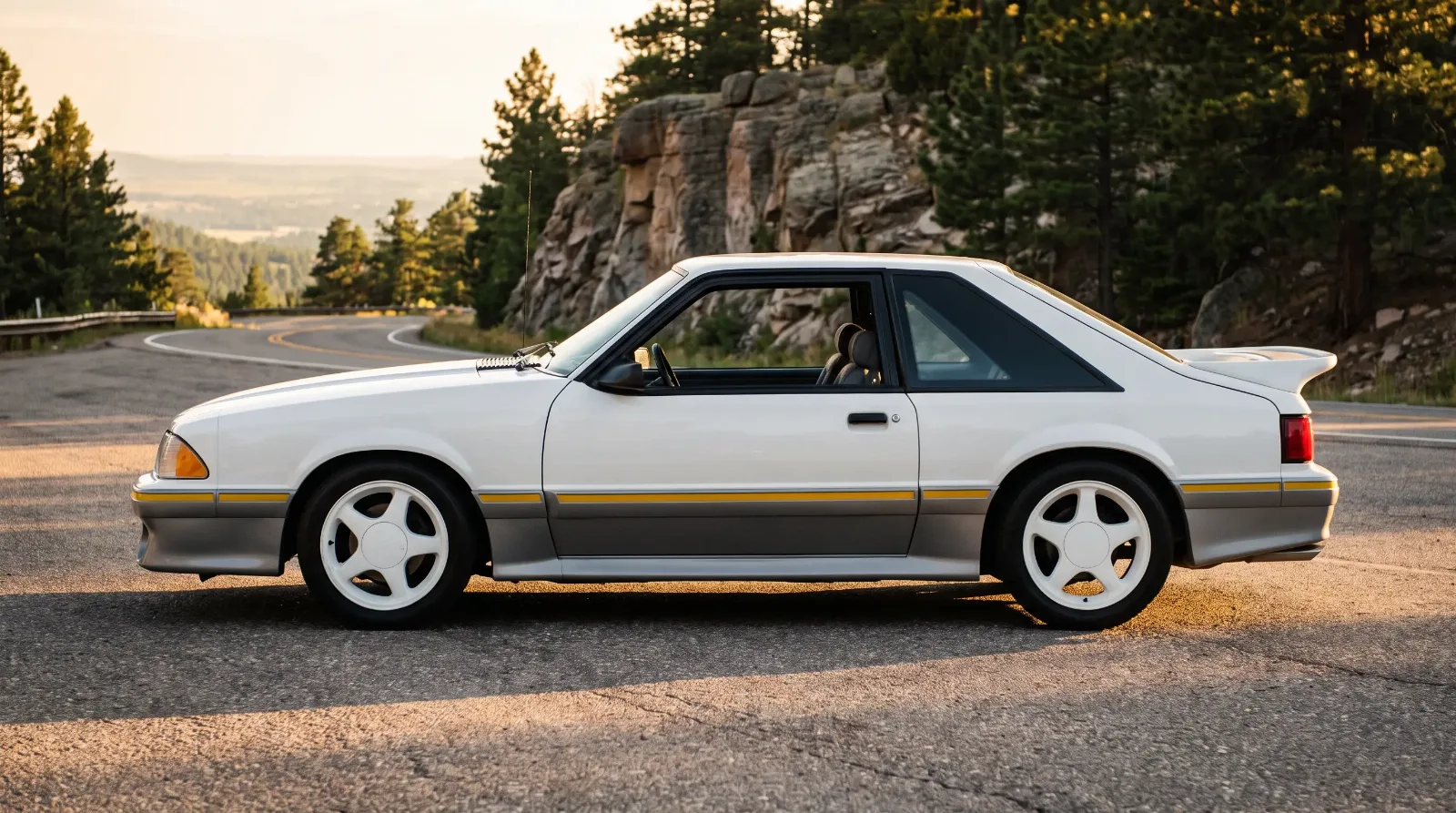
The 1994 convertibles, all 1,000 of them, were pace car replicas. The 1995 Cobra R was all Crystal White with a saddle interior, and both R cars of the SN95 era appear in Coletti's own list of SVT programs. The 2000 Cobra R had a 5.4 four-valve V8 rated at 385 hp and 385 lb-ft, and only 300 were built, all in Performance Red.
The 1996 to 1998 cars are the core of the SVT Mustang story by volume. The 4.6 DOHC made 305 hp at 5,800 rpm, and the 1996 run included about 2,000 Mystic Cobras in color-shifting BASF paint, an $815 option.
The 1999 recall and what it tested
An SVT car was sold on a promise: the number on the sticker was the number you got. In 1999 that promise was tested in public. The revised Cobra was advertised at 320 hp with independent rear suspension standard. On August 6, 1999, Ford stopped sales of unsold 1999 Cobras and recalled the cars already delivered, after dyno tests showed about 285 hp against the 320 advertised.
That is not a flattering episode, and I am not going to dress it up. It is also the most telling one. A manufacturer that halts sales of its own flagship because the output is about 35 hp short is treating the rating as a commitment.
There was no regular Cobra for 2000. The only 2000 SVT Cobras were the 300 Cobra Rs. Coletti stayed at SVT until 2004, and in 2015 SVT was merged with Ford Racing and Ford Team RS into Ford Performance. The honest summary is that SVT was the factory doing what the tuners had been doing, in limited numbers, with Ford's name and reputation on the line. Our overview of the Mustang SVT Cobra and its rivals takes each of those cars in turn.
Sources and notes
Related Reading
Have a
Ford Mustang
for Sale?
Reach thousands of serious classic car collectors across the US.
Sell It Here →
Selling a classic? Here's how: sell my classic car
Are You a Classic Car Dealer?
List your full inventory and connect with targeted classic car buyers.
Join as a Dealer →
#mustang history
#Ford Mustang
#SVT Cobra
#Ford SVT
#John Coletti
#Special Vehicle Operations
#Special Vehicle Team

About the author
Tom Ramirez
Corvette researcher and historian based in Bowling Green, Kentucky. Two decades documenting Corvette production history from original factory records.
Related Listings - Ford Mustang




Comments
Be the first to comment on this article.