
Every Mustang club has a member who parks a red Fox hatchback on the show field and tells anyone within earshot that it is one of the 107. Sometimes it is. More often it is a 1993 Mustang SVT Cobra, or a GT with a Cobra wing, and the folder that would settle the question is at home in a drawer, if it exists at all. That is the tuner Mustang hobby in one scene. From 1984 to 2000, Ford's own specialists and a handful of outside builders turned out the most interesting Mustangs of their era in small numbers, and small numbers are exactly where stories outrun the paperwork.
Car Features
10 min read
SVO, SVT Cobra and Saleen: The Tuner Mustangs (1984–2000)
The SVO, McLaren, Saleen and Mustang SVT Cobra cars of 1984 to 2000: what each was, how many were built, and which papers prove one.
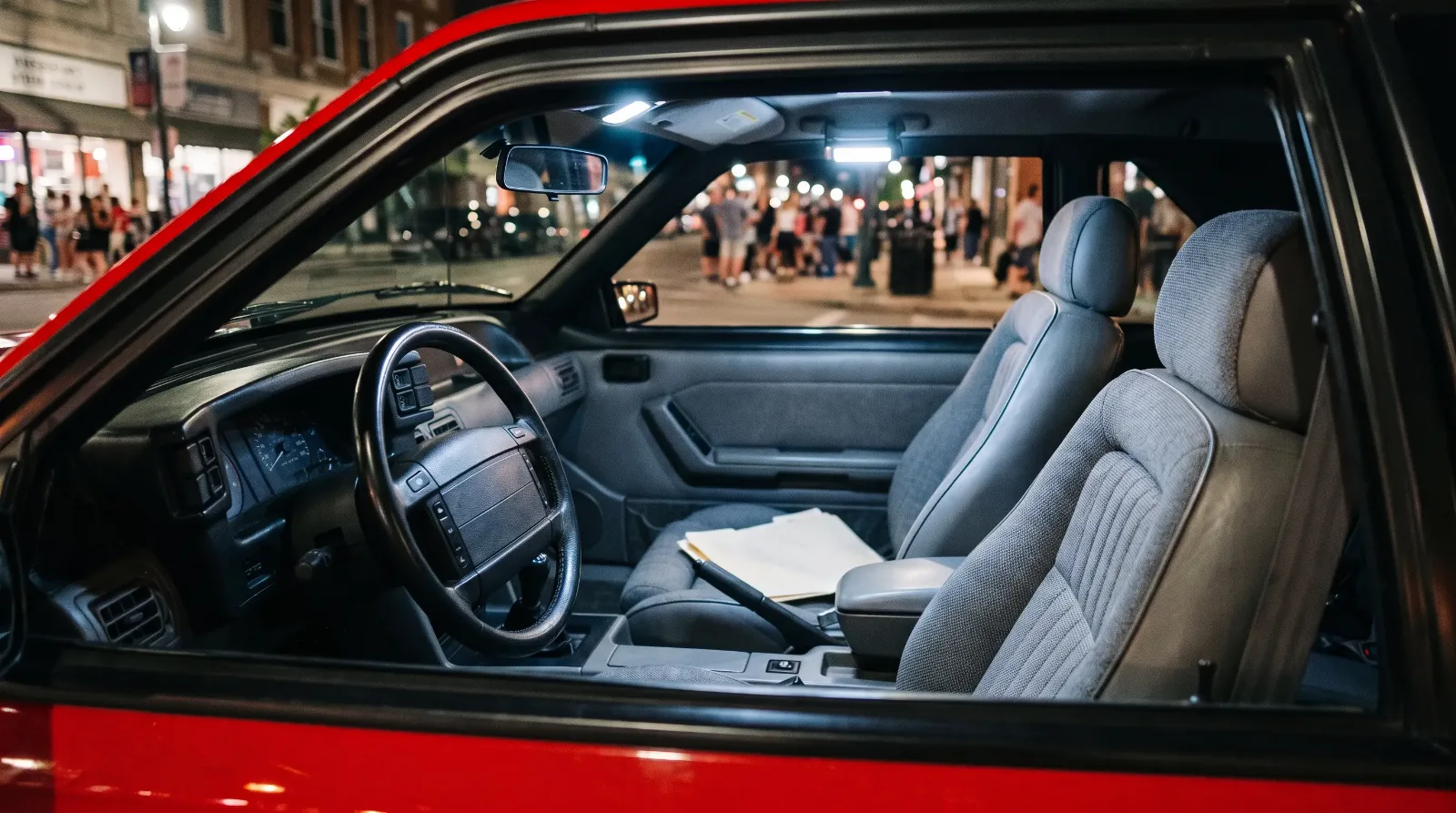
This is the overview: the SVO, the McLaren and Saleen cars, the SVT Cobras and the three Cobra R runs, in order. Each has its own deep dive. Here the job is to show how they fit together and which figures hold up.
Before SVT: the McLaren M81 and the Mustang SVO
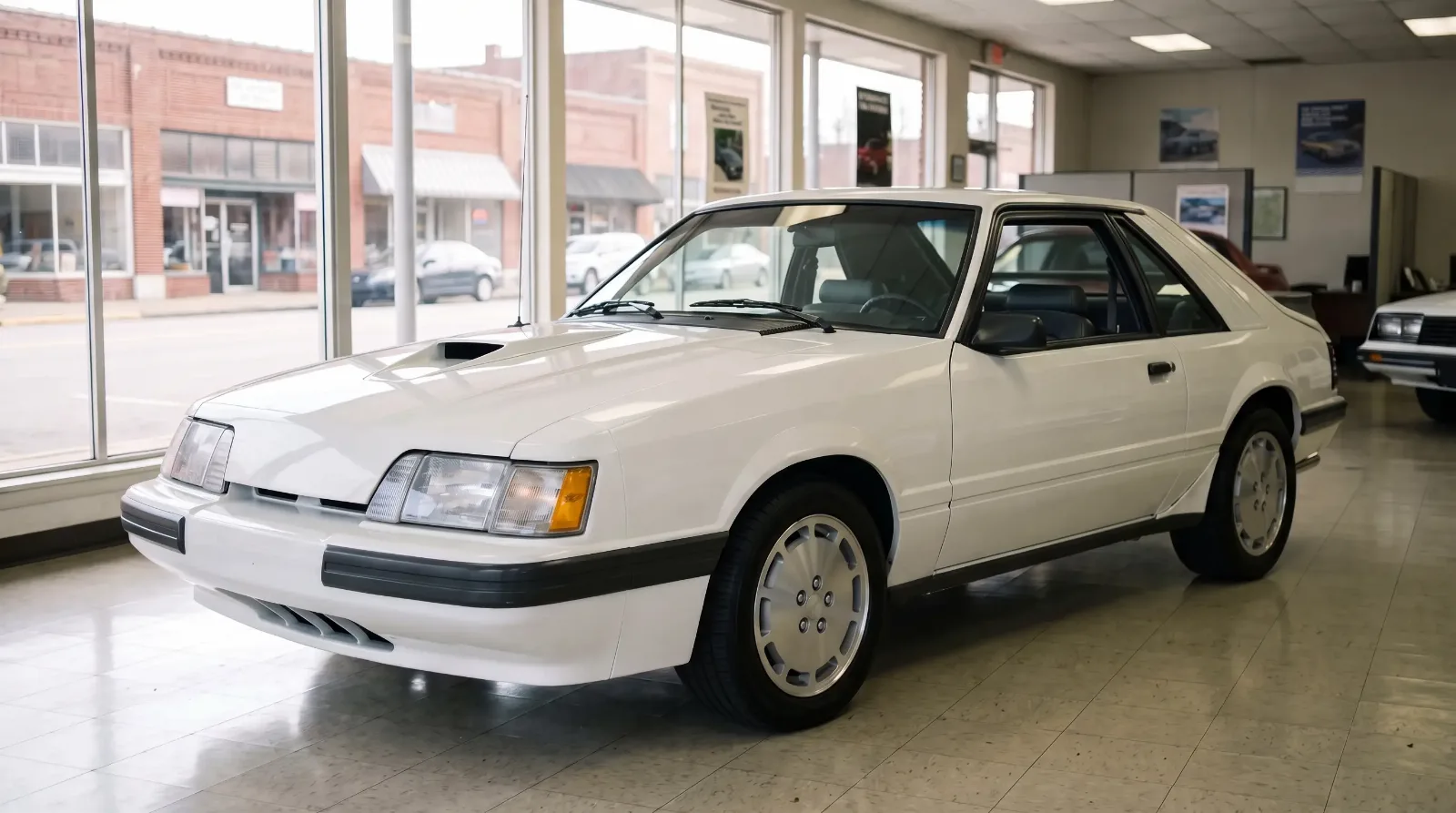
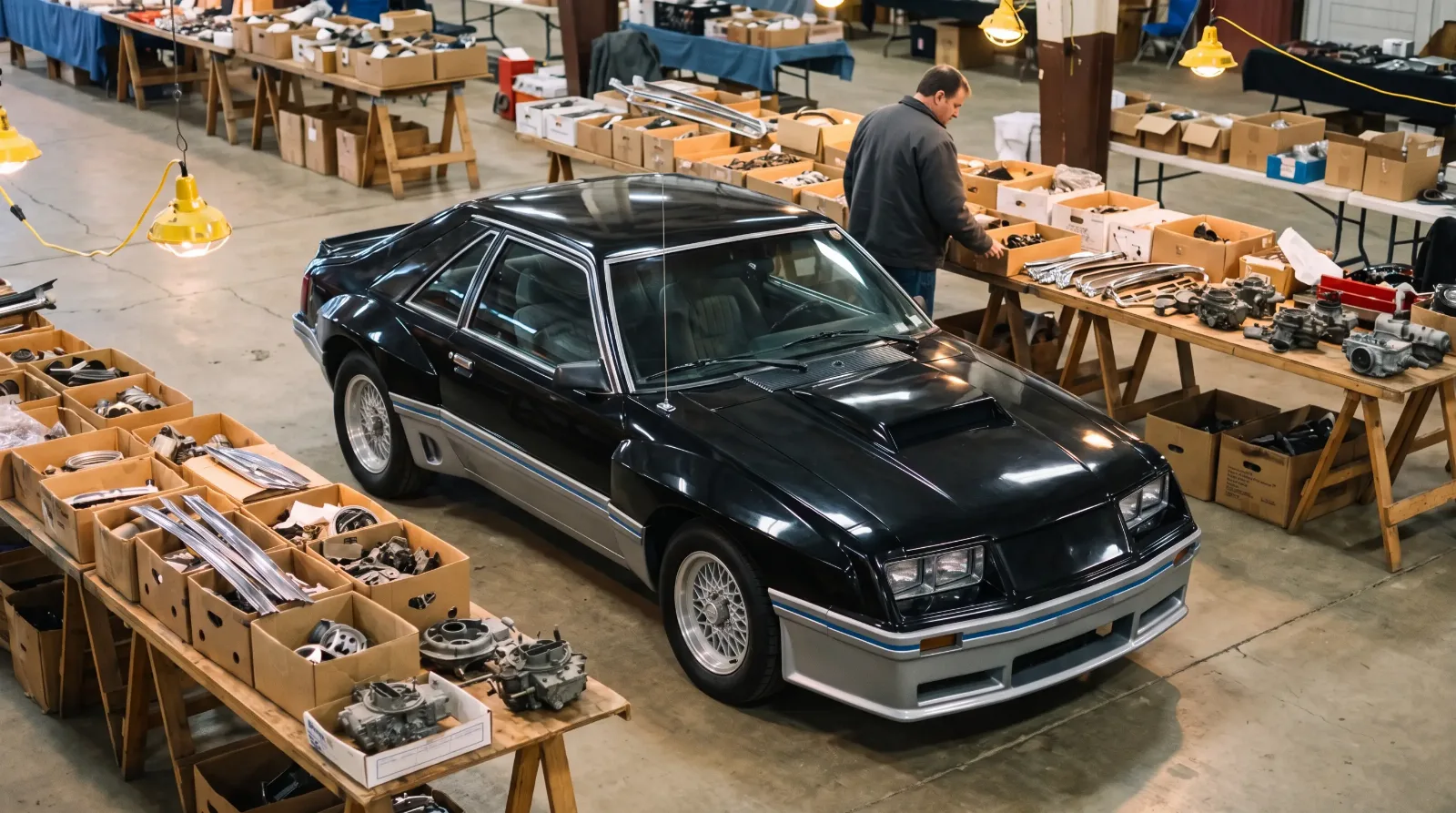
Ford decided at the end of the 1970s to set up Special Vehicle Operations, which was running by about 1980 with Michael Kranefuss in charge. It was a racing division first, with road cars a distant second. The first high-boost Mustang of the Fox era did not even come from SVO. The McLaren M81 was an outside program built for Ford by Marketing Corporation of America, with a 2.3 turbo prepared by McLaren Engines in Michigan and boost meant to be adjustable from the cabin between 5 and 11 psi, although most of the cars are reported to have no boost controller. At 10 psi it was rated at 175 hp. The plan called for about 250 cars at $25,000 each. About 10 were built.
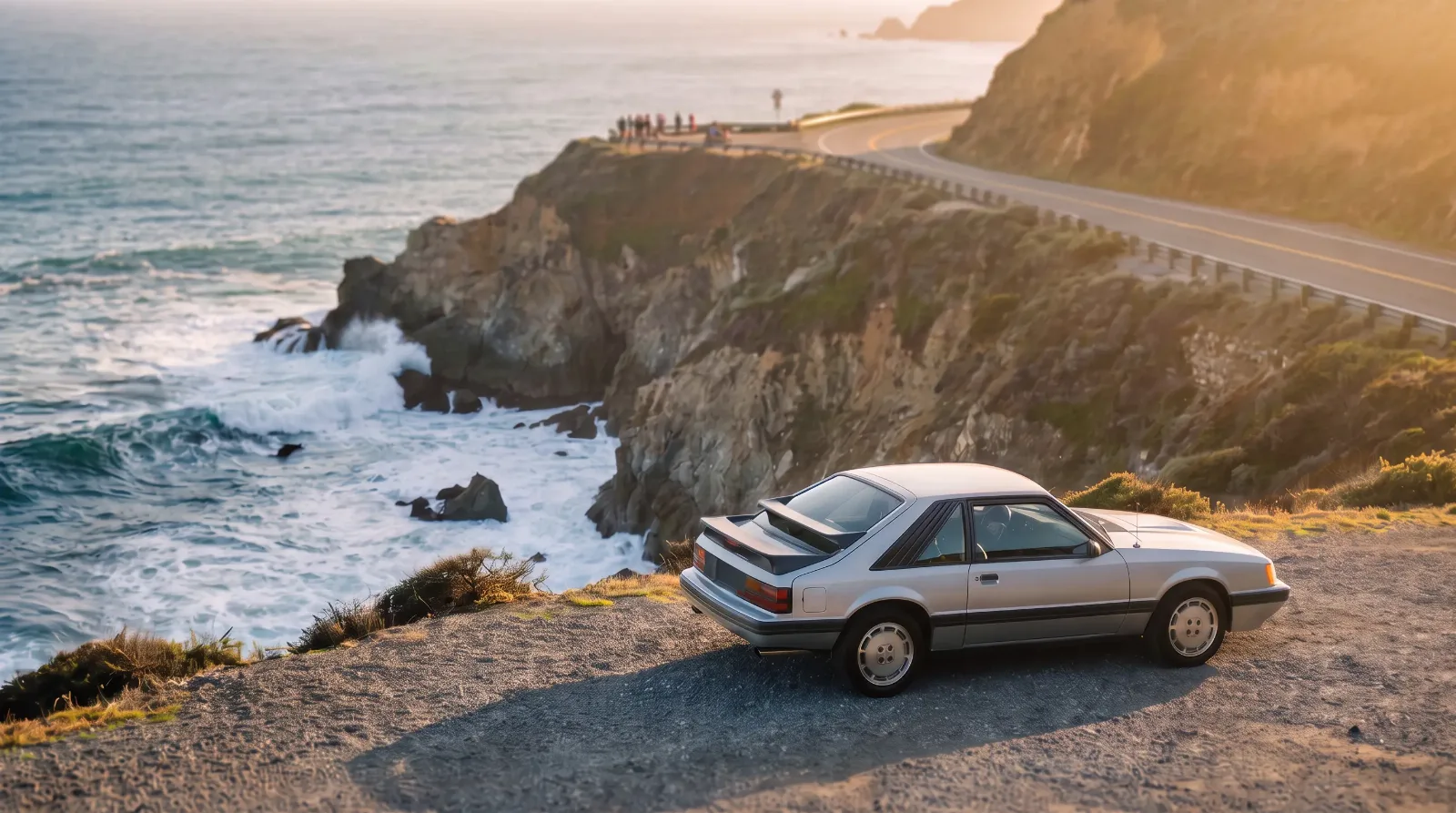
SVO's own answer arrived in mid-April 1984. The Mustang SVO ran an intercooled 2.3 turbo at around 14 psi, with four-wheel disc brakes, adjustable Koni dampers and 16-inch wheels. It listed at $15,585, more than double a base Mustang, and made 175 hp at launch. The 1985½ revision raised that to 205 hp, and the 1986 car was rated at 200.
The trouble was the V8 in the same showroom. In 1984 the 5.0 GT also made 175 hp and cost about $6,000 less. By 1986 the GT and the SVO were both rated at 200 hp. Buyers chose displacement, and the SVO ended after 1986 with 9,844 built. Its flush composite headlamps outlived it, moving across the whole Mustang line with the 1987 facelift.
Steve Saleen takes the outside road
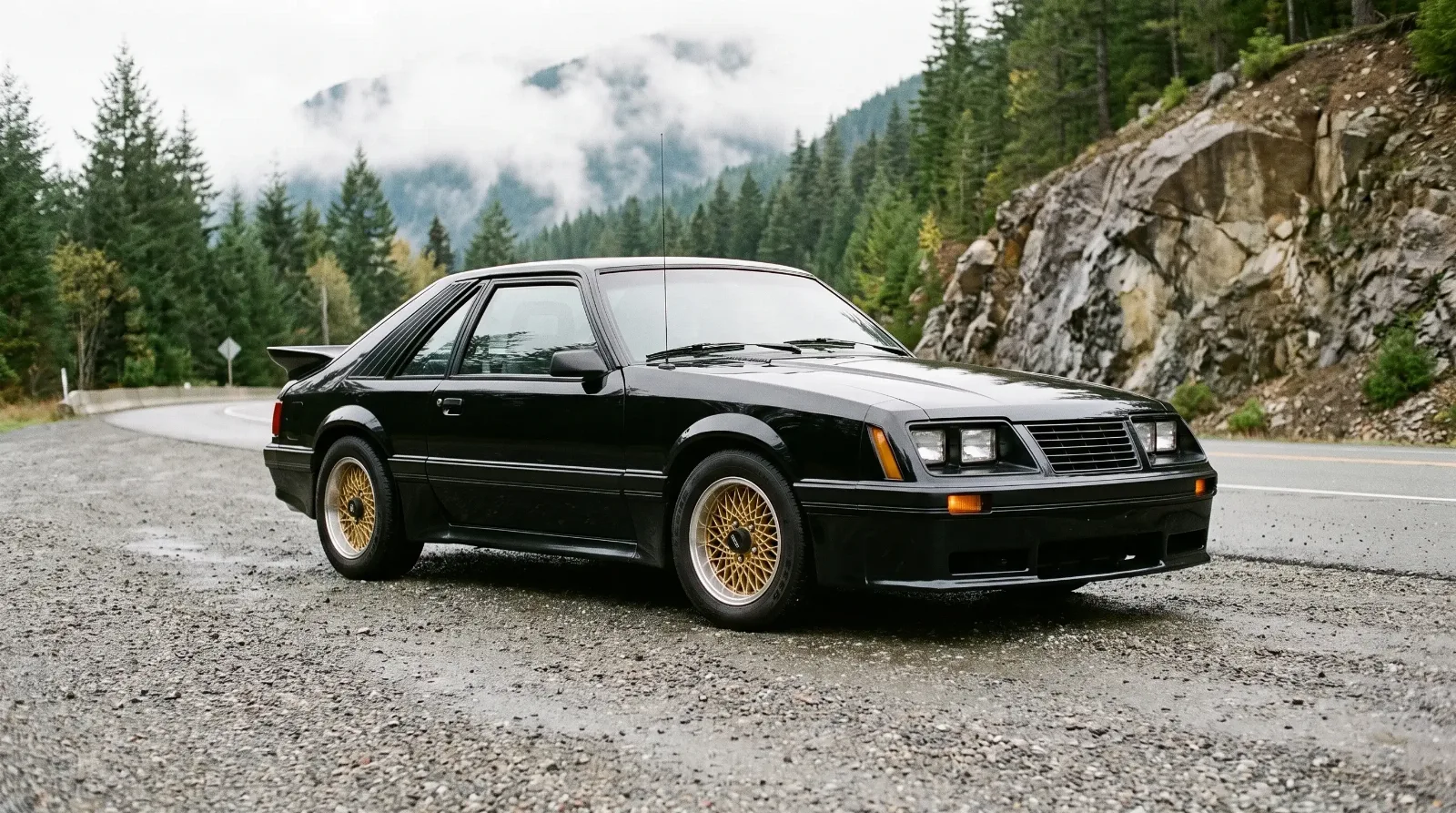
While SVO worked on a turbo four, a Trans-Am racer in California started from the other end. Steve Saleen had raced a Mustang in SCCA Trans-Am from 1982 and formed Saleen Autosport in 1983. His first cars, three Fox hatchbacks built in 1984, had aero, suspension and interior work over stock Ford engines rated at 175 hp. The engines stayed stock for emissions reasons. The first certified supercharger on a Saleen Mustang followed in 1985.
The racing record built the name. A Saleen Mustang won the 24 Hours of Mosport in the SCCA Endurance series in 1986, and in 1987 the team took the SCCA Drivers', Team, Manufacturer and Tire championships with Saleen, Parnelli Jones and George Follmer driving. Then came the 1989 SSC, short for Saleen Super Car: ported heads, roller rockers, a 65 mm throttle body and tubular headers on the 5.0, for a Saleen rating of 292 hp against Ford's 225. Saleen built 161 of them at $36,500, when a 5.0 LX sold for about $15,000.
One other outside name appeared on the Fox in these years. ASC built just over 1,800 ASC McLaren Mustangs from 1987 to 1990, coachbuilt cars on the stock 5.0 HO, with no real link to the M81 beyond the badge.
The first Mustang SVT Cobra, 1993
Ford's Special Vehicle Team went public at the 1992 Chicago Auto Show with two vehicles: the SVT F-150 Lightning pickup and the 1993 Mustang Cobra. The team's founding date is disputed in the sources, so the first car on the stand is the safest marker. John Coletti, who had led the 1989 skunkworks that saved the rear-drive Mustang, ran SVT from 1993 to 2004.
The timing was awkward. For 1993 Ford had re-rated the regular 5.0 from 225 hp to 205. The Cobra's 5.0 got GT-40 heads, a Cobra upper intake, its own camshaft, larger injectors and a 65 mm throttle body, for 235 hp. SVT added rear disc brakes, Tokico dampers and 17-inch wheels, the first on a factory Mustang, and it actually fitted softer springs than the GT to help the rear tires stay planted. The only gearbox was the T-5 manual. Road & Track timed it at 5.9 seconds to 60 mph. It cost $18,505, and Ford built 4,993.
Alongside it came 107 Cobra R models, all Vibrant Red, priced at $25,692 and built for IMSA Firestone Grand Sport and SCCA World Challenge racing. The rear seat, radio, air conditioning and fog lamps came out. Bigger brakes, Koni dampers and Eibach springs went in. The engine stayed the same as the street car's. That set the SVT pattern for the rest of the decade: a regular Cobra for the street and a short run of R cars for people who raced.
| Model year | SVT Mustang | Engine | Rated power | Built | Base price |
|---|---|---|---|---|---|
| 1993 | Cobra | 5.0 V8, GT-40 heads | 235 hp | 4,993 | $18,505 |
| 1993 | Cobra R | 5.0 V8, same as Cobra | 235 hp | 107 | $25,692 |
| 1994 | Cobra coupe and convertible | 5.0 V8, GT-40 heads | 240 hp | 6,009 | $21,300 (coupe) |
| 1995 | Cobra coupe and convertible | 5.0 V8, GT-40 heads | 240 hp | 5,008 | $21,300 (coupe) |
| 1995 | Cobra R | 5.8 (351) Windsor V8 | 300 hp | 250 | $37,599 |
| 1996 to 1998 | Cobra coupe and convertible | 4.6 DOHC 32-valve V8 | 305 hp | About 28,700 | $24,810 (1996 coupe) |
| 1999 | Cobra coupe and convertible | 4.6 DOHC, revised | 320 hp advertised | 8,095 | $27,470 (coupe) |
| 2000 | Cobra R | 5.4 DOHC 32-valve V8 | 385 hp | 300 | $54,995 |
SN95 Cobras: from pushrods to four valves
When the Mustang moved to the SN95 body for 1994, SVT carried the recipe across. The 1994 and 1995 Cobras used the same GT-40 head formula at 240 hp, with 13-inch front brakes and 17-inch Goodyear GS-C tires. A Cobra convertible paced the 1994 Indianapolis 500, and all 1,000 Cobra convertibles that year were Rio Red replicas. Every 1995 Cobra convertible was black, and 499 of the 1,003 built got the one-year removable hardtop.
The 1995 Cobra R went the old-fashioned way: more cubic inches. SVT fitted a 5.8 liter 351 Windsor rated at 300 hp and 365 lb-ft, a Tremec TR-3550 five-speed and a racing fuel cell of 20-plus gallons. All 250 were Crystal White, and buyers needed an NHRA or SCCA competition license.
Then the pushrod era ended. For 1996 the Cobra got a 4.6 DOHC four-valve V8 rated at 305 hp, with an aluminum block cast in Italy by Teksid and each engine assembled by a two-person team of SVT technicians at Ford's Romeo, Michigan plant. About 2,000 of the 1996 coupes wore color-shifting Mystic paint. Car and Driver ran one to 60 mph in 5.4 seconds, and the trap speed of about 102 mph says the 305 hp rating was real.
Saleen in the SN95 years
Saleen answered the new body with the S351, which debuted in 1994 with a Saleen-built 351. When Ford moved the GT to the 4.6 for 1996, Saleen kept developing its own EPA-certified 351 Windsor instead of following. Certification is what let a small company keep selling new cars with an engine Ford no longer put in the Mustang. The same year as the first S351, Saleen also sold a V-6 Sport with a supercharged V6 rated at 220 hp, five more than the stock 1994 GT's V8.
The SR came in 1995, developed alongside a paint partnership with BASF. That year Steve Saleen formed the Saleen/Allen RRR Speedlab with comedian Tim Allen and Bob Bondurant to race in SCCA World Challenge. A Widebody SR won the 1996 Manufacturers' Championship, Saleen took both the Manufacturers' and Drivers' titles in 1998, and in 1997 a Saleen Mustang SR ran at Le Mans in GT2, completing 133 laps before retiring. Racing fame is not screen fame, and the Mustangs that became famous in film are mostly a different list, but Allen's name gave this one more attention than most race programs ever get.
Steve Saleen went into the Mustang Club of America Hall of Fame in 1996, alongside Carroll Shelby. The club calls Saleen the highest-volume niche Mustang manufacturer in the world. Roush, the other name buyers ask about, worked mostly in racing and alongside Ford's engineers in these years; Roush Performance was founded in 1995, and its Stage packages on the SN95 date from about 1997.
The 1999 recall and the 2000 Cobra R
An SVT car was sold on the promise that the sticker number was the number you got. The 1999 Cobra tested that in public. It was advertised at 320 hp with independent rear suspension, the first on a production Mustang. Owners found it slower than a 1998 Cobra, and dyno tests pointed to about 285 hp. On August 6, 1999, Ford stopped sales and recalled the cars already delivered. The fix took new intake manifolds, engine computer changes and a new exhaust from the catalytic converters back.
There was no regular Cobra for 2000. The only SVT Mustangs that year were 300 Cobra R models, all Performance Red, with a 5.4 liter DOHC V8 rated at 385 hp and 385 lb-ft and a Tremec T-56, the first six-speed Mustang. Brembo front brakes, Bilstein dampers and a fuel cell came with it; the radio, air conditioning and rear seat did not. It listed at $54,995. Nobody has seriously disputed its rating, which after 1999 was the point. The regular Cobra returned for 2001, and that chapter sits outside this story.
Reading the paperwork on a Mustang SVT Cobra or Saleen
Here is where the show-field stories meet the folder. Most of the cars in this article can be imitated with parts anyone can buy, so the badge is the least useful evidence on the car.
- A Saleen carries its own registry number alongside the Ford VIN, in the form of a two-digit year, a dash and four digits. The Ford VIN on an S351 may still show the engine Ford installed, so judge it by the Saleen paperwork.
- On 1996 to 1998 Cobras, the eighth VIN character is V for the 4.6 DOHC. A GT shows X or W.
- The 1994 pace car decals were shipped loose for dealer installation, so decals prove nothing. Rio Red paint, the saddle top and leather, and the Indy logo on the seats are better evidence.
- For any Cobra R, ask for the original documents first. Production was tiny, and the reward for a convincing copy is large.
"I have heard about more 1993 Cobra Rs at club meets than SVT ever built. The car is never the hard part. Anybody can paint a Fox red and pull the back seat. The window sticker is the hard part, and that is the part I ask to see."
Wayne Coburn
Taken together, the tuner Mustangs of 1984 to 2000 are a short shelf of cars in the full Mustang story, and a well-documented one when the papers survive. The SVO lost to a cheaper V8, Saleen proved an outsider could build a certified performance Mustang, and SVT spent the 1990s doing the same thing with a factory warranty. If you are hunting the early end of that run, the Fox-body SVO and Cobra Mustangs for sale are the place to start, folder first and car second.
Sources and notes
Related Reading
Article
The Classic Ford Mustang Story
Article
The SN95 Mustang Story (1994–2000): Ford Rethinks the Pony Car
Article
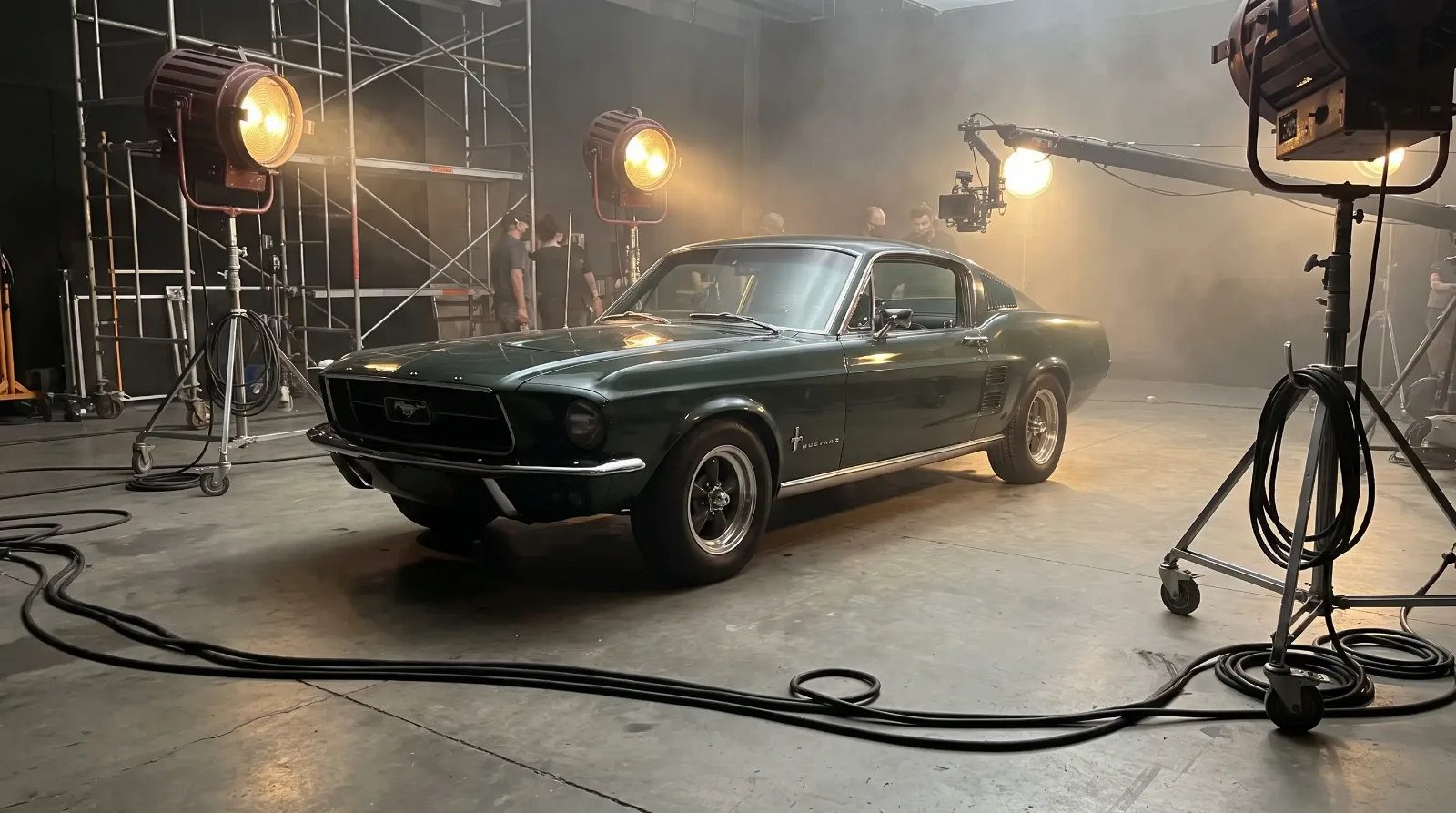
Mustang in Pop Culture and Film
Article
The McLaren Mustangs: The M81 and the ASC McLaren
Article
The Mustang SVO: Ford's Turbo-Four Experiment
Article
The 1984 Saleen: Steve Saleen's First Mustang
External
/ford/mustang
#Ford Mustang
#fox body mustang
#SN95 Mustang
#Mustang SVT Cobra
#Mustang SVO
#Saleen Mustang
#Cobra R
#Ford SVT

About the author
Wayne Coburn
Longtime Corvette owner, judge and club figure who knows the cars, the records and the people behind them.
Related Listings - Ford Mustang




Comments
Be the first to comment on this article.