
Every club show has one. A white Z28 sits on the grass with its hood stripes and a body-color grille, and the owner tells anyone who slows down that it is a rare 1992 Camaro 25th anniversary car, one of a handful. Then somebody asks to see the paperwork, and the conversation gets quieter. The 1992 Camaro 25th anniversary story is a good one, but it is smaller and stranger than the show-field version. It was a $175 appearance package, it could go on any 1992 model, and the real anniversary car Chevrolet had planned never made it to a dealer.
Car Features
8 min read
The 1992 25th Anniversary Heritage Package
The 1992 Camaro 25th anniversary Heritage package was a $175 stripe kit on any model. What RPO Z03 added, the cancelled car, and how to prove one.
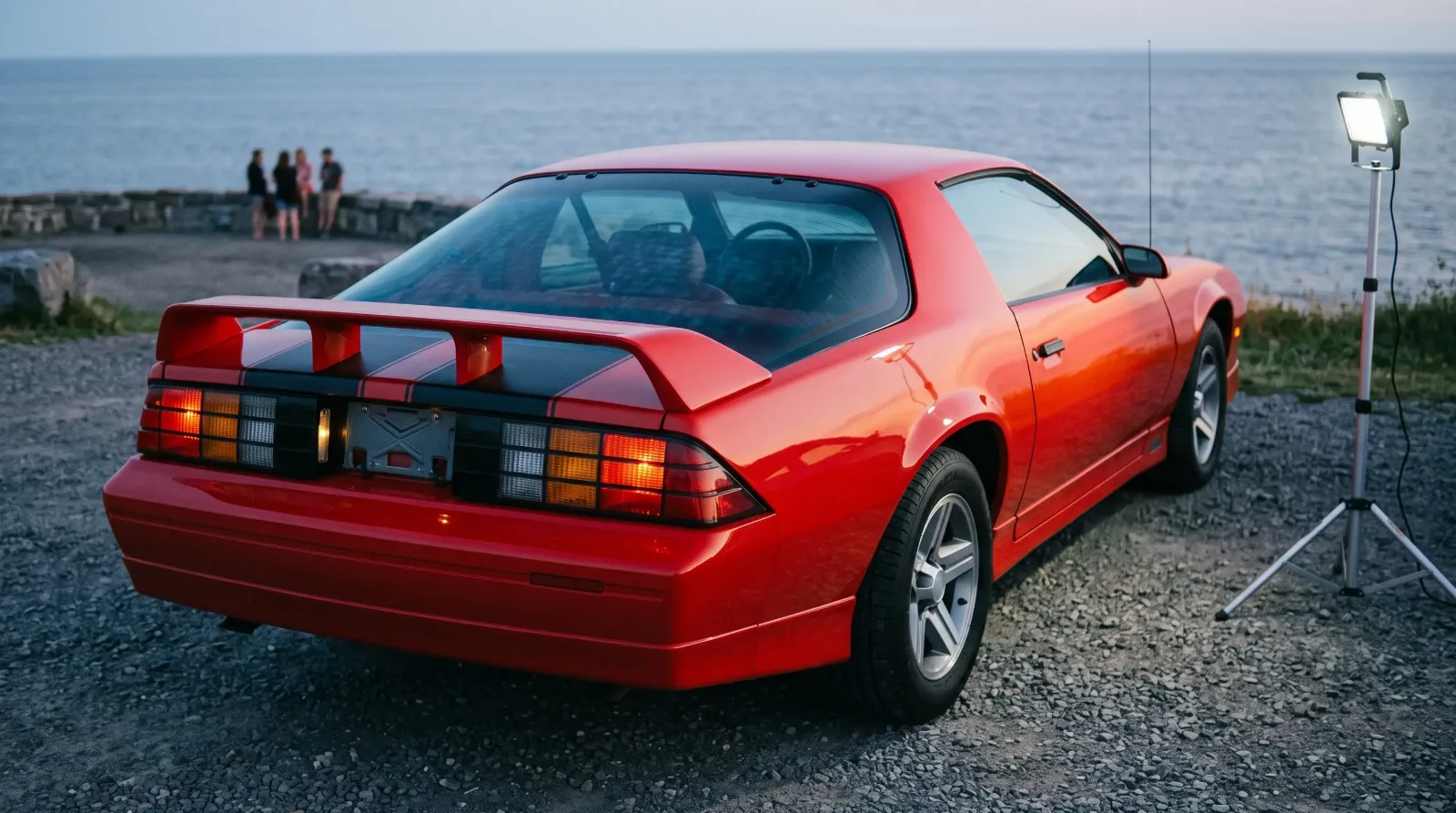
It also arrived at an odd moment. The 1992 car was the last of a body that had been in production since October 1981, so if you want the full arc, there is more on the third-gen cars in the main story. Here the job is narrower: what the package was, what it was not, and how to tell a real one from a set of stripes added later.
What the 1992 Camaro 25th anniversary package added
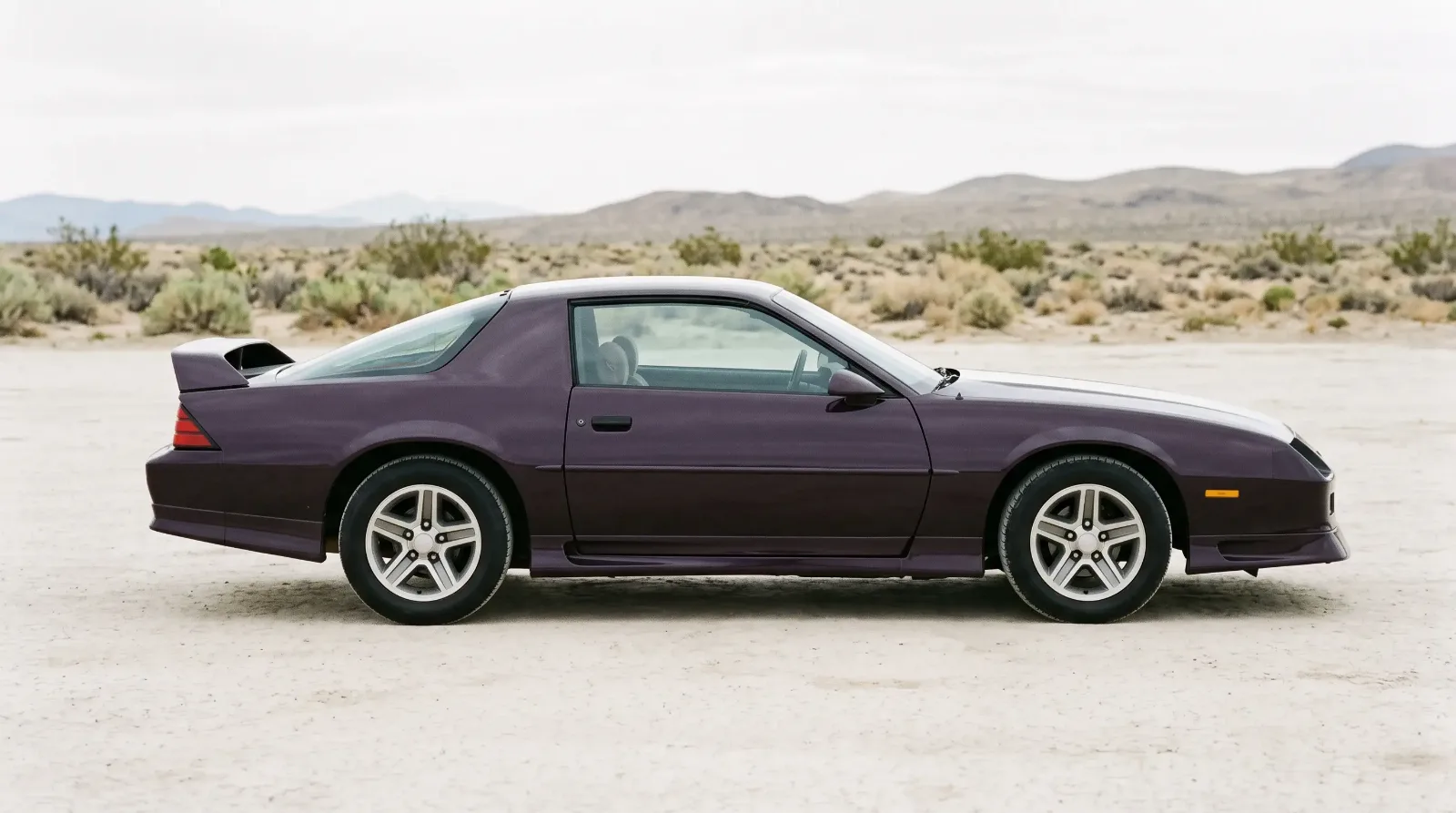
Start with the thing every 1992 Camaro got, because it confuses people. Each car built for the 1992 model year carried a 25th Anniversary badge on the dash. A base V6 RS got it. A Z28 convertible got it. A police B4C got it. So the badge by itself proves nothing beyond the model year, and an owner who points at it as proof of a special car is pointing at standard equipment.
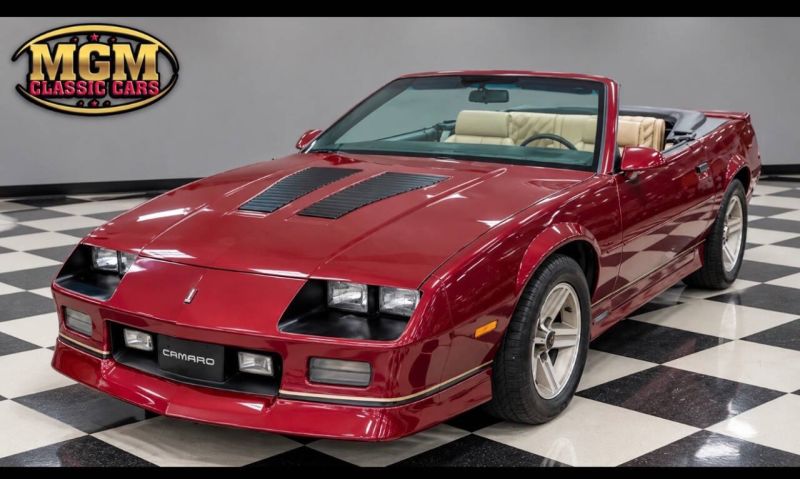
The package on top of that was called the Heritage package. It was purely cosmetic. It gave the car a body-color grille, blacked-out headlamp pockets, stripes on the hood and decklid, and painted wheels. There was no mechanical change of any kind: no engine work, no suspension, no different axle. A Heritage RS drove like an RS and a Heritage Z28 drove like a Z28.
That is the whole list. The stripes were the point. They were a nod back to a car that had gone on sale on September 29, 1966, as a 1967 model. Twenty-five years later, the nod cost $175.
RPO Z03 on paper: code, price and who could order it
On the order form the package was RPO Z03, listed at $175, and it was available on any 1992 Camaro. Some enthusiast references print the code as "ZO3," with a letter O, which is worth knowing when you search old listings and parts catalogs. Same package, two spellings.
Put that $175 in context. A 1992 RS started at $12,075 and a Z28 coupe at $16,055. The Heritage package was close to the cheapest line on the sheet, cheaper than most of the real performance options a Z28 buyer was looking at. Chevrolet built 70,007 Camaros for the 1992 model year, and 6,451 of them were Z28s (5,197 coupes and 1,254 convertibles).
| Item | 1992 figure |
|---|---|
| Package name and code | Heritage package, RPO Z03 |
| Price | $175 |
| Available on | Any 1992 Camaro model |
| Content | Body-color grille, black headlamp pockets, hood and decklid stripes, painted wheels |
| Mechanical change | None |
| Standard on every 1992 car | 25th Anniversary dash badge |
| Total 1992 Camaro production | 70,007 |
| 1992 Z28 production | 6,451 |
Because the package fit any model, the underlying car matters far more than the stripes. A Heritage Z28 could carry the LB9 305 at 205 hp with the automatic or 230 hp with the five-speed, or the L98 350 at 245 hp and 345 lb-ft, automatic only. A Heritage RS could be a 3.1-liter V6 at 140 hp. Those are very different cars wearing the same paint scheme.
Colors, the badge and the Heritage Edition that never happened
The stripes went on a short list of colors: Arctic White, Purple Haze, Black and Bright Red, with Polo Green II Metallic also possible on the RS. Not every reference agrees on that list. One marketplace listing names only white, red and black, so a Purple Haze car is the one where you want the factory label before you get excited. It may be perfectly real. It just needs the code to back it up.
That cancelled car is the part of the story club members love to argue about. On paper it would have been the most serious third-gen Camaro of all, an anniversary car with hardware borrowed from the Corvette. It did not happen. By StreetMuscle's account, Chevrolet had planned 602 of them, the same number as the 1967 Z28 run, then built about 10 prototypes and destroyed eight. The two survivors turn up at Camaro shows, and MotorWeek drove one. Those are GM's cars, not anybody's dealer purchase. Anyone who tells you they bought one, or know a man who did, is telling you about a car with no production record behind it. I have heard the claim more than once. I have never seen the paperwork, because there is none to see.
The timing explains a lot. Van Nuys was closing, and the last third-gen car, a red Z28 coupe, rolled off the line there on August 27, 1992. The fourth generation was already set for Sainte-Thérèse, Quebec. A body that started with the downsized 1982 launch was in its final months, and it is easy to see why a special engine package for the last year of an outgoing car lost out to a stripe kit.
How many Heritage cars were built
The number you will see quoted is 8,197. Treat it with care. It comes from secondary sources that agree with each other, but none of them cites GM production data, and at least one technical reference says the total count is unclear. So when a seller writes "1 of 8,197," he is quoting a figure that nobody has tied to a factory document yet.
What that means for a buyer is simple. The Heritage package was not rare by the standards of the hobby. Even if the true figure is off by a wide margin, Chevrolet built thousands of these, on every trim. The rare cars in 1992 were elsewhere: 705 cars with the 1LE package, and of those, 589 were B4C police cars. A Heritage stripe kit on a V6 RS coupe is a nice period detail. It is not a collectible on its own.
"I have watched men pay extra for the stripes and never ask about the engine under them. The stripes cost $175 in 1992. The L98 is what you are paying for. Read the label first, then admire the paint."
Wayne Coburn
Proving a Heritage car today
This is where the paperwork earns its keep. The stripes, grille and painted wheels are all easy to reproduce, and a stripe kit can turn any 1992 Camaro into a lookalike in an afternoon. The RPO code cannot be added after the fact. If the factory option label on the car or the original window sticker shows Z03, the package is real. If it does not, you are looking at decoration.
The dealer invoice route is worth the trouble. GM's archive has offered invoices for Chevrolets built from the 1977 model year, fleet and export cars excluded, and the 2022 order form priced them at $50 per document. That one sheet shows the options the car left the factory with, and it settles the Z03 question for good.
As for money, the market is modest. As of September 2, 2026, a black Heritage Z28 with the 245 hp L98 and an automatic sold for $14,445 at no reserve on Hagerty Marketplace. One sale is not a price guide, but it lines up with what the package always was: a pleasant extra on a good car, not a reason to pay double. If you are shopping, browse 1992 Camaros for sale, ask for the label photo before anything else, and let the engine and condition set the price. The stripes are the story you tell at the show. The paperwork is the story that holds up.
Sources and notes
- GM EFI: guide to the third-gen Chevrolet Camaro (Heritage package, colors, 1LE and B4C)
- Musclecarfacts: 1992 Camaro prices, production and the 8,197 Heritage figure
- Wikipedia: Chevrolet Camaro (third generation)
- StreetMuscle: the 3rd-gen Camaro that never was (the cancelled Heritage Edition)
- Hagerty Marketplace: 1992 Camaro Z28 Heritage, sold September 2026
- GM Media Archive (Allied Vaughn): vehicle invoice and build sheet order form, 2022
Related Reading

Have a
Chevrolet Camaro
for Sale?
Reach thousands of serious classic car collectors across the US.
Sell It Here →
Selling a classic? Here's how: compare the places to sell classic cars
Are You a Classic Car Dealer?
List your full inventory and connect with targeted classic car buyers.
Join as a Dealer →
#camaro z28
#camaro rs
#chevrolet camaro
#third generation Camaro
#1992 Camaro
#Heritage package
#RPO Z03

About the author
Wayne Coburn
Longtime Corvette owner, judge and club figure who knows the cars, the records and the people behind them.
Related Listings - Chevrolet Camaro


Comments
Be the first to comment on this article.