
On April 14, 1964, a 33-year-old airline pilot named Stanley Tucker walked into George Parsons Ford in St. John's, Newfoundland, and drove out in a Wimbledon White Mustang convertible. Three days later the Mustang would be introduced to the public in New York. Tucker did not know that the one under him was Serial Number One, 5F08F100001, a pre-production car built at the Rouge that winter. The very first Mustang with a serial number had a folding roof, and that is a fitting place to begin the classic Mustang convertible history: with a man, a cold Atlantic spring, and a car that wanted the top down anyway.
Car Features
6 min read
The Classic Mustang Convertible, 1964½–1973
Serial Number One was a convertible. How the open Mustang went from 73,112 cars a year to a few thousand, then surged once more in 1973.
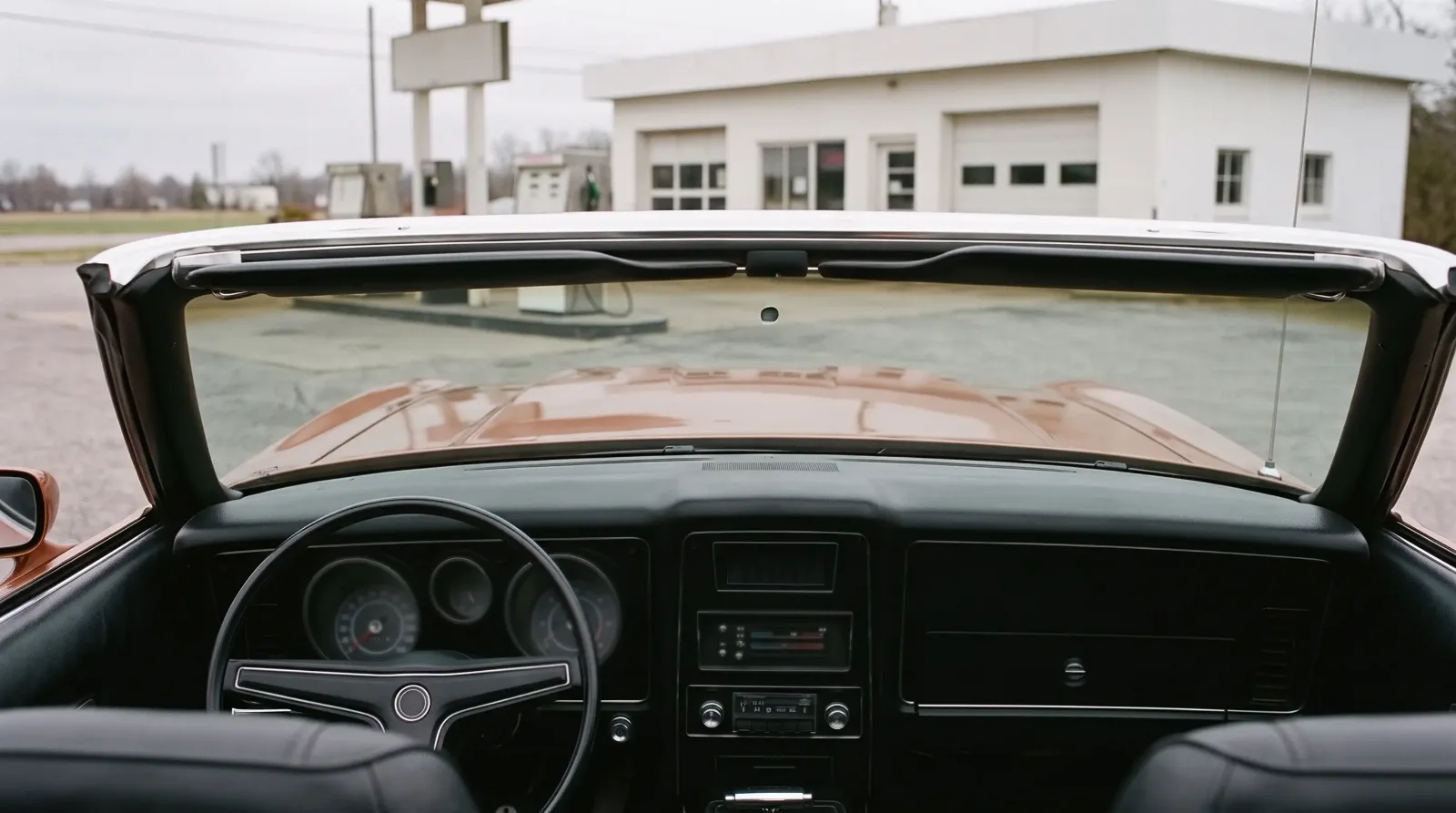
Two years later Ford wanted that car back. In early 1966 it offered Tucker the One Millionth Mustang, built to his specification, in exchange for Serial Number One. On March 2, 1966, in Dearborn, he met Lee Iacocca and took delivery of a new 1966 convertible, which The Henry Ford records as Silver Frost. He had traded one open Mustang for another. The rest of the first-generation car, from the coupe to the fastback, is told in the first-generation Mustang chapter. This piece stays with the roofless one.
Classic Mustang convertible history, 1964½ to 1966
In those first seasons the convertible was not a niche. It was a quarter of the early excitement. Ford built 28,833 of them in the 1964½ run that ended on July 31, 1964, and then 73,112 in the 1965 model year. The 1965 figure breaks down by the data plate: 65,663 standard cars (76A), 5,338 with the luxury interior (76B) and 2,111 with the bench seat (76C). The luxury number matters to collectors today, because about 5,300 of those 1965 convertibles carried the Pony interior with its embossed running horses on the seats.
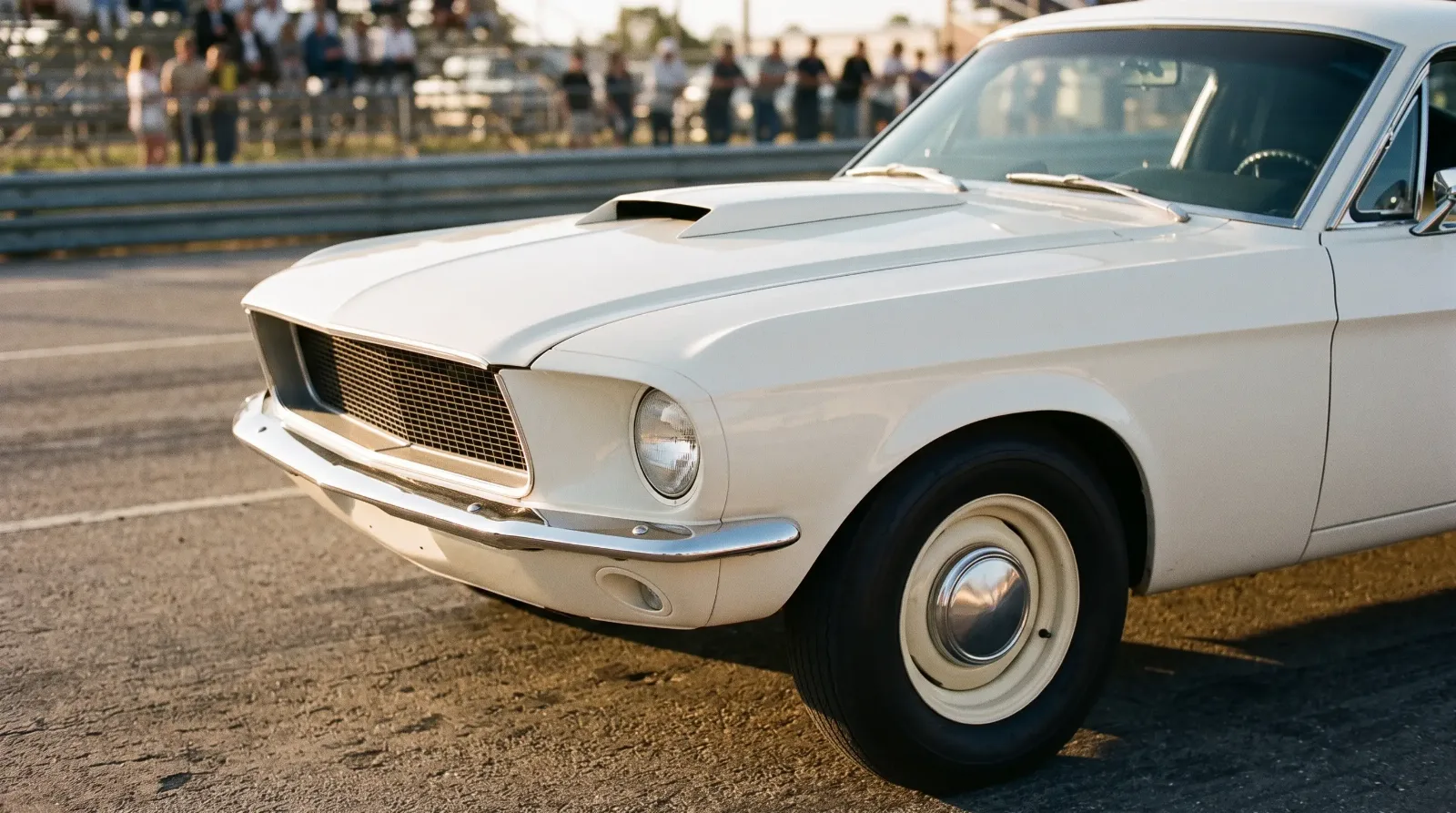
It was not an expensive way in. At launch the convertible listed at $2,614, against $2,372 for the hardtop. A power top cost $52 extra in 1965. Picture a dealer lot that summer: white and red cars with their tops folded behind the rear seat, the chrome catching sun, a price only a couple of hundred dollars above the hardtop's. The surprise came from the other direction. The new 2+2 fastback sold 77,079 cars in 1965 and quietly outsold the convertible in its first full year.
Then came 1966, the record year. Ford built 72,119 convertibles: 56,409 standard, 12,520 luxury and 3,190 with the bench. It was the best-selling convertible in the United States that year, and at $2,652 it was still within reach of a young buyer with a steady paycheck.
The slow fade, 1967 to 1970
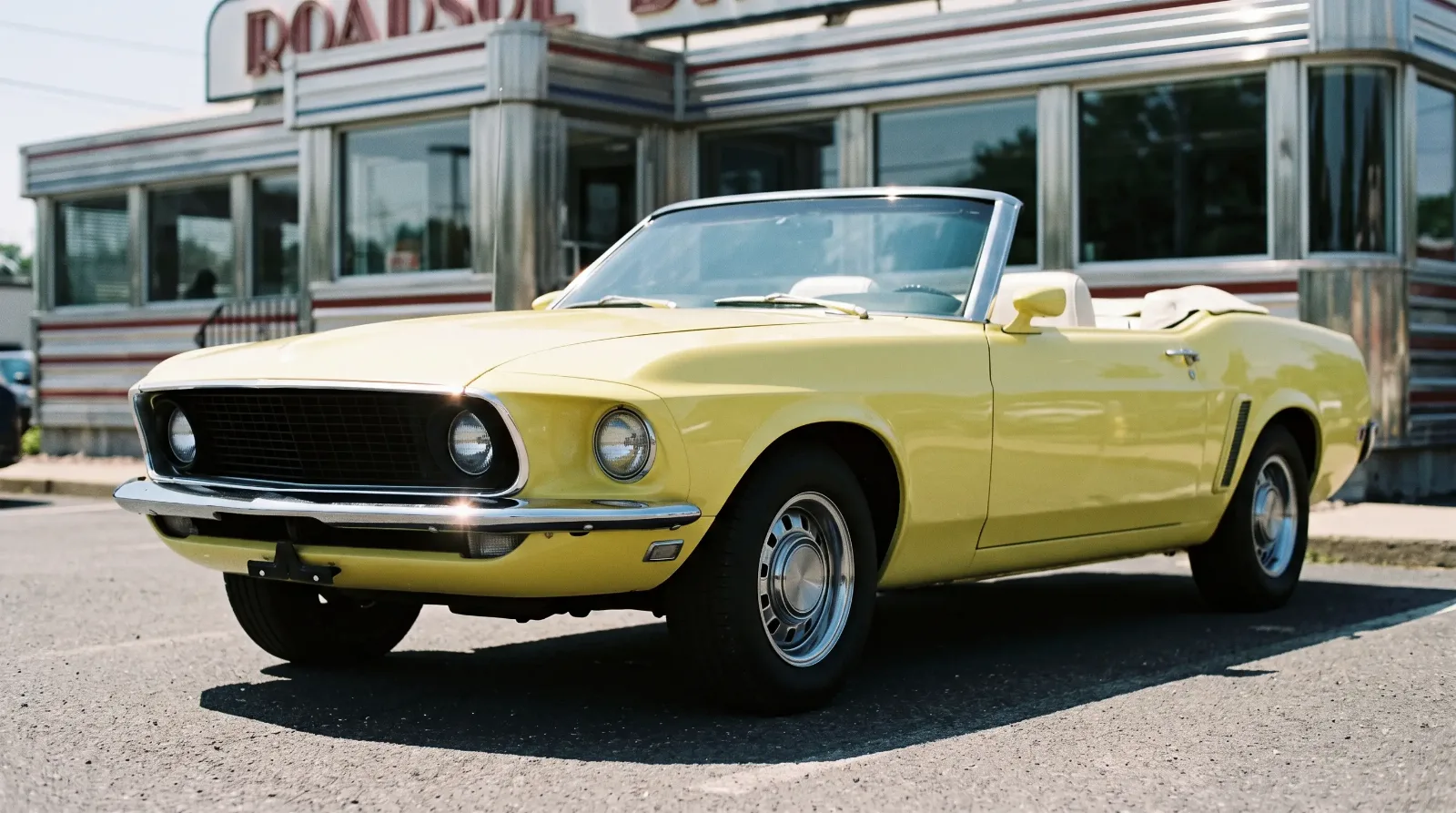
The 1967 car was longer and fuller, and its sculpted sides looked especially good with the top down. Buyers did not follow in the same numbers. Convertible production fell to 44,808 in 1967, as the new Camaro and Firebird drew customers away from the Mustang overall. In 1968 it fell again, to 25,376. Each year the open car shrank as a share of a shrinking total, and how the body itself grew and changed across these years belongs to the wider Mustang design story.
The 1969 restyle brought quad headlights and a longer body, and convertible output dropped to 14,746. Ford's new luxury Mustang, the Grandé, was offered only as a hardtop, so there was never a factory Grandé convertible. For 1970 the base convertible listed at $3,126, and only 7,673 were built. A car that had sold more than 70,000 a year in the mid-sixties had become, in four years, something you rarely saw at the curb. The 1970 model year as a whole is covered if you read more here.
| Model year | Convertibles built | Note |
|---|---|---|
| 1964½ | 28,833 | Builds to July 31, 1964 |
| 1965 | 73,112 | Body codes 76A, 76B, 76C |
| 1966 | 72,119 | Best-selling US convertible that year |
| 1967 | 44,808 | New, larger body |
| 1968 | 25,376 | |
| 1969 | 14,746 | No Grandé convertible |
| 1970 | 7,673 | One table gives 7,643 |
| 1971 | 6,121 | Power top and glass rear window standard |
| 1972 | 6,401 | |
| 1973 | 11,853 | Last Mustang convertible until 1983 |
The big car and the last top, 1971 to 1973
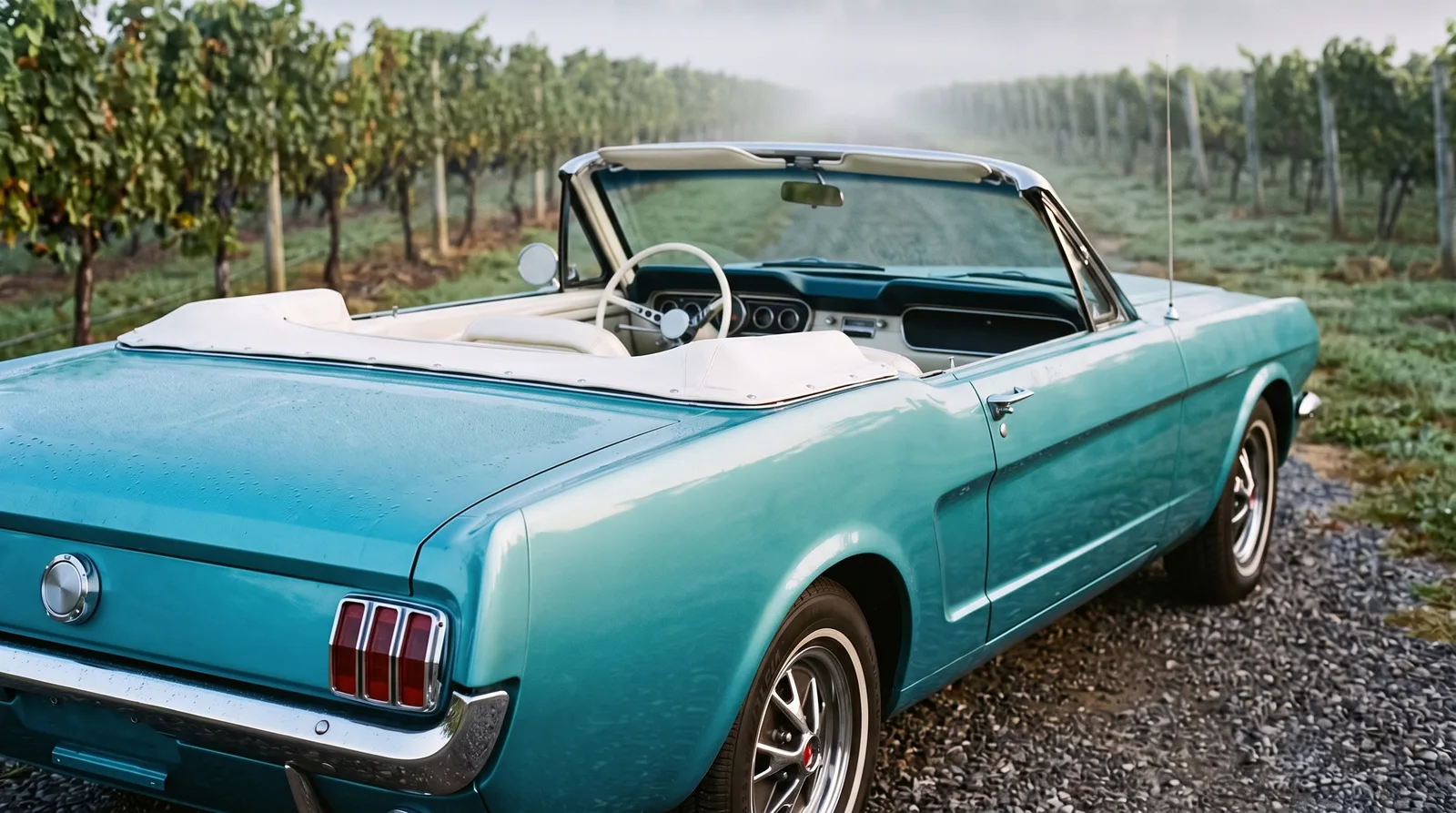
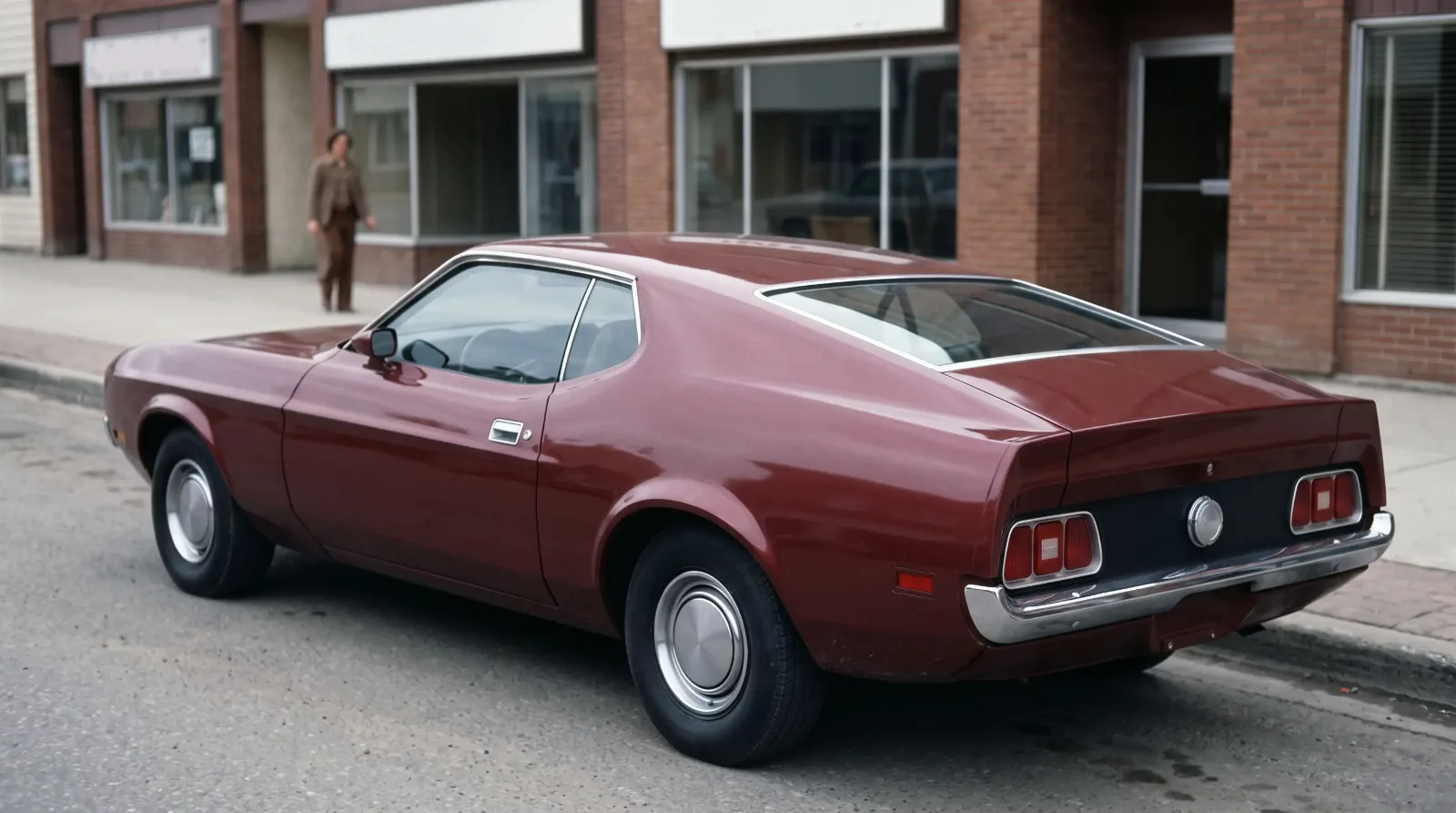
The 1971 Mustang was the largest of the first generation, a long, low car with a broad hood, and the convertible version had a kind of lazy grandeur to it. Ford made the power top and a one-piece glass rear window standard from 1971 through 1973, so every one of those cars left the factory with glass behind the rear seat. Production stayed small: 6,121 in 1971 and 6,401 in 1972. In Germany, where Ford could not use the Mustang name, buyers knew these cars by a different badge, and the reason is the story of the T-5.
Then 1973 did something odd. Convertible production rose to 11,853, almost double the year before. People seemed to sense an ending. The 1973 car turned out to be the last Mustang convertible until the 1983 model year, a gap of a full decade. The reason most often given is that Ford, like the rest of Detroit, expected proposed federal rollover rules to make open cars impossible to sell. That explanation is widely repeated, but no rule ever banned the convertible: the roof-strength standard that was finally written covered fixed-roof cars only. Open-car sales had also been falling across the industry since the mid-sixties, so fading demand probably mattered as much as the fear of regulation.
"Those last 1973 convertibles feel like the final warm evening of a long summer. Nobody planned a farewell, but people bought them as if they knew."
Nora Beckett
Reading a first-generation convertible today
The paperwork tells you what the eye cannot. On a 1964½ to 1966 car, the data plate body code starts with 76 for a convertible, and the letter after it separates the standard car from the luxury and bench-seat versions. In the VIN, the body digits are 08 for a convertible on 1965 and 1966 cars. From 1967 through 1973 the VIN uses 03 for the convertible. A car that claims to be a factory convertible but carries a hardtop code is a conversion, however good the work.
The arc is simple and a little sad. The convertible arrived as the Mustang's first serial-numbered car, sold more than 70,000 a year at its peak, then thinned to a few thousand before one last surge in 1973. Each year in that run has its own feel, from the crisp 1965 to the long 1971. For many people the sweet spot is the middle, where the body grew more muscular but the top still folded neatly away. If that is your year, start with the 1967 Mustangs, and look for the 76 or the 03 that tells you the open sky came from the factory.
Sources and notes
- The Henry Ford: Stanley Tucker and Ford Mustang Serial Number One
- Wikipedia: Ford Mustang (first generation)
- MustangSpecs: 1970 Mustang production numbers
- MustangSpecs: 1973 Ford Mustang
- Classic Industries: 1964 to 1973 Mustang VIN decoder
- The Truth About Cars: America's 1970s convertible controversy
Related Reading
Have a
Ford Mustang
for Sale?
Reach thousands of serious classic car collectors across the US.
Sell It Here →
Selling a classic? Here's how: where to sell your classic car online
Are You a Classic Car Dealer?
List your full inventory and connect with targeted classic car buyers.
Join as a Dealer →
#1965 mustang
#Ford Mustang
#first generation Mustang
#1973 Mustang
#Mustang convertible
#production numbers
#body codes

About the author
Nora Beckett
Automotive features writer and photographer who tells the human stories behind the cars, from show fields to cross-country road trips.
Related Listings - Ford Mustang
Comments
Be the first to comment on this article.