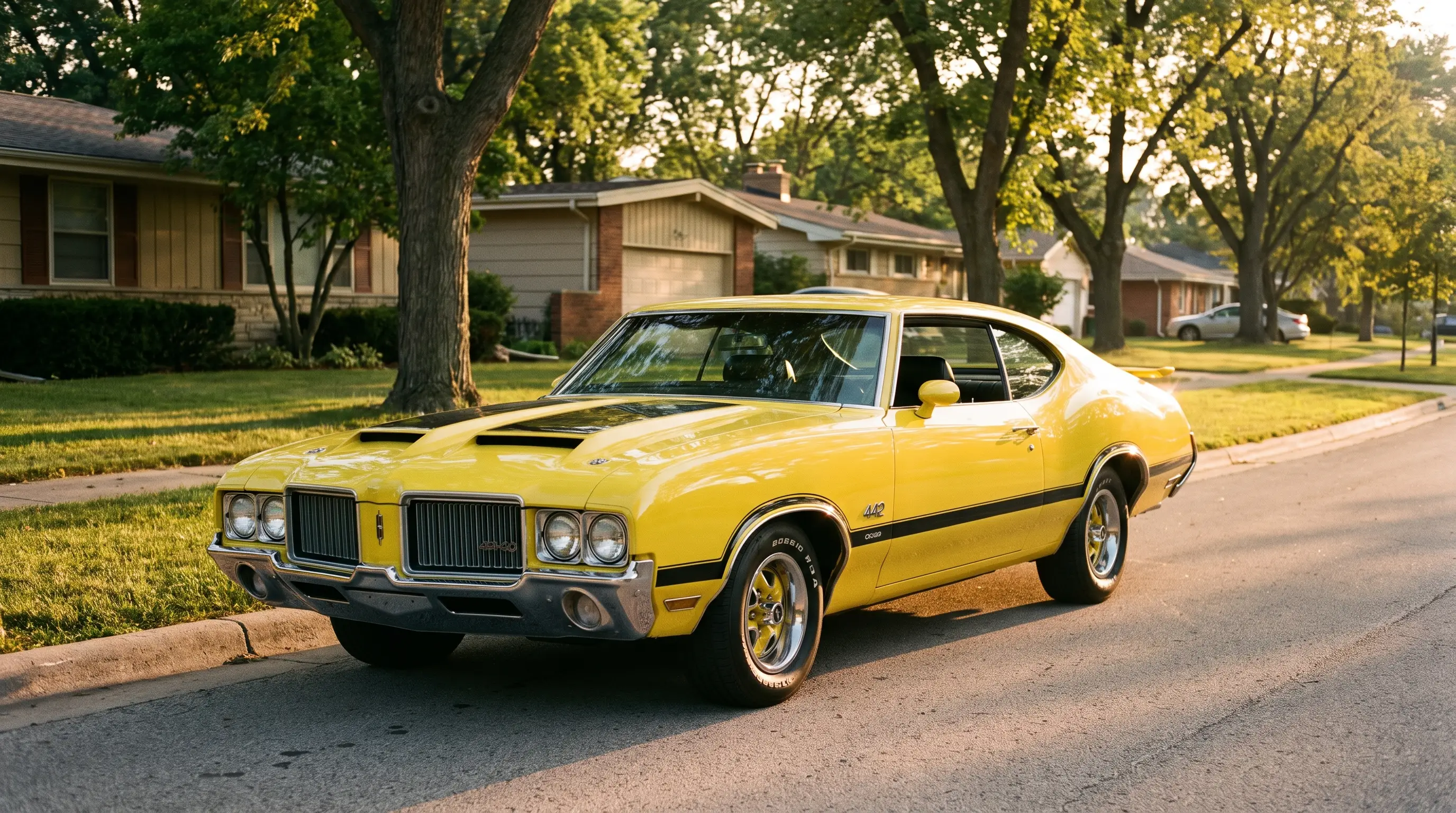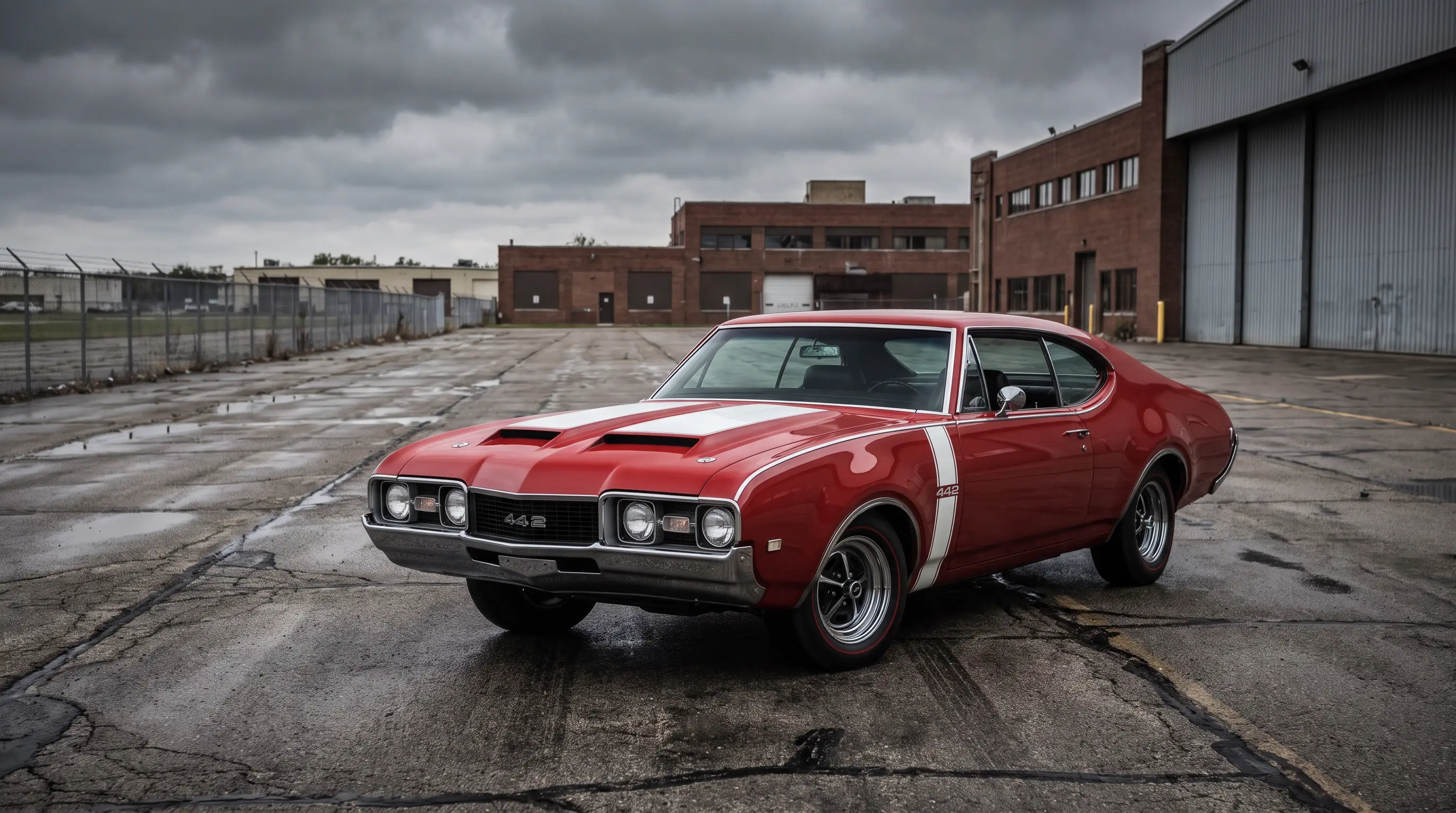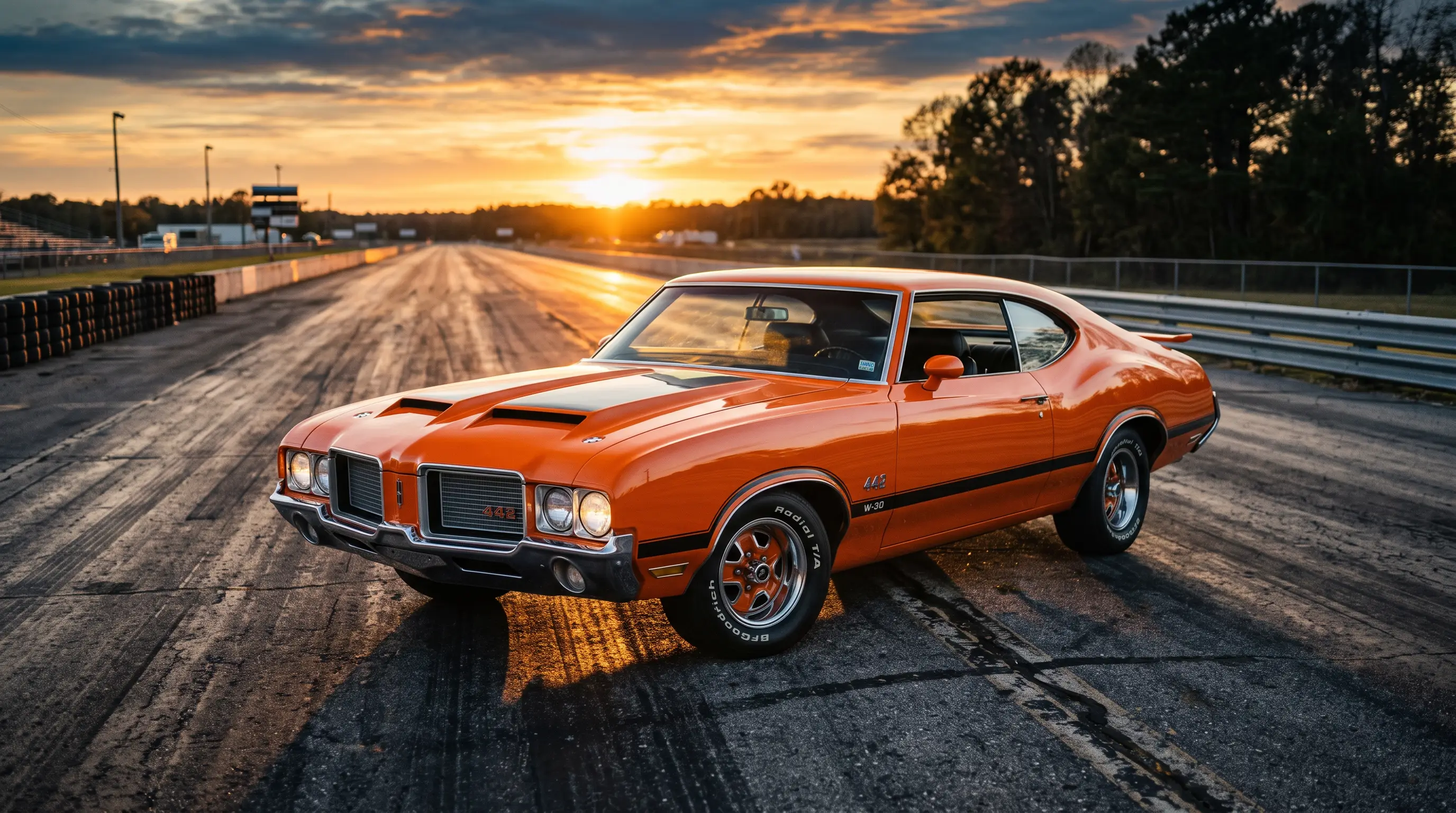
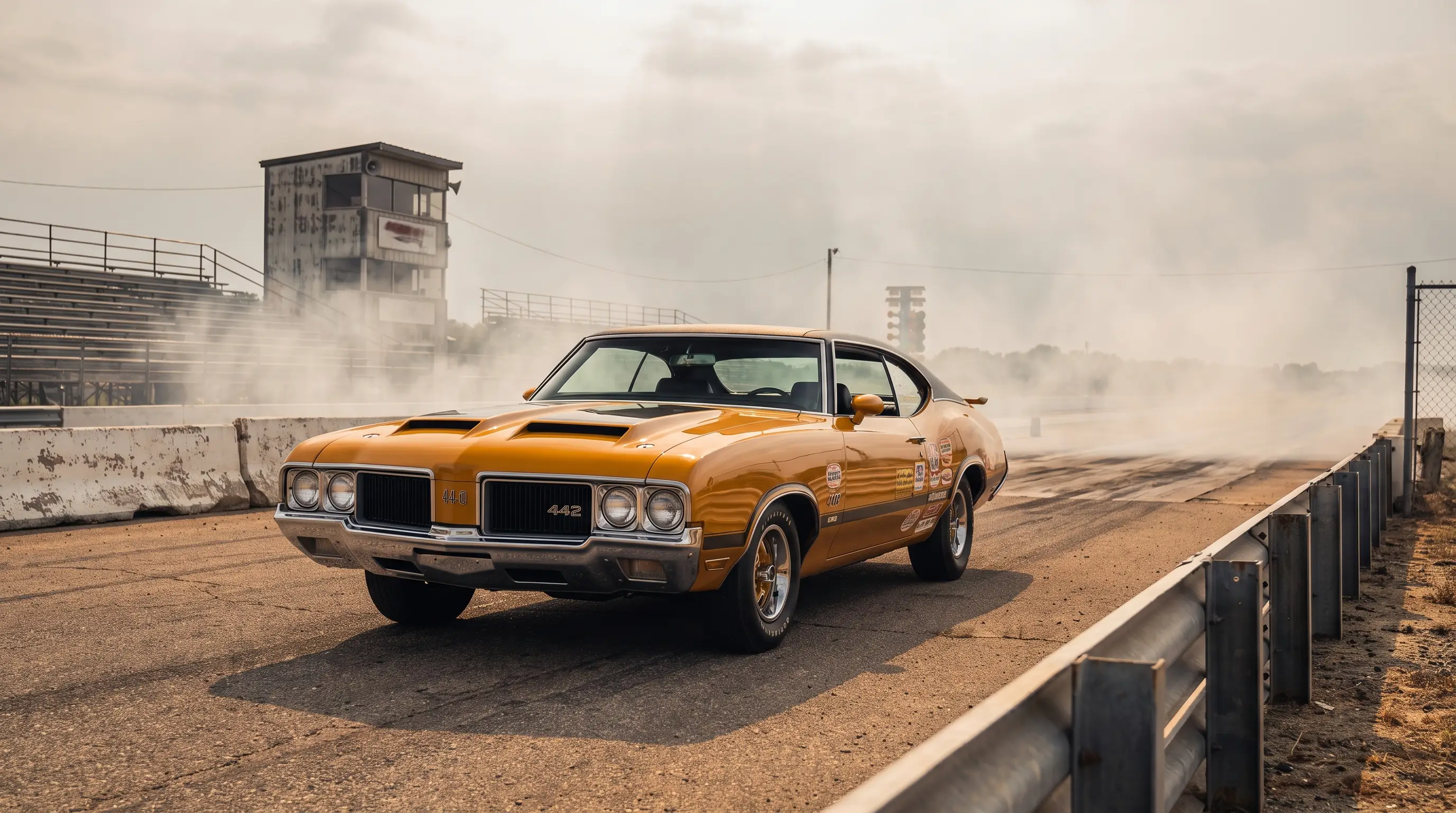
The 1970 442 W-30 sits at the top of every serious Oldsmobile buyer's list, and the price data backs up why. This was the year GM dropped its old displacement cap on intermediates, and Oldsmobile answered with a 455 cubic inch engine wearing a fiberglass hood, functional scoops, and a rating that undersold what the car actually did on the strip. If you are shopping this market, the 1970 442 w30 is the benchmark every other year gets measured against.
What the W-30 package actually bought you
W-30 was never just a bigger engine stuffed into a Cutlass. It was a specific order combination: the 455 with a hotter cam, an aluminum intake manifold, a fiberglass hood with functional Force-Air induction scoops feeding cold air straight to the carburetor, F70-14 fiberglass-belted tires, and a stiffer suspension package tuned specifically for the extra weight over the front axle. Oldsmobile also fitted lightweight components where it could, including that fiberglass hood, to offset some of what the big-block added up front.
The result was a car that handled better than its curb weight suggested and pulled harder than its factory rating implied. Buyers who cross-shopped the base 442 against the W-30 in 1970 were paying for a car built around one job: straight-line performance without giving up the chassis Oldsmobile had already sorted out.
The numbers: 370 hp and what it really made
Factory paper says 370 hp at 5200 rpm and 500 lb-ft of torque at 3600 rpm. Those numbers were conservative even by the loose standards of 1970 gross ratings, and dyno work done on unmolested W-30s over the decades has consistently shown real output well above the sticker. Quarter mile times from period magazine tests landed in the low 14s, with Motor Trend and Road Test both recording 14.2 at over 100 mph and Popular Hot Rodding running 13.89 in an independent test, which was competitive with anything else in the segment that year.
What matters for a buyer today is not just the number on the tag. It is whether the numbers matching drivetrain is actually still under the hood, because a W-30 with a replacement block or a re-stamped data plate is a different car financially, even if it looks identical in every photo.
Auction results and what W-30s trade for today
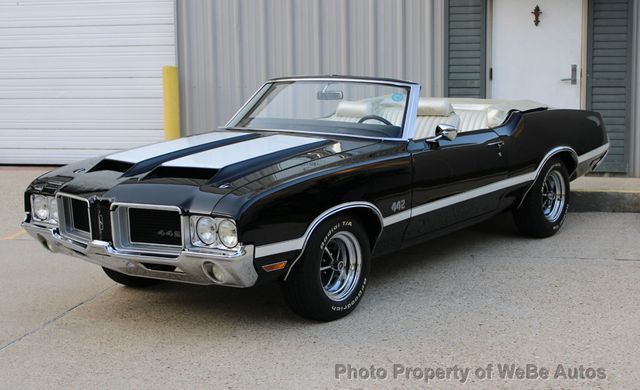
Documented, numbers matching 1970 W-30 hardtops with build sheets and Protect-O-Plates routinely clear six figures at the major auction houses now, and verified convertibles push well past that. Cars missing documentation, running a correct-but-not-original engine, or showing obvious rust repair sell for a fraction of that money, sometimes less than half. The spread between a documented car and a "believed to be" car is the single biggest variable in this market.
| Condition and documentation | Typical range |
|---|---|
| Numbers matching, full documentation, concours condition | roughly $120,000-$180,000+ |
| Numbers matching, driver quality, partial documentation | roughly $70,000-$100,000 |
| Correct engine family, no build sheet, solid driver | roughly $45,000-$65,000 |
| Replacement engine, project or restored without paperwork | roughly $25,000-$40,000 |
"People pay for the block and the paperwork before they pay for the paint. I have watched two cars that looked nearly identical sell forty thousand dollars apart because one had a build sheet and the other had a story."
— David Mercer
Verifying a real W-30
Start with the VIN decode and cross-check it against the trim tag and the engine's stamped pad. Ask for a build sheet, a Protect-O-Plate, or PHS documentation before anything else. Confirm the block casting number matches a 455 W-30 application and check for the correct carburetor, intake, and cam specifications rather than trusting a seller's description alone. A car can look perfect and still be running a passenger car 455 wearing W-30 badges, and that swap does not show up in a walk-around.
A private pre-purchase inspection from someone who has handled Oldsmobile big-blocks before is worth the fee every time. Have them pull the intake and check casting numbers against a reference list, verify the hood is the correct fiberglass piece and not a fiberglass reproduction sitting on a car that never had one from the factory, and check the suspension components for the heavier-duty parts the package specified. None of that shows up in listing photos, and sellers do not always know the difference between a correct restoration and a well-intentioned guess.
Buy or pass
For a buyer who wants the definitive 1970 Oldsmobile, a documented W-30 is worth the premium over a base 442, and the price gap has widened rather than closed over the last several years. A car without paperwork is not worthless, but it needs to be priced like what it actually is: a good 442 with an unverifiable claim attached, not a blue-chip W-30. Buy the documentation first and the car second.
The math also changes depending on what you plan to do with the car. A buyer chasing show points and long-term appreciation should hold out for full documentation even if it means waiting an extra year and paying more up front. A buyer who wants to drive the car regularly and does not care about a trophy has more room to negotiate on a correct, numbers matching example that is missing its original paperwork, since the driving experience is identical either way. What does not make sense is paying documented-car money for a car that only has a plausible story attached to it.
Financing and insurance also track this split. Agreed-value policies want the same paperwork an auction house wants, and a lender evaluating a car as collateral will discount an undocumented W-30 the same way a buyer should. That is worth factoring into an offer before it is worth arguing about in the comments section of a listing.
For the full story on how this car fits into Oldsmobile's broader muscle car run, the 442 chapter covers the years around it, and if you want to see how Oldsmobile handled the same 455 in a less aggressive state of tune, keep reading the series.
Sources and notes
- Oldsmobile 442 - Wikipedia
- Displacement unleashed: 1970 brought several flavors of GM 455 - Hagerty Media
- 1970 Olds 442 - Muscle Car Facts
- 1970 Oldsmobile 442 W-30 Road Test - Car Life Magazine (Over-Drive Magazine archive)
- 1970 Oldsmobile 442 W-30 - Barrett-Jackson Scottsdale 2025 docket
- 1970 Oldsmobile 442 W-30 sold at Mecum Indy (2024) - Classic.com