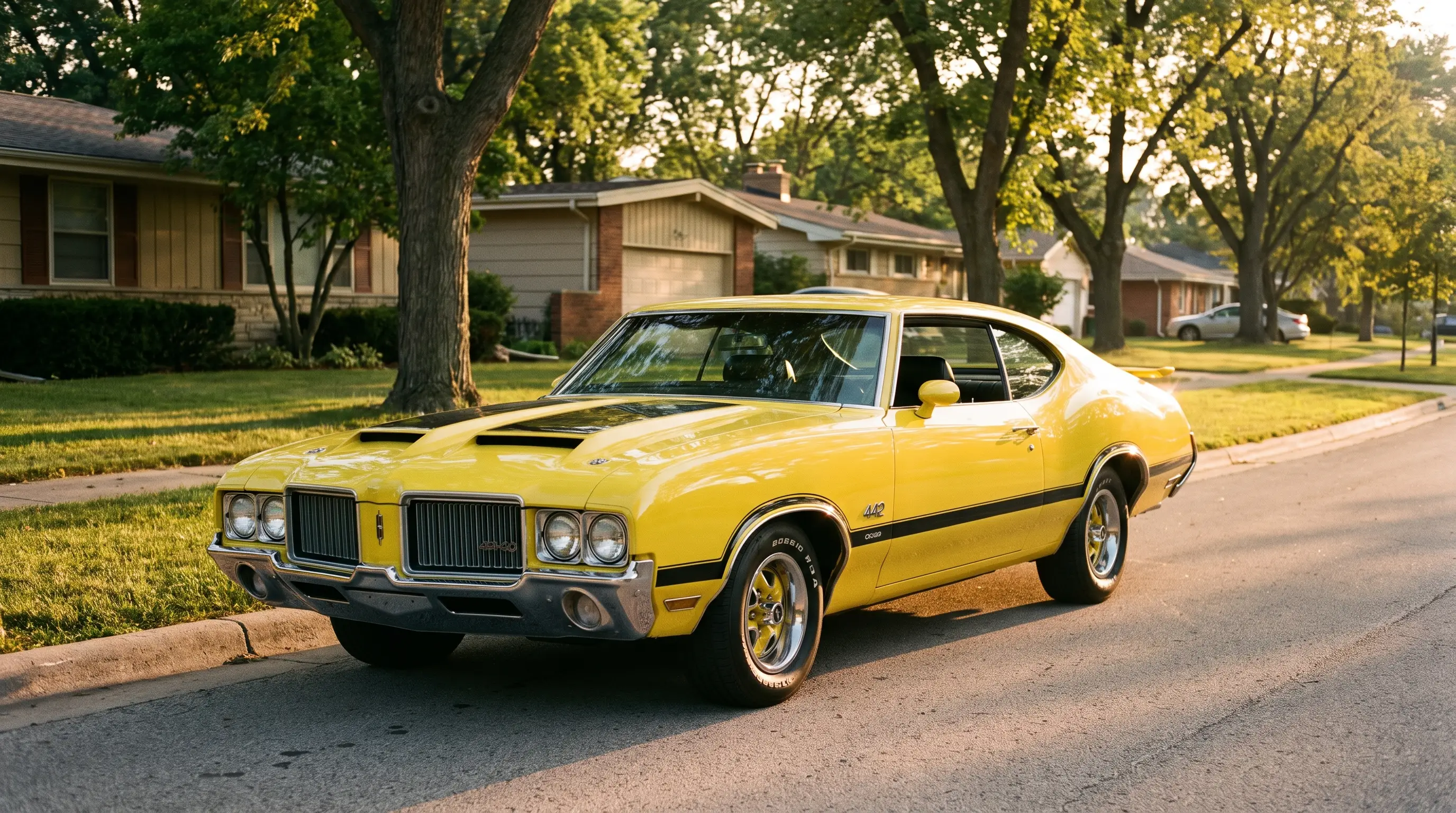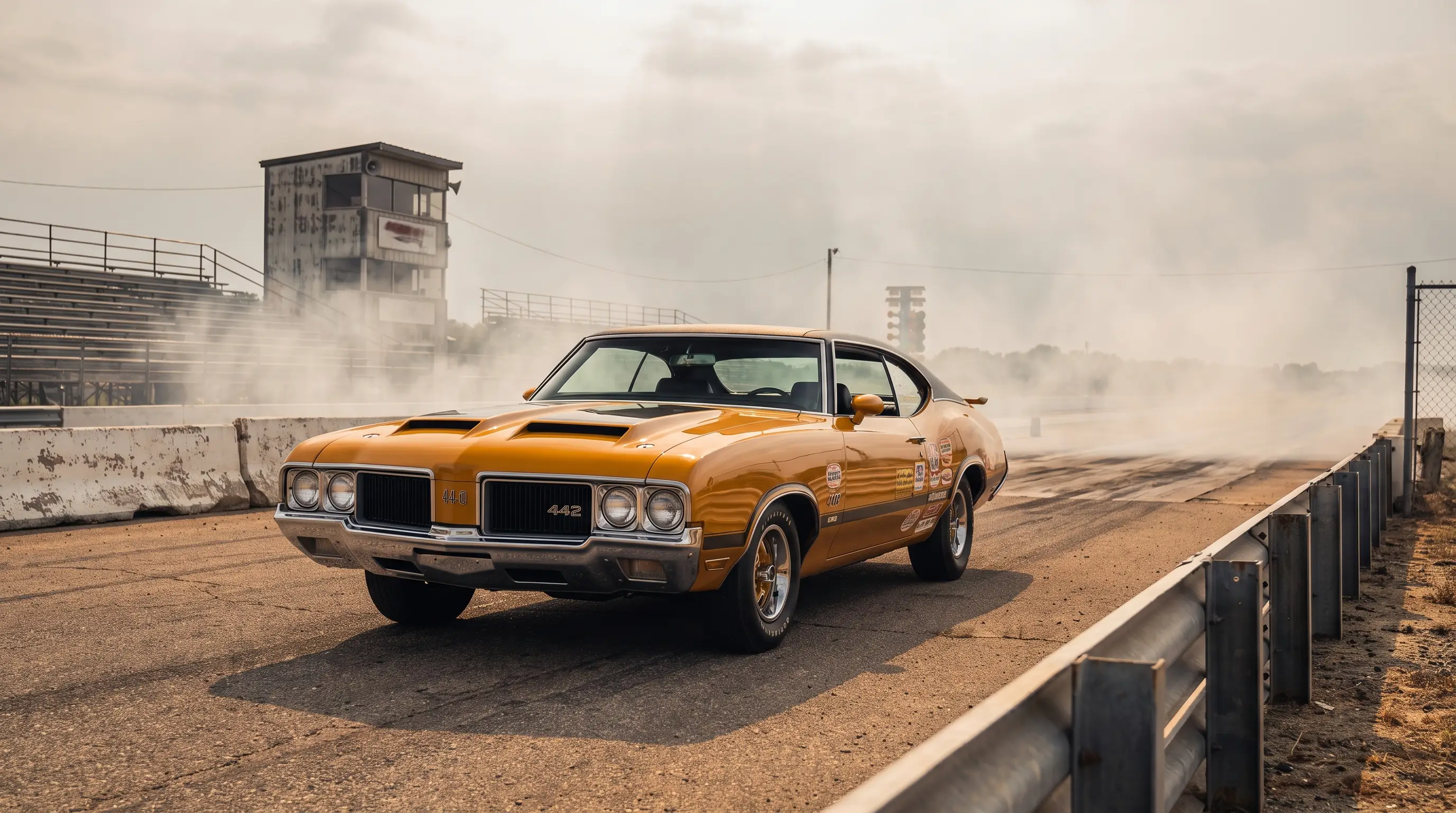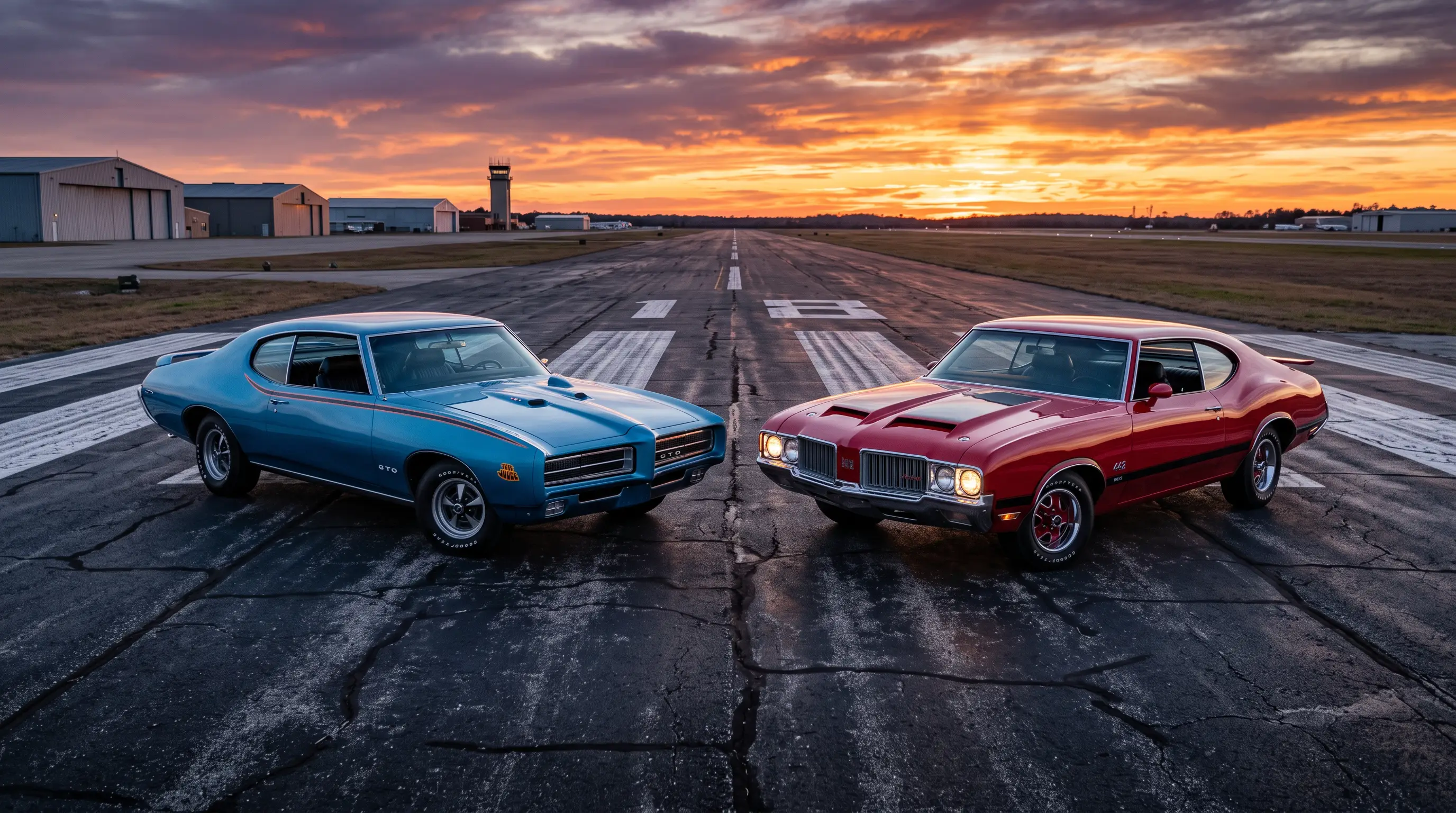
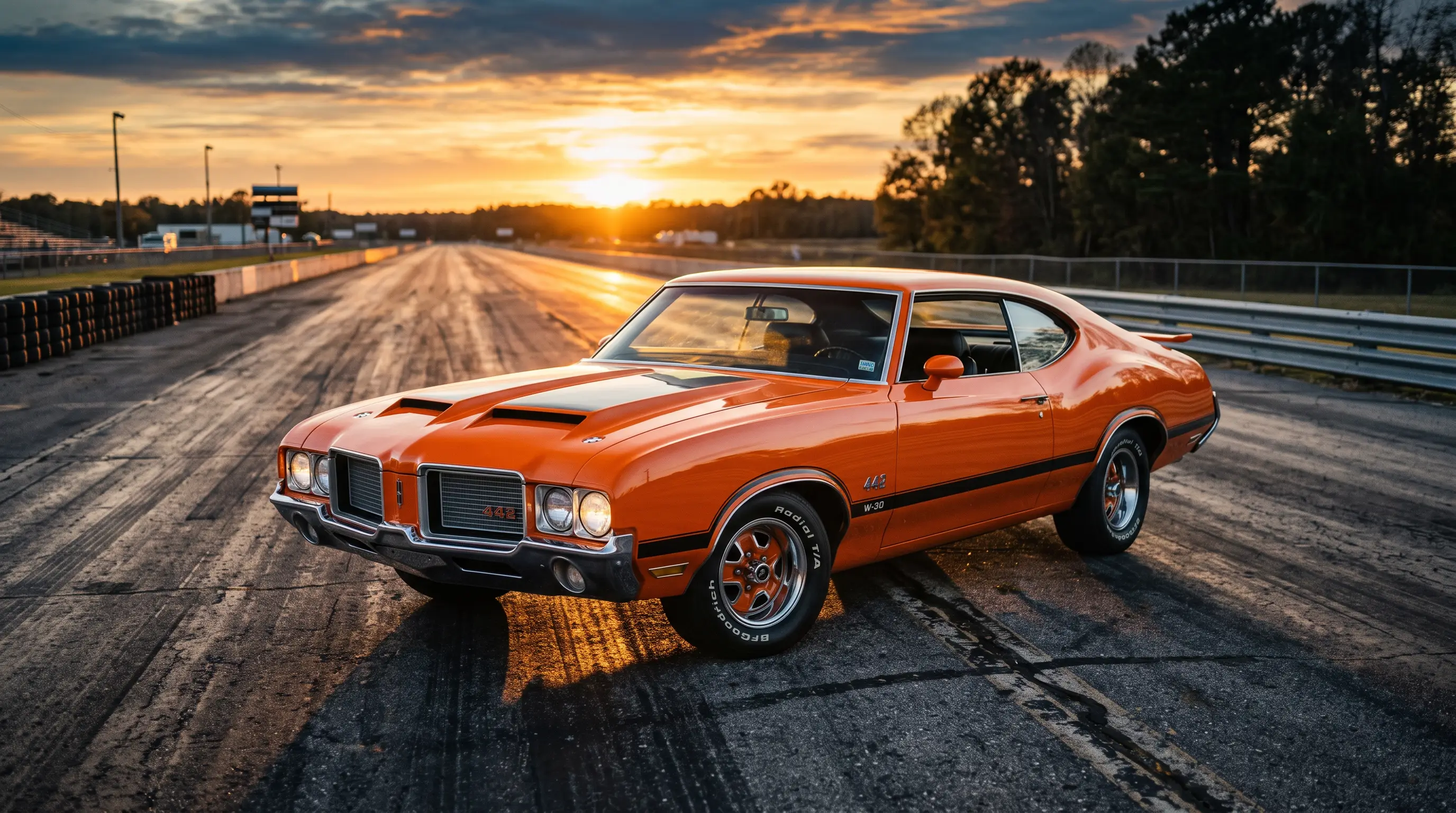
Say "442" to most people and they picture one engine, but the 455-powered 442 that Oldsmobile built between 1970 and 1972 was actually three different cars wearing the same badge. The block stayed roughly the same size the whole way through. What Oldsmobile did to it, and what a shop today has to know to keep one running right, changed every single year. If you are working on one of these or buying one, you need to know which year you actually have under the hood.
Three years, three different 455s
The 455 first appeared under a 442-based hood in 1968, but only in the specially built Hurst/Olds, which Hurst assembled off-line to get around GM's corporate 400 cubic inch cap on intermediates. The 455 did not become a regular factory option on the 442 itself until that cap went away for 1970, and that is when the big-block became the story of the car. That year the 455 in a 442 could be had in standard form or in the W-30 tune, and both were built around higher compression and a more aggressive state of tune than what came after. By 1971, GM had mandated lower compression across the board to run on lower-octane unleaded fuel, and every 455 in the lineup, W-30 included, lost real power along with the compression drop. Then 1972 brought the switch to SAE net horsepower ratings, which measured the engine with accessories installed and no test-bench tricks, so the number on the window sticker dropped again even though the hardware barely changed from 1971.
None of that means the 1972 455 is a lesser engine mechanically. It means you cannot compare a 1970 rating to a 1972 rating and draw a conclusion about which one actually makes more power at the crank. You have to know what each number is actually measuring before it means anything.
What changed under the hood 1970-1972
Compression ratio is the biggest variable across these three years. The 1970 455s ran 10.25:1 in standard tune and 10.5:1 in W-30 trim, and that dropped to 8.5:1 for 1971 to handle lower-octane fuel without pinging on the road. Cam timing and carburetor calibration were adjusted alongside the compression change, and the W-30 package, where it was still offered, kept its own specific cam and induction setup separate from the standard 455.
Exhaust systems, head castings, and intake manifolds saw running changes too, which is why two 455s three years apart can look similar at a glance and behave completely differently once you have a wrench on them. A rebuild done to 1970 specs on a 1972 block, or the reverse, will run, but it will not run like it should and it will not pass a numbers-matching inspection if that matters to the eventual buyer.
What it's like to actually own one
These are torque engines first. A stock 455, any year, pulls hard from idle and does not need to be wound out to feel strong, which is the opposite experience from a smaller high-revving small-block. Daily driving one means dealing with a heavy nose, a thirsty carburetor, and a cooling system that needs to be right, because these blocks run hot in traffic if the radiator, water pump, and timing are not all in good shape.
Parts availability is decent for the common stuff, gaskets, water pumps, standard rebuild kits, but W-30 specific pieces and some of the earlier casting variants get expensive and take patience to source correctly. Buy from someone who has kept receipts if you can, because a 455 with an undocumented rebuild history is a bigger unknown than a numbers matching small-block would be in the same situation.
"A 455 doesn't care if you baby it. It wants oil changes on schedule, a cooling system that actually works, and timing set correctly. Give it that and it'll run for decades. Ignore any one of those and it'll tell you about it at the worst possible time."
— Mike Sullivan
Common mistakes buyers make
The most common one is assuming a 455 badge or displacement decal means the engine underneath matches the year on the title. Blocks got swapped over fifty years of ownership, sometimes for good reasons and sometimes because a cracked block needed a replacement and whatever was available at the time went in. Check casting numbers and dates against the car's build date before assuming anything.
The second mistake is judging power by the horsepower rating printed on a fender tag or in an old brochure without knowing whether that number is gross or net. A 1972 442 rated lower on paper than a 1970 car is not necessarily weaker at the wheels, it is being measured a different way. Judge the car by how it actually runs and what a compression test and a dyno pull tell you, not by a number pulled from a different testing standard.
Bottom line
A 455-powered 442 from any of these three years is a strong, torquey classic that rewards an owner who understands which year's specifications actually apply to the engine in front of them. Do not let a horsepower number from a brochure make the buying decision for you, and do not assume every 455 under a 442 hood was born there. Get the casting numbers checked, get a compression test done, and buy the car that matches its own paperwork rather than the reputation of the badge. For the bigger picture on where this fits in Oldsmobile's muscle car run, the 442 story lays out the full timeline, and for a look at how the 442 stacked up against its most direct competitor, another angle is worth reading next.
Sources and notes
- Oldsmobile 442 - Wikipedia
- Displacement unleashed: 1970 brought several flavors of GM 455 - Hagerty Media
- The History Of The Oldsmobile 455 - DrivingLine
- The Oldsmobile 442 Had A More Powerful V8 Than The Company Claimed - CarBuzz
- 1971 Oldsmobile 4-4-2 W-30: A Profile of a Muscle Car - HowStuffWorks
- 1970 Oldsmobile 442 Specifications & Dimensions - Conceptcarz