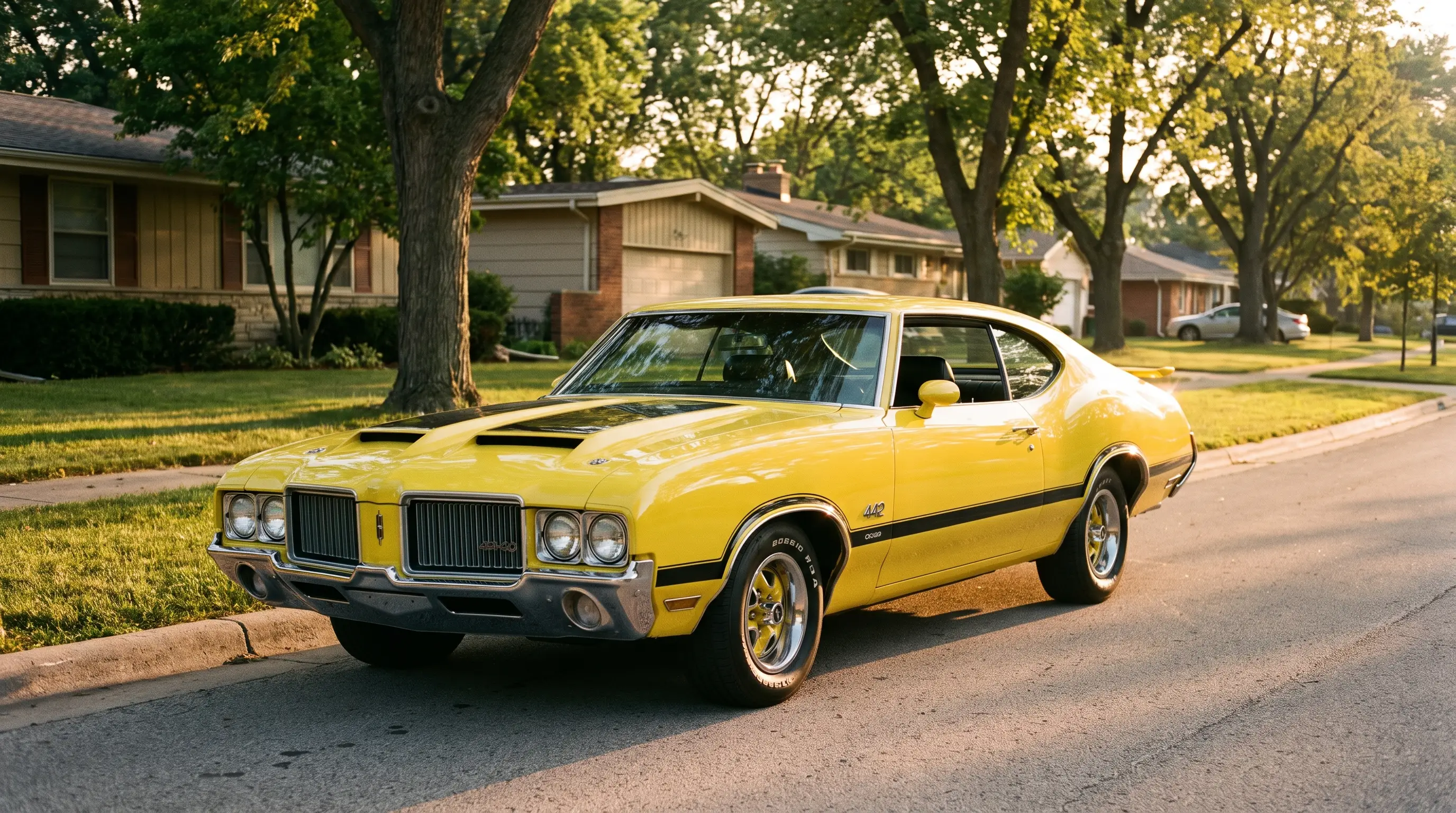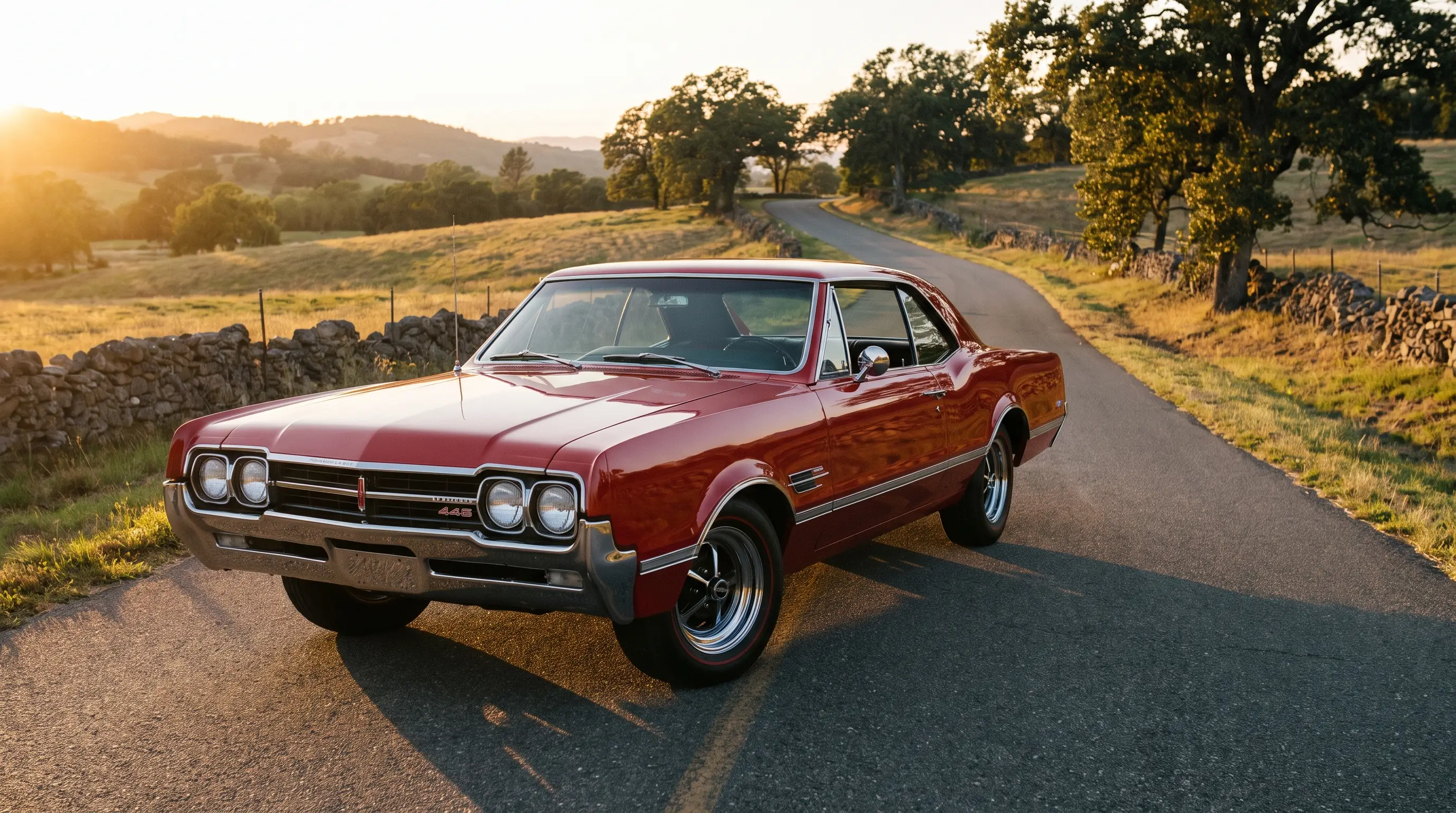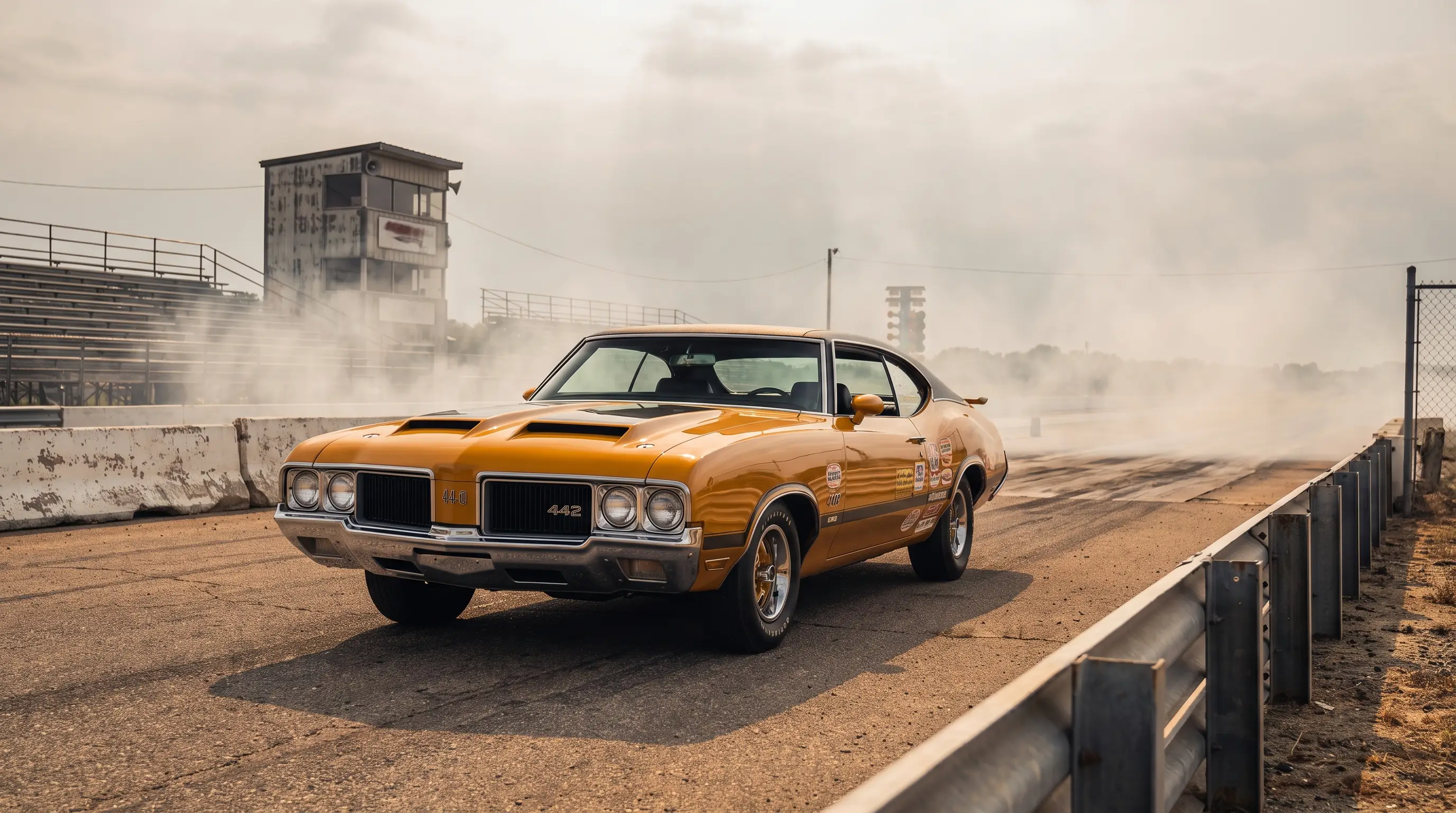
1968 is the year the Oldsmobile 442 stopped being something you checked off on an order form and became a car in its own right. For four model years, the 442 had lived as an option package bolted onto the F-85 and Cutlass, borrowing its identity from whatever car it happened to be riding on. That ended in 1968, and the change was bigger than most people give it credit for.
From option package to its own series
Oldsmobile made the 442 a standalone model for 1968, no longer just RPO B09 sitting on a Cutlass order sheet. This coincided with a full redesign of GM's A-body intermediate platform, which meant every car in this class, Chevelle, GTO, and the 442 among them, got new sheet metal for 1968. The 442 rode on the same restyled body as the rest of the lineup, but for the first time it had its own model identity rather than functioning as an add-on to somebody else's car.
Why does this distinction matter to a buyer today? Because it changes how you verify a car. On a 1964 through 1967 442, you are checking whether a Cutlass or F-85 correctly received the B09 package. On a 1968 car, you are checking whether the vehicle was built as a 442 from the ground up according to its own production records. Different documentation trail, different things to look for on the cowl tag and build sheet.
The 400 stays, and a new player joins the lineup
The 400 cubic inch V8 carried over as the standard engine, rated at 350 horsepower with the four-speed manual and 325 horsepower behind the automatic, a healthy figure for a single four-barrel carburetor setup. What is more interesting is what happened alongside the standard 442 that year: the Hurst/Olds partnership effectively began around this same body style, built to get around GM's internal displacement limits for intermediates by having a third party install a bigger engine after the car left the factory floor. That is a story worth its own space, but it is worth knowing that the 442 badge and the Hurst/Olds badge are close cousins from this exact model year forward, not the same car.
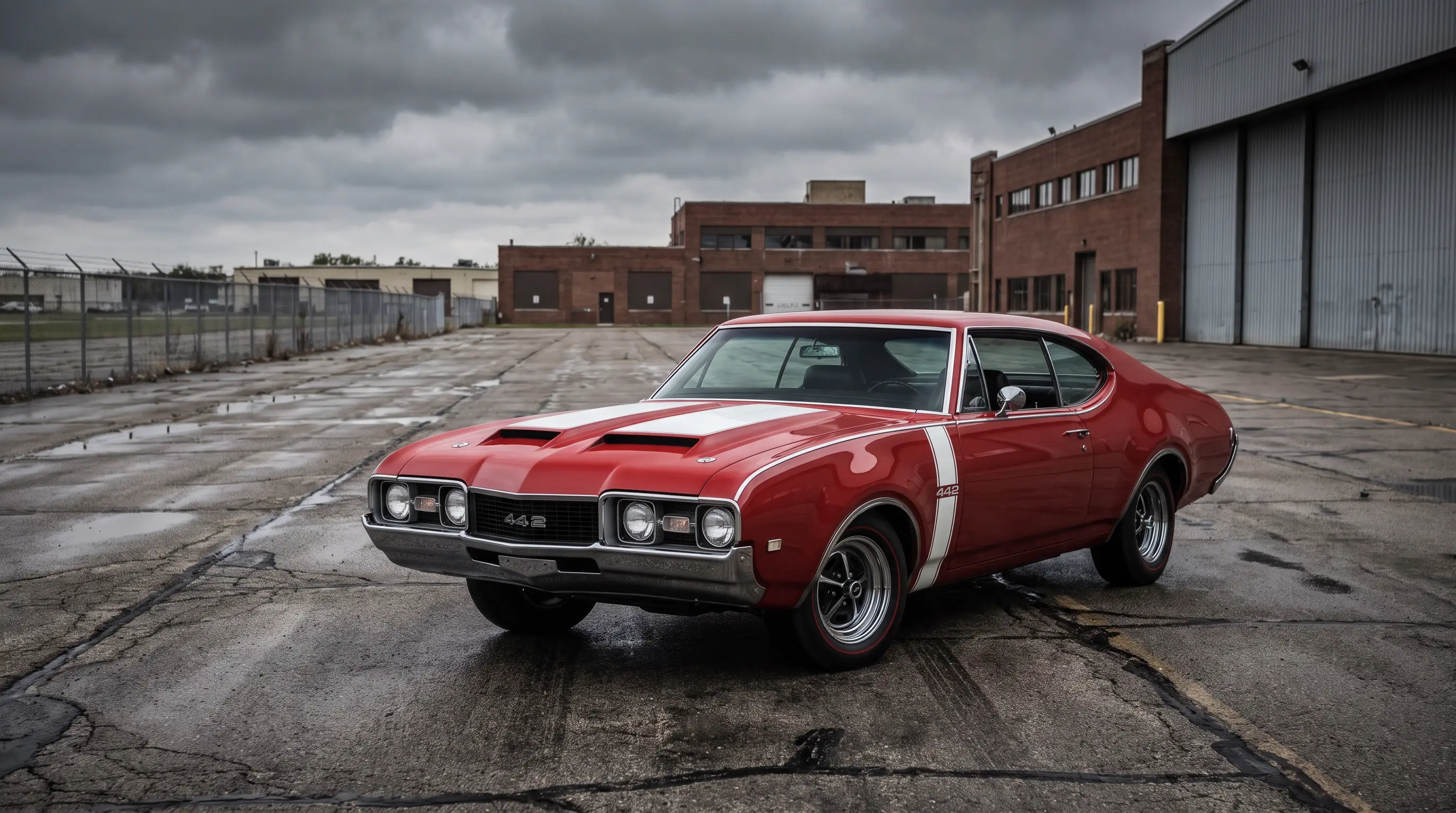
The W-30 option also carried into 1968, now with fiberglass hood scoops feeding functional cold-air induction into the engine rather than relying on decorative styling alone. This was not a cosmetic upgrade dressed up as performance. The ductwork actually routed outside air to the carburetor, and cars built this way genuinely made more usable power than a standard 442 in real driving conditions, not just on a dyno sheet.
What to check when you are looking at a 1968 car
Because 1968 marks the 442's transition from option package to standalone model, the documentation questions shift. You want to confirm the car left the factory as a 442, not that a Cutlass received a 442 package after the fact, which was still technically possible on some trim combinations depending on how the order was written up. The cowl tag and build sheet, where they survive, will tell you more than any badge or decal will.
Watch closely for W-30 claims specifically. The functional hood scoops and their associated ductwork are far easier to replicate today than they were to build correctly in 1968, and a numbers-matching W-30 commands a real premium over a standard 400 four-barrel car. If a seller cannot produce documentation tying the specific VIN to the W-30 build, price the car as a standard 442 and let the paperwork surprise you upward, not the other way around.
I have seen this mistake play out more times than I care to count. Somebody buys what they believe is a W-30 based on the scoops alone, pays a premium for it, and finds out years later the fiberglass hood was swapped on at some point by a previous owner chasing the same premium themselves. The scoops are bolt-on parts. The documentation is not. Treat any claim without paperwork as a starting point for negotiation, not a settled fact, and you will save yourself a headache down the road.
| Spec | 1968 Oldsmobile 442 |
|---|---|
| Status | Standalone model, no longer an option package |
| Platform | Redesigned GM A-body intermediate |
| Standard engine | 400 cubic inch V8, single 4-barrel (350 hp manual / 325 hp automatic) |
| Performance option | W-30 with functional cold-air induction |
| Related model | Hurst/Olds, built on the same body this year forward |
Why 1968 is the hinge point for the whole nameplate
Everything that came before 1968 was Oldsmobile testing whether a fast intermediate was worth building. Everything after 1968 was Oldsmobile committing to it as a real model with its own identity, its own production numbers, and its own place in the lineup separate from the Cutlass it started life bolted onto. For background on the naming decision that got the whole thing started, how the 442 earned its name covers the earlier history. And if you want to see where the standalone model went from here, a related deep-dive covers the W-30's most famous model year.
"1968 is where the 442 grew up. Before that it was a checkbox on somebody else's order form. After that it had its own production line and its own paperwork. That's the year I tell people to start paying closer attention to documentation, because the car finally had its own identity to fake."
— Mike Sullivan
Sources and notes
- Oldsmobile 442 - Wikipedia
- Oldsmobile Hurst/Olds - Wikipedia
- 1968 Oldsmobile 442 - Muscle Car Facts
- GM's Original Rule Breaker: The 1968 Hurst/Olds Story - autoevolution
- Vintage M/T Review: 1968 Oldsmobile Hurst/Olds - Curbside Classic
- 1968-72 Oldsmobile 442 values are holding steady, for now - Hagerty Media