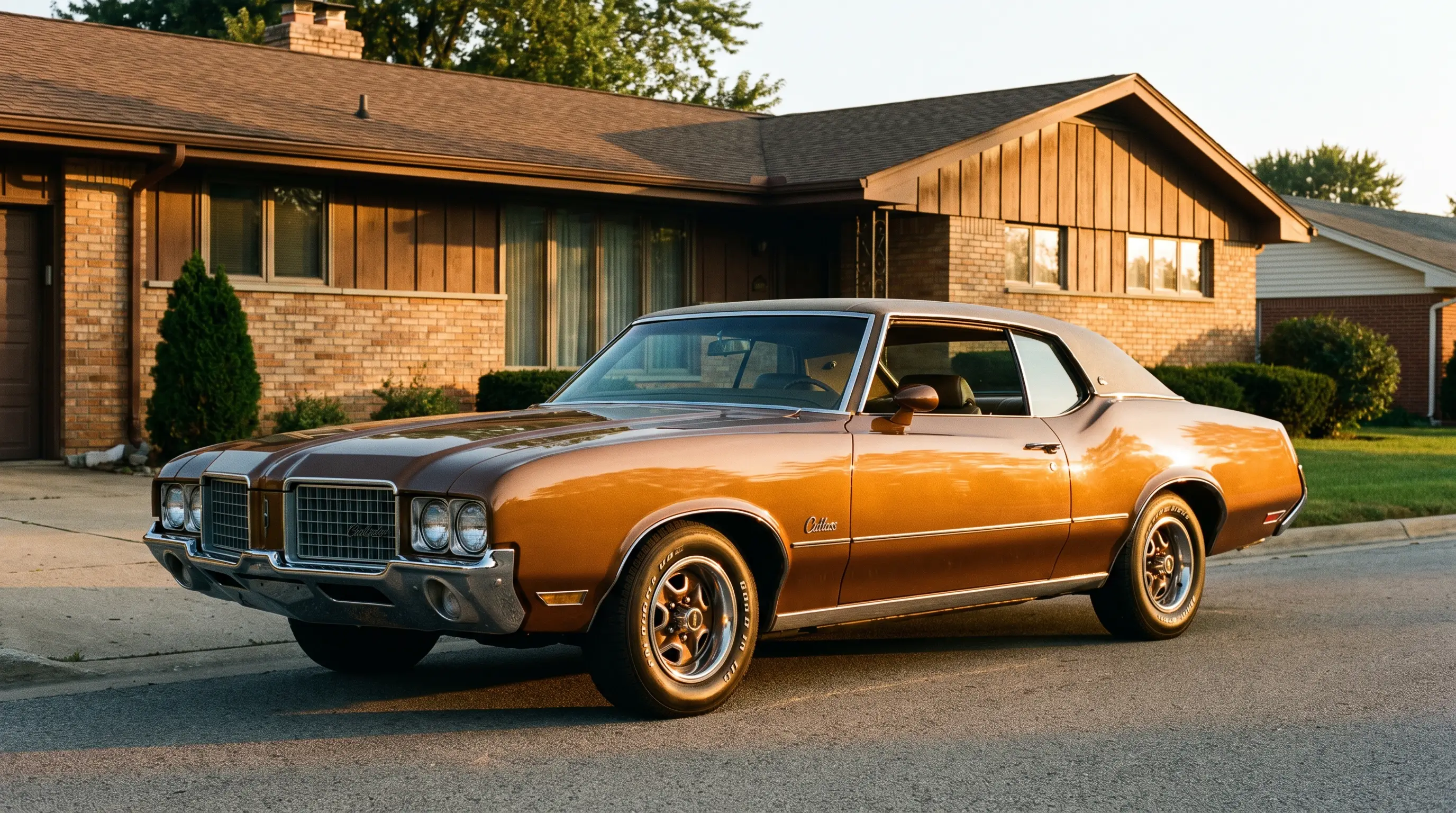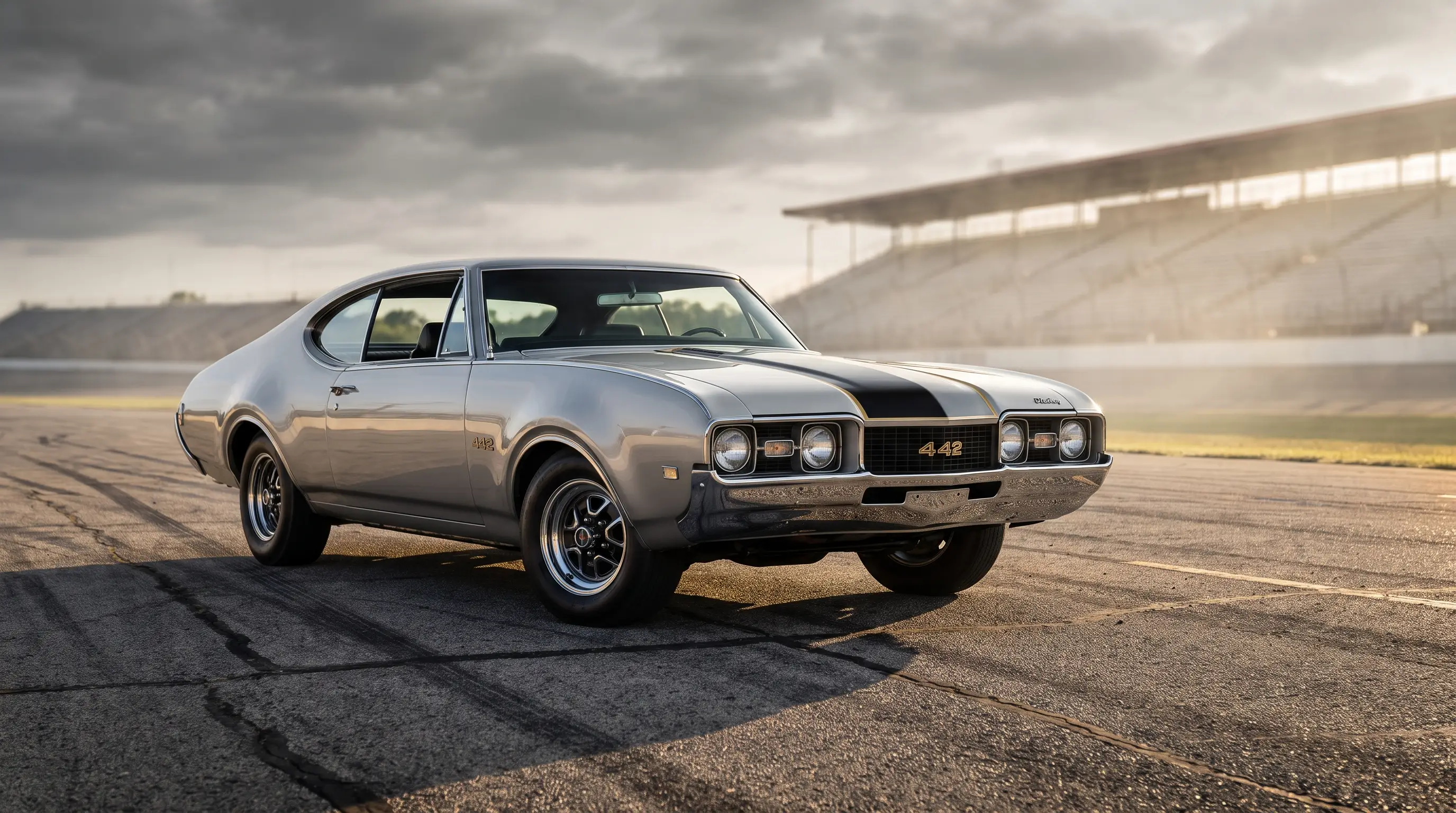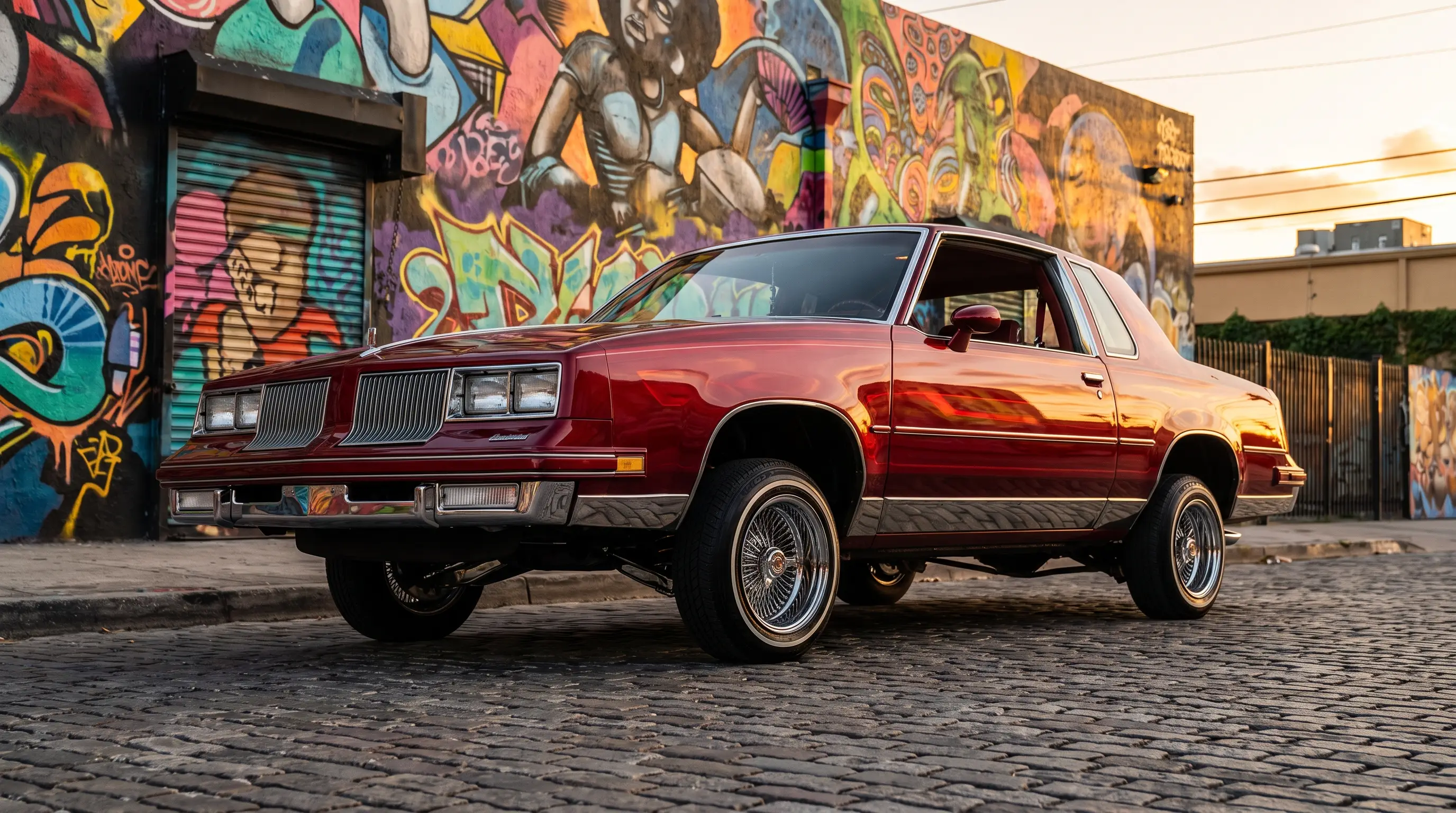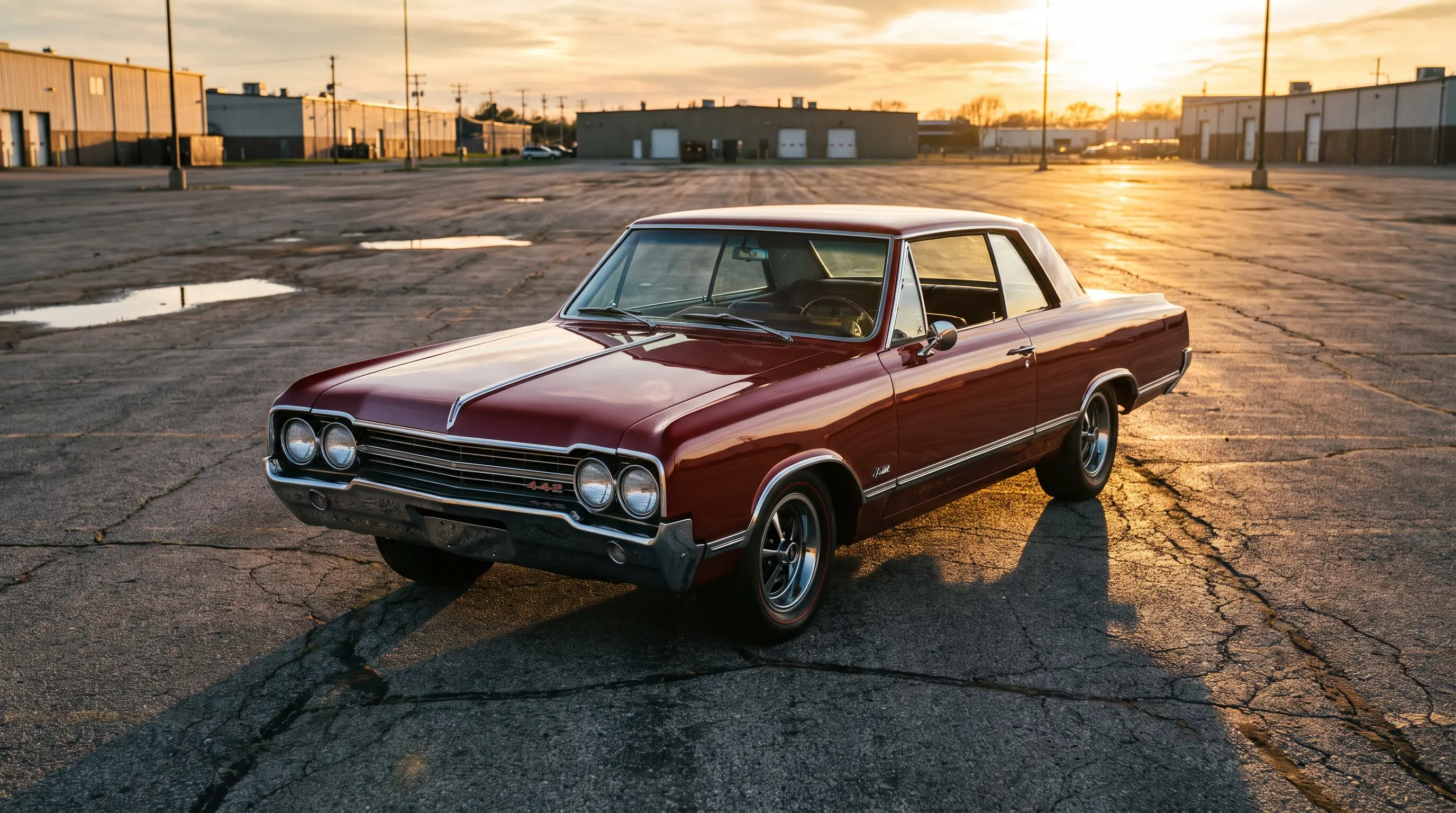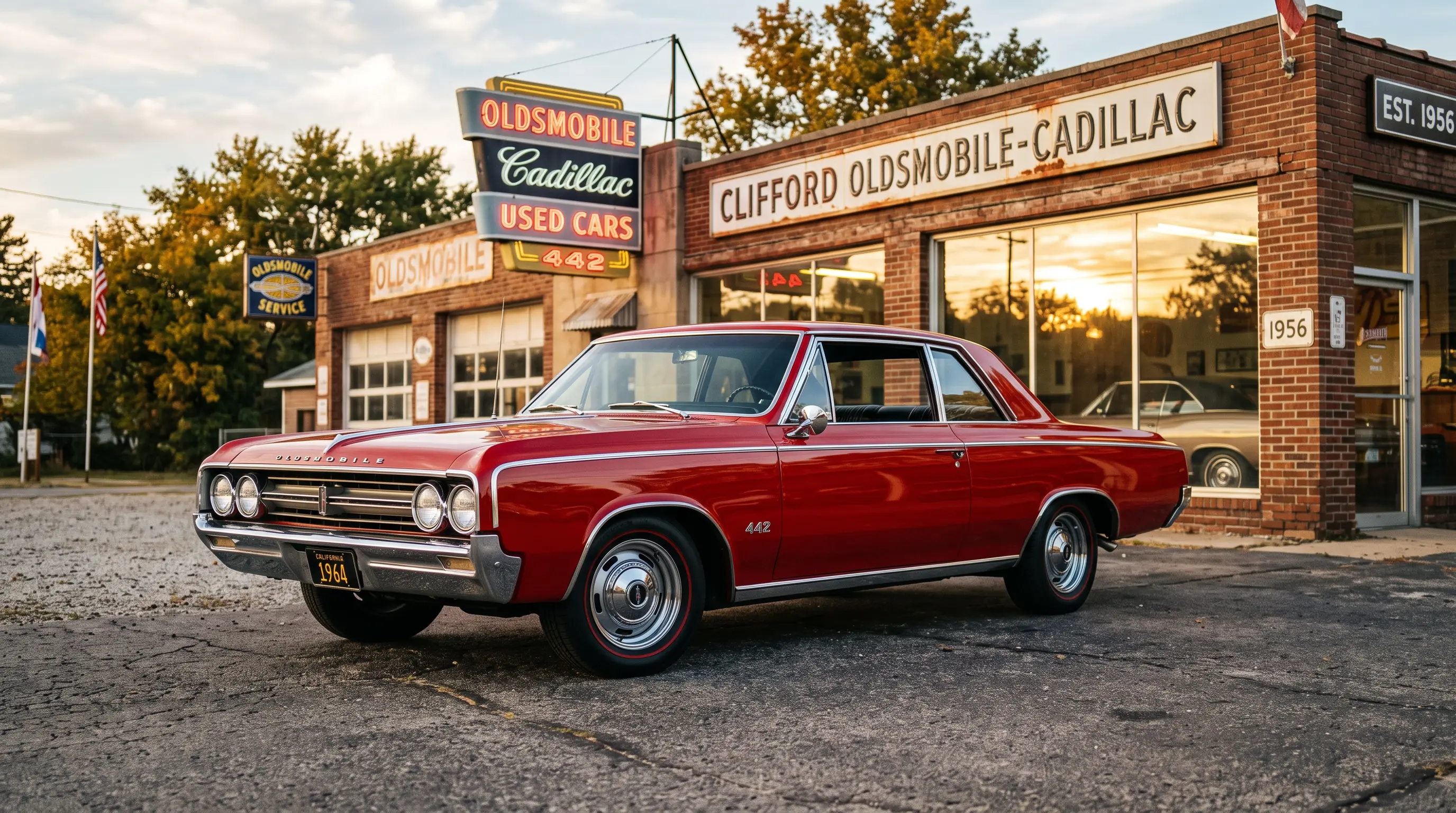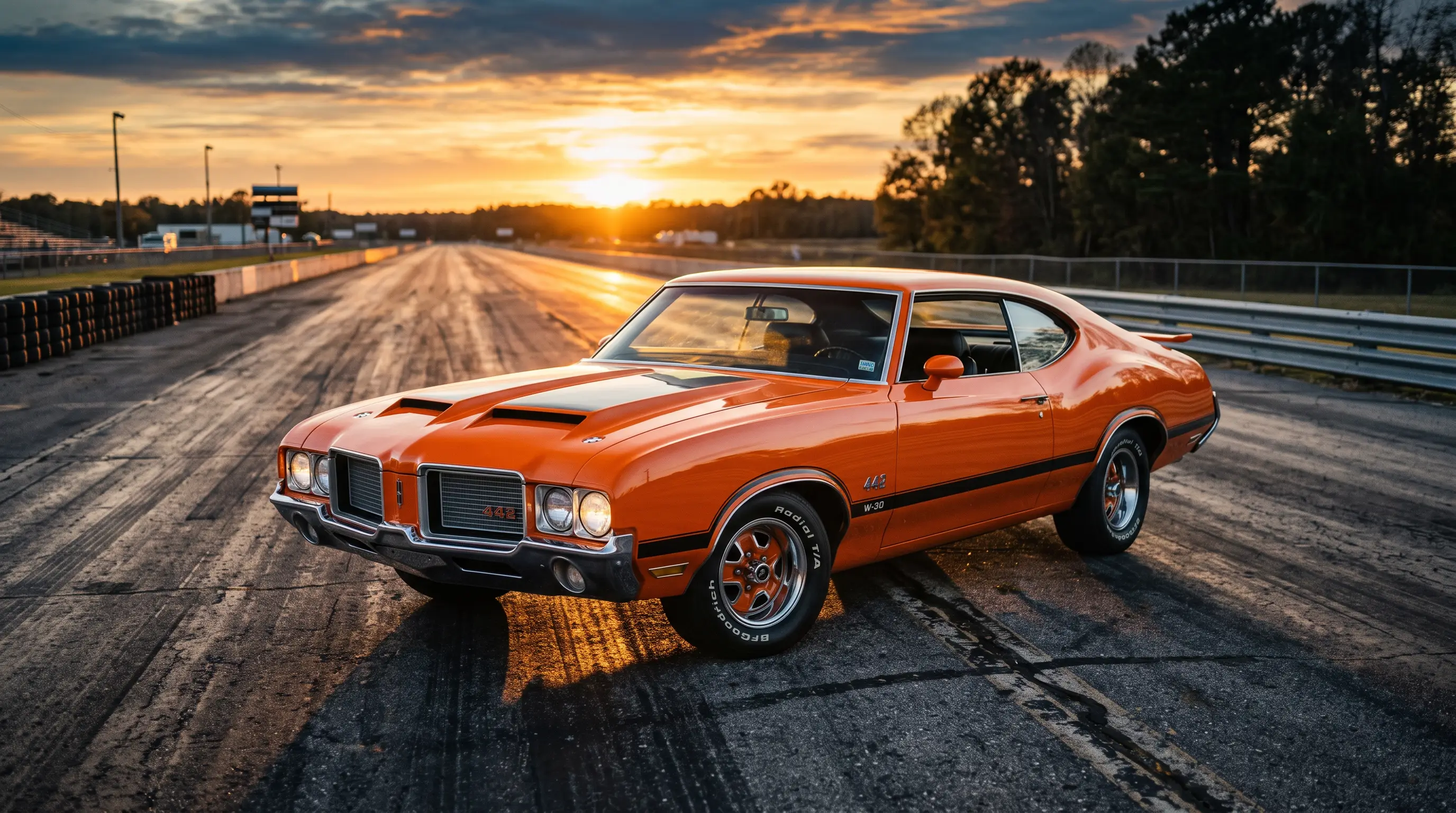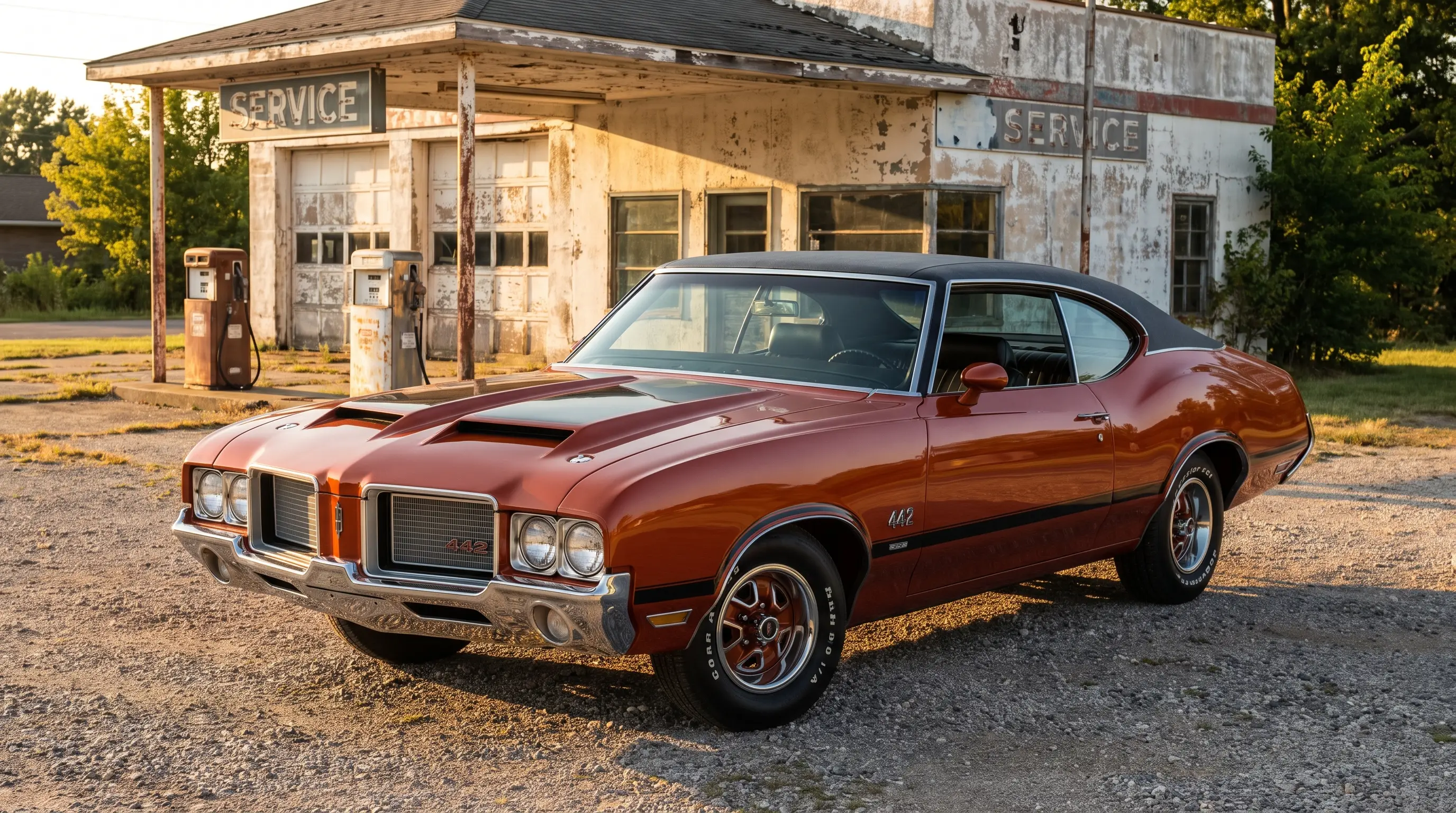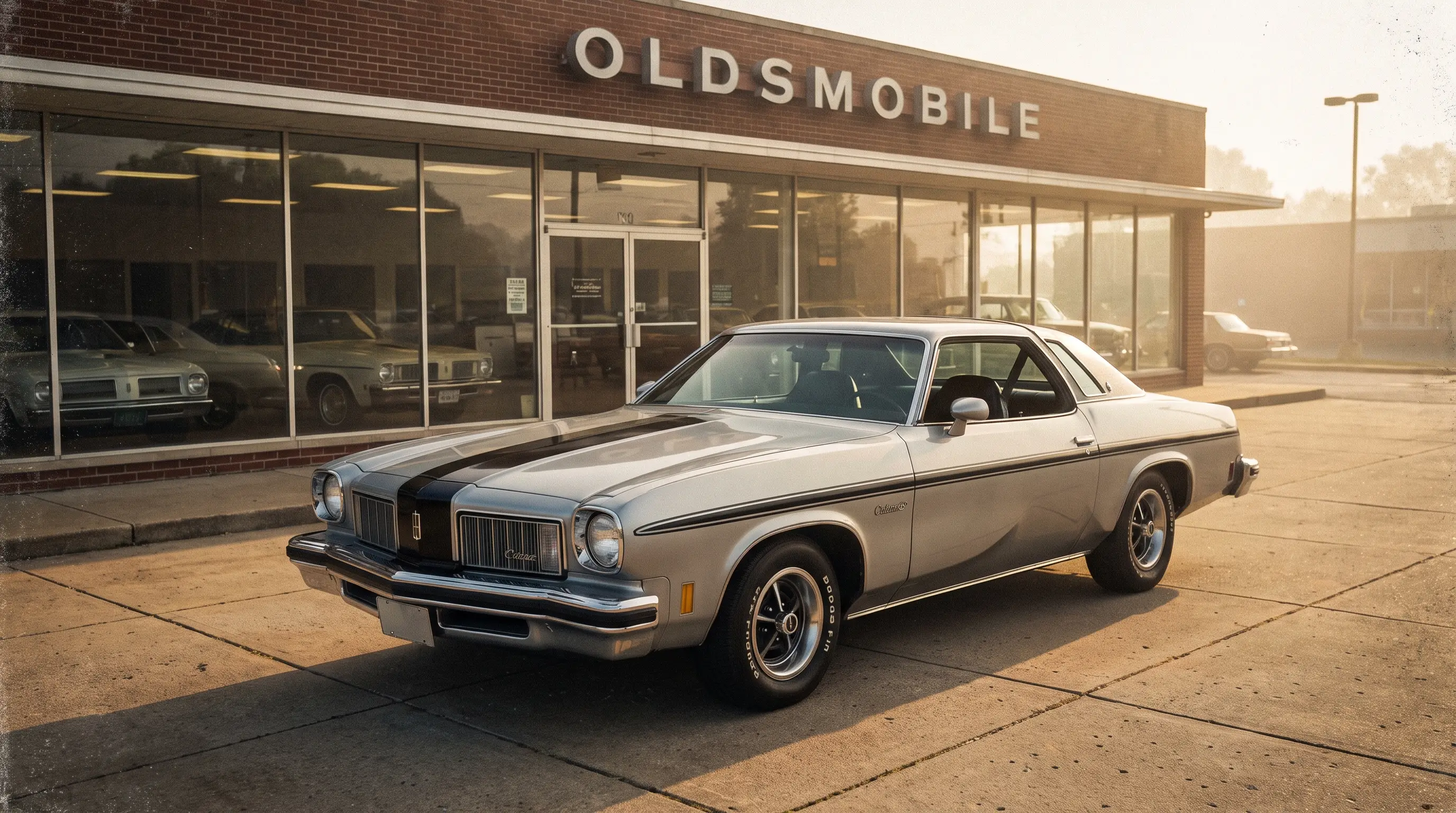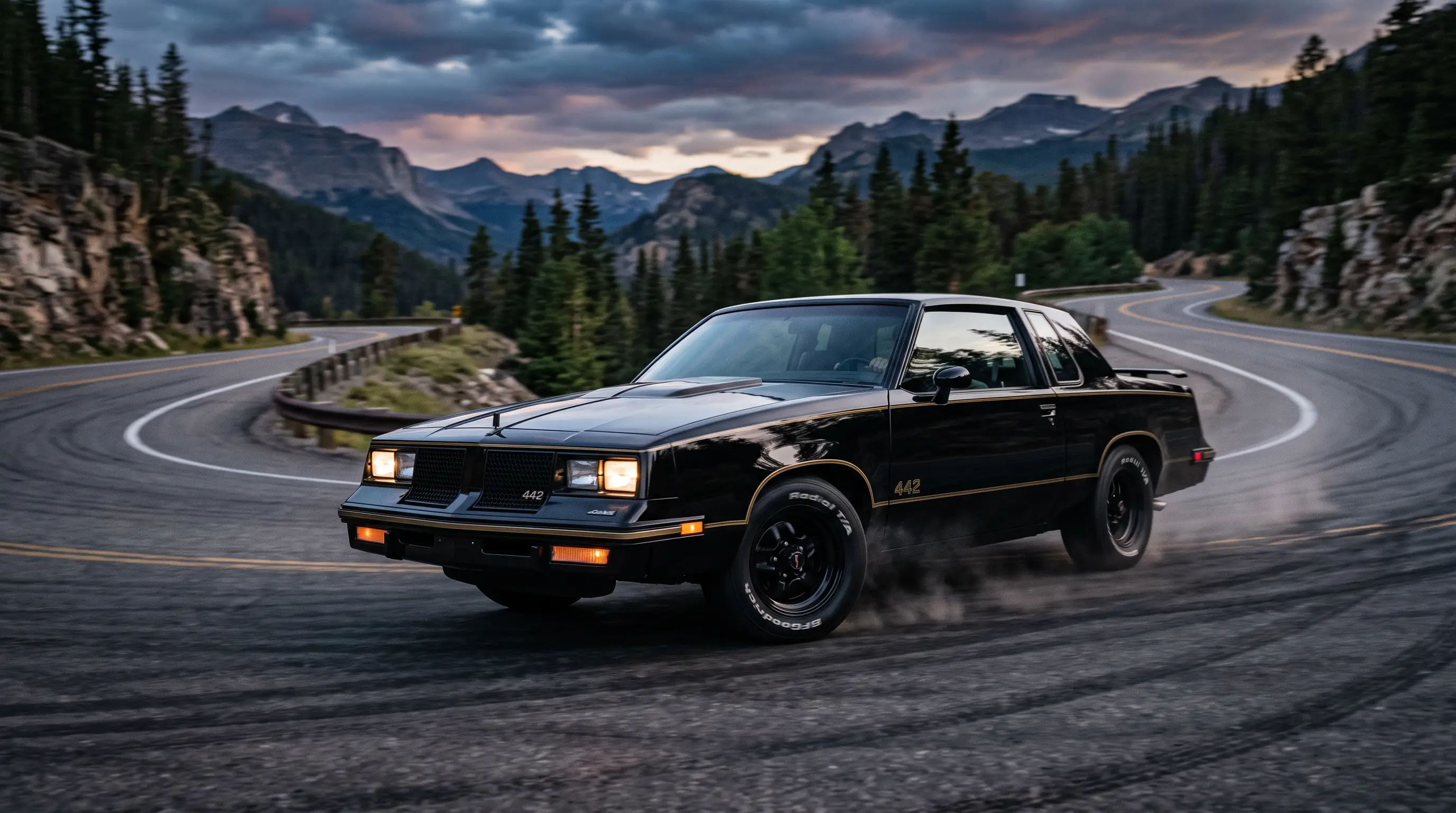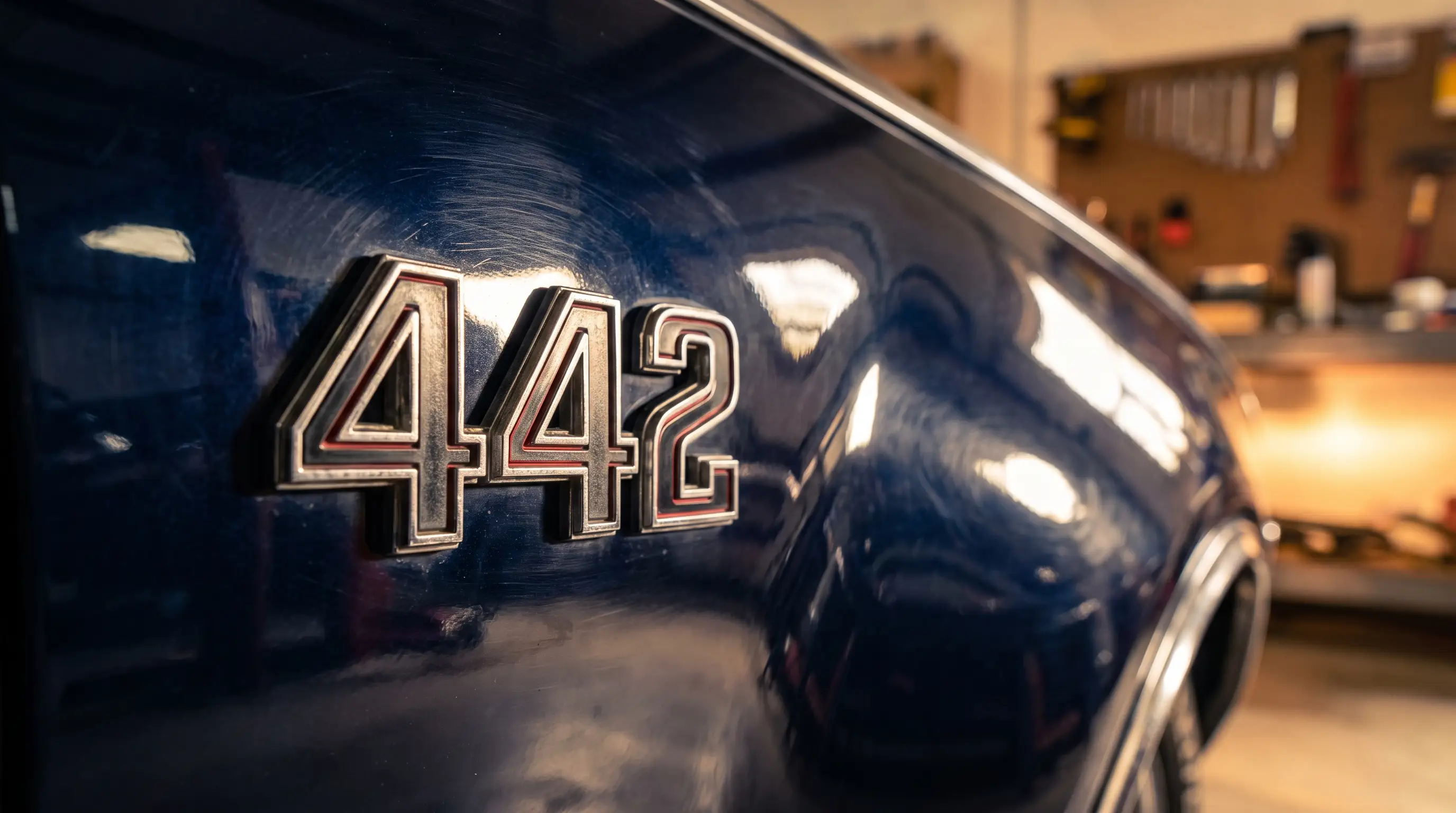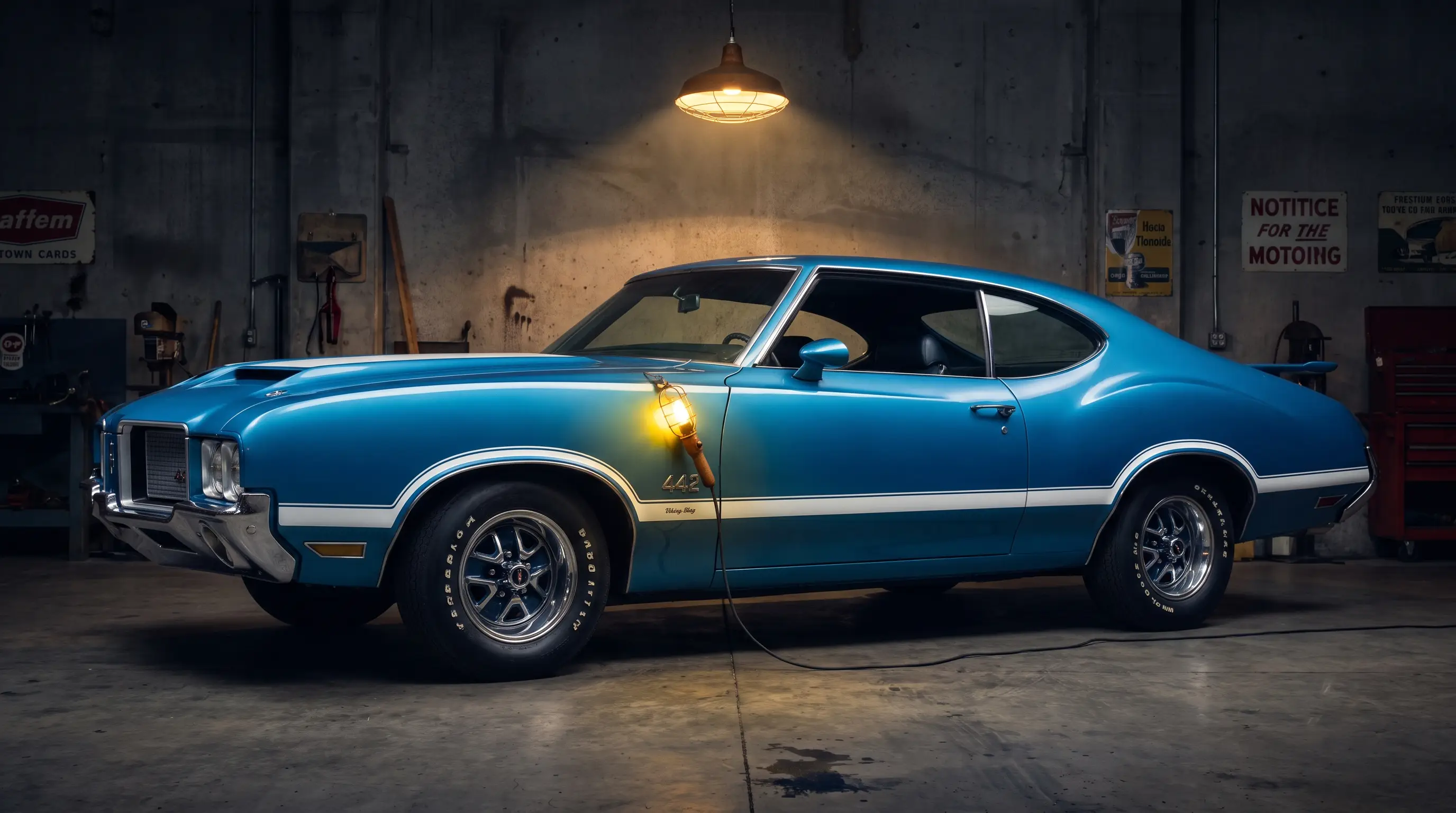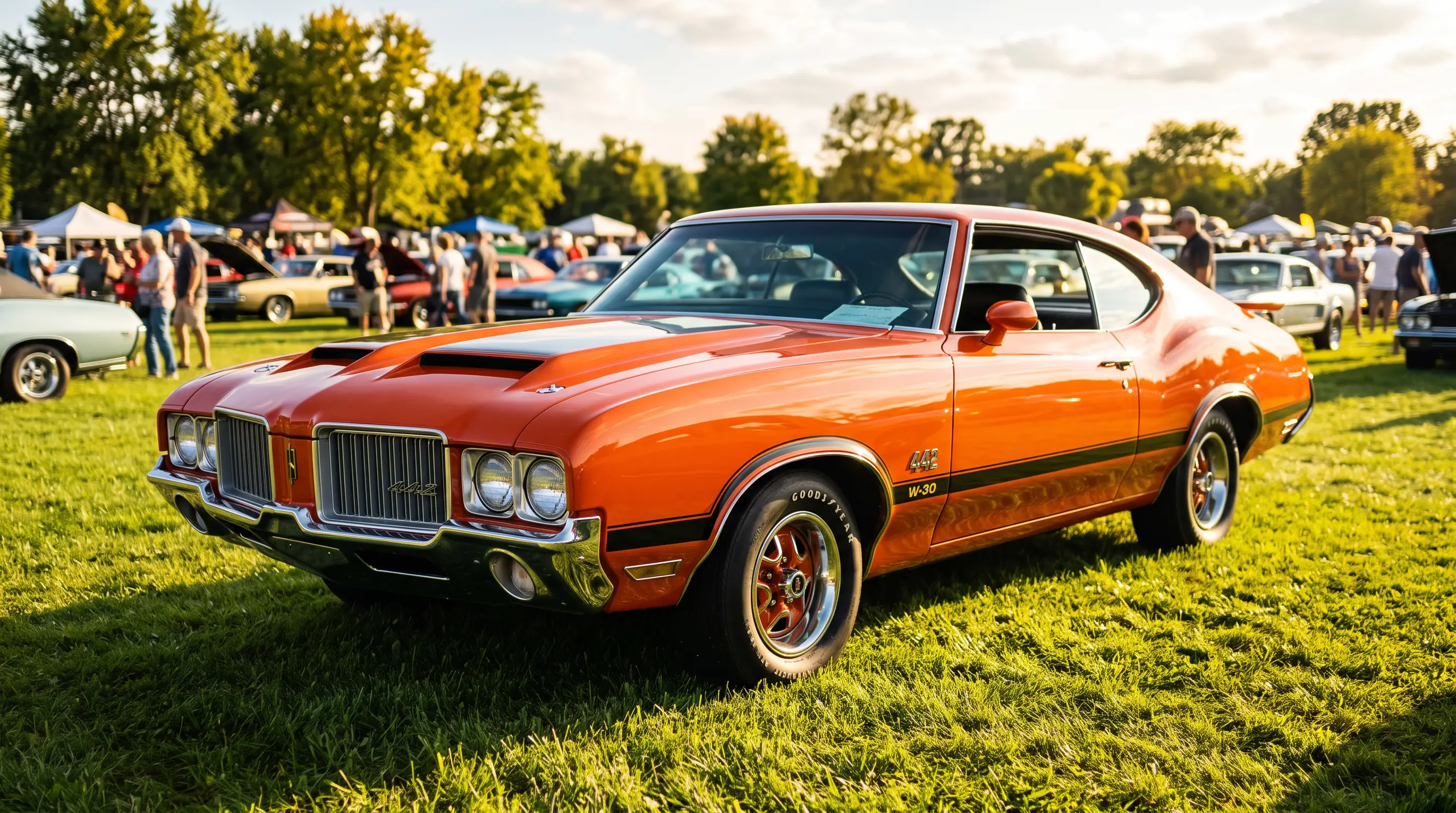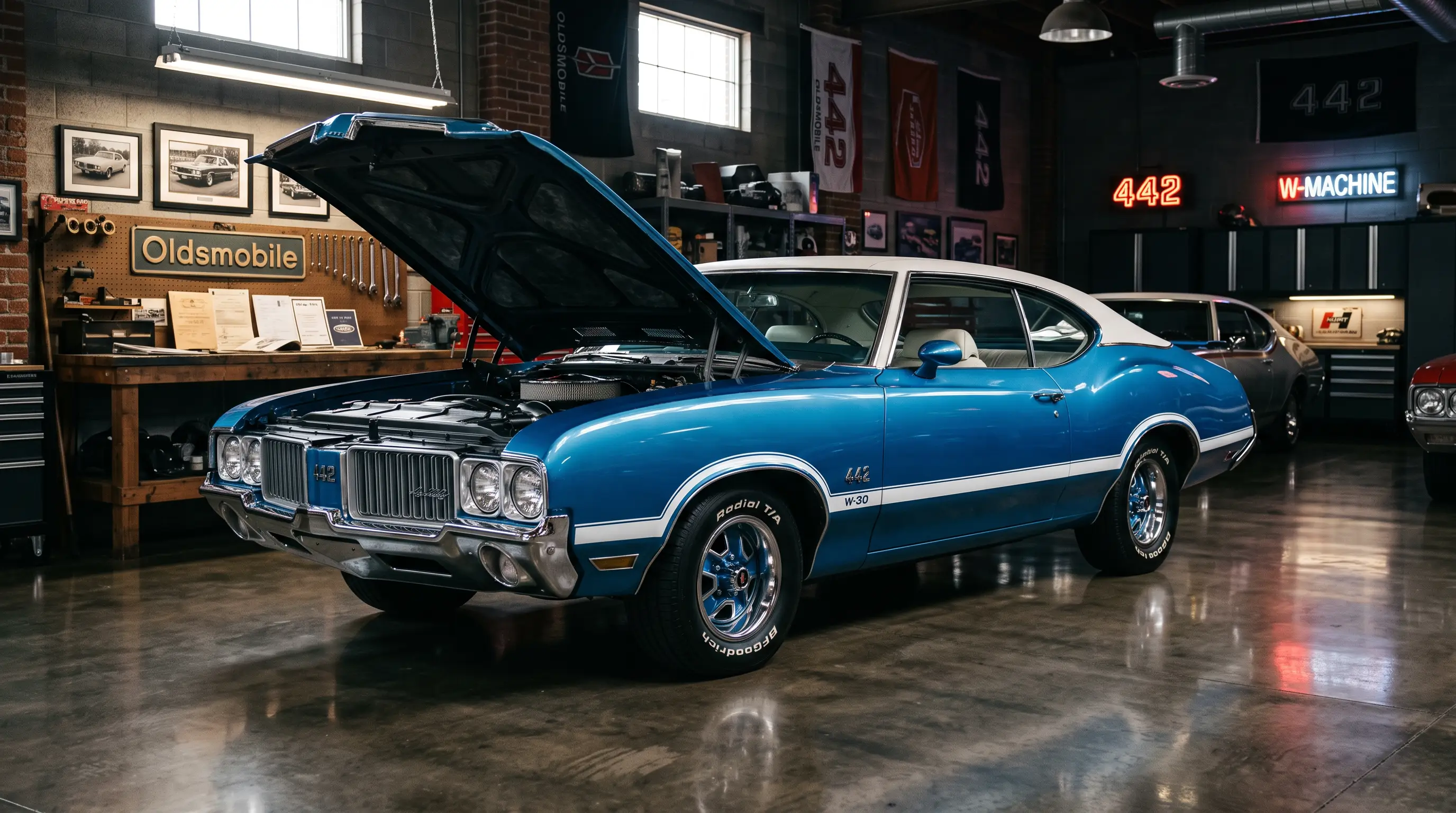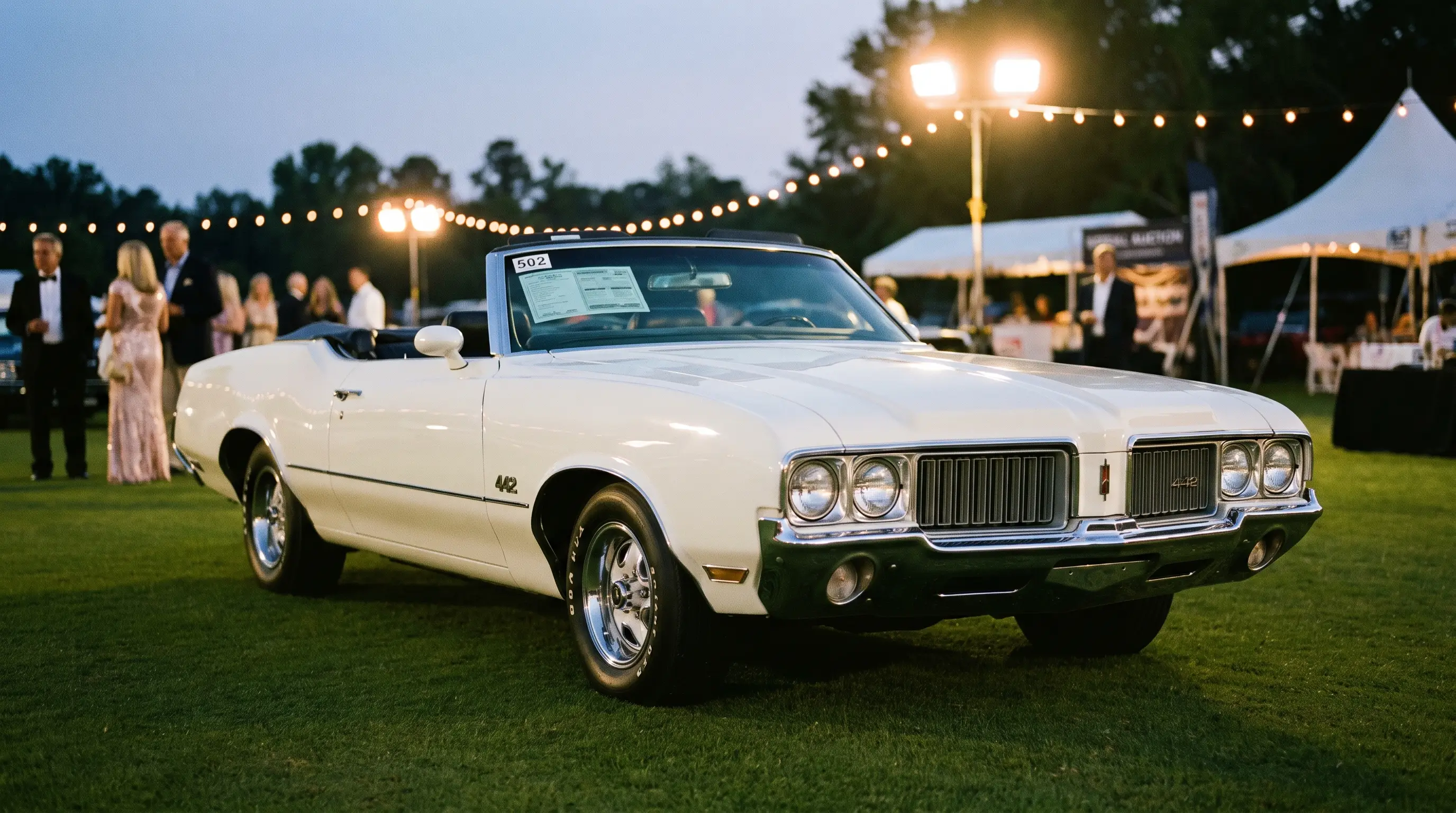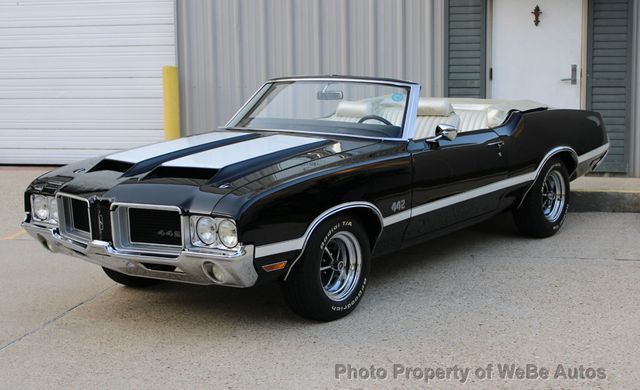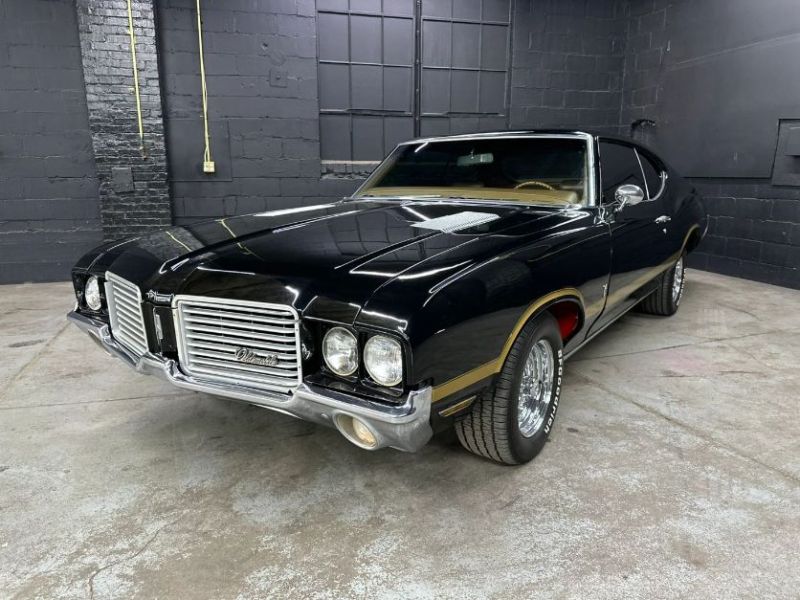
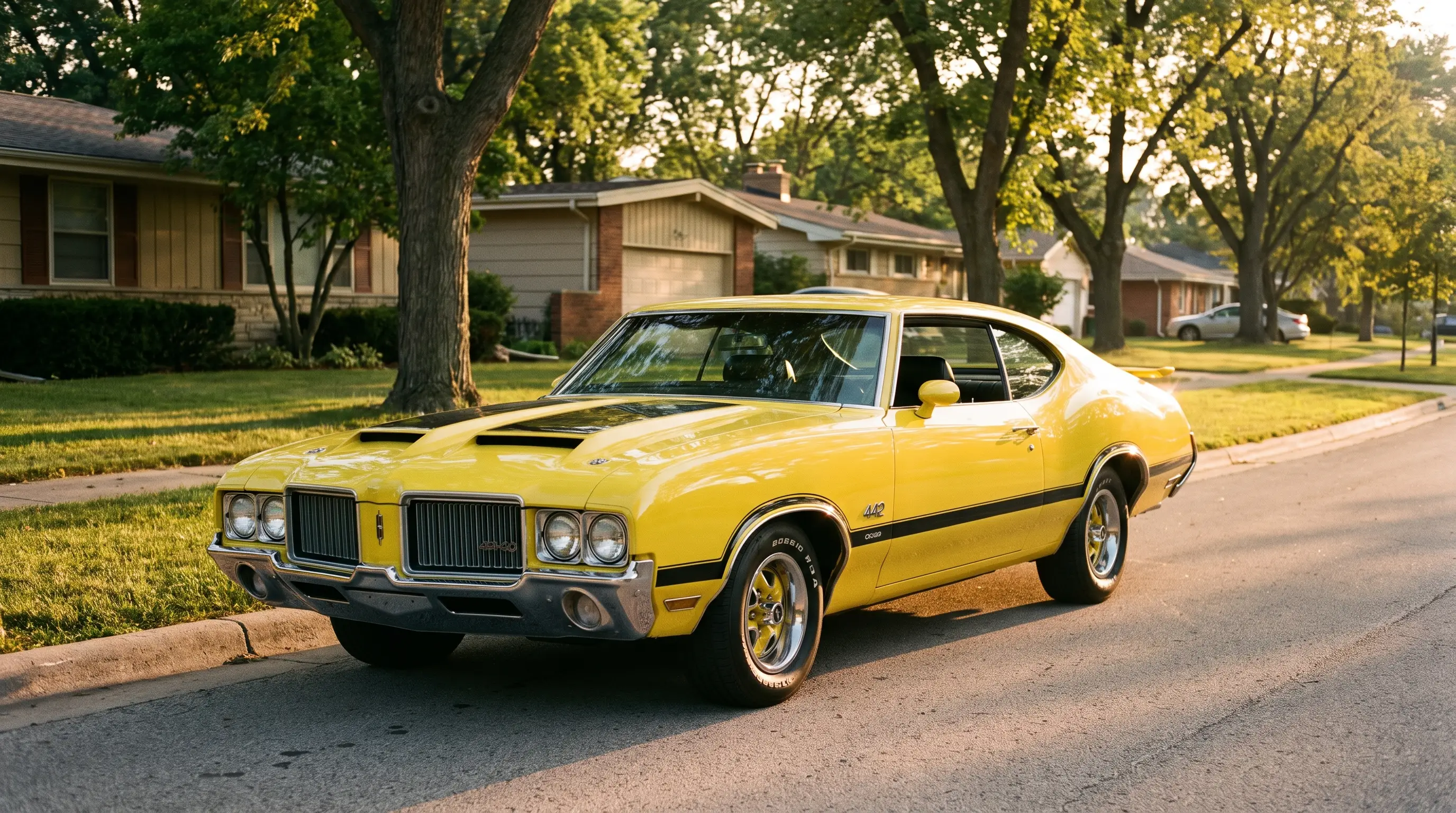
The Oldsmobile 442 started life as a police package, and people forget that. In early 1964 Oldsmobile needed an answer to Pontiac's GTO, and instead of building a whole new car they bolted a hotter driveline into the F-85 and Cutlass. The option code was B09. The badge read 4-4-2, and the numbers meant something specific: four-barrel carburetor, four-speed manual, dual exhaust. Not marketing fluff. A spec sheet you could read off the fenders.
That literal honesty is why I like the car. It tells you what it is. If you want the longer background on where the nameplate came from, Oldsmobile's Cutlass history covers the family tree. This piece is about the muscle end of it, and about what actually matters when one shows up in your driveway.
What the numbers meant, and when they changed
The first 442 in 1964 used a 330-cubic-inch V8. Decent, not brutal, rated at 310 horsepower. It was a package built on top of the Cutlass, not a separate model. That is the part buyers trip over. A 1964 or 1965 442 is a Cutlass or F-85 with a code, and the paperwork has to prove the code was there from the factory.
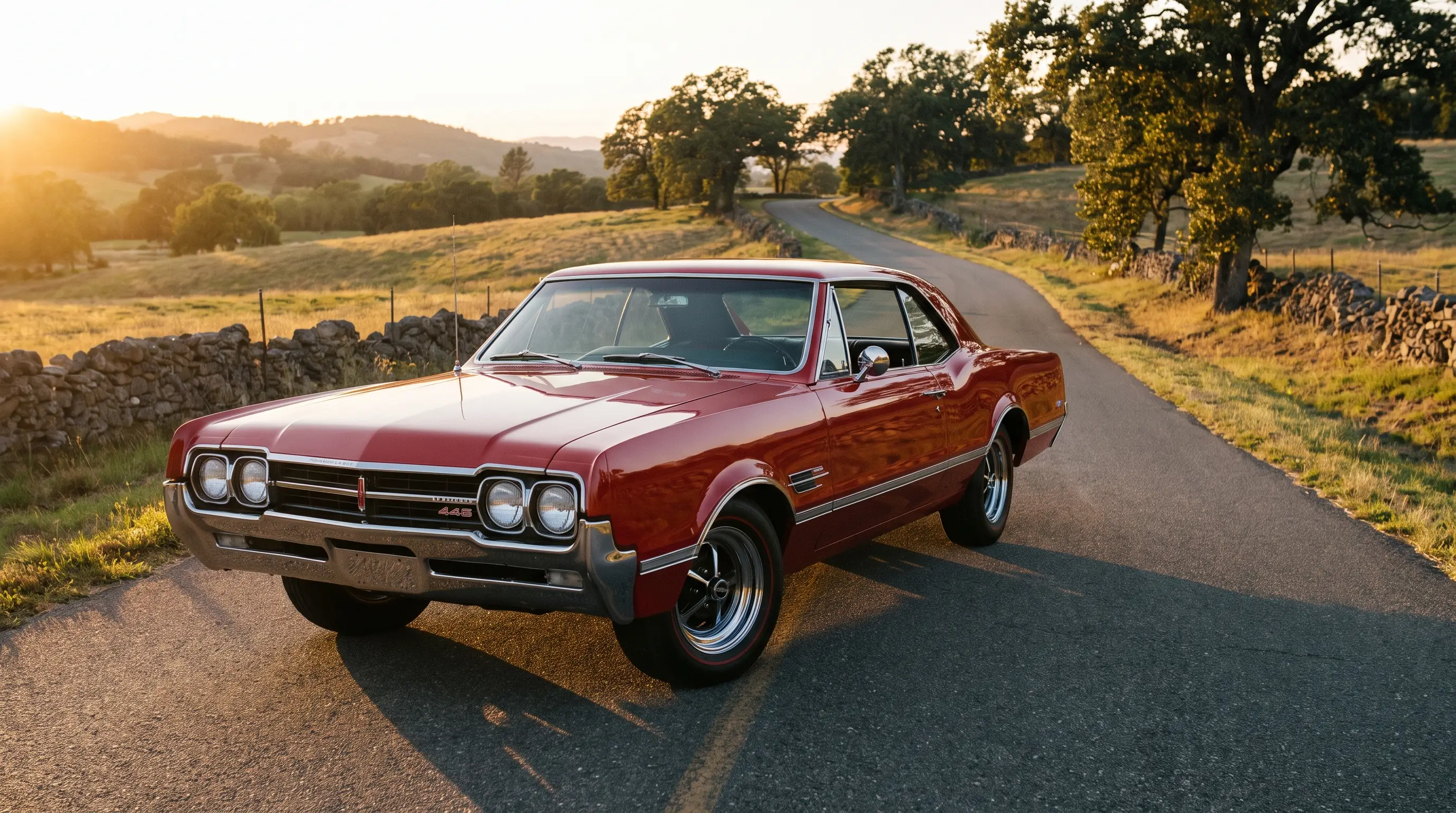
In 1965 the engine grew to 400 cubic inches, and that is where the car found its stride. The badge stopped being strictly true right then, by the way. The middle "4" originally meant four-speed, but Oldsmobile started allowing automatics, so by the late sixties the story shifted to "400 cubic inches, four-barrel, dual exhaust." Same badge, new math. Nobody at the dealership was going to argue with you about it.
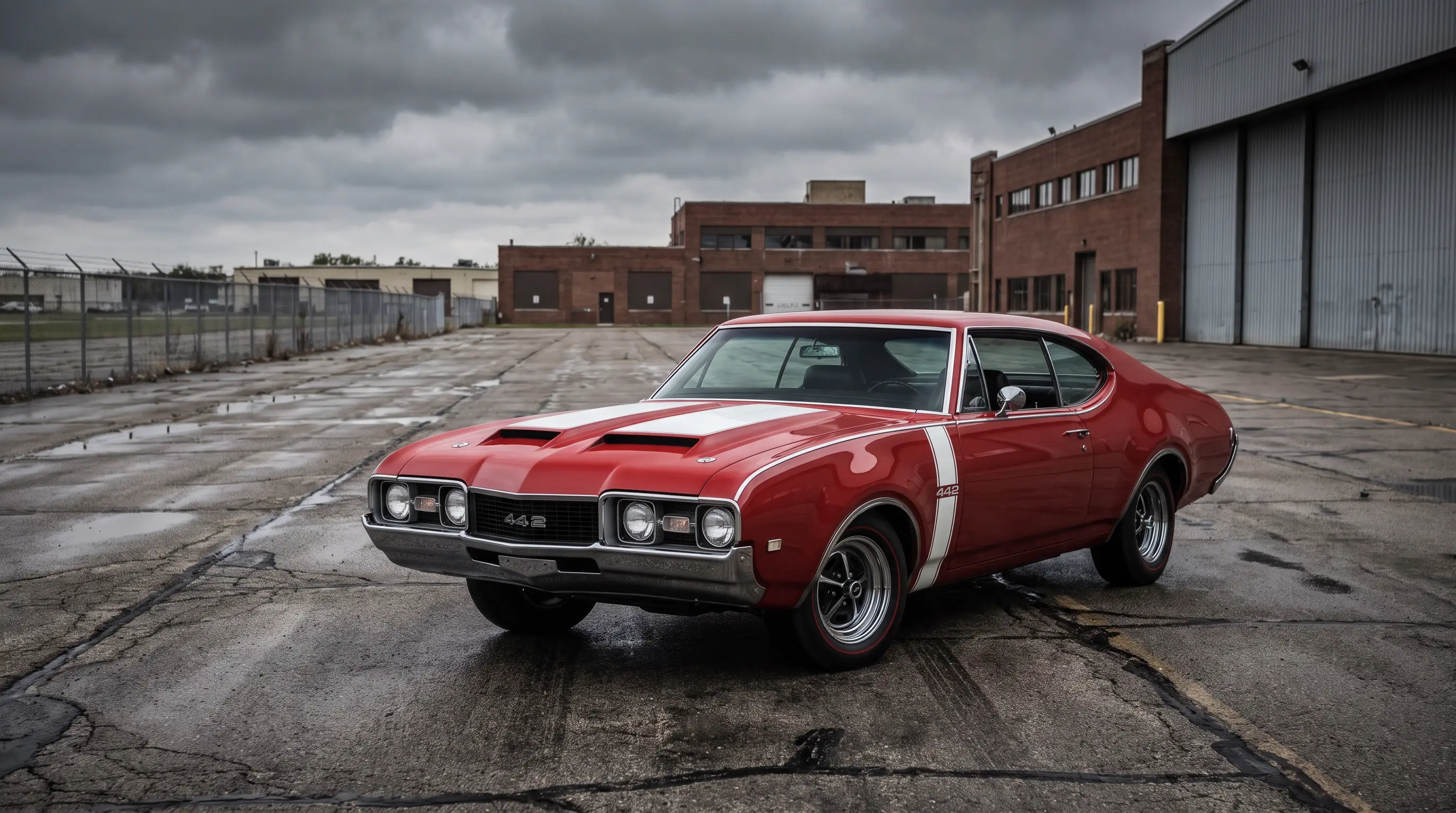
By 1968 the 442 became its own series rather than an option box. That is a meaningful line for anyone shopping. A 1968 through 1971 car has its own VIN identity, and that makes verification cleaner than the earlier option-package years.
The 455 years and the W-30 problem
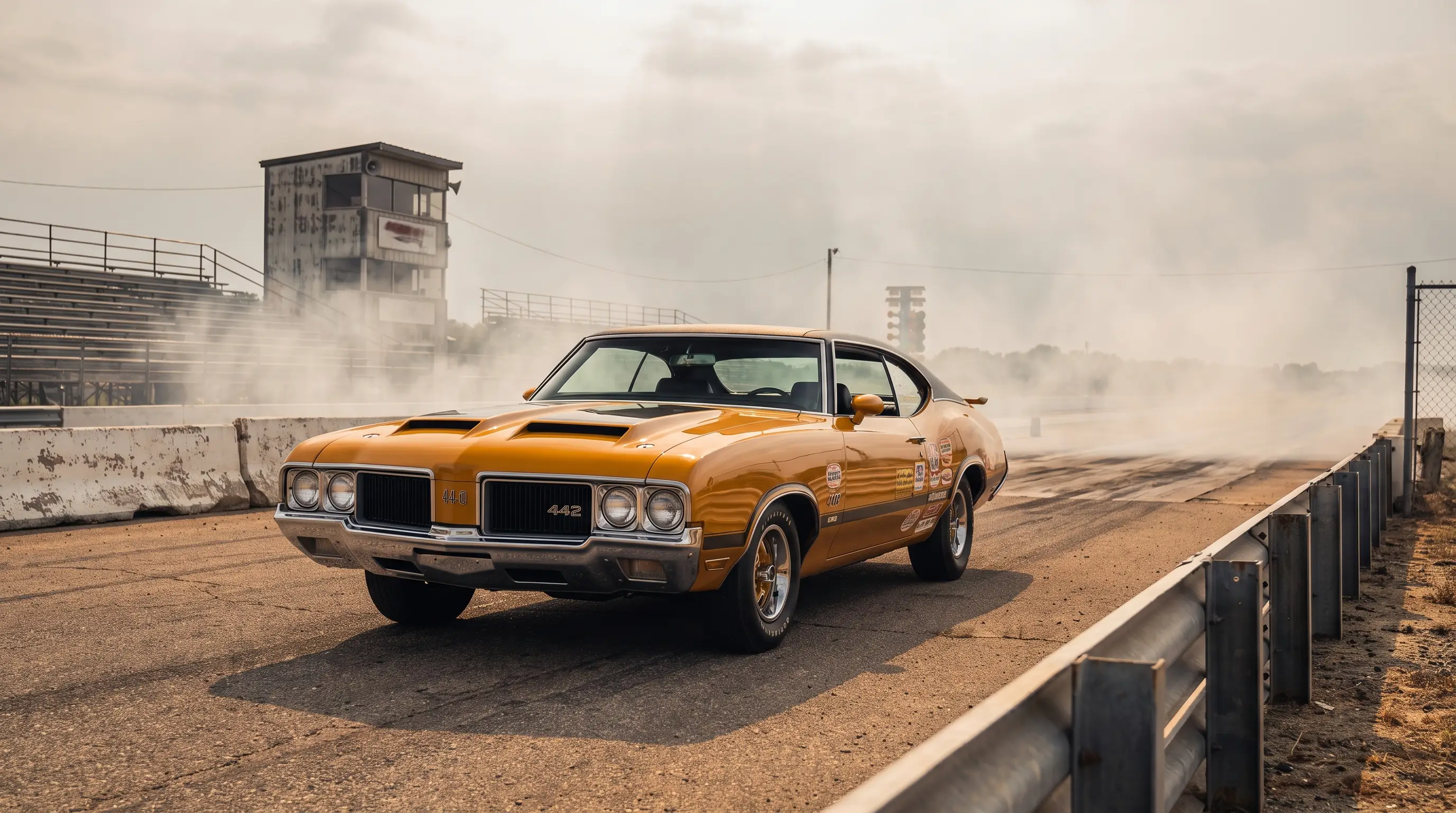
1970 is the year everyone chases. GM lifted its displacement cap, and Oldsmobile dropped the 455-cubic-inch V8 into the 442. Factory rating was 365 horsepower and 500 lb-ft of torque, and the torque number is the one that matters. These cars pull from just off idle. You do not row through gears to make them move. You breathe on the throttle and hang on.
Then there is the W-30. That was the high-output package: a hotter cam, better breathing, functional cold-air induction through those two scoops under the front bumper, and a mess of small factory changes. The 1970 W-30 carried a 370-horsepower rating, five over the standard 455, and it was underrated the way most of these engines were. Here is the buyer trap. W-30 cars are worth serious money, and a plain 442 is a lot cheaper. The market rewards the W-30 badge, so the market grows fake W-30 cars. Documentation is everything.
There was also a lighter-weight play buried in the option book. The W-31 was a small-block package on the 350-cubic-inch engine, rated at 325 horsepower, a high-winding motor in a lighter car. It never got the fame of the big 455 cars, and that is a shame, because a good W-31 is a sweeter-handling machine than the nose-heavy 455. If you care about how a car turns and stops rather than just how it launches, do not write off the smaller engine. The market has, which is exactly why they can be a smarter buy.
The picture changed fast after 1970. For 1971 GM lowered compression across the board so the engines could run on lower-octane unleaded fuel, and the power ratings fell with it. A 1971 or later 442 is a milder animal than a 1970 car, and the paper ratings look worse partly because the industry switched from gross to net horsepower measurement in this stretch. That is a measurement change, not just a power loss, and buyers get the two tangled up all the time. Read the year before you judge the numbers.
How to tell a real one from a tribute
Most 442s for sale today are honest cars, but a fair number are Cutlass bodies wearing 442 badges. That is not always fraud. Plenty of people build a tribute because they like the look and cannot afford the real thing, and they say so up front. The problem is the seller who lets you assume.
Start with the numbers. Oldsmobile stamped engine identification and a build code that a knowledgeable inspector can read against the body. Match the engine to the car. Match the car to its paperwork. A window sticker or a factory build sheet found under the seat or over the gas tank is worth real money because it settles arguments. No paperwork does not mean the car is fake. It means you pay tribute-car money until proof shows up.
Living with one
These are honest cars to own. The Oldsmobile Rocket V8 is a stout engine and parts are around, though not as thick on the ground as small-block Chevy stuff. You will pay a little more and wait a little longer for correct pieces. That is the Oldsmobile tax, and it is real.
The brakes are the weak point on the earlier cars. Factory drums stop a 3,800-pound muscle car about as well as you would expect, which is to say not well by modern standards. Front disc brakes were available and many cars got them. If you plan to drive it rather than trailer it, a front disc setup is not cheating. It is common sense.
Fuel is the other thing. These engines were built for leaded premium and high compression. Run good gas, watch the timing, and do not lug the engine. Treat it right and a 455 will outlast you.
Cooling deserves a word too. A 455 makes a lot of heat, and these cars sat in an era before anyone worried much about it. If the radiator has never been recored and the car is going to see summer traffic, budget for cooling work up front. A shrouded radiator, a good fan clutch, and a clean system will save you from boiling over at the worst possible moment, which for these cars is always in a show-field parade line with everyone watching.
Parts interchange is a mixed bag. The engine and driveline are shared across a lot of Oldsmobile A-body cars, so mechanical pieces are findable. Trim, correct emblems, and the year-specific bits are where you will spend time hunting. The Oldsmobile clubs are the real parts network here, not the big catalog houses, and getting to know a few long-time members will do more for a restoration than any online search.
"People buy the badge and forget the frame. I have seen mint-looking 442s with trunk floors you could put your boot through. Buy the metal first. The paint is the cheap part."
— Mike Sullivan
Where the 442 sits in the muscle world
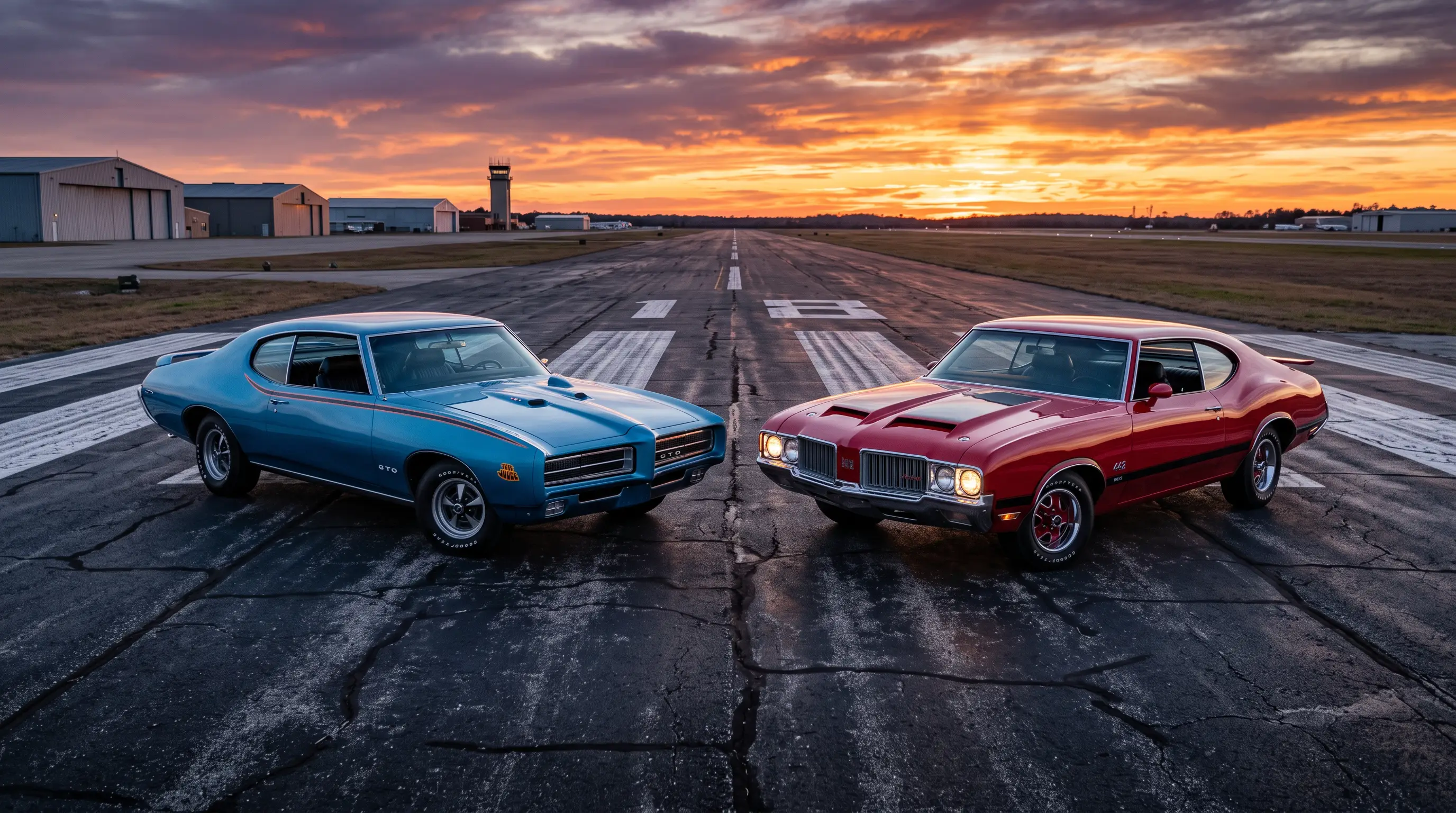
The 442 never sold like a GTO or a Chevelle SS, and that works in the owner's favor now. Fewer were built, so you stand out at a show without trying. The Oldsmobile crowd is loyal and knows its cars cold, which means the bad tribute jobs get called out fast in that community.
It is also a more civilized muscle car than most of its rivals. Oldsmobile built these with a bit of luxury baked in, so the interior is a nicer place to sit than a stripped-down competitor. You get the torque and the noise without a punishing ride. That balance is the whole Oldsmobile pitch, and the 442 is the sharp end of it.
| Spec | Detail |
|---|---|
| Introduced | Mid-1964 as option B09 on F-85 / Cutlass |
| Name origin | 4-barrel carb, 4-speed, dual exhaust |
| Became own series | 1968 |
| Peak engine | 455 cu in Rocket V8 (1970) |
| 1970 rating | 365 hp, 500 lb-ft |
| Top package | W-30 with cold-air induction |
| Transmission | 4-speed manual or automatic |
Buying advice, plain
If you want a 442, decide first whether you are buying an investment or a driver. An investment means a documented numbers-matching car, ideally a W-30, and you pay for the paper. A driver means you can accept a tribute or a non-original engine and spend your money on mechanical condition instead of provenance. Both are fine. Just know which one you are doing before you write the check.
The Hurst-built cars are their own conversation and worth understanding before you shop, so if you like where this is heading, keep exploring. And when you are ready to see what is actually on the market, browse the current classic Oldsmobile 442 for sale listings and compare documentation before condition. The car that comes with a build sheet is almost always the smarter buy, even at a higher price.
Buy the honest one. It will tell you what it is, same as the badge always did.
Sources and notes
- Oldsmobile 442 - Wikipedia
- 1970 Oldsmobile Cutlass 442 - GM Heritage Center
- 1970 Oldsmobile 442 Specifications & Dimensions - Conceptcarz
- The 1968-1970 Oldsmobile 350 CID W-31 V8 - Over-Drive Magazine
- The Oldsmobile 442 Had a More Powerful V8 Than the Company Claimed - CarBuzz
- What's In a Name: Oldsmobile 442 - Mac's Motor City Garage