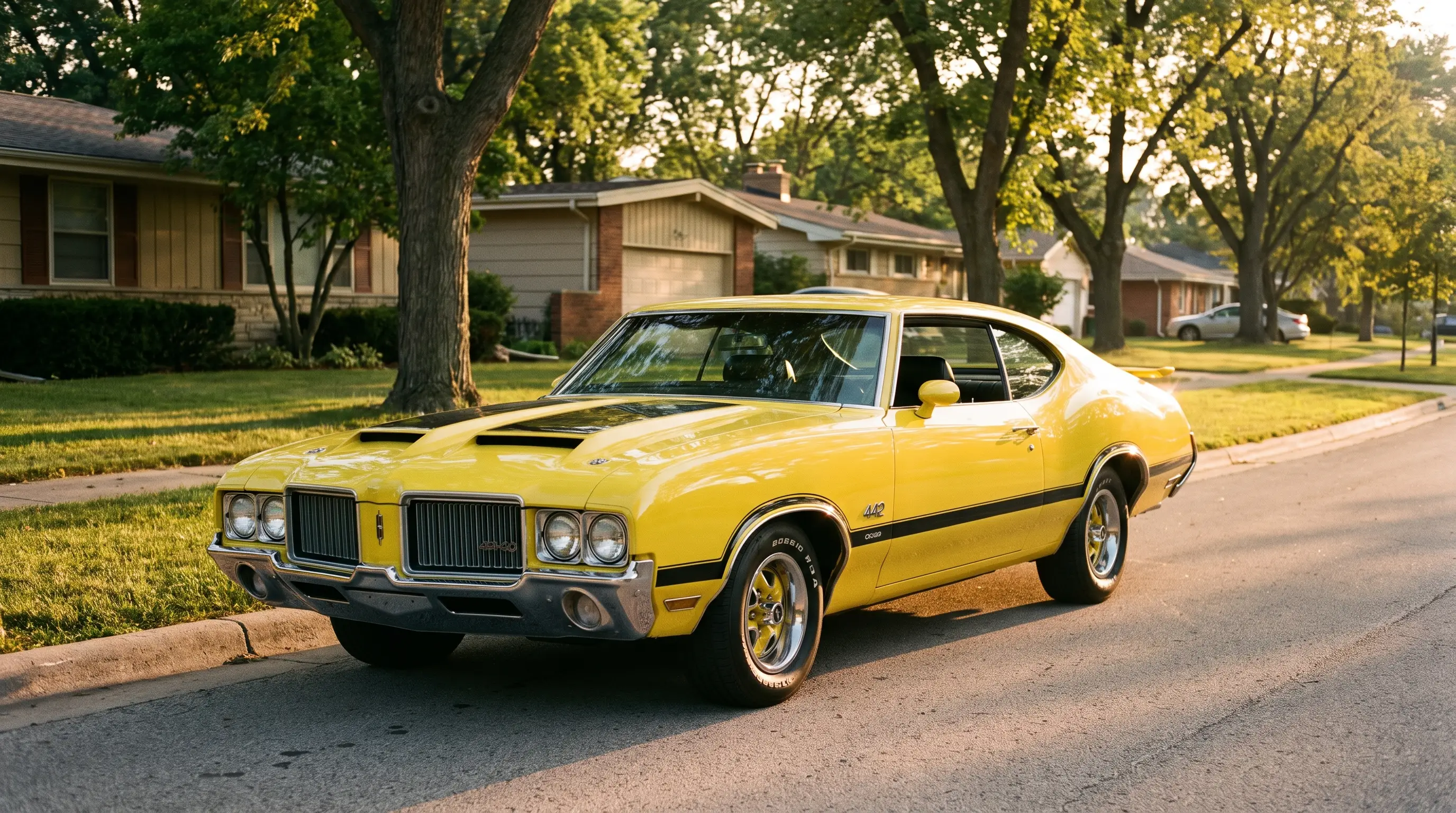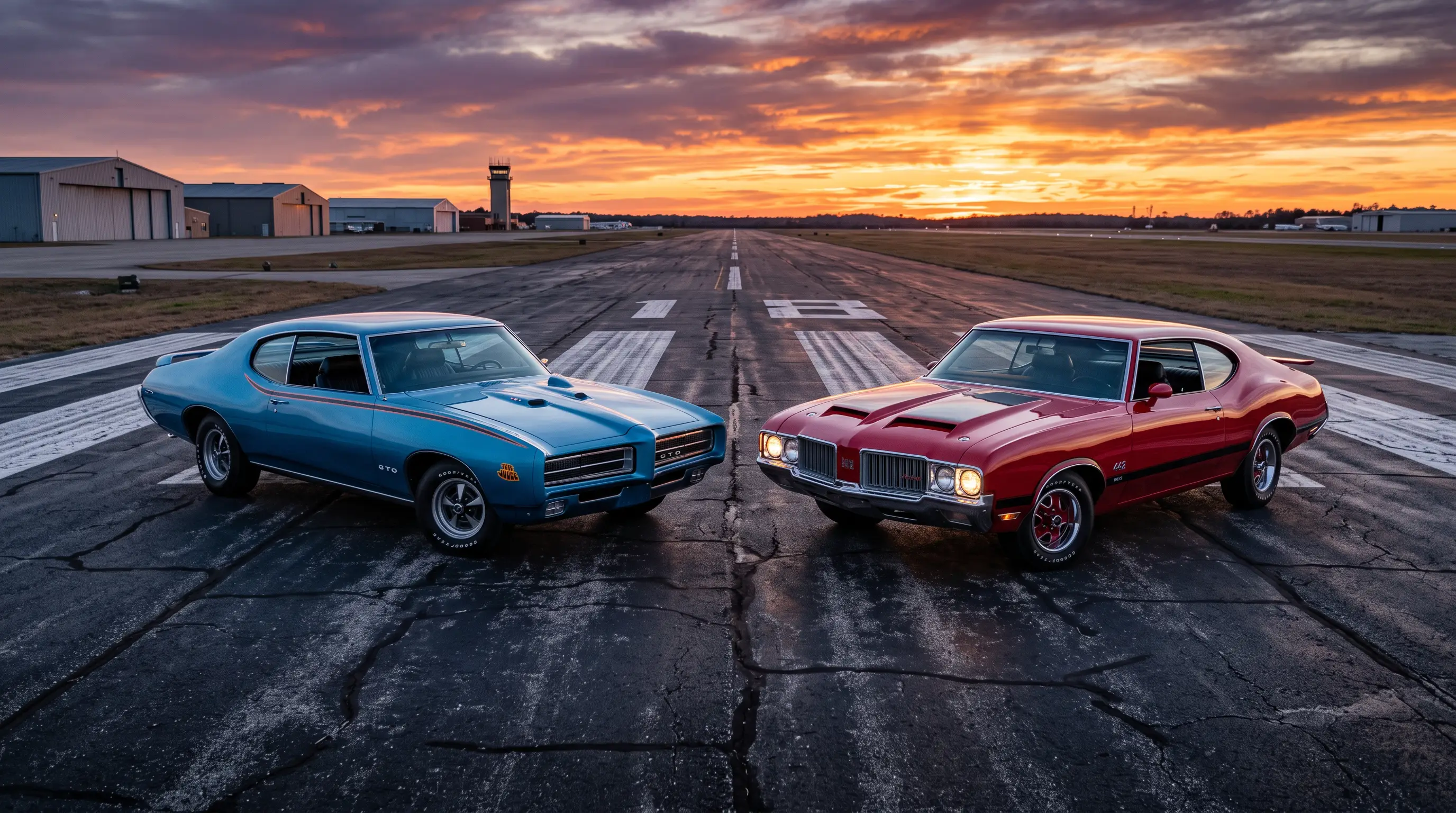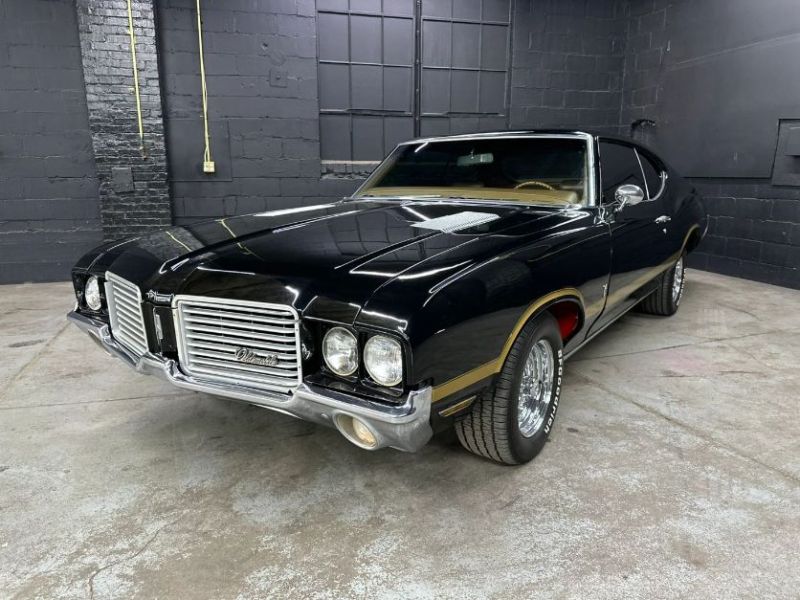
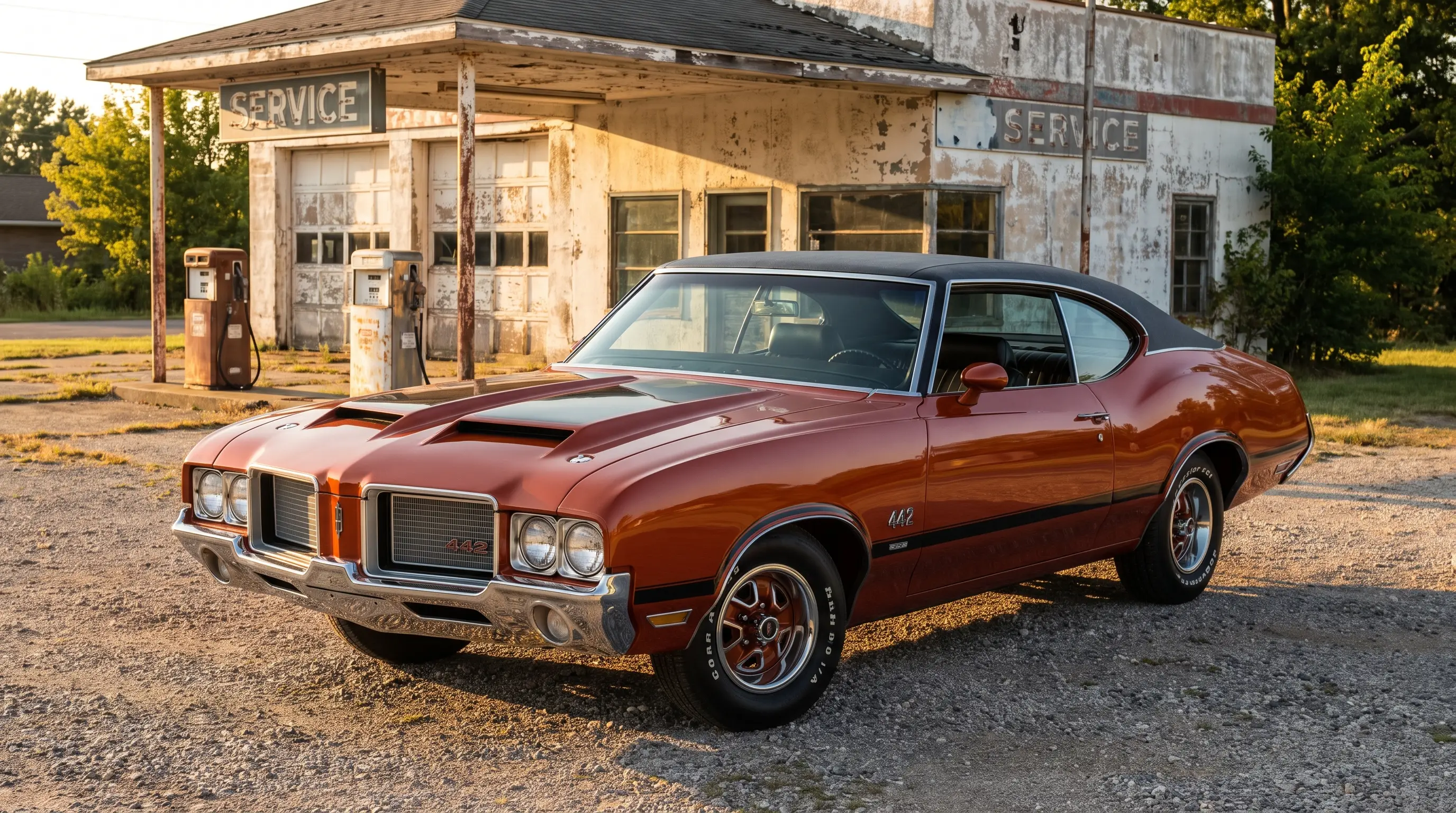
The 1971 and 1972 Oldsmobile 442 get overlooked by buyers chasing the bigger horsepower numbers on 1970 window stickers, and that's a mistake. These two years still ran real 455 cubic inch engines, still offered W-30 hardware for at least one more model year, and represent some of the last true muscle car era 442s built before emissions regulations reshaped the entire category. If you understand what actually changed under the skin, a 1971 or 1972 442 can be a smarter buy than the more famous car that came before it.
The compression cut that changed everything
General Motors mandated lower compression ratios across every division's engines starting with the 1971 model year, a corporate decision aimed at running on lower-octane unleaded fuel ahead of tighter emissions rules on the horizon. Oldsmobile's 455 dropped from 10.5:1 compression in 1970 to 8.5:1 for 1971, and every horsepower rating on the spec sheet fell with it. This wasn't an Oldsmobile decision made in isolation, it hit Pontiac, Buick, and Chevrolet big-blocks the same model year for the same reason.
The effect on paper looked dramatic. The effect on the road was smaller than the numbers suggest, because a lot of that lost rating was conservative accounting rather than a proportional loss in real-world power. Still, there's no getting around the fact that a 1971 442 makes less usable power than the 1970 W-30 it replaced.
1971: still a real 442
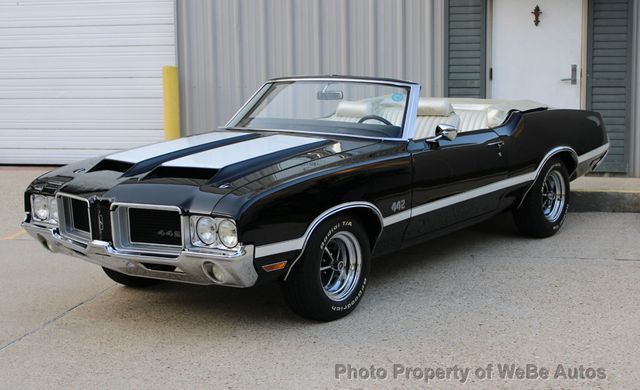
The 1971 442 kept the 455 as an available engine and kept the W-30 package on the order sheet, including a documented run of convertibles built with it. Styling carried over largely unchanged from 1970, with detail trim differences distinguishing the model year for anyone doing a close inspection. The suspension and handling packages that made the 442 stand out against the GTO and other rivals stayed intact, so the car's character on a back road didn't change even as the horsepower rating did.
This is the year serious buyers should not skip past just because it isn't 1970. A well-documented 1971 W-30, where one can be verified, is a genuinely rare car and arguably undervalued relative to its 1970 counterpart given how similar the two cars are mechanically.
1972: net numbers, same car
The 1972 model year brought another change that had nothing to do with the actual hardware: the industry-wide switch to SAE net horsepower ratings, which measured an engine with all its accessories installed and running, rather than the stripped-down gross rating used previously. A 1972 442's horsepower figure looks dramatically lower than a 1970 car's on paper, but a meaningful part of that drop is the measurement method, not a redesigned, weaker engine.
Mechanically, the 1972 455 carried over much of the 1971 specification with running changes typical of any model year transition. W-30 remained a factory option for 1972, Oldsmobile's last year for the true W-30 455 package, with roughly 772 cars built across both the Cutlass and Cutlass Supreme body styles combined, split between automatic and four-speed cars. That low count makes any documented 1972 W-30 a genuinely scarce find, and documentation matters even more here than on a 1970 or 1971 car.
"Don't let a lower number on a 1972 window sticker fool you into thinking it's a slower car than a 1970. Half that gap is just how they measured it, not what the engine actually does."
— Mike Sullivan
What's actually rare from these two years
Survivor counts for 1971 and 1972 442s, particularly any car with documented W-30 equipment, are lower than for 1970 simply because fewer were built as the muscle car market began cooling and insurance costs for big-block intermediates climbed. Convertibles from either year are scarcer still. Buyers focused entirely on the 1970 car sometimes miss that a clean, documented 1971 or 1972 example can represent better relative value precisely because the broader market hasn't caught up to how rare these later cars actually are.
Buying one now
Approach a 1971 or 1972 442 the same way you'd approach any big-block Oldsmobile: verify the engine casting numbers and dates against the car's actual build date, get a compression test done before handing over money, and don't let a horsepower number pulled from an old brochure drive your judgment of how the car actually performs. Judge the car in front of you, not the year printed on the window sticker.
Pricing on these two years still trails 1970 in most cases, which means a patient buyer willing to skip the most famous model year can end up with a mechanically similar car, comparable driving experience, and genuine rarity, for less money. That gap has narrowed over the last several years as more buyers catch on, so it's not a secret that will last forever, but it's still a better opportunity today than shopping the 1970 market on price alone.
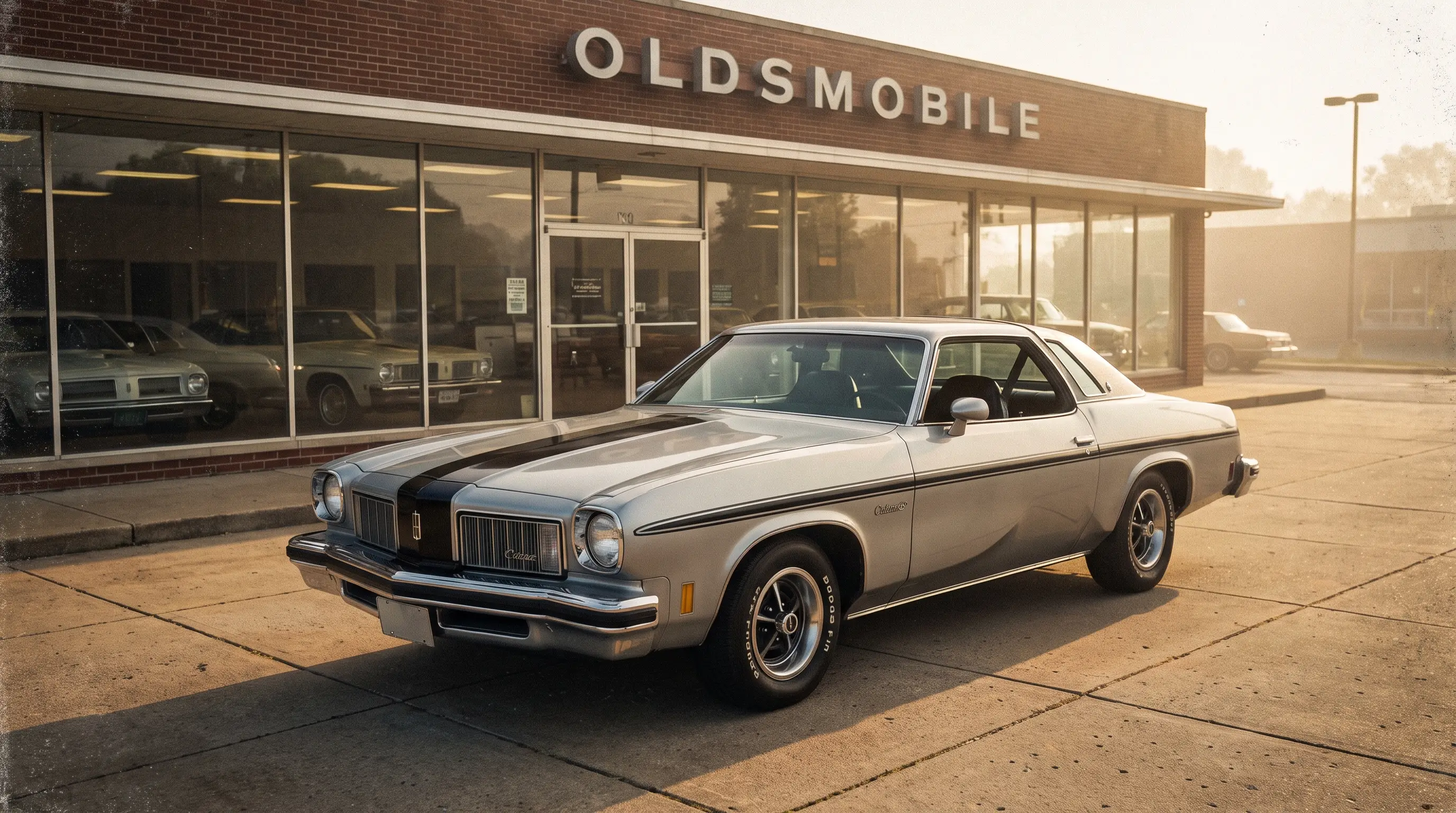
For the broader arc of the model, the 442 chapter lays out how these years fit into the full run, and for a look at how Oldsmobile handled the shift to the redesigned Colonnade-style body a couple years later, a companion piece picks up the story from here. If a documented 1971 or 1972 example is what you're after, you can browse a classic Oldsmobile 442 for sale to see what's currently on the market.Sources and notes
- 1971 Oldsmobile 4-4-2 W-30: A Profile of a Muscle Car - HowStuffWorks
- Oldsmobile 442 - Wikipedia
- Super-Rare 1971 Olds 442 Ragtop Flexes W-30 Muscle - autoevolution
- 1972 442 Production Numbers - ClassicOldsmobile.com
- 1972 Oldsmobile 442 W-30: Specs, History, Values - MotoGallery
- Car of the Week: 1971 Oldsmobile 442 coupe - Old Cars Weekly