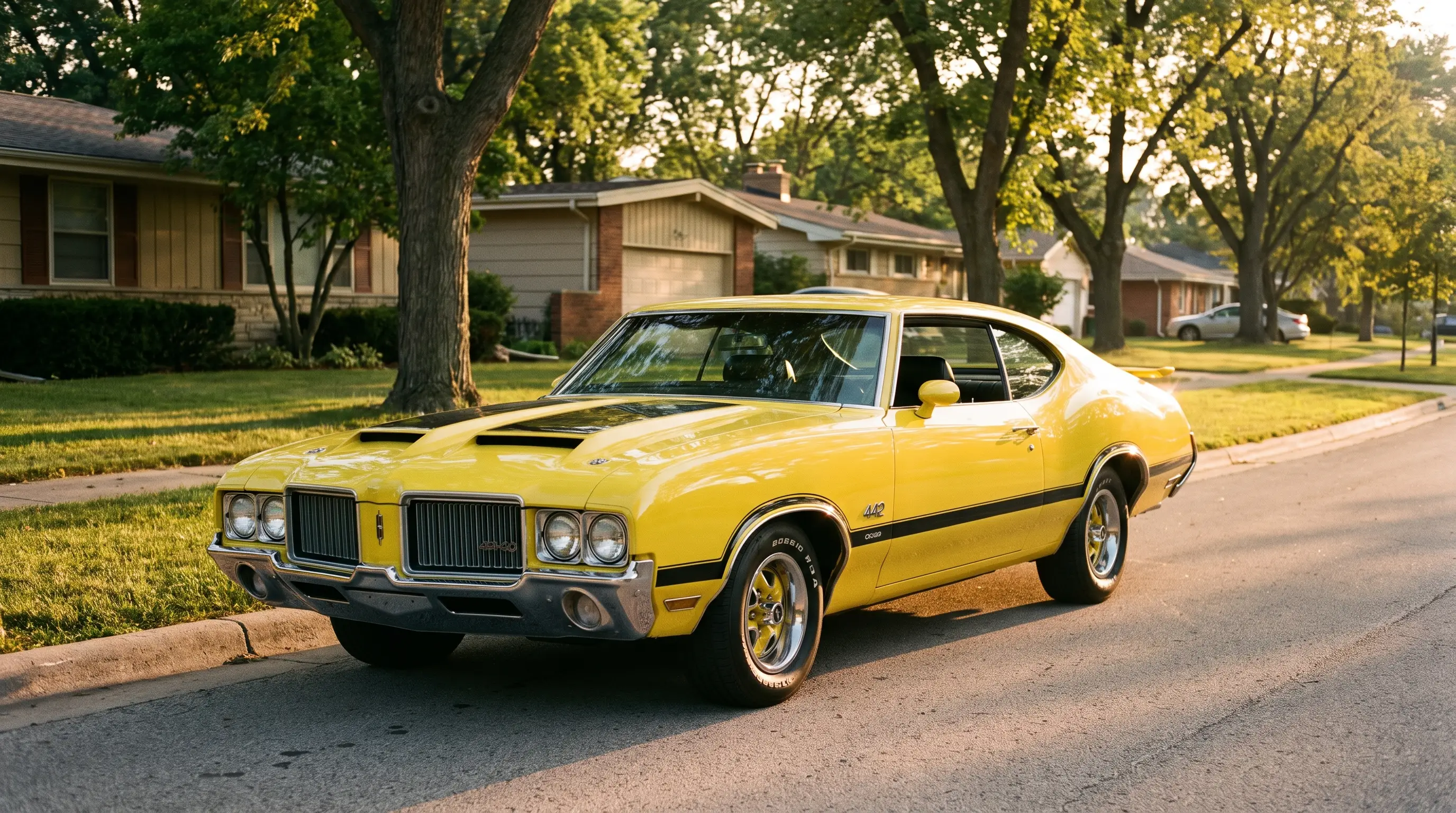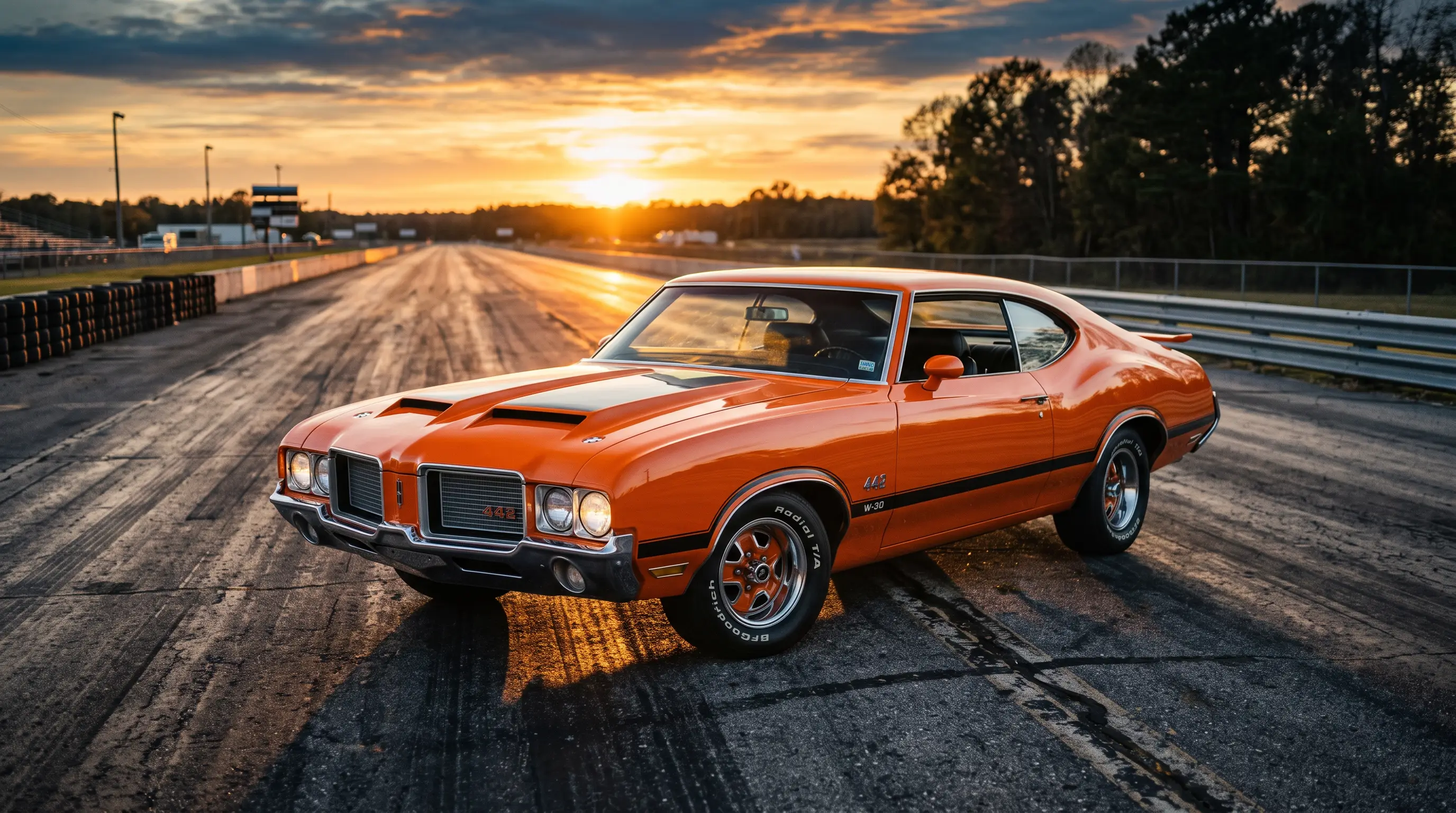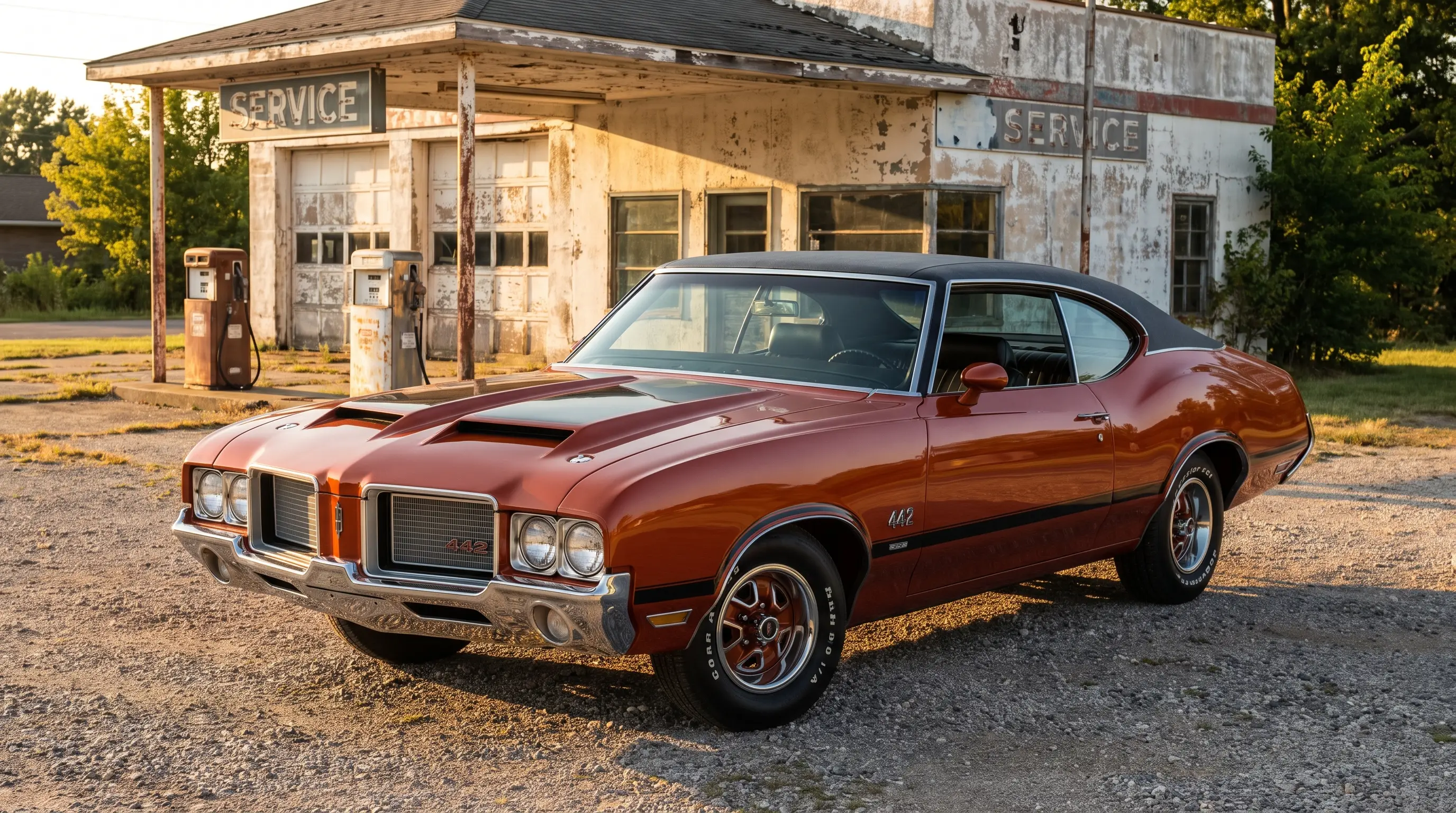
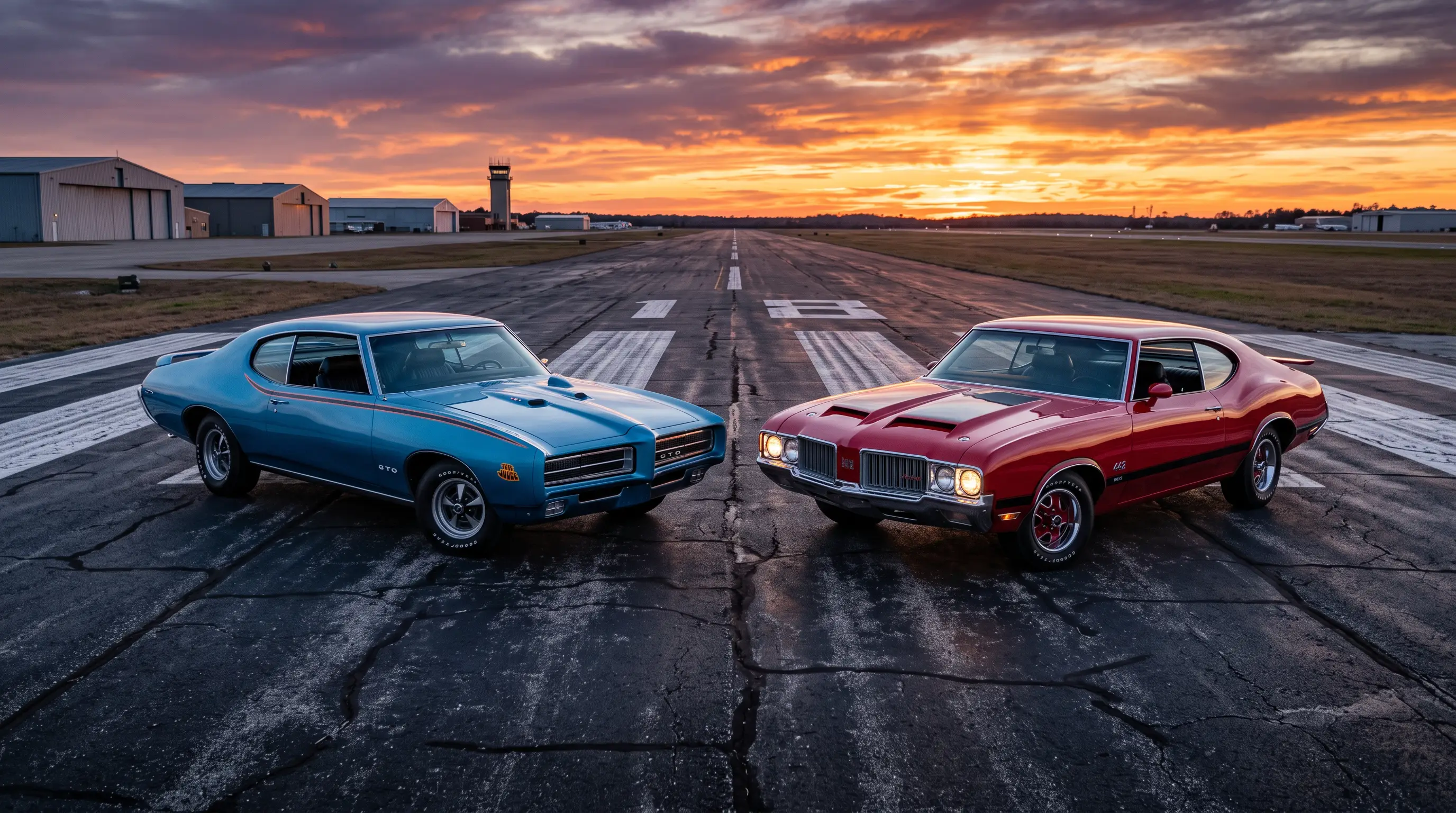
The Oldsmobile 442 and the Pontiac GTO came off the same GM A-body platform, sold through different divisions of the same company, and spent the better part of a decade fighting over the same buyer. Anyone cross-shopping a 442 against a GTO today is having the same argument dealers were having in the showroom in the 1960s. Neither car won on every count, and the differences between them say more about GM's internal politics than either car's engineering.
Same bones, different attitude
Pontiac built the GTO first, wrapping a big-block into a Tempest in 1964 and marketing it hard as a young man's car, complete with tiger imagery and ad copy that leaned into attitude over specifications. Oldsmobile answered the same year with the 442 built on the Cutlass, and Oldsmobile's approach was noticeably more restrained. The 442 name itself referred to hardware, a four-barrel carburetor, four-speed manual, and dual exhaust in its earliest form, which tells you where Oldsmobile's marketing instincts were pointed compared to Pontiac's.
That difference in tone never really went away. Pontiac kept pushing the GTO's personality forward, most obviously with the Judge package in 1969, while Oldsmobile kept selling the 442 on the idea that it was the engineer's muscle car, a Cutlass built by people who cared as much about how it stopped and turned as how it left a stoplight.
Numbers on paper vs numbers at the strip
By 1970, both cars had strong big-block options on the table, the 442 with its 455 and the GTO with its 400 cubic inch Ram Air engines plus a newly available 455 H.O. of its own, and period magazine tests generally had them within a few tenths of each other in the quarter mile depending on gearing, driver, and which specific engine option was under the hood. Motor Trend ran a 442 W-30 four-speed to a 14.2 second quarter mile at 102 mph, while a 1970 GTO with the 400 four-barrel posted a 14.6 second run in period testing, close enough that gearing and driver skill mattered as much as the badge on the fender. Neither car had a decisive advantage that showed up consistently across every test published at the time.
Where the gap showed up was less in raw acceleration and more in how each car got there. The GTO's engines tended to feel more eager to rev, while the Olds 455 built its case lower in the rev range with torque that made it feel strong from a roll, not just off the line. Depend on which kind of driving you actually do, and each car has a real argument for being the better one.
| Category | Oldsmobile 442 | Pontiac GTO |
|---|---|---|
| Launch year | 1964 | 1964 |
| Top big-block by 1970 | 455 cubic inch | 455 H.O. (Ram Air remained 400 cubic inch) |
| Suspension reputation | Widely praised for handling | Strong straight-line focus |
| Sales volume, era average | Consistently lower | Consistently higher |
| Collector premium today | Generally lower | Generally higher |
What separated them behind the wheel
Suspension tuning is where the 442 made its real case. The 442's FE2 suspension package, standard equipment on the car by 1968, brought heavy duty springs and shocks, front and rear sway bars, and boxed lower control arms tuned specifically for handling rather than towing, and reviewers of the era consistently noted the car handled better than most muscle cars of the period, GTO included. The GTO answered with its own performance suspension options, but its reputation was built more on straight-line theater than cornering ability, and that reputation was not entirely unearned.
Inside, the two cars competed on similar ground, bucket seats, console shifters, gauge packages aimed at a younger buyer who wanted their car to look the part. Neither division gave up much ground to the other on trim and options once both cars matured through the late 1960s.
Why the GTO outsold the 442 anyway
Sales numbers never favored Oldsmobile in this matchup. The GTO consistently outsold the 442 across nearly every year both cars were on sale, helped by Pontiac's more aggressive marketing and the head start the GTO name had in the public imagination. Oldsmobile's buyer base skewed a little older and a little more conservative than Pontiac's, and that showed up directly in the sales charts even in years when the 442 was arguably the better engineered car.
This is a case where marketing budget and brand positioning mattered as much as anything happening under either hood. Pontiac understood image-building in a way that Oldsmobile, historically the more staid of GM's divisions, simply didn't prioritize the same way.
"People ask me which one is faster and I ask them what road they're driving on. On a drag strip with good traction, it's close enough not to matter. On a back road with some corners, the Olds usually wins that argument."
— Mike Sullivan
Which one to buy today
Both cars have strong followings and active parts networks, so neither one is a mistake on ownership grounds alone. A GTO generally commands a premium at auction thanks to its bigger name recognition and the density of its collector base, while a comparable 442 can sometimes be bought for less money while delivering equal or better performance and a suspension that holds up better on a real road. If you care about long-term value and don't mind paying for the name, the GTO has the edge. If you want more car for the money and don't need everyone at a show to immediately recognize what they're looking at, the 442 is the smarter buy.
Parts support favors both cars roughly equally at this point, since both platforms have decades of reproduction parts backing them and active clubs that keep documentation and technical knowledge circulating. The bigger factor for most buyers ends up being which dealership network their family grew up around, or which car they saw first as a kid. That kind of loyalty has kept this rivalry alive for sixty years, and it will probably keep it alive for sixty more. For the full Oldsmobile side of this story, the 442 story covers the whole model run, and if you want to see how the 455 evolved across the early 1970s, a related deep-dive picks up right where this leaves off. For the broader context of where the 442 sits inside Oldsmobile's Cutlass history, that piece is worth reading too.