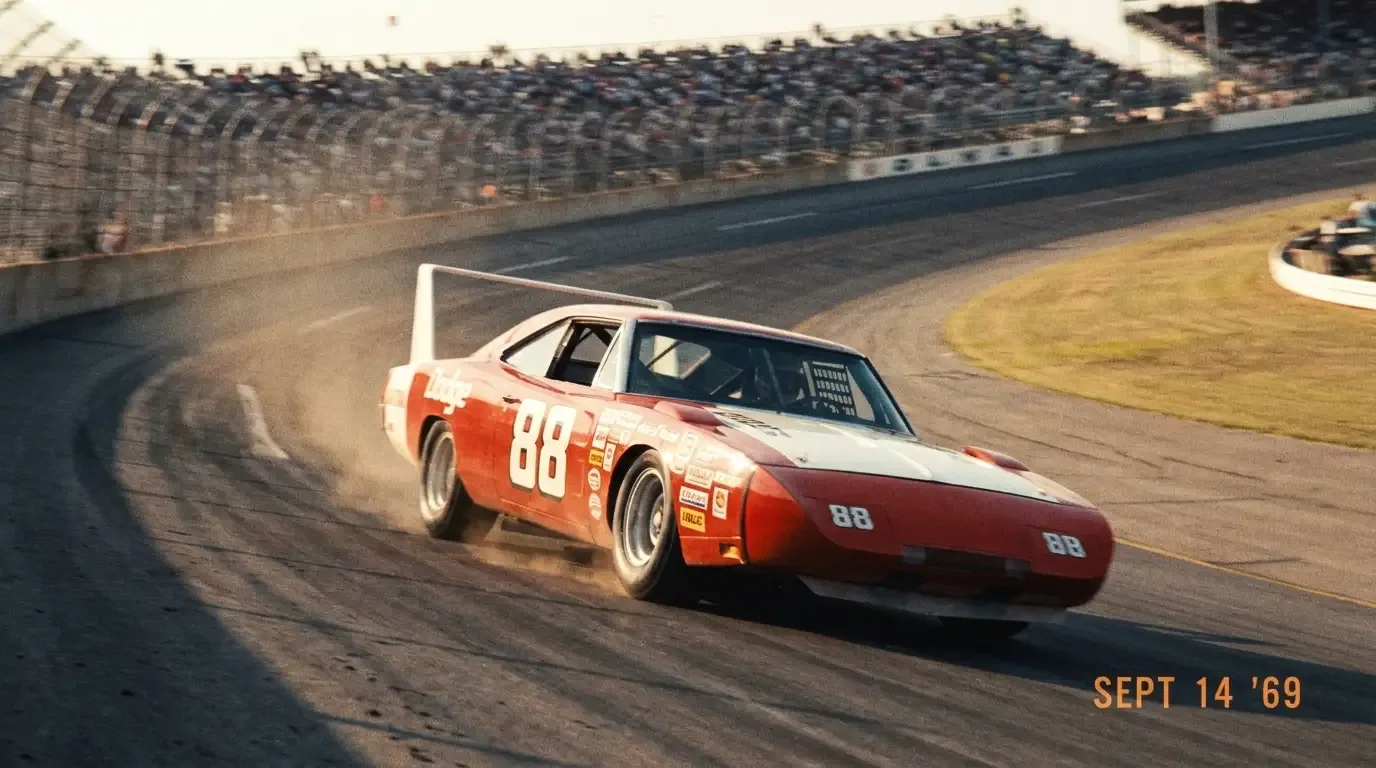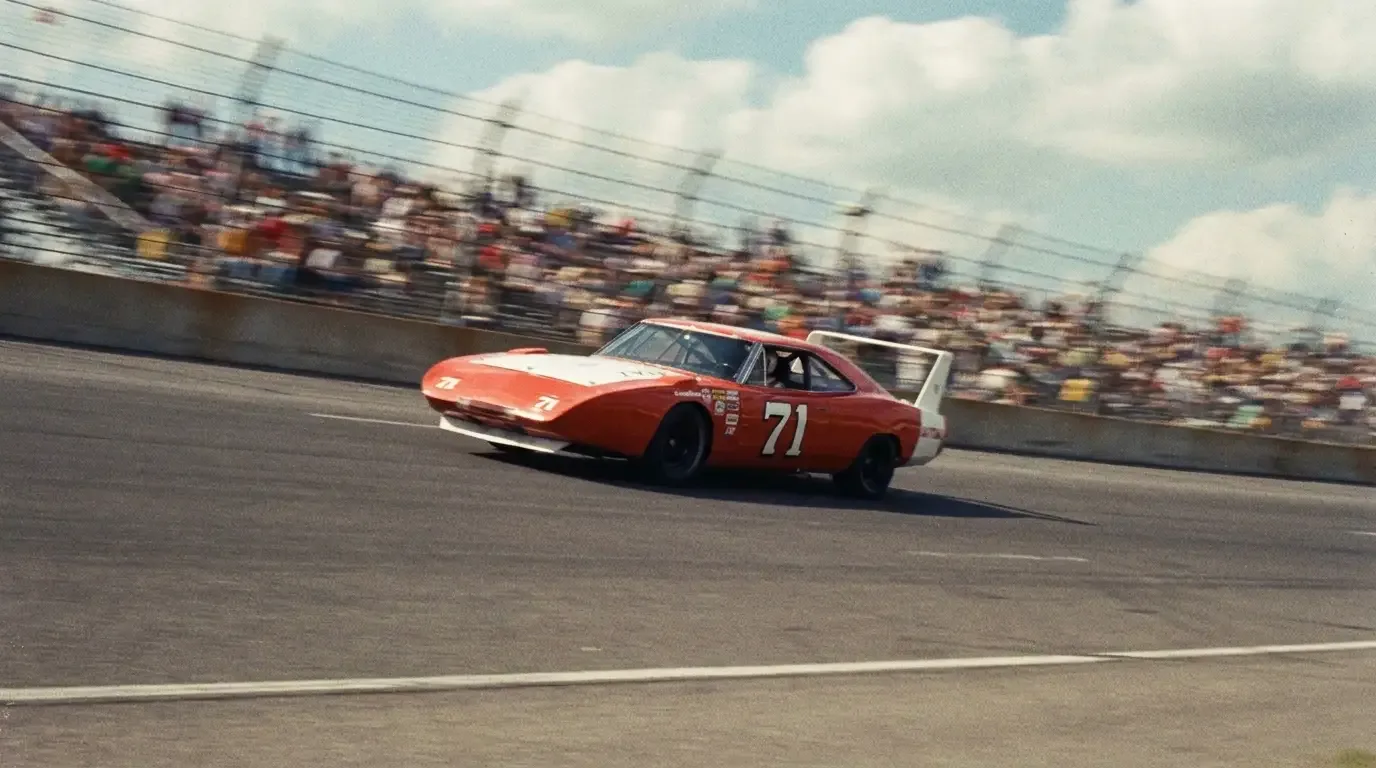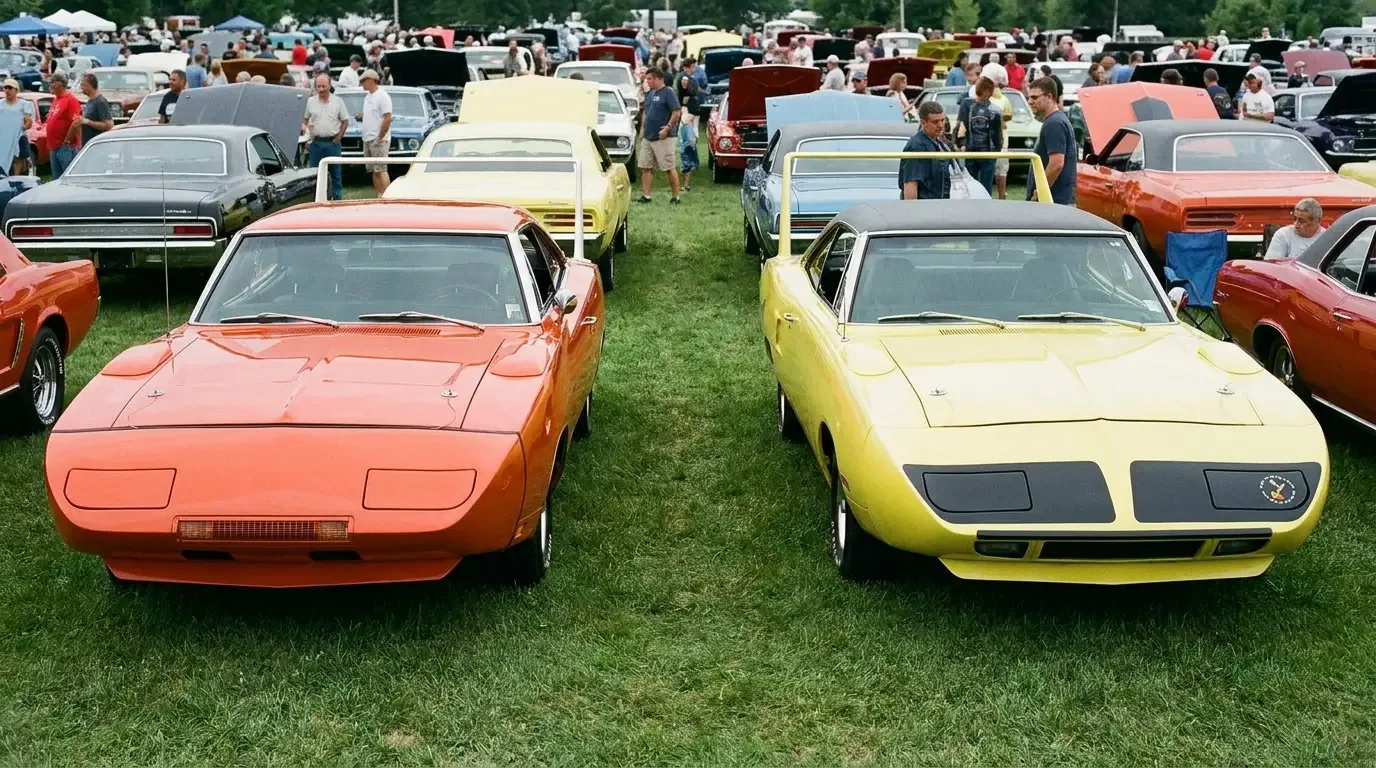
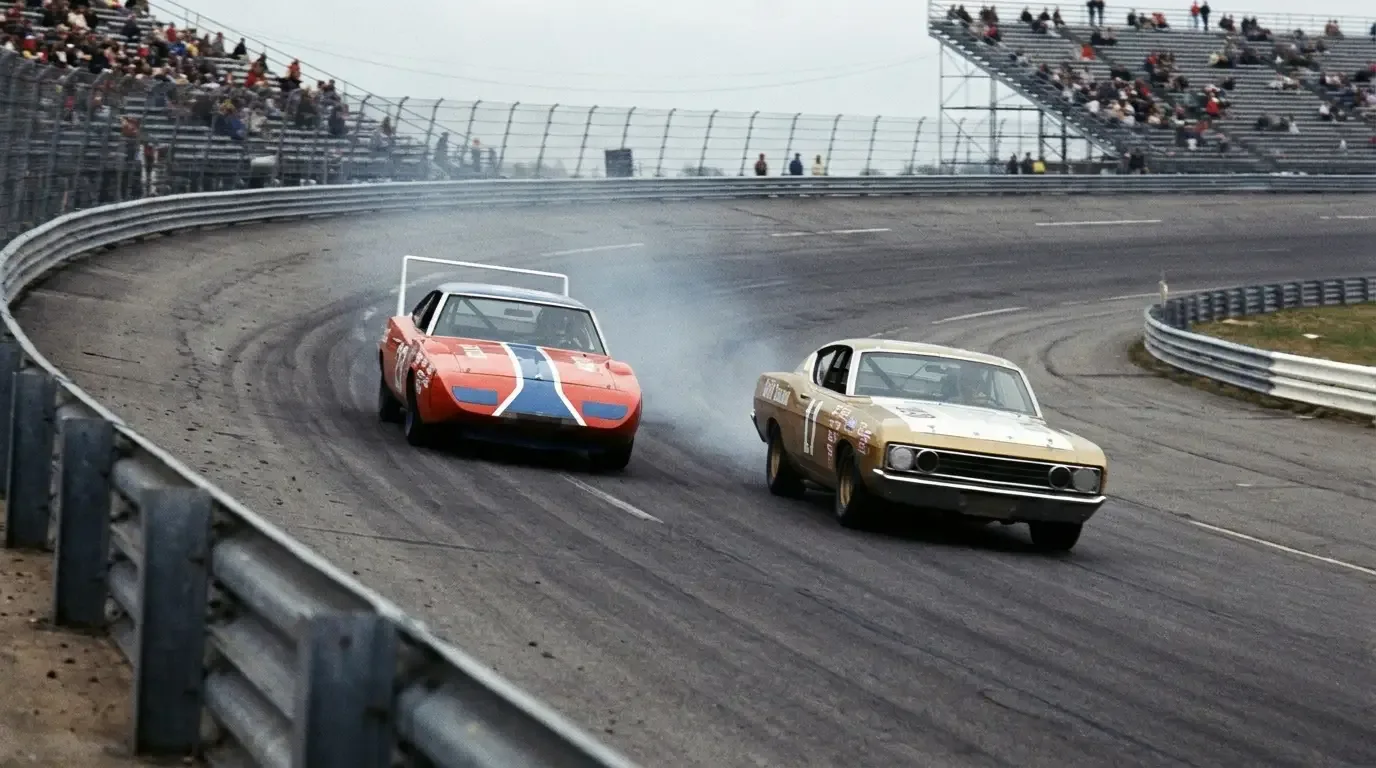
Two companies looked at the same problem in 1969 and arrived at strikingly different answers. Chrysler built the Charger Daytona, a car with a nose that ran nearly two feet longer than stock and a wing that towered above the roofline. Ford built the Torino Talladega, a car that solved the same aerodynamic problem with restraint, smoothing and stretching an existing shape rather than bolting on anything dramatic. Both were fast. Only one of them looked like it came from another planet, and the contrast tells you almost everything about how the two companies thought.
Two philosophies, one problem
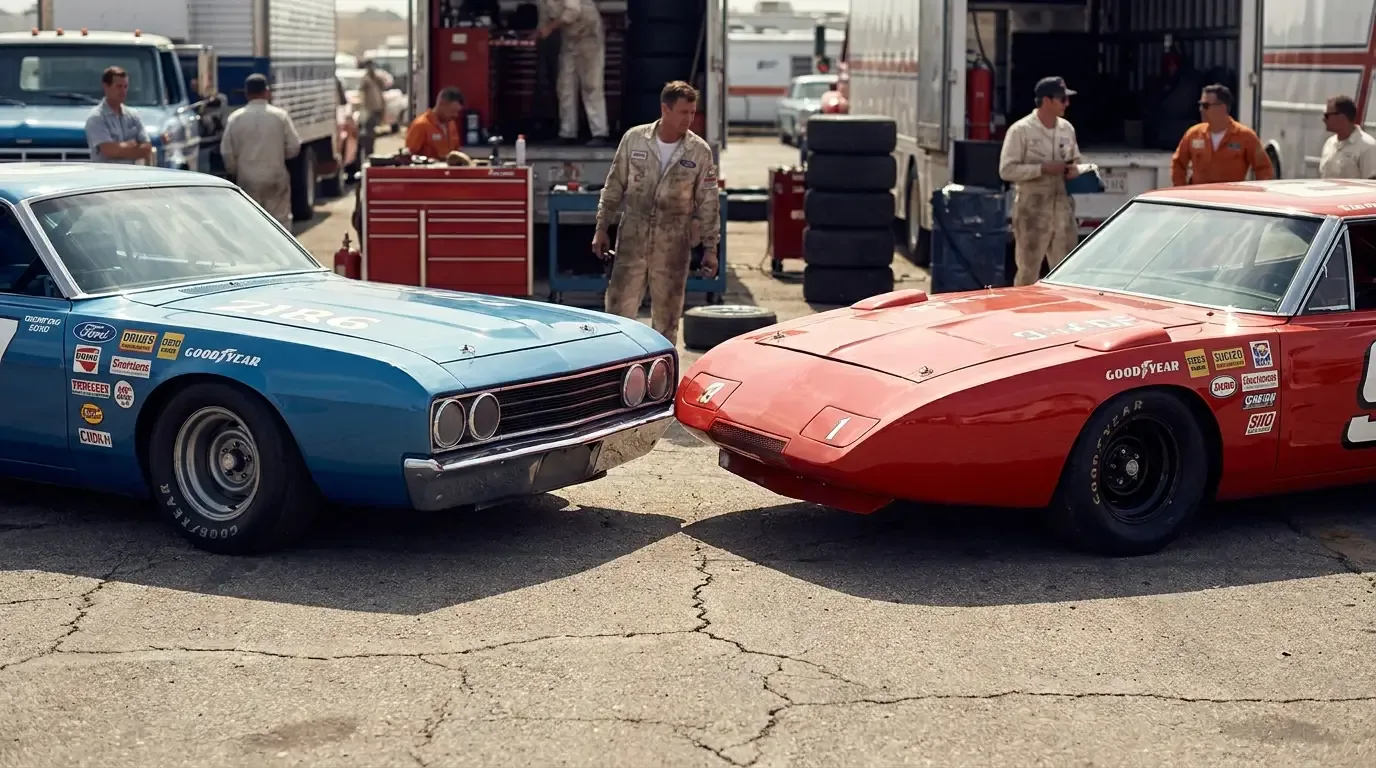
Ford's approach with the Torino Talladega was subtractive. Engineers extended the nose by a few inches, smoothed the grille opening, and tucked the front bumper closer to the body, changes that a casual observer at a stoplight might not even notice. The car looked like a slightly cleaner Torino, not a different species. That restraint was intentional. Ford's engineers believed they could win the aero fight without radically altering the car's appearance or its manufacturing process, keeping tooling costs down and production practical.
Chrysler's approach with the Daytona was additive and extreme. Rather than trim an existing shape, engineers built an entirely new nose cone and mounted a wing tall enough to escape the turbulent air coming off the roofline. It required its own assembly process at Creative Industries in Detroit, separate from the standard Charger line, and it produced a car that looked nothing like a mildly revised Charger. Chrysler was betting that going further would win outright, even at greater cost and greater visual departure from the base model.
"The guy I talked to at Carlisle had owned his car since 1974. Drove it there every single year, even the time the water pump let go outside Harrisburg."
— Patrick Walsh
How the numbers actually compared on track
On raw speed, the Daytona and its Plymouth sibling the Superbird generally had the edge over Ford's Torino Talladega and Mercury Cyclone Spoiler II through 1969 and 1970, with the Chrysler cars posting the eye-catching records, including Buddy Baker's 200.447 mph closed course run at Talladega in March 1970. Ford's cars were competitive and won races during this period, they were not simply outclassed, but the outright top-end numbers tended to favor the winged Dodges and Plymouths. That gap is part of why the Daytona and Superbird are remembered as the signature cars of the era while Ford's aero entries get comparatively less attention today, despite being legitimately quick machines in their own right.
Production numbers tell a parallel story
Both manufacturers built these cars in limited numbers to satisfy NASCAR's homologation rules, and both ran into the same problem, dealers struggling to move cars that looked strange to ordinary buyers who had no interest in racing. Ford's Torino Talladega production is generally cited at around 750 units for 1969, similar in scale to Chrysler's Daytona and 500 runs. Neither company built these cars expecting them to be volume sellers. They existed purely to clear a rules threshold, and that shared reality is part of why survivors from both camps are relatively rare and valuable today.
Why the rules ended the whole argument
NASCAR's response to the speeds both manufacturers were reaching was to impose engine displacement restrictions for 1971 aimed squarely at aero-bodied cars, rules tight enough that neither Chrysler nor Ford found it economically sensible to continue campaigning these configurations. That decision effectively ended the argument both companies had been having through wind tunnels and stopwatches, not with a winner declared on track but with a rulebook that made the whole exercise pointless going forward. In that sense neither side truly won. Both got legislated out at roughly the same time, which is part of why comparing them now feels less like picking a winner and more like examining two answers to the same test.
| Aspect | Dodge Charger Daytona | Ford Torino Talladega |
|---|---|---|
| Approach | Extended nose cone, tall rear wing | Smoothed and extended existing nose |
| Estimated production | 503 U.S. units | About 750 units |
| Notable record | 200+ mph closed course, Talladega 1970 | Competitive race wins, 1969 |
| Engine | 426 Hemi, 440 Magnum | 428 Cobra Jet |
What this means for buyers comparing the two today
Collectors weighing a Daytona against a Torino Talladega are really choosing between two different stories, one of extreme, purpose-built engineering that looks the part, the other of understated speed achieved with restraint. Values have historically favored the Dodge and Plymouth winged cars, partly because of the visual drama and partly because of the outright records, but a genuine, documented Torino Talladega is a rare and historically significant car in its own right, arguably undervalued relative to its rarity. Anyone building a genuine understanding of this era should also read more on the Charger Daytona and the direct comparison to Chrysler's other winged entry, read more here, along with the wider dodge charger history that put the Daytona in position to have this fight in the first place.
The Cyclone Spoiler II from Mercury deserves a mention here too, since it ran alongside the Torino Talladega as Ford's other homologation entry, sharing much of the same nose treatment on a Mercury body. It rarely gets discussed on equal footing with its Dodge and Plymouth rivals, partly because Mercury's motorsport presence carried less weight culturally than Ford's own factory effort, but the engineering behind it followed the same restrained philosophy Ford applied across the board. None of these cars exist in isolation from each other, and understanding one properly means understanding what the other three companies were doing at the exact same moment under the exact same pressure.
What is easy to miss in hindsight is how short this entire window was. From the Charger 500's debut through the rule changes that ended the winged car era took barely two full seasons, an unusually compressed arms race even by the standards of a sport that moved fast in the muscle car years. Everything covered here, Ford's restraint, Chrysler's extremes, the records both sides set, happened inside that narrow window and then never happened again in quite the same form.
Sources and notes
- Wikipedia - Ford Torino Talladega - confirmed the ~750-unit production, the roughly six-inch flush-nose extension, the 428 Cobra Jet, the Mercury Cyclone Spoiler II, and Ford ending factory racing after 1969.
- Wikipedia - Dodge Charger Daytona - confirmed the 503-unit Daytona run, the 426 Hemi/440 Magnum engines, and the 1971 aero-car rules.
- Wikipedia - Plymouth Superbird - confirmed Chrysler's second winged entry that ran alongside the Daytona.
- Wikipedia - Buddy Baker - confirmed the 200 mph closed-course record that anchored Chrysler's top-speed edge.
- Wikipedia - Talladega Superspeedway - confirmed the track and speeds at the center of the aero war.