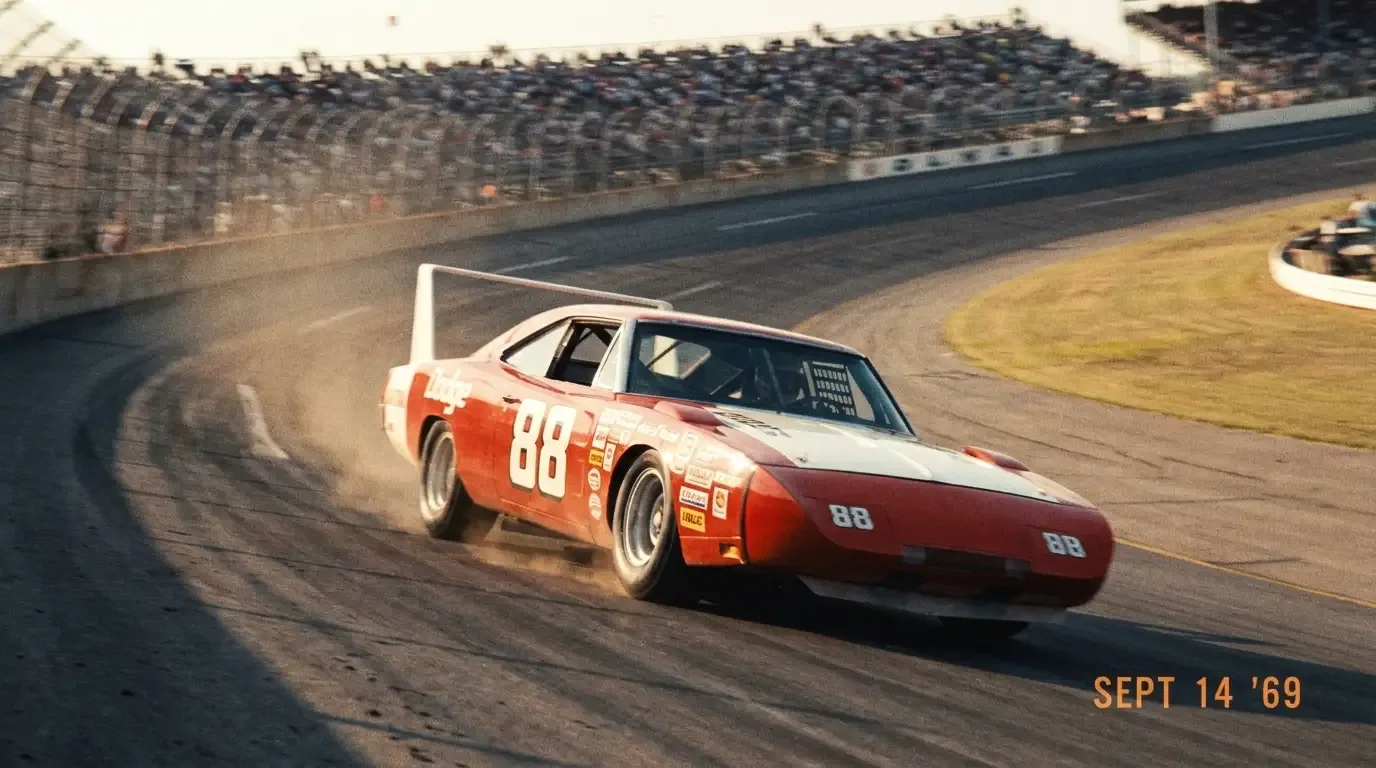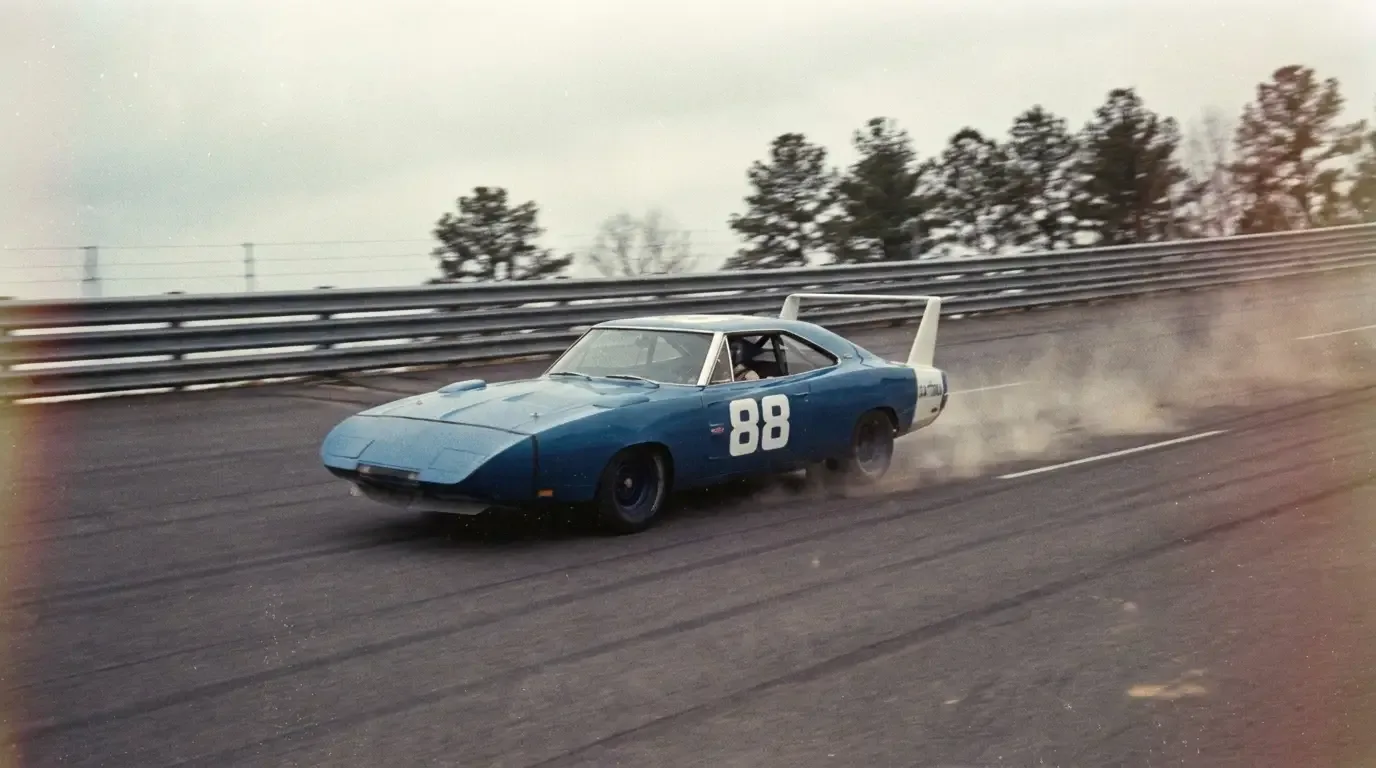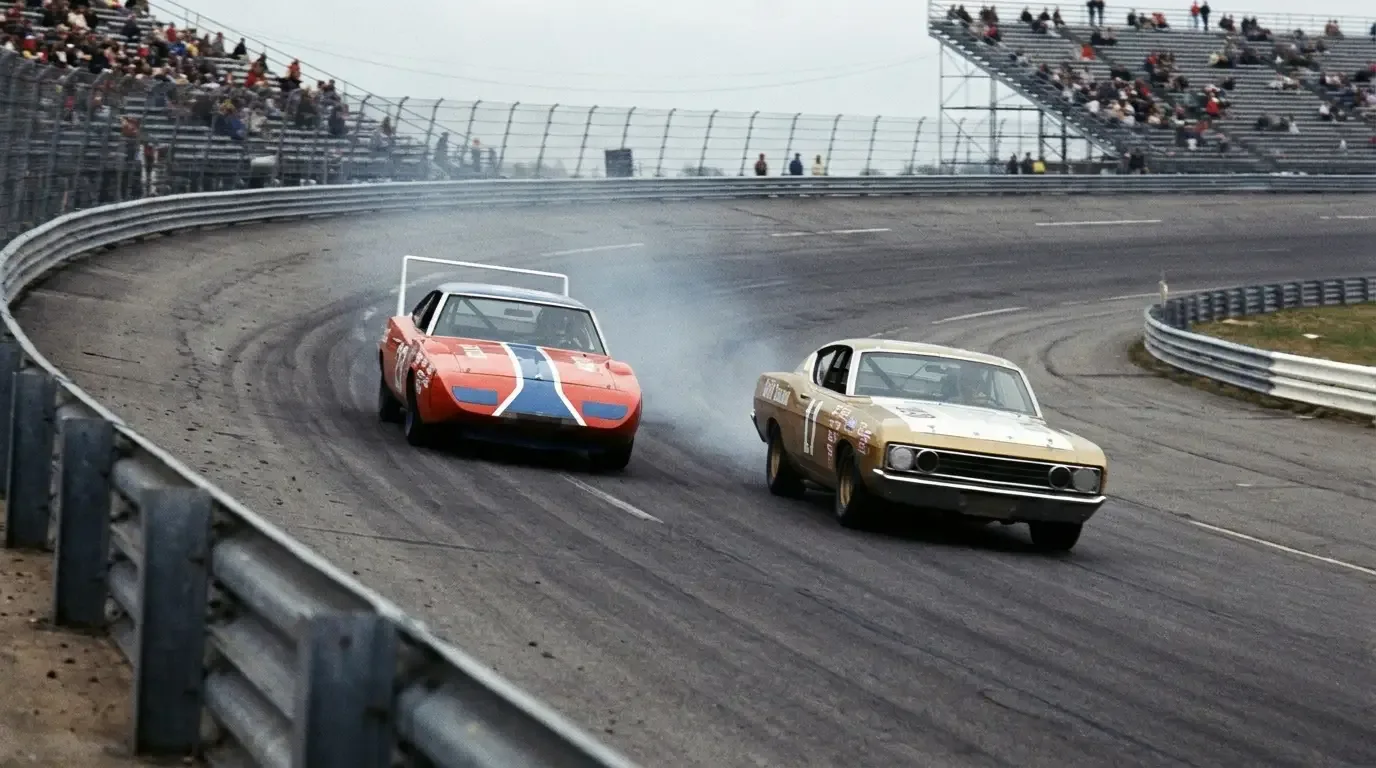
Bobby Isaac did not have Buddy Baker's flair for the dramatic, and he did not need it. Isaac was quiet, methodical, and reportedly one of the most technically precise drivers of his era, the kind of racer who let the stopwatch do his talking. Between the two of them, Isaac and Baker put the Charger Daytona's name into the record books in ways that outlasted the car's brief production run by decades, and their runs deserve to be told together rather than treated as footnotes to a single famous test session.
Bobby Isaac and the closed course speed record
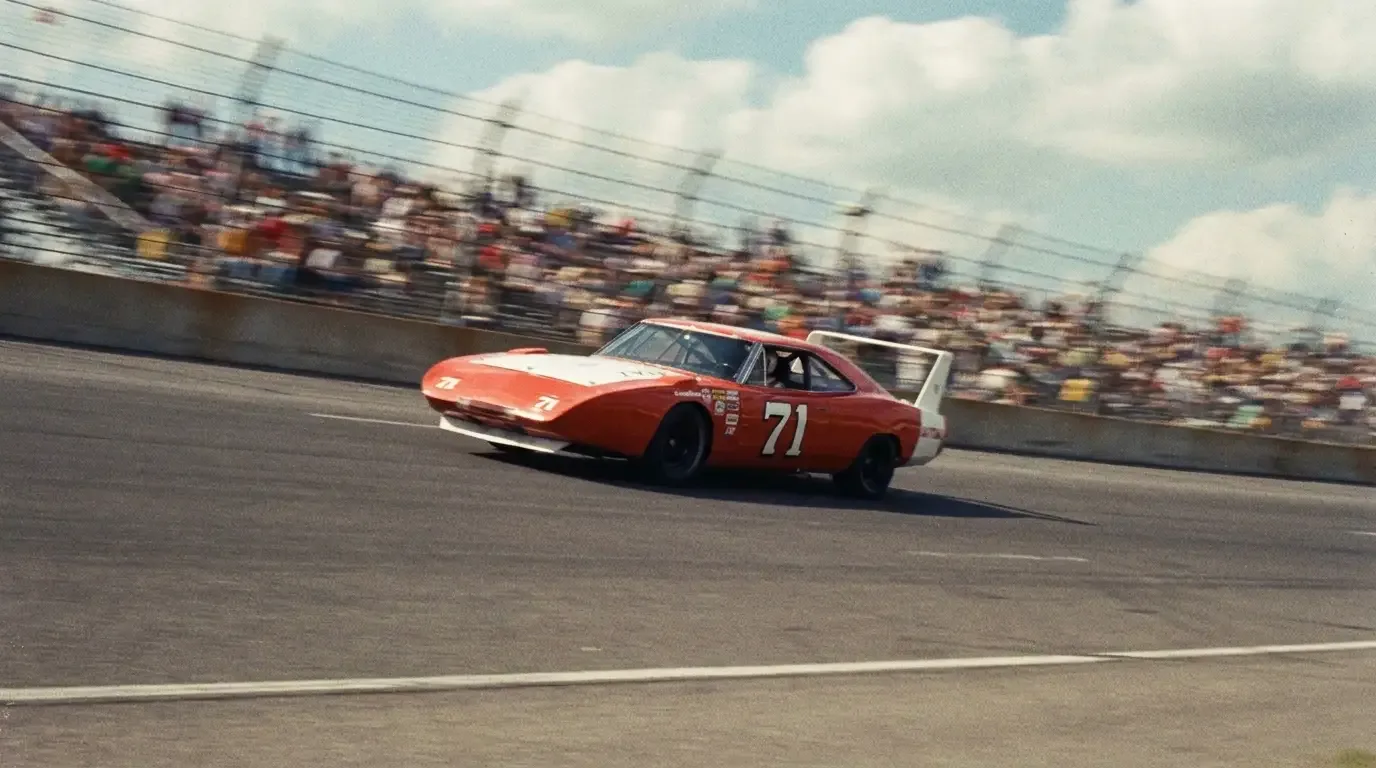
Isaac's association with the winged Dodges runs through much of the 1969 and 1970 seasons, campaigning for Nord Krauskopf's K&K Insurance team, one of the most competitive operations fielding Chrysler's aero cars. Isaac's precision behind the wheel made him a natural fit for a car that rewarded consistency and smooth inputs over raw aggression, since any car running that close to its aerodynamic limits punishes a driver who oversteers the physics. His closed course record set at Talladega in November 1970, a 201.104 mph lap, stood as a benchmark for stock bodied cars until 1983, long after NASCAR's rule changes had already pushed the winged cars out of competition.
What made Isaac's runs notable is that they came in a period when NASCAR was already signaling discomfort with the speeds these cars were reaching. Isaac and the K&K team kept extracting performance from the package even as the writing was on the wall for the winged car era, a reminder that the drivers campaigning these cars were racing against a deadline as much as against each other.
"The guy I talked to at Carlisle had owned his car since 1974. Drove it there every single year, even the time the water pump let go outside Harrisburg."
— Patrick Walsh
Buddy Baker and the 200 mph barrier
Baker's March 24, 1970 closed course test at Talladega, reported as 200.447 mph, is the number most casual fans know, and for good reason, it was the first time a stock bodied car had been documented over 200 mph. That run gets its own detailed treatment elsewhere, but it belongs in the same conversation as Isaac's records because the two drivers were essentially proving the same engineering point from different angles, Baker chasing an outright speed number, Isaac chasing sustained competitive pace over a full run.
Both men were driving cars built around the same nose and wing package, the same 426 Hemi power, and the same fundamental bet Chrysler had made that aerodynamics, not additional horsepower, was the path to beating Ford on the superspeedways. The records they set validated that bet in the clearest way available to an engineering department: a stopwatch that did not care about opinions.
How the records shaped the rule changes that followed
NASCAR did not sit on its hands watching these numbers climb. The speeds Isaac and Baker posted, combined with growing concern about tire technology keeping pace with the cars, pushed the sanctioning body toward engine displacement restrictions specifically targeted at the winged cars for the 1971 season, restrictions tight enough that they effectively ended the aero war rather than merely slowing it down. Manufacturers on both sides, Chrysler with the Daytona and Superbird, Ford with its own aero cars, found the new rules made continued competition in that configuration financially pointless.
That is the part of the records story that tends to get lost. Isaac and Baker were not just setting marks for the sake of history. Every number they posted became ammunition in an internal NASCAR argument about safety and cost that Chrysler and Ford both eventually lost. The records outlived the cars that set them by a wide margin, since neither manufacturer campaigned anything like the winged Dodges again after the rules changed.
| Driver | Notable achievement |
|---|---|
| Buddy Baker | First stock car over 200 mph, Talladega, March 24, 1970 (200.447 mph) |
| Bobby Isaac | 201.104 mph closed course record, Talladega, November 1970, K&K Insurance Dodge |
| Bobby Isaac | 1970 NASCAR Grand National championship |
| Team | Nord Krauskopf, K&K Insurance |
| Engine | 426 Hemi |
Why these records still matter to Daytona owners today
Every Daytona sold today, whether it ever came near a racetrack, carries some of the reputation these two drivers built. A car's value is rarely just about its own history, it is also about what the model as a whole proved capable of, and Isaac and Baker are a significant part of why the Charger Daytona name still commands attention more than five decades later. Collectors researching a specific car's history should look for any documented connection to the racing program, since a Daytona with genuine ties to the K&K team or similar period racing efforts sits in a different tier entirely from a well kept street car with no competition history.
The broader story of how Chrysler's engineering answered Ford's aero threat, and how these two men helped prove it worked, is covered from the manufacturer's side in dodge charger daytona, and the head to head comparison against Ford's competing package is worth reading in full, read more here for how the two companies' approaches actually compared on track.
The drivers who never got their due
Isaac in particular gets less recognition outside serious NASCAR history circles than his results deserve. He never had the media profile of some of his contemporaries, partly because his driving style was understated rather than showy, and partly because a championship season driving a car that got legislated out of existence the following year is an awkward thing for a sport to celebrate loudly. Chasing the records himself, in period magazines and race reports rather than modern retrospectives, gives a clearer picture of how respected he actually was among people who worked alongside him.
Baker's career continued well past the aero car era into a long run of superspeedway success with multiple manufacturers, and his Talladega test run is often the single line people remember from an otherwise long and accomplished career. Both men's stories are worth more attention than the aero wars footnote treatment they usually get, and both are inseparable from the Daytona's reputation as more than just a strange looking street car.
Sources and notes
- Wikipedia - Bobby Isaac - confirmed the 1970 Grand National championship in the No. 71 K&K Insurance Daytona and the 201.104 mph Talladega record that stood until 1983.
- Wikipedia - Buddy Baker - confirmed the March 24, 1970 first over-200 mph run in the Chrysler Engineering Daytona.
- Wikipedia - Talladega Superspeedway - confirmed the venue and the 200.449 mph figure for Baker's run.
- Wikipedia - Dodge Charger Daytona - confirmed the 426 Hemi power and the 1971 rule change that ended the aero cars.
- Wikipedia - Plymouth Superbird - confirmed the sibling aero program and the 1971 displacement rules that legislated both cars out.