
Three American chassis makers defined the top of the domestic luxury market in the coachbuilt era: Duesenberg, Packard, and Pierce-Arrow. Each built its reputation on a different combination of engineering and prestige, and each attracted coachbuilders willing to put their best work on that particular chassis.
Car Features
6 min read
American Coachbuilt Luxury: Duesenberg, Packard, Pierce-Arrow
Duesenberg sold speed, Packard sold trust, Pierce-Arrow sold quiet confidence. Here is how each marque shaped American coachbuilt luxury.
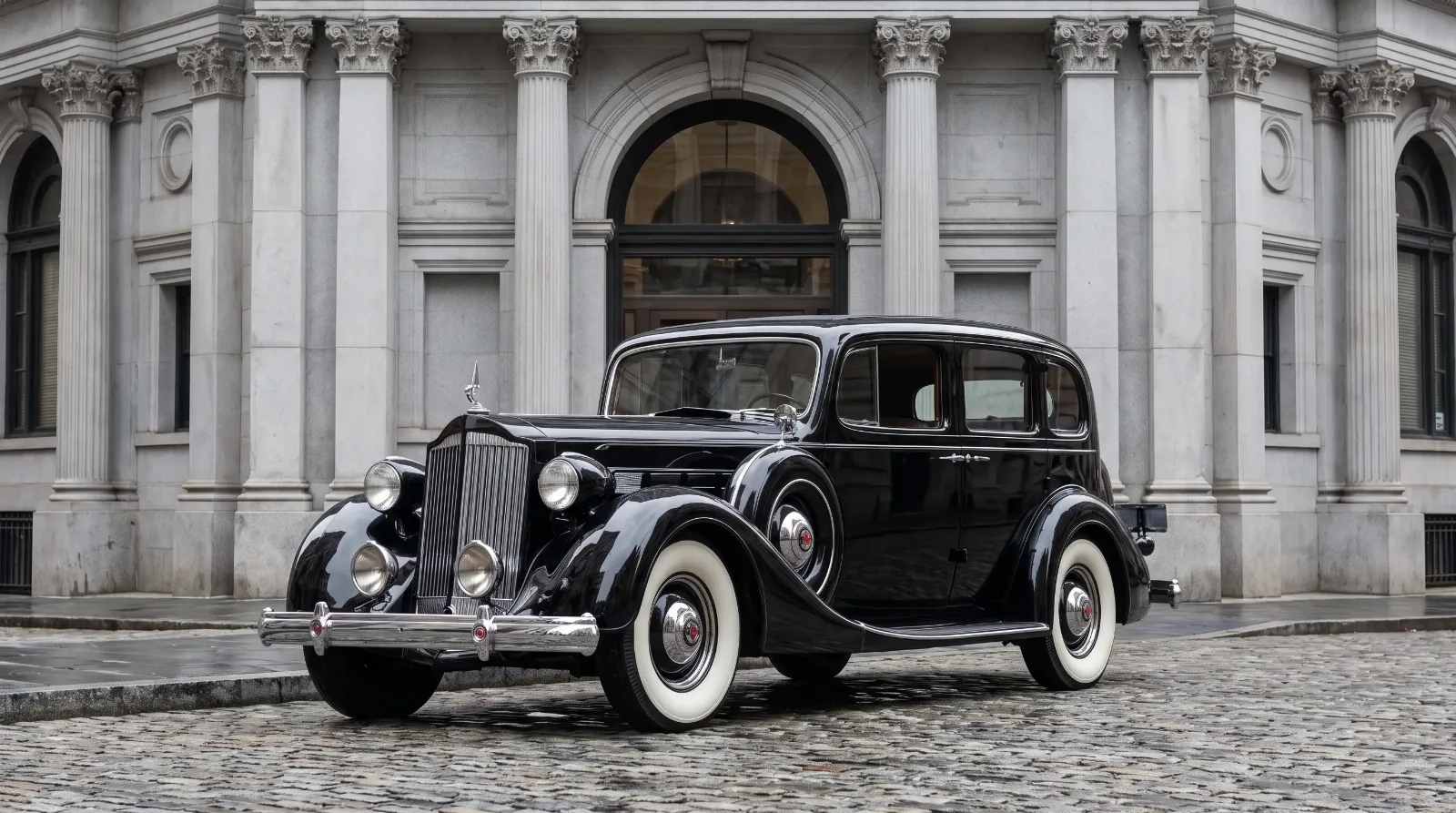
A market shaped by three different customers
It helps to think about these three marques less as competing on the same shopping list and more as answering to three genuinely different kinds of buyer. A Duesenberg customer wanted to be seen as someone who understood and valued serious engineering, and was often young enough, or at least temperamentally inclined enough, to actually drive the car hard. A Packard buyer wanted proof of arrival without any risk of being seen as flashy about it, a car that signaled they had made it without suggesting they needed anyone to notice. A Pierce-Arrow buyer wanted something closer to institutional trust, the kind of car a bank president or an established family firm would keep for decades rather than trade in for the newest thing. None of these are guesses pulled from nowhere, they show up clearly in how each company advertised, who bought their senior models, and how each marque's dealer network was positioned regionally.
Duesenberg: engineering as the selling point
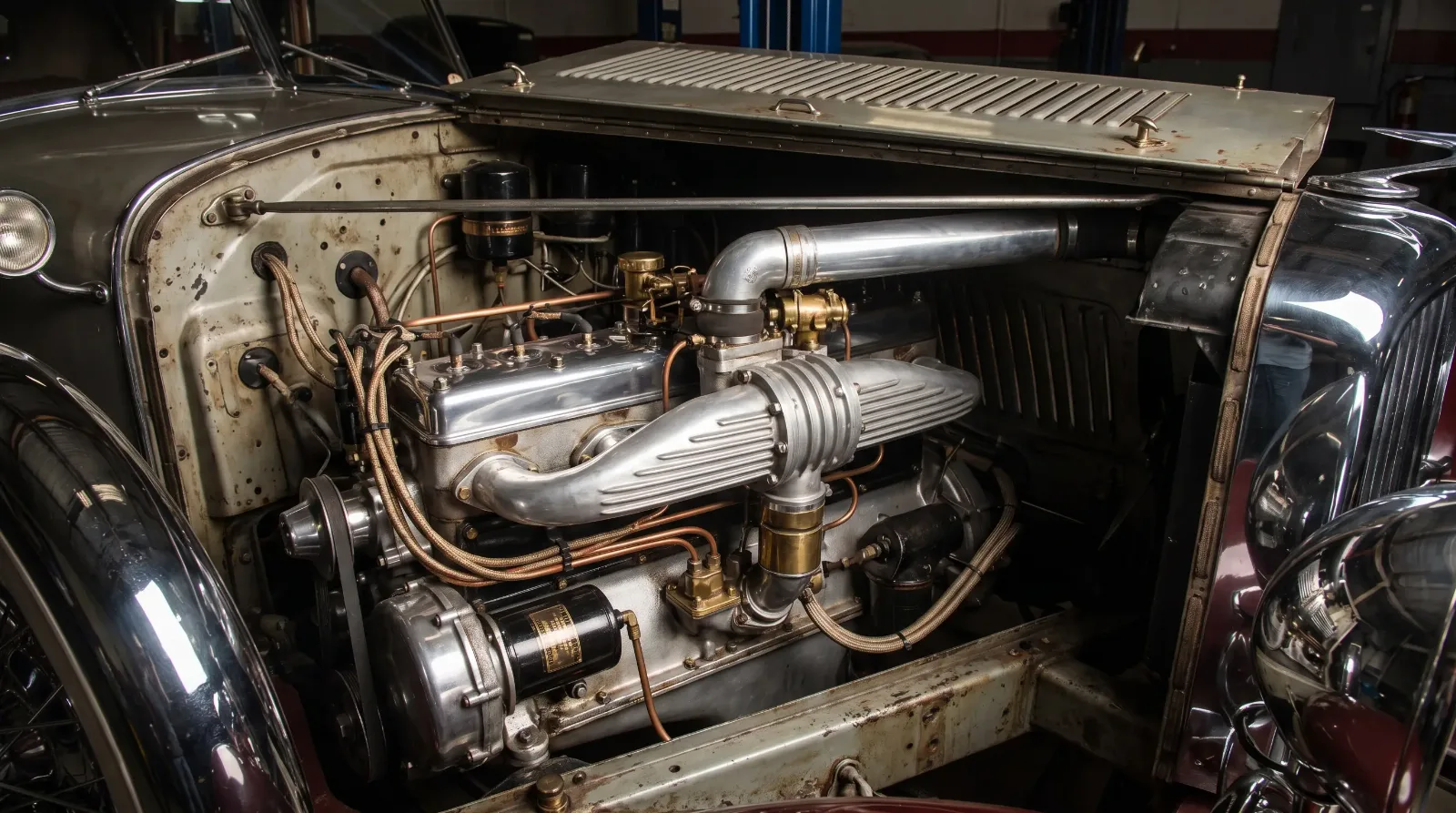
Duesenberg built its name on raw mechanical superiority. The Model J, introduced in 1928, offered a straight-eight engine and chassis engineering that outperformed nearly everything else on the American road, and the supercharged SJ variant that followed pushed that reputation further still. Duesenberg sold bare chassis to buyers who then commissioned bodies from top houses, Murphy's dual-cowl phaetons are the most famous result, though LeBaron, Bohman & Schwartz, and several European houses also bodied Duesenberg chassis for particular clients.
What made Duesenberg different from its competitors was that the chassis itself was already a status symbol before a single body panel was fitted. A buyer commissioning coachwork on a Duesenberg J was dressing an engine that was already famous, which gave coachbuilders an unusual amount of freedom to design bodies that matched the car's performance reputation rather than simply its price bracket.
Packard: consistency and a broader model range
Packard took a different approach, building a genuine range from solidly upper-middle-class cars up through its most exclusive senior chassis, all under one badge that stood for reliability and refinement rather than outright speed. Packard's senior models, the Twelve in particular, attracted serious coachbuilder attention, including LeBaron and Dietrich, without ever chasing the raw performance numbers Duesenberg was known for. That range meant Packard reached a wider customer base than Duesenberg ever did, while still supporting a genuine coachbuilt program at its top end.
Packard's approach arguably aged better commercially. The company's breadth let it weather the Depression longer than some rivals, continuing to offer both catalog and custom coachwork options into the mid and late 1930s even as the coachbuilt market as a whole contracted.
Pierce-Arrow: the quiet third option
Pierce-Arrow, based in Buffalo, built a reputation for engineering quality and quiet refinement that made it a favorite among buyers who wanted the prestige of a top American chassis without the overt flash of a Duesenberg. The marque's distinctive fender-mounted headlamps became one of the most recognizable styling details of any American luxury car of the period, and its chassis attracted coachwork from several respected houses, though the company's smaller production volume and more conservative marketing meant it never achieved quite the same public profile as its two rivals.
Pierce-Arrow did not survive the Depression as an independent company, closing in 1938, which makes surviving examples with original coachwork a genuinely finite population today. Unlike Duesenberg, which has enjoyed a strong revival of scholarly and collector attention over the decades, Pierce-Arrow has often been the quieter marque in conversation even among people who know the era well, despite engineering that held up well against its better-known rivals.
Beyond the big three
Lincoln deserves mention alongside this group, even though its reputation formed slightly differently. Under Edsel Ford's direction, Lincoln cultivated close relationships with coachbuilders including Brunn and LeBaron, and the marque's association with dignified, restrained luxury put it in fairly direct competition with Packard for a similar customer, buyers who valued quality and quiet confidence over outright performance claims. Cadillac occupied a related space, particularly once its Fleetwood body division began producing in-house custom work that competed directly with independent coachbuilders on the same chassis.
Cord, though shorter-lived and mechanically distinct with its front-wheel-drive layout, also attracted coachbuilder attention for its striking factory styling, proof that by the late 1930s the line between factory design and coachbuilt exclusivity had started to blur even at the very top of the American market.
Comparing the three marques
| Marque | Core reputation | Signature detail | Fate |
|---|---|---|---|
| Duesenberg | Raw performance and engineering | Supercharged SJ, dual-cowl phaetons | Closed 1937 |
| Packard | Consistency across a broad range | Senior Twelve chassis | Merged into Studebaker-Packard, ended 1958 |
| Pierce-Arrow | Quiet, refined engineering | Fender-mounted headlamps | Closed 1938 |
Anyone shopping this category today should treat these three marques as a starting point rather than the whole story, and should expect that documentation quality will vary considerably even among cars from the same coachbuilder and the same model year, since coachbuilders also worked on Lincoln, Cadillac, and Cord chassis with results worth studying in their own right. For a broader look at where these American cars fit against the market as a whole, the classic luxury car story is a useful next stop, and the american luxury pre war cars story puts this trio in context alongside the coachbuilders who bodied them.
"Duesenberg sold speed, Packard sold trust, Pierce-Arrow sold quiet confidence. None of those are wrong answers, they were just answering different questions for different kinds of buyers."
Sarah Whitfield
European coachbuilders were solving similar problems on a different set of chassis during this same period, and a related read covers that side of the story in detail.
Sources and notes
Related Reading
Have a
Classic Car
for Sale?
Reach thousands of serious classic car collectors across the US.
Sell It Here →
Are You a Classic Car Dealer?
List your full inventory and connect with targeted classic car buyers.
Join as a Dealer →

About the author
Sarah Whitfield
Third-generation classic car collector specializing in pre-war American and European coachbuilt automobiles. Researcher and concours enthusiast.
Comments
Be the first to comment on this article.