
Step past the chrome and the two-tone paint and the 1955 Bel Air interior is where Chevrolet made its clearest case that this was no longer a basic transportation appliance. The cabin used pattern and color combinations that would have looked out of place in a 1954 Chevrolet, with woven vinyl and cloth inserts coordinated directly to the exterior paint scheme, a level of coordinated design that treated the interior as part of the same styling statement as the body rather than an afterthought finished in whatever fabric happened to be on hand.
Car Features
6 min read
The 1955 Bel Air Interior
The 1955 Bel Air interior coordinated seat pattern, dashboard finish, and color directly to the exterior paint, turning the cabin into part of the same design statement.
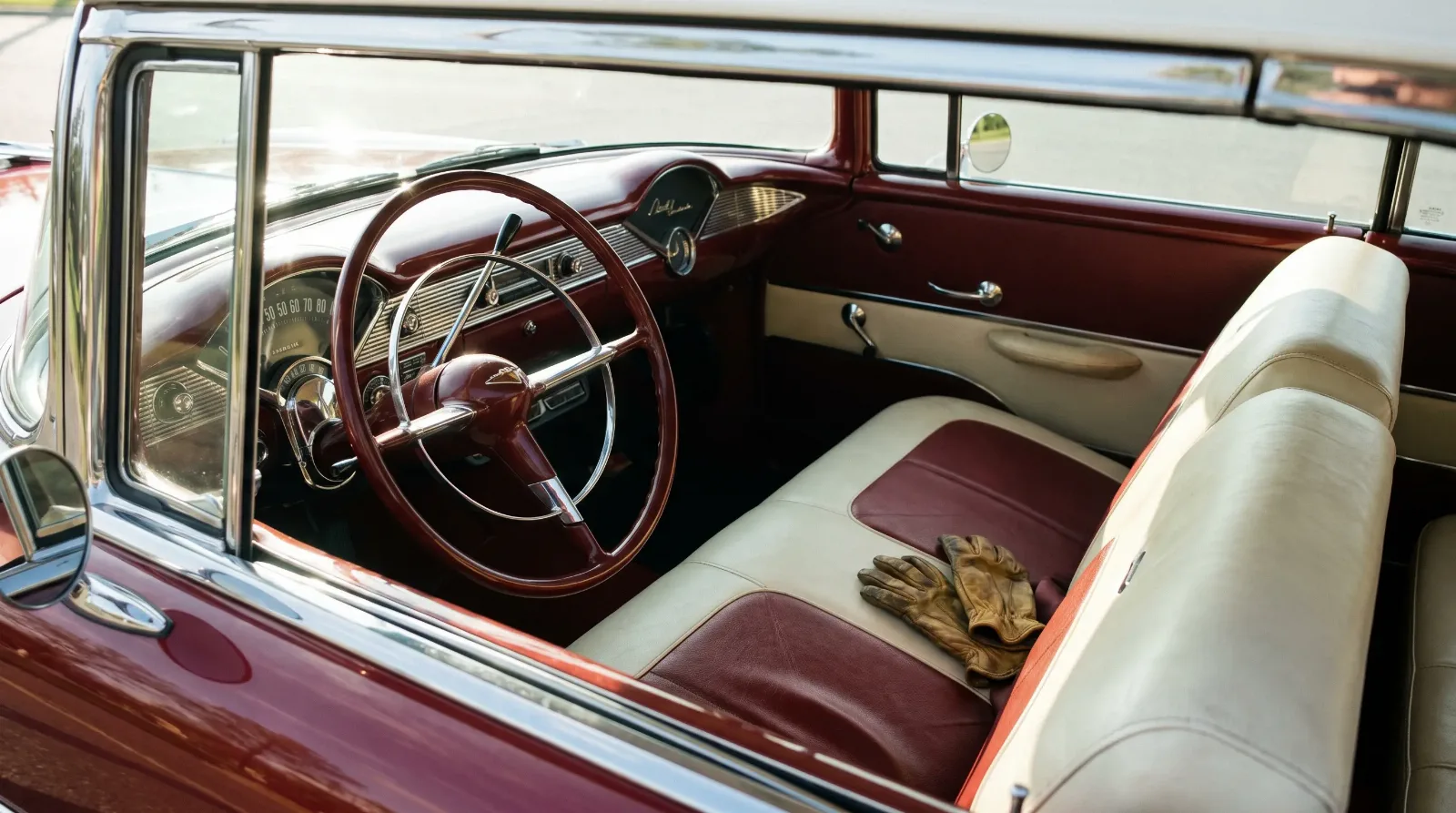
Materials and pattern, not just upholstery
Chevrolet's designers specified interior trim packages that paired specific seat patterns and door panel treatments with each exterior color combination, so a Bel Air ordered in Coral and India Ivory arrived with an interior color story built to match rather than a generic gray or tan thrown in regardless of the body color. The seat inserts used a woven vinyl pattern with metallic threading in some combinations, a detail meant to catch light and read as genuinely upscale against the base 150 and mid-range 210 interiors, which used plainer cloth and simpler patterns. This was Chevrolet's clearest signal that Bel Air buyers were paying for more than badges and trim rings. The 1955 Bel Air interior was engineered as a coordinated system, matched to the body outside it.
The dashboard as a design statement
The 1955 dashboard moved away from the flat, utilitarian panels of earlier Chevrolets toward a wraparound instrument cluster with a symmetrical layout, painted in body-coordinated color rather than uniform black or gray. A large, clear speedometer sat directly ahead of the driver, flanked by simplified gauges, and the whole panel was finished with enough brightwork to echo the exterior trim without overwhelming it. Steering wheels on Bel Air models carried a horn ring and color-matched center hub, another small detail that separated the top trim from the plainer wheels fitted to base cars. None of this changed how the car drove, but it changed how the car felt to sit inside, and Chevrolet clearly understood that distinction mattered to buyers shopping against Ford and Plymouth in the same showroom season.
| Feature | 1955 Bel Air interior |
|---|---|
| Seat material | Woven vinyl with cloth inserts, color-matched to exterior |
| Dashboard | Wraparound panel, body-color finish |
| Steering wheel | Horn ring, color-matched hub |
| Trim distinction | Upgraded patterns versus 150 and 210 series |
Hardware and small details
Beyond fabric and dashboard finish, Chevrolet paid attention to smaller hardware details that separated the Bel Air cabin from its stablemates, including chrome window cranks, brighter door handle trim, and a two-tone treatment on some steering wheel colors that echoed the exterior paint split rather than defaulting to a single neutral shade. Sun visors, ashtrays, and even the glovebox latch carried a slightly higher grade of finish on Bel Air compared to the base 150, small touches that added up to a cabin that felt considered rather than assembled from whatever parts bin happened to be nearest on the line. Interior door panel courtesy lights, an option on some Bel Air models, were another example of Chevrolet using small, inexpensive features to widen the gap between trim levels without adding meaningful cost to the car itself.
Comfort details buyers noticed
Beyond pattern and color, Chevrolet improved the actual seating comfort for 1955, with wider bench seats and revised cushion contouring compared to the outgoing body style, along with a lower cowl and dashboard that opened up the sense of space inside the cabin. Door panels carried coordinated inserts and simple integrated armrests on Bel Air trim, again a step above the base cars. Reviewers and dealers at the time consistently pointed to the interior as one of the more persuasive parts of the sales pitch, since it was the part of the car a buyer could touch and sit in directly on the showroom floor, unlike the engine bay.
"Judges at a concours event will look at a dashboard color match before they look at almost anything else. The interior tells you faster than the paint whether a car has been correctly restored."
- Sarah Whitfield
How the Bel Air interior compared to 150 and 210 trim
Chevrolet drew clear lines between its three 1955 trim levels inside the cabin, not just on the badge. The base 150 series used rubber flooring instead of carpet on many models, plain vinyl seating in a limited color range, and a stripped-down dashboard with fewer bright accents. The mid-range 210 improved on that with better cloth options and some added trim, but still fell noticeably short of Bel Air's coordinated pattern work and carpeted floors. Sitting in a 150 immediately after a Bel Air makes the gap obvious even to someone with no particular interest in cars, which was exactly the point. Chevrolet wanted the interior experience to do real selling work, nudging buyers who walked in intending to look at a base model toward a Bel Air once they felt the difference in the seat and saw the finish level around them. That upsell strategy, built into the physical experience of sitting in the car rather than left to a salesman's pitch alone, was a deliberate and effective piece of Chevrolet's 1955 product planning.
What survives, and what to check
Original 1955 interiors are less common than original exterior paint, since fabric and vinyl age and tear at a faster rate than sheet metal holds up, and a fair number of surviving cars carry reproduction upholstery that gets the general pattern right but misses smaller period-correct details like stitching count or exact color match.
Sun exposure is the biggest enemy of an original 1955 interior, since the vinyl and cloth combinations used in these cars were not engineered for the decades of UV exposure many of them ultimately received sitting in driveways and open carports. Dashboards crack, seat vinyl fades unevenly depending on which panels caught direct sun, and door panel inserts often show more wear than the seats themselves simply from repeated arm contact over years of daily use. A judge or a serious buyer inspecting a claimed original interior will check these wear patterns closely, since a suspiciously uniform, unfaded interior on a car that otherwise shows real age is a signal worth investigating further rather than taking at face value. For collectors and researchers, the 1955 chevy bel air story covers the model year in full, while the full story traces how the Bel Air name evolved across the decades that followed. Buyers hoping to find a car with original or correctly reproduced interior trim should look closely at seam work and pattern spacing before assuming a listing photo tells the whole story, and comparing several classic Airs on the market side by side is the most reliable way to calibrate what correct actually looks like.
Sources and notes
Related Reading
Have a
Chevrolet Bel Air
for Sale?
Reach thousands of serious classic car collectors across the US.
Sell It Here →
Are You a Classic Car Dealer?
List your full inventory and connect with targeted classic car buyers.
Join as a Dealer →

About the author
Sarah Whitfield
Third-generation classic car collector specializing in pre-war American and European coachbuilt automobiles. Researcher and concours enthusiast.
Related Listings - Chevrolet Bel Air





Comments
Be the first to comment on this article.