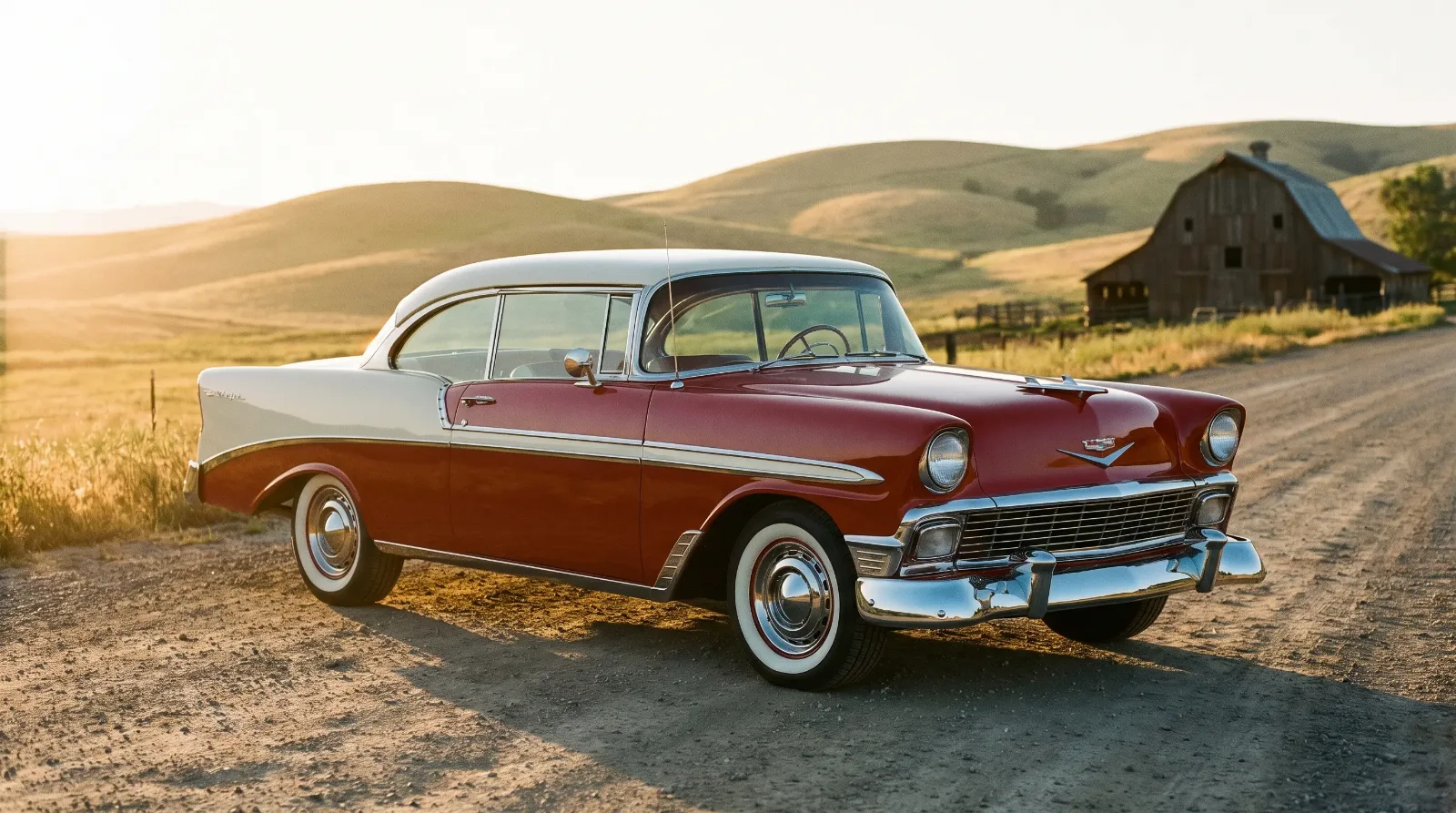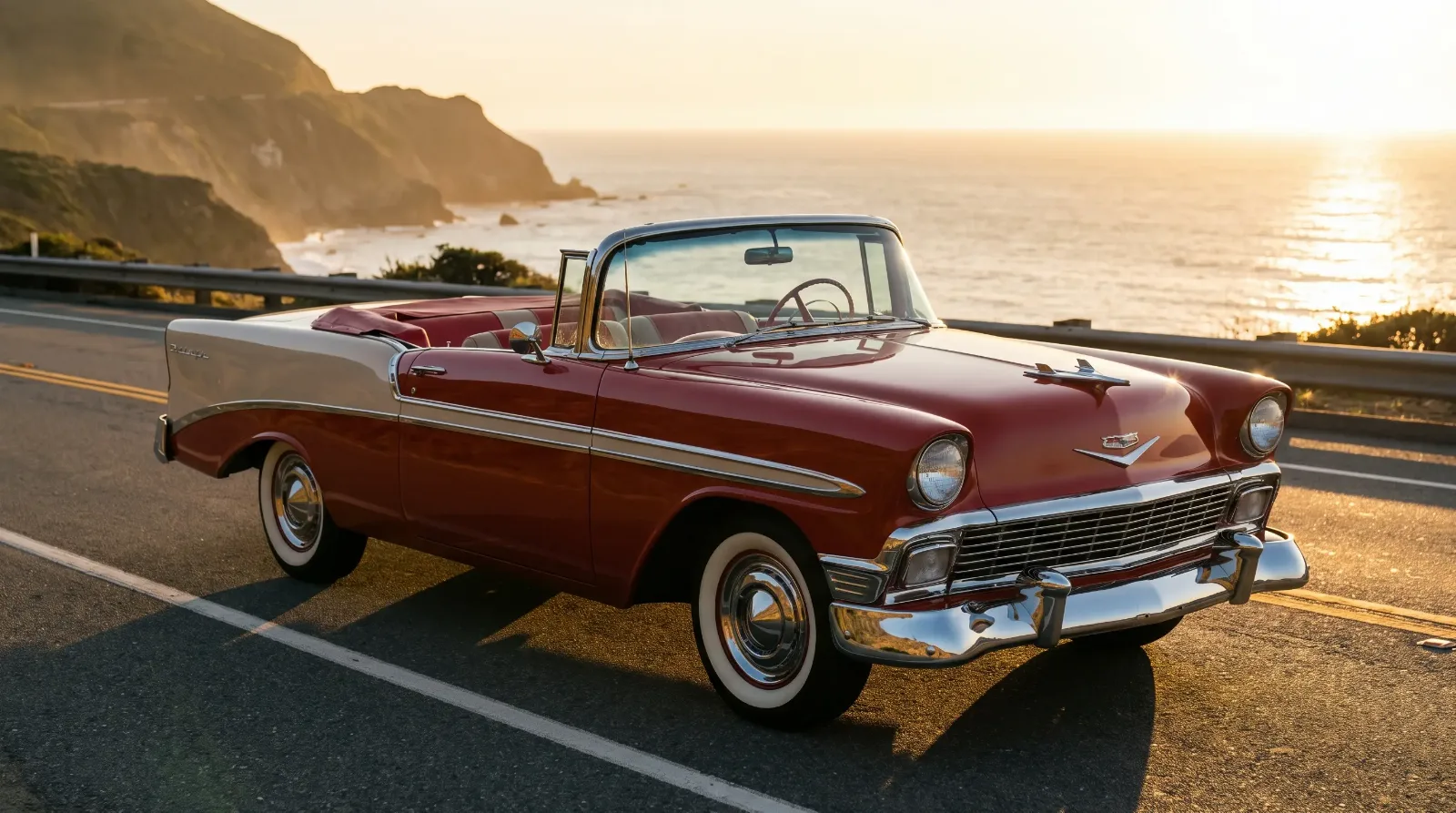
Two-twenty-five. That is the number, and it belongs to the 1956 bel air 225 hp engine option, a dual four-barrel version of the 265 cubic inch V8 that shared its basic architecture with the engine Chevrolet was putting in the Corvette that same year. This was not the standard Power Pack four-barrel most Bel Air buyers checked on their order forms. It was the rare, expensive, high-compression version built for buyers who wanted the most the small-block could give in 1956, and it made the Bel Air one of the quickest affordable cars on the road that year.
Three tunes, one block
By 1956, Chevrolet was offering the 265 in a genuine spread of states of tune, and understanding the ladder matters more than memorizing a single headline number. The base two-barrel engine continued largely as it had, offering reasonable performance for buyers prioritizing economy. Above that sat the familiar Power Pack configuration, four-barrel carburetor and dual exhaust, rated at 205 horsepower for 1956, itself an increase over the 1955 Power Pack figure as compression and tuning improved. At the top of the range sat the dual four-barrel option, the engine sharing its high-performance specification with the Corvette, rated at 225 horsepower.
That top engine used solid lifters rather than the hydraulic units in the lesser tunes, a mechanical detail that separated it clearly from a Power Pack car with a fancier carburetor bolted on. Solid lifters meant a stiffer, more aggressive valvetrain built for higher rpm operation, and buyers who ordered this engine were getting genuine mechanical hardware differences, not just a carburetor swap dressed up with a bigger number on the option sheet.
Why so few buyers checked this box
The dual four-barrel 265 was expensive relative to the Power Pack option, and it demanded a buyer willing to live with a solid-lifter engine's rougher idle and more demanding tuning requirements in exchange for the extra output. Most Bel Air buyers in 1956 were still ordinary families who wanted a stylish, comfortable car, not a street racer, and the take rate on the top engine reflected that reality. It sold in small numbers relative to the total 265-equipped production for the year, which is exactly why a genuine, documented example of this engine configuration commands serious attention from collectors today.
Chevrolet built the option for a specific kind of buyer and did not pretend otherwise in how it marketed the car. The dual four-barrel engine was there for the customer who read the spec sheet and wanted the number at the top of it, and Chevrolet was happy to sell it to anyone willing to pay, even knowing most buyers would pass. That is a small, honest business decision that ended up producing one of the rarer and more interesting engine configurations from the entire Tri-Five run.
What this means for buyers now
If a seller claims a dual four-barrel 265 in a 1956 Bel Air, verify it. Do not take a pair of four-barrel carburetors sitting on the intake as proof, because aftermarket dual-quad setups exist and have been bolted onto plenty of cars over seven decades by owners chasing the look or the sound rather than documenting an original factory configuration. Confirm the solid-lifter camshaft, the correct casting numbers, and ideally paperwork tracing the car's original build. A genuine example is worth real money over a Power Pack car. A convincing fake is worth what a Power Pack car is worth, no more, no matter how good the story sounds.
The broader lesson here is one I keep coming back to. Rarity plus documentation is what actually drives value in this hobby, not a big number repeated confidently enough times that people stop questioning it. The 1956 dual four-barrel 265 is genuinely rare and genuinely significant, which is precisely why it attracts more embellished claims than a common engine ever would. Buyers who understand that dynamic protect themselves. Buyers who do not tend to overpay.
| 1956 265 configuration | Approx. output | Key hardware |
|---|---|---|
| Base two-barrel | 162 hp | Hydraulic lifters, single exhaust |
| Power Pack four-barrel | 205 hp | Hydraulic lifters, dual exhaust |
| Dual four-barrel | 225 hp | Solid lifters, dual exhaust, Corvette-shared spec |
"Everybody wants to own the 225 horsepower car. Fewer people want to actually check the casting numbers before they pay for one. That gap between wanting and verifying is where most of the bad deals in this hobby happen."
- Dan Reeves
How it drove and what buyers noticed
The difference between the Power Pack car and the dual four-barrel car showed up most obviously in how the engine behaved above idle. A solid-lifter camshaft with more aggressive timing gives an engine a rougher, choppier idle than a hydraulic-lifter setup, a tradeoff period buyers accepted in exchange for how the car pulled once the revs came up. Owners who drove both configurations back to back in period reportedly described the dual four-barrel car as feeling like a genuinely different animal past the midrange, not just a slightly stronger version of the same experience.
That character is part of why the engine still draws attention from collectors who actually drive their cars rather than trailer them to shows. A numbers-matching dual four-barrel 265 is not just a line on a spec sheet. It changes how the car feels every time the throttle goes down, and that tangible difference is worth something to an owner in a way a documentation-only rarity sometimes is not. Buyers chasing this engine purely for bragging rights at a car show are missing half of what made it worth building in the first place.
The bottom line on this engine
The 225 horsepower dual four-barrel 265 is one of the genuinely significant pieces of hardware to come out of the 1956 model year, a rare, honestly engineered option that gave a family sedan a real claim to performance credibility. It is not a myth and it is not marketing exaggeration. It is a documented factory option that a small number of buyers actually ordered, and that scarcity is exactly why it deserves careful verification rather than casual acceptance whenever a seller brings it up. Readers who want the fuller context of the 1956 model year this engine belonged to can find it in where this started, and anyone shopping seriously for a 265-powered example can look at current classic Air for sale and start asking the right questions before writing a check. The car will not tell you which engine it has just by looking good in the driveway. The paperwork will, and that is where the real due diligence happens.