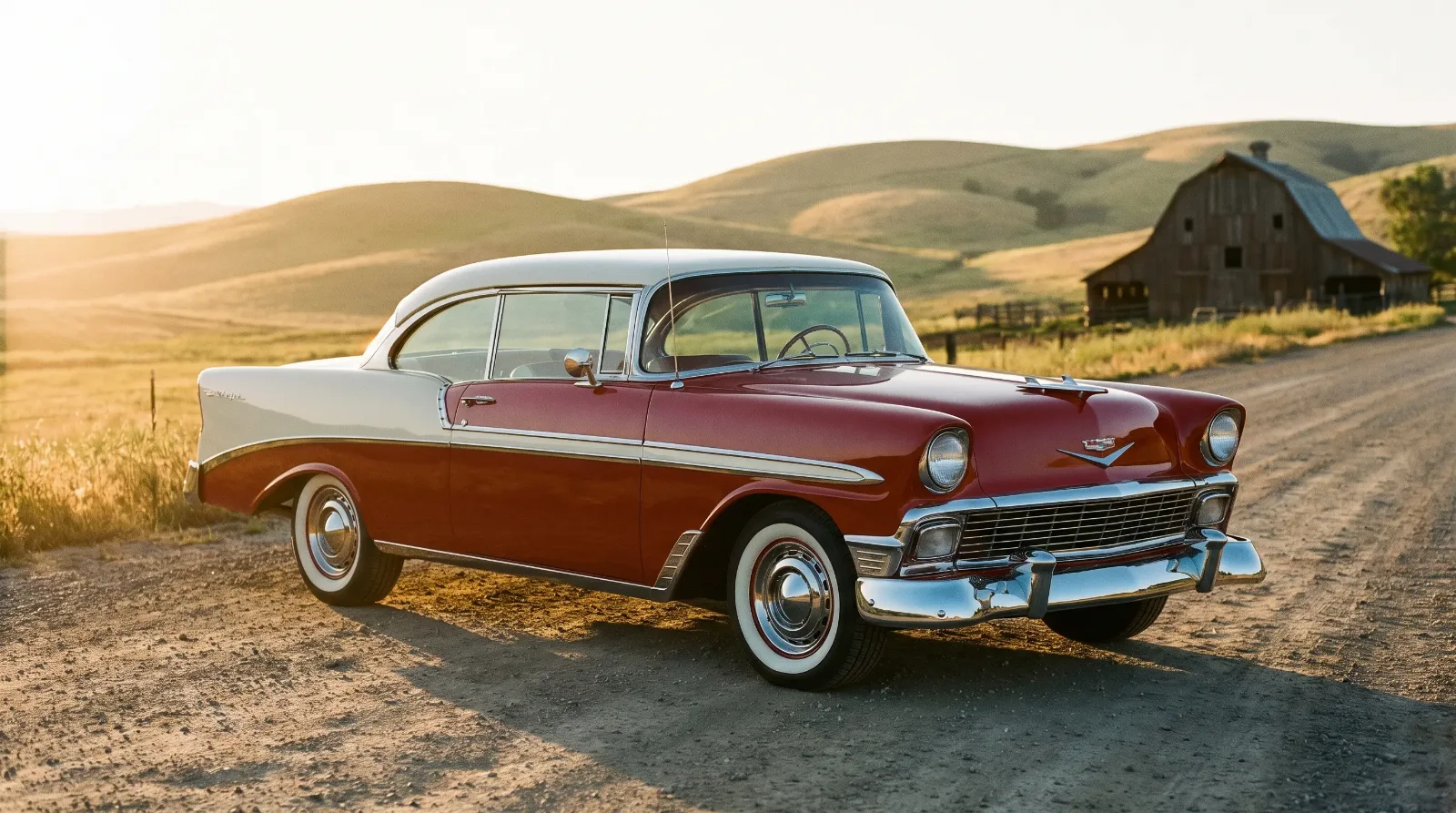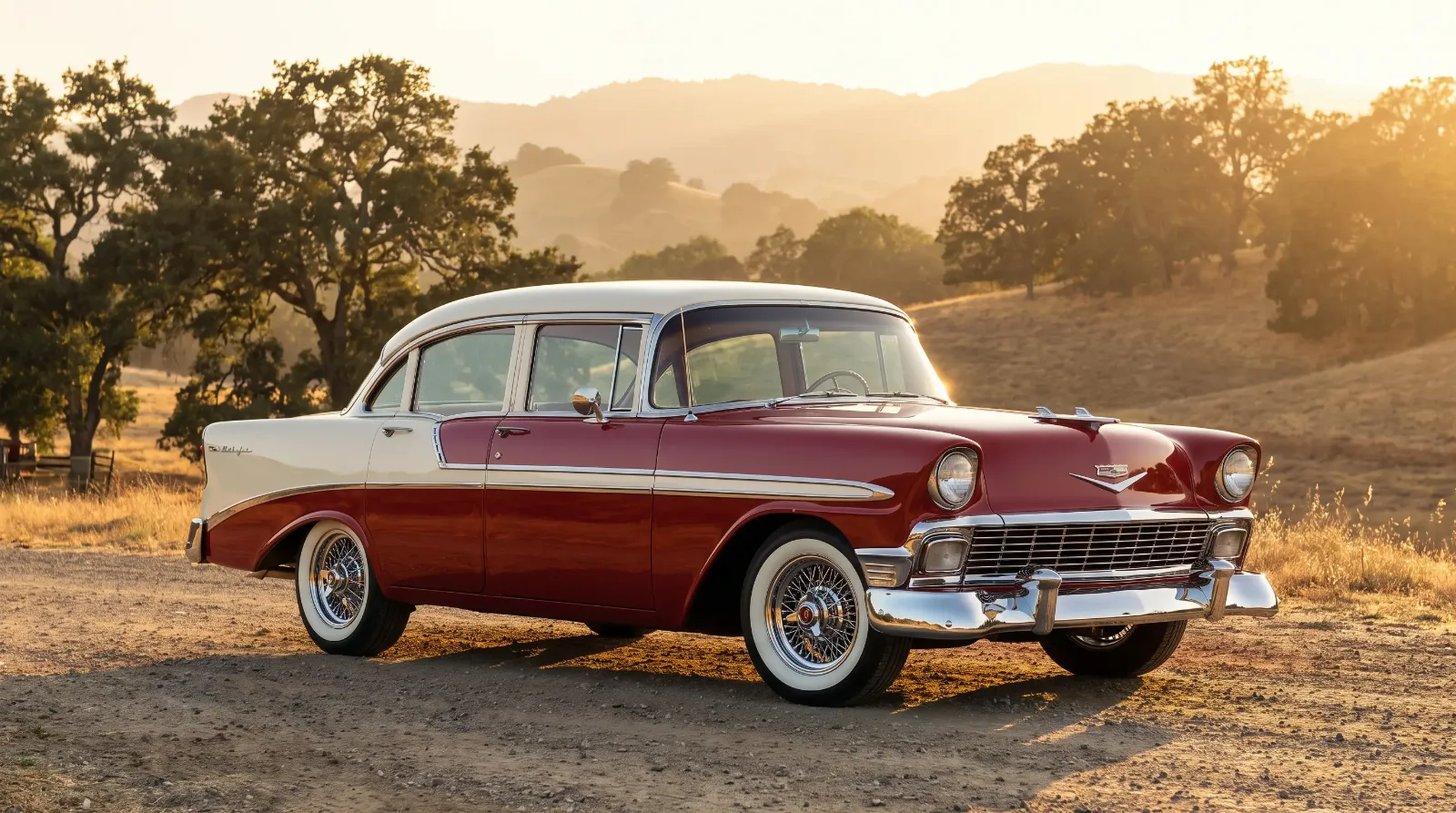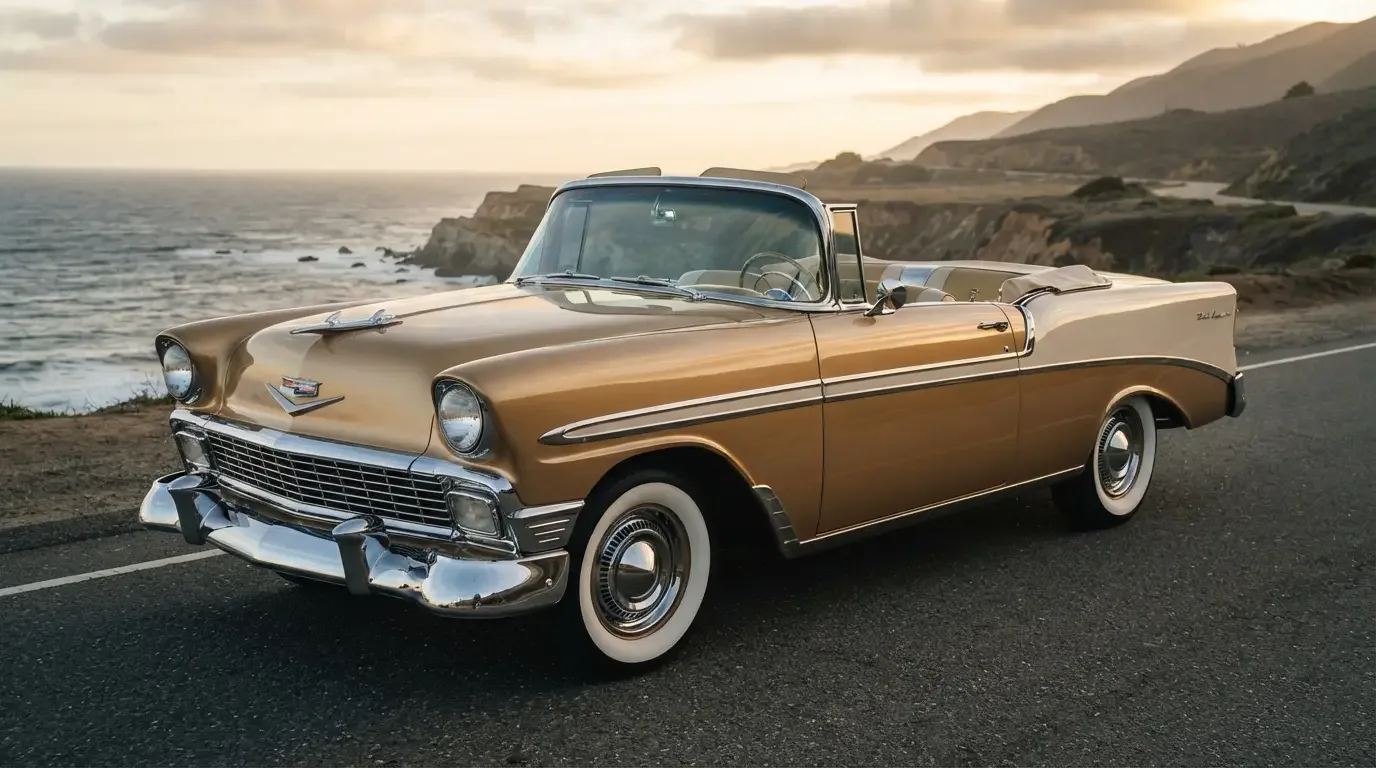
Chevrolet's stylists spent 1955 defending a new face and spent 1956 correcting it. The narrow grille on the debut Tri-Five had flanking panels of body color that some dealers reported buyers found thin for a top-line car, and the division's designers went back to the drawing board rather than let a strong redesign carry a weak point into its second year. The result was the 1956 bel air grille, a full-width chrome treatment that stretched the entire nose of the car and gave it a presence the first year never quite had.
Reading the change against the factory record
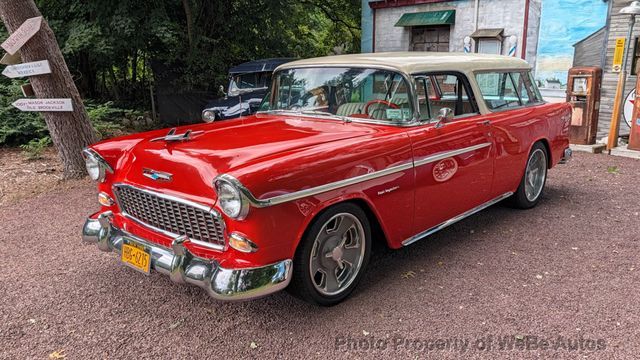
The 1955 Bel Air's front end used a comparatively restrained grille set between painted panels, a design choice that fit the car's overall theme of clean, uncluttered lines. It photographed well and it aged well, but next to the fuller-width fronts competitors were fielding, it read as slightly modest for a car marketed at the top of Chevrolet's lineup. Internal styling records and period dealer commentary point to that gap as the reason the 1956 revision went as far as it did rather than settling for a minor trim update.
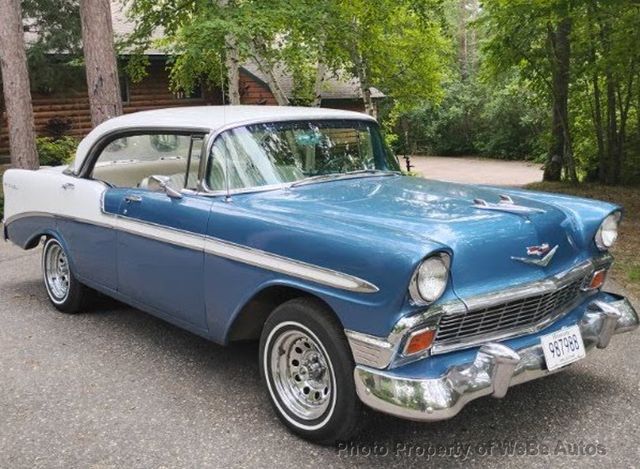
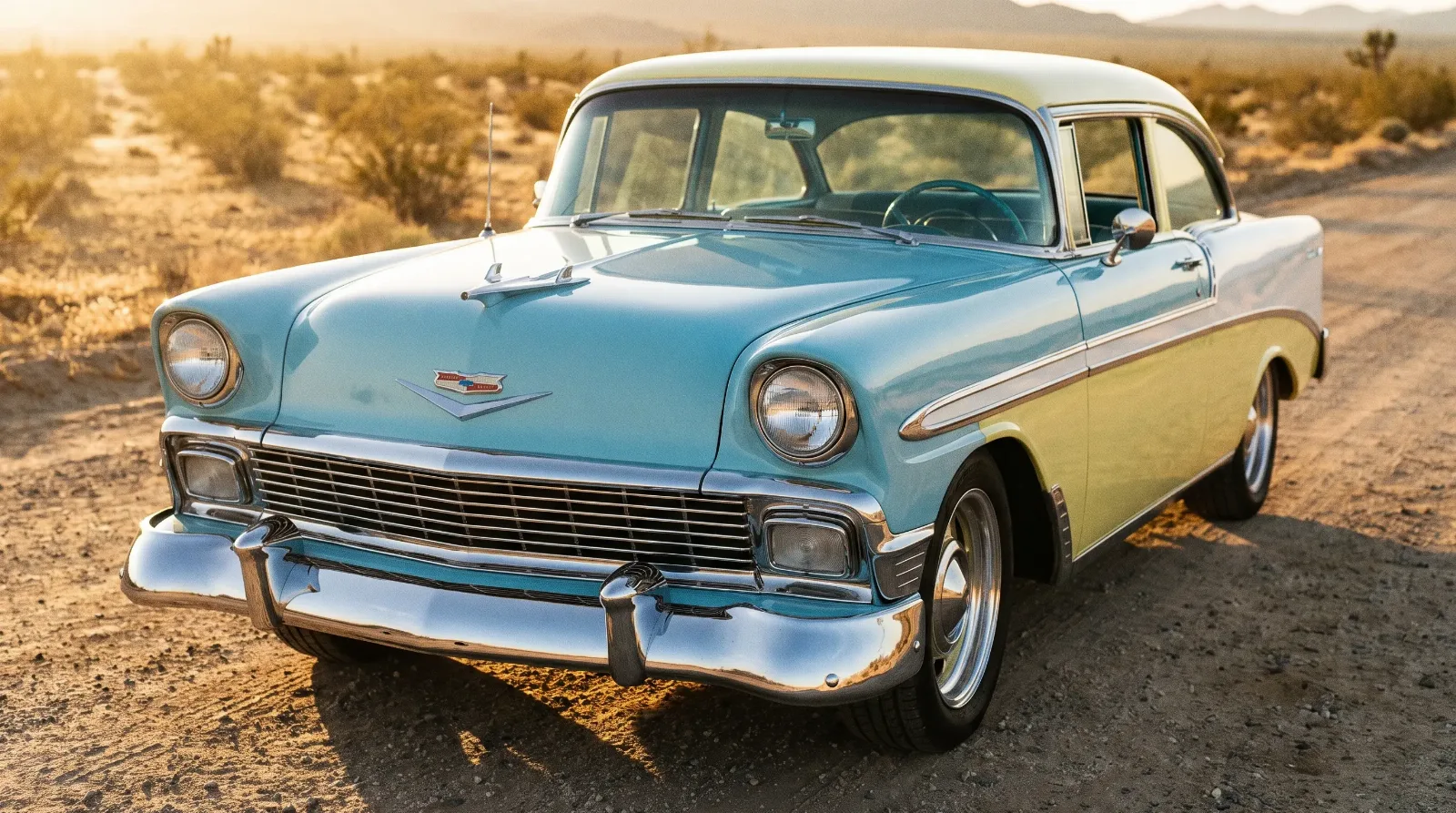
The 1956 grille filled the entire width of the nose with a heavier concentration of chrome, incorporating the parking lights into the design in a way the 1955 car had not. The change was not subtle, and it was not meant to be. Chevrolet wanted the second-year Tri-Five to look like a deliberate evolution rather than a running change, and the front end was the clearest place to make that statement. Anyone comparing the two years side by side, which we cover directly in a related story, will find the grille is usually the fastest way an untrained eye tells the cars apart.
Production and identification notes
For collectors and buyers doing visual identification work, the full-width grille is the single most reliable marker separating a 1956 Bel Air from its 1955 sibling at a glance, more reliable than trim level or interior details that varied more between individual cars than between model years. The grille bar itself carried horizontal chrome elements that differ in detail from both the 1955 car before it and the 1957 car that followed, meaning a correctly sourced replacement grille matters for anyone documenting a car to original specification.
Parts records from the period and the aftermarket support that specificity. Reproduction grilles built for the 1956 model year are not interchangeable with 1955 or 1957 pieces despite superficial similarity, and a car wearing the wrong year's grille is an easy tell for anyone doing a careful pre-purchase inspection. This is a detail that matters more to judged concours entries than to casual buyers, but it is worth knowing regardless, since a mismatched grille often signals other non-original repairs on the same car.
Why the redesign worked commercially
The proof that the grille change succeeded is in the sales figures. Chevrolet did not lose momentum going into 1956, and the Bel Air line continued selling in the hundreds of thousands across its body styles. A styling revision that alienated existing buyers or confused the car's identity would have shown up in softer numbers, and that is not what the factory records show. The full-width grille gave the car a more substantial, established look without asking Chevrolet to redesign the platform underneath it, which is precisely the kind of low-risk, high-payoff change a successful mid-cycle refresh is supposed to deliver.
It also positioned the Bel Air more directly against costlier competitors on showroom floors. A wider, more heavily chromed face read as a more expensive car at a glance, even though the mechanical underpinnings and price point had not moved dramatically. That perception shift, delivered largely through sheet metal and trim rather than engineering, is a case study in how much a front-end revision can do for a car's market position when the rest of the package is already sound.
| Attribute | 1955 front end | 1956 front end |
|---|---|---|
| Grille width | Narrow, flanked by body color | Full-width chrome |
| Parking lights | Separate from grille bar | Integrated into grille design |
| Overall reading | Clean, understated | Wider, more substantial |
| Part interchange | Not compatible with 1956 | Not compatible with 1955 or 1957 |
"People sometimes assume the full-width grille was the flashy choice and the 1955 face was the honest one. The factory record tells a plainer story. Dealers wanted a car that looked like it belonged at the top of the lineup, and the styling studio gave them one. That is not flash, that is a business decision."
- Tom Ramirez
The rest of the front-end changes that get overlooked
The grille draws the attention, but it did not arrive alone. Chevrolet also revised the hood ornament and the placement of the Bel Air script for 1956, small details that rarely make it into casual descriptions of the redesign but matter to anyone documenting a car down to the trim level. The bumper design was updated as well, with guards that read heavier than the 1955 pieces, reinforcing the wider, more substantial impression the grille itself was built to create. None of these secondary changes would carry much weight on their own, but taken together with the grille they form a coherent design update rather than a single isolated fix.
That coherence is worth noting because it separates a well-executed refresh from a car that simply got a new grille bolted onto an unchanged front clip. Chevrolet's stylists treated the whole nose of the car as one problem to solve, and the factory record backs that up in how consistently the new elements were specified together on the assembly line rather than mixed and matched. A 1956 car that somehow carries a mismatched combination of front-end parts is very likely the product of later parts-bin repair work rather than anything that left the factory that way.
What it means for today's buyers
For anyone shopping either model year, the grille is a useful shorthand but not a substitute for checking a car's actual documentation. A correctly sourced reproduction grille on a 1956 car is a normal, acceptable repair. A grille from the wrong model year, or a heavily modified example wearing custom trim, is a different situation and worth flagging in any inspection. Buyers who understand the design history behind the change are simply better equipped to evaluate what they are looking at, whether that is confirming a car's model year at a glance or catching an inconsistency a casual look would miss.
The full-width grille remains one of the clearest, most photogenic examples of how Chevrolet handled a mid-cycle refresh in the 1950s, correcting a minor weakness without disturbing what already worked. Readers wanting the complete account of that second Tri-Five year, styling and mechanical changes together, can find it in our 1956 chevy bel air history, and buyers ready to compare real examples can look at current Airs for sale now to see how the grille reads on a car in person rather than in a catalog photo.