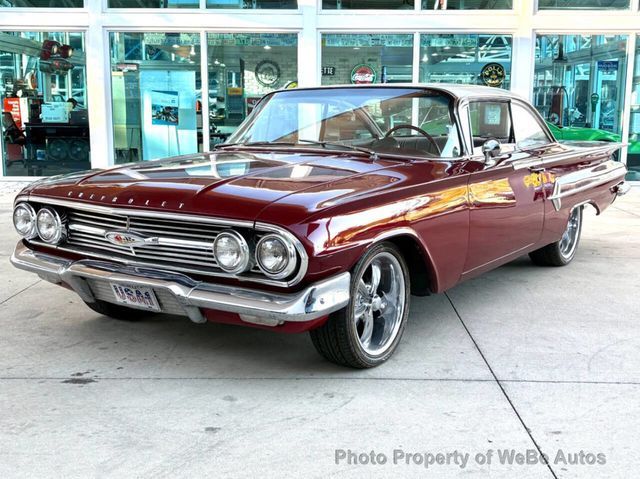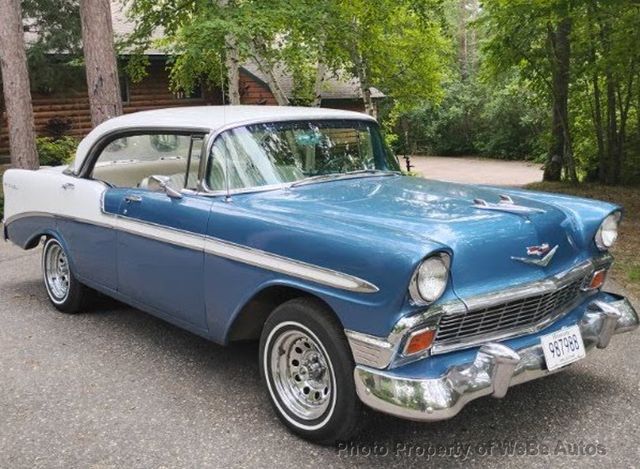
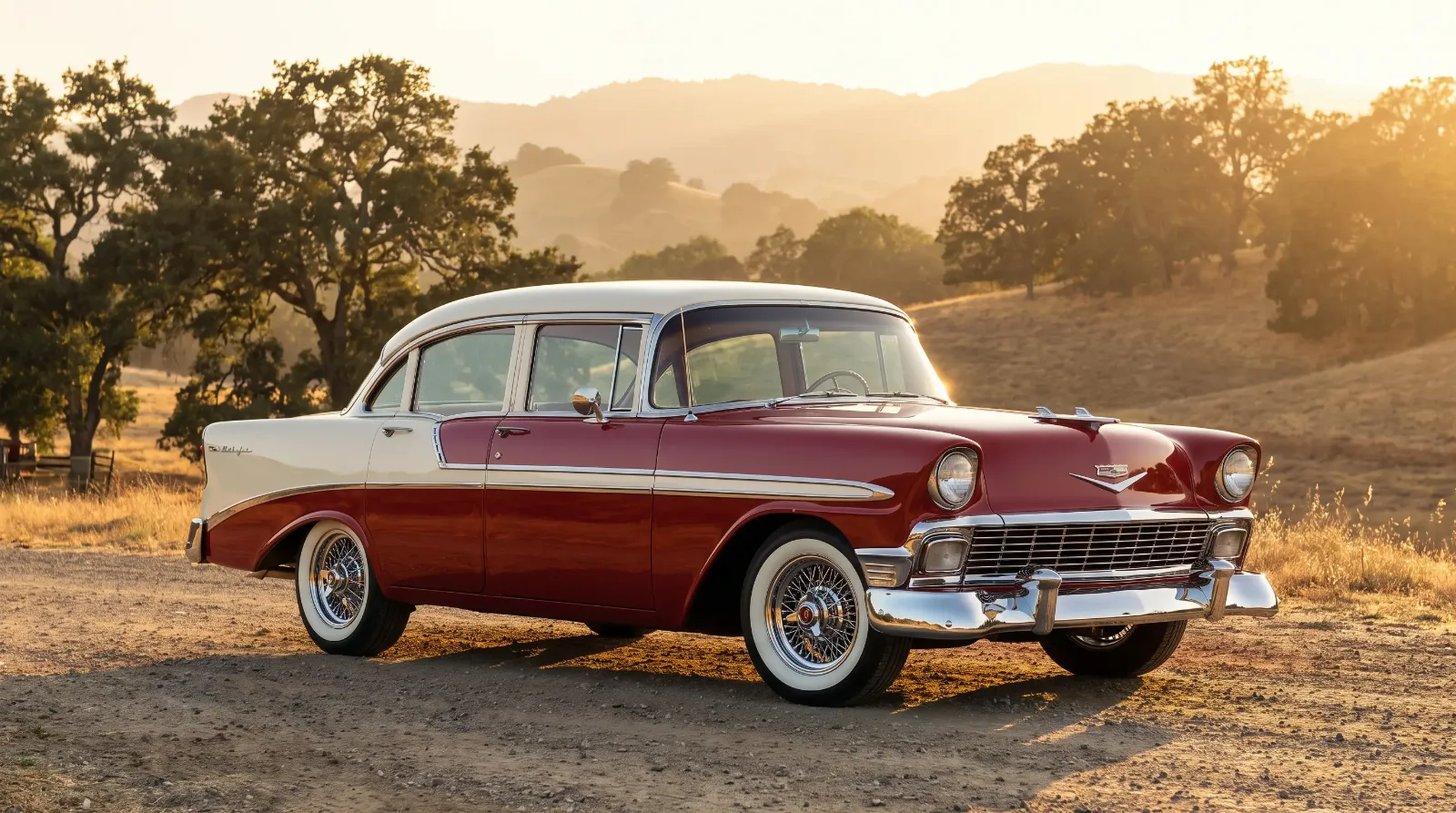
A trained eye can date a Tri-Five Chevrolet at fifty paces, but the reasoning behind that snap judgment deserves more care than most casual glances give it. The question of 1955 vs 1956 bel air is not a single answer but a list of specific, documentable changes, some visible from across a parking lot and some that only reveal themselves under close inspection. Treating the two years as interchangeable, as some general histories do, does a disservice to what Chevrolet's engineers and stylists actually accomplished between one model year and the next.
The front end, the easiest tell
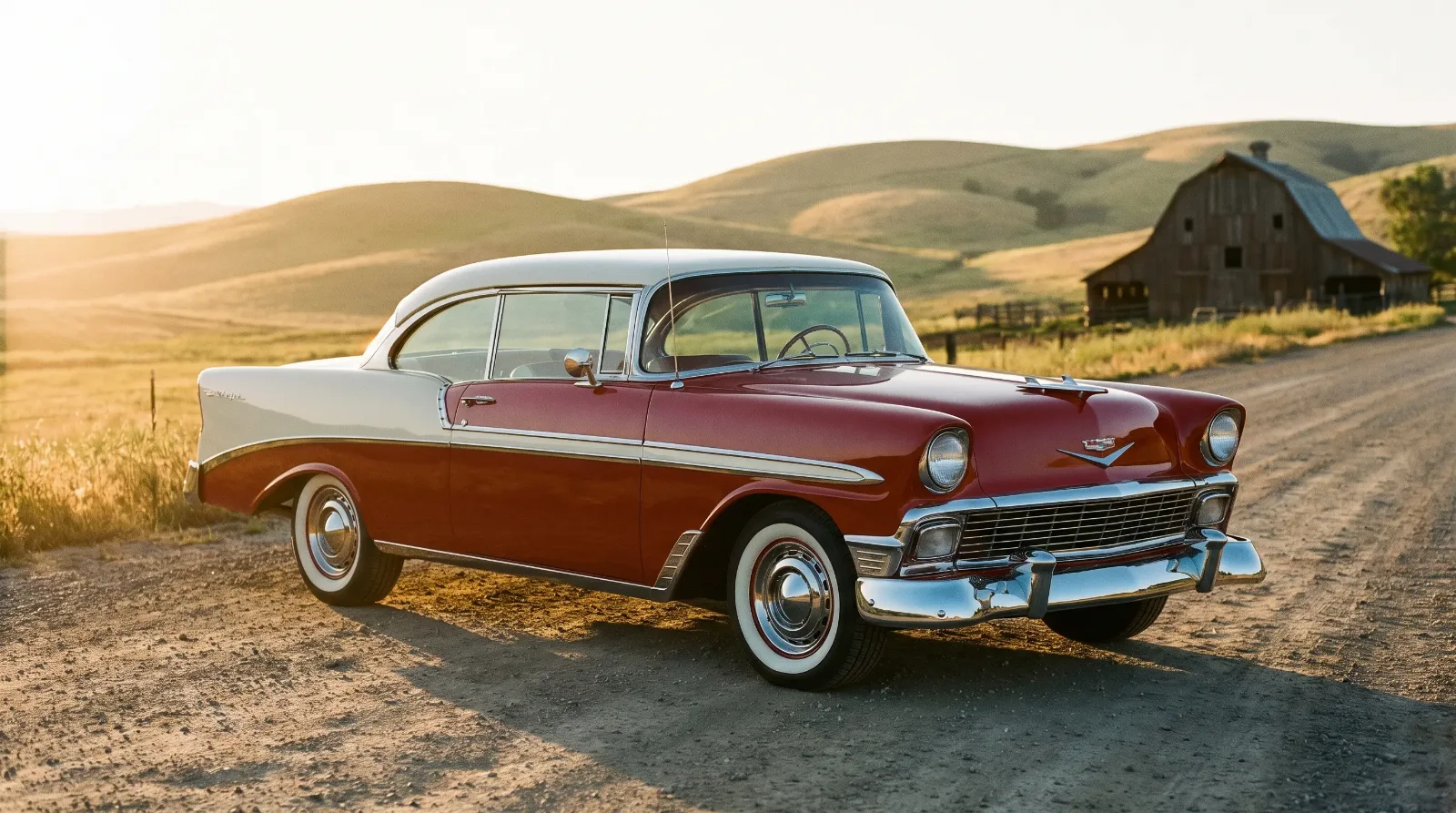
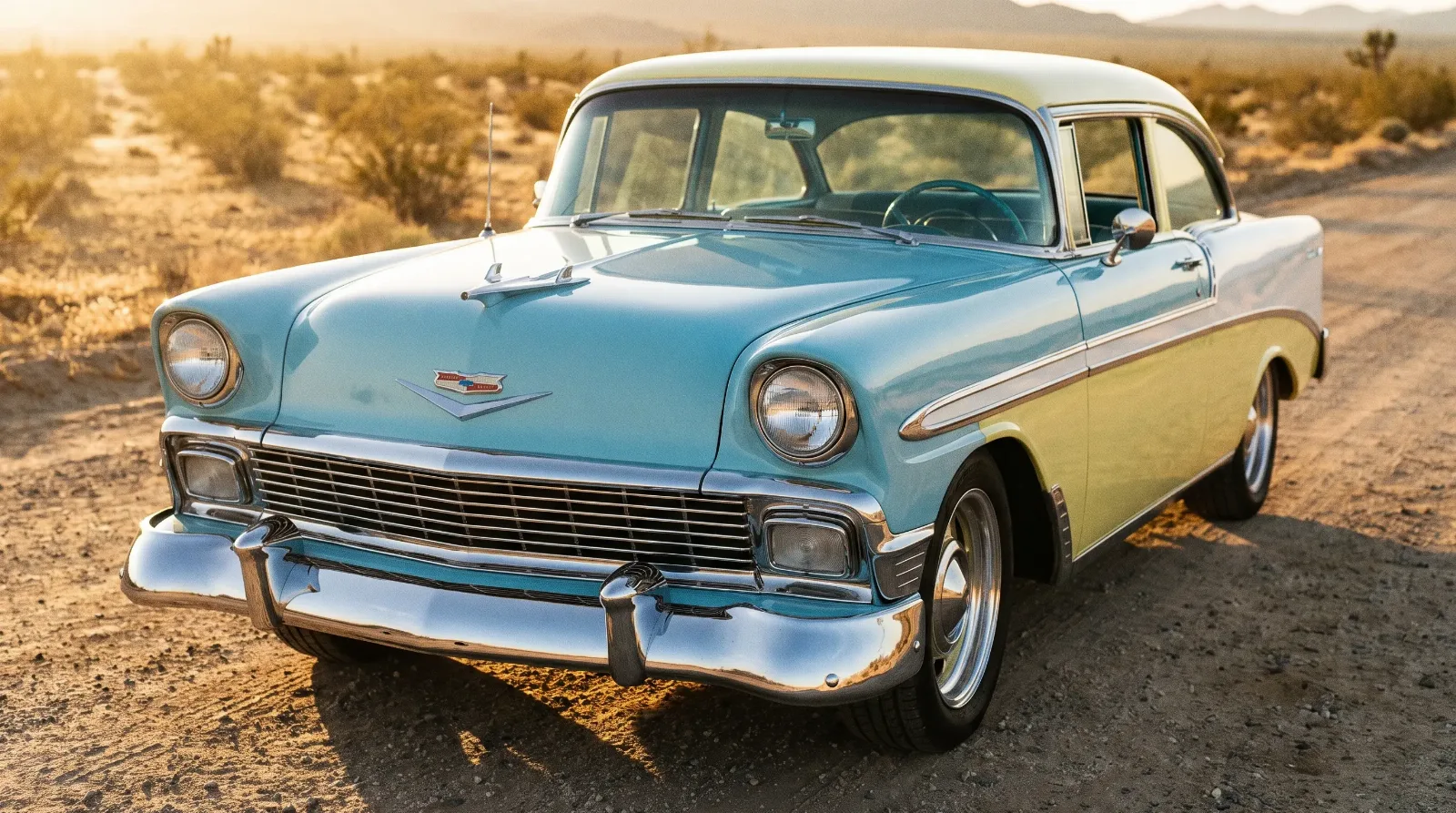
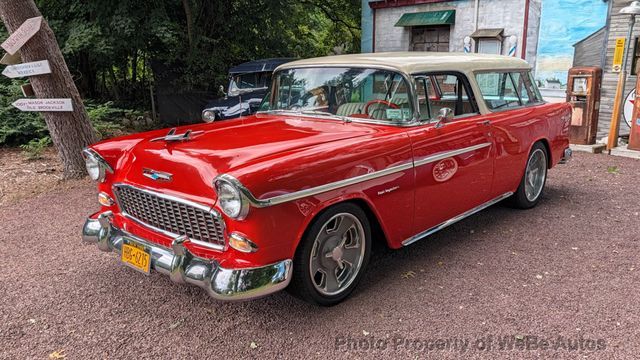
The most immediate difference sits at the nose of the car. The 1955 Bel Air carries a narrower grille flanked by painted body panels, a restrained treatment consistent with the car's overall clean-sheet design language. The 1956 model replaced that with a full-width chrome grille that filled the entire front of the car and incorporated the parking lights into its design. This single change accounts for the majority of quick model-year identifications made by casual observers, and it remains the most reliable single point of reference for anyone dating a car from a photograph rather than an inspection.
Behind that visible difference sits a documented styling decision, not an incidental variation. Chevrolet's stylists revisited the front clip specifically because the narrower 1955 treatment read as understated next to costlier competitors, and the correction was deliberate enough to touch the hood ornament and bumper detailing along with the grille itself.
Side trim and the arrival of true two-tone
The second major distinction runs along the flanks of the car. Both years offered two-tone paint, but the 1956 model introduced a reworked chrome side spear that swept back from the front fender and dropped down along the rear quarter, creating a defined panel that factory color schemes were built to fill. The 1955 treatment was simpler and less pronounced. Collectors documenting a car's originality pay close attention to this trim, since reproduction pieces exist for both years but are not interchangeable between them despite superficial similarity.
This is also where three-tone paint schemes became viable in a way the 1955 body did not as readily support, and period color charts for 1956 reflect that expanded palette. A car wearing an authentic three-tone combination is almost certainly a 1956 or later model rather than a 1955, a useful shorthand for anyone trying to date an unbadged car from a period photograph.
The body style Chevrolet added
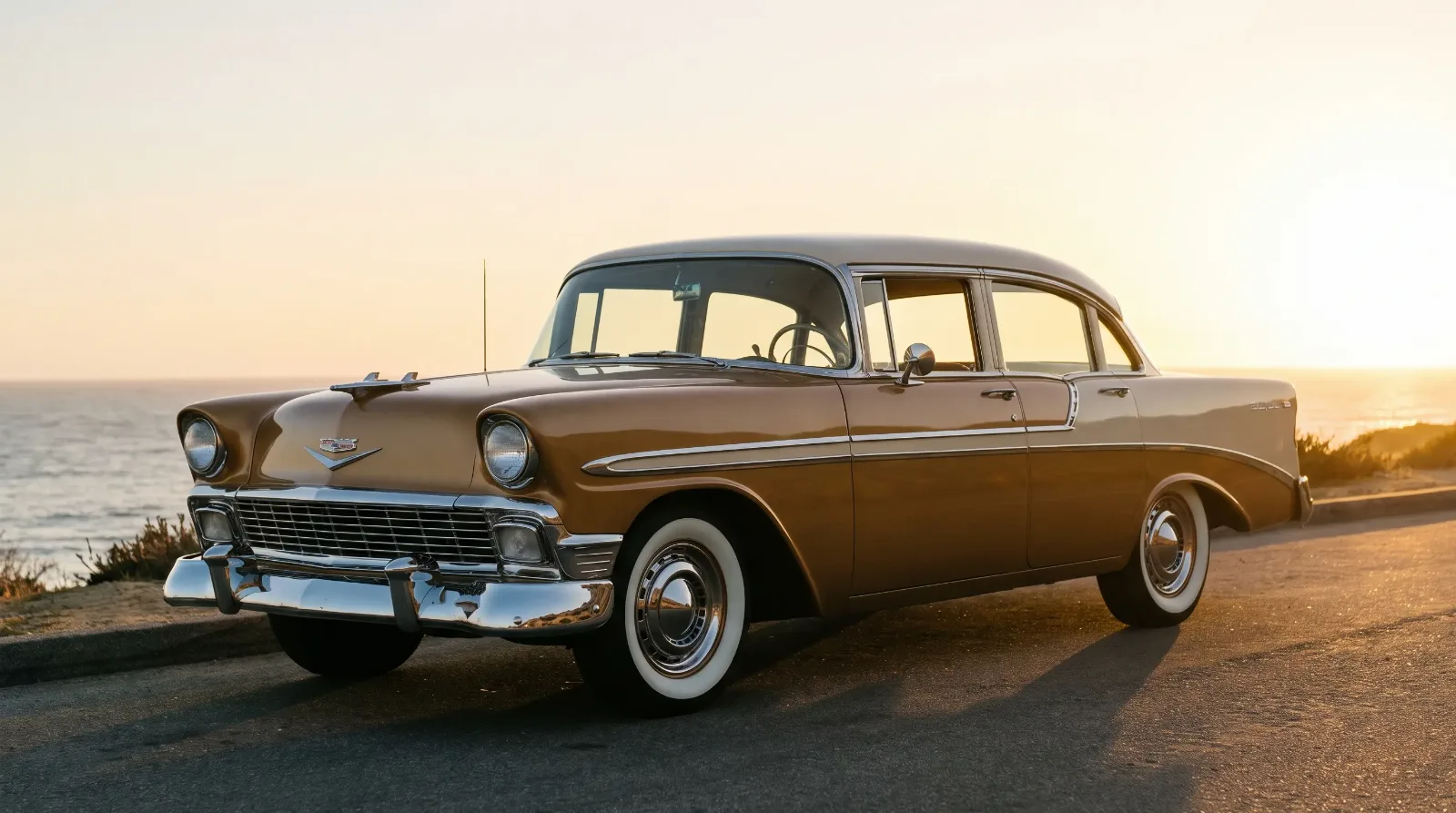
Beyond trim, 1956 brought a genuine addition to the lineup that 1955 did not offer: the Sport Sedan, a four-door pillarless hardtop that gave family buyers the open-window look of a hardtop coupe with the practicality of rear doors. No equivalent existed in the 1955 range, which limited its pillarless body style to the two-door Sport Coupe. This is not a trim detail but a genuine expansion of what the Bel Air line offered, and it reflects Chevrolet responding to demand for the hardtop silhouette across more of its buyers, not just the two-door crowd chasing a sportier image.
Mechanical continuity with a documented power increase
Under the hood, the story is one of continuity rather than replacement. The 265 cubic inch V8 introduced in 1955 carried into 1956 largely unchanged in its fundamental architecture, but Chevrolet increased the output available from its top configurations across the model year, a documented step in the engine's development rather than a marketing claim without engineering behind it. The base six-cylinder Blue Flame engine also continued into 1956 for buyers who prioritized economy over the V8's growing performance reputation.
Readers who want the granular detail on exactly how the power figures moved between the two years, and what that meant for buyers cross-shopping the engines, will find a dedicated account of it in a companion piece on the period's horsepower race. For the purposes of this comparison, the relevant point is that the powertrain evolved incrementally while the body underwent a more deliberate visual correction, two different paces of change happening within the same two-year window.
| Element | 1955 | 1956 |
|---|---|---|
| Grille | Narrow, body-color flanked | Full-width chrome |
| Side trim | Simpler two-tone spear | Reworked spear, three-tone capable |
| Four-door hardtop | Not offered | Sport Sedan introduced |
| 265 V8 | Introduced, base and Power Pack tunes | Carried over, higher-output tunes added |
"Cataloguing these cars properly means resisting the shortcut of treating 1955 and 1956 as near-twins. The build records, the trim part numbers, and the body style offerings all diverge in ways that matter to anyone documenting a car to its correct year, not just to someone dating it by eye."
- Sarah Whitfield
Interior details that separate the two years
Inside the cabin, the differences are less dramatic than the exterior changes but still documentable. Upholstery patterns and available color combinations shifted between the two model years, tracking the same expanded palette that reached the exterior two-tone options. Dashboard trim details and the specific chrome accents used on the instrument cluster surround also differ in ways that period brochures and factory parts catalogs record precisely, even though the overall dashboard layout carried over largely unchanged from 1955 into 1956.
Steering wheel design saw a modest revision as well, part of the same broader effort to give the 1956 car a slightly more finished, less austere feel than its predecessor without touching the fundamental architecture underneath the sheet metal. None of these interior points draw the attention that the grille or the Sport Sedan body style do, but for a restoration aiming at strict period accuracy, getting the smaller details right is what separates a correct car from one that merely looks close enough.
Why the distinction matters to buyers and restorers
For a restorer, confusing the two years in parts sourcing is a common and costly mistake. Grilles, side trim, and several smaller brightwork pieces are specific to their model year despite looking similar enough to fool an inexperienced buyer at a swap meet. Confirming a part against its correct year before installation, rather than assuming interchangeability, saves both money and the frustration of a fitment that never quite looks right.
For a buyer, understanding what genuinely changed between the two years, rather than treating them as cosmetically identical Tri-Five variants, makes it possible to evaluate a car's originality with real confidence, and it also makes conversations with sellers and fellow owners considerably more productive, since vague year-agnostic descriptions tend to fall apart the moment someone asks a specific question about grille width or trim spear shape. Readers wanting the complete year-by-year account of the 1956 model, styling and mechanical changes together, can find it in our complete history, and anyone ready to compare the two years on real cars in person can browse and find a classic Air currently on the market.