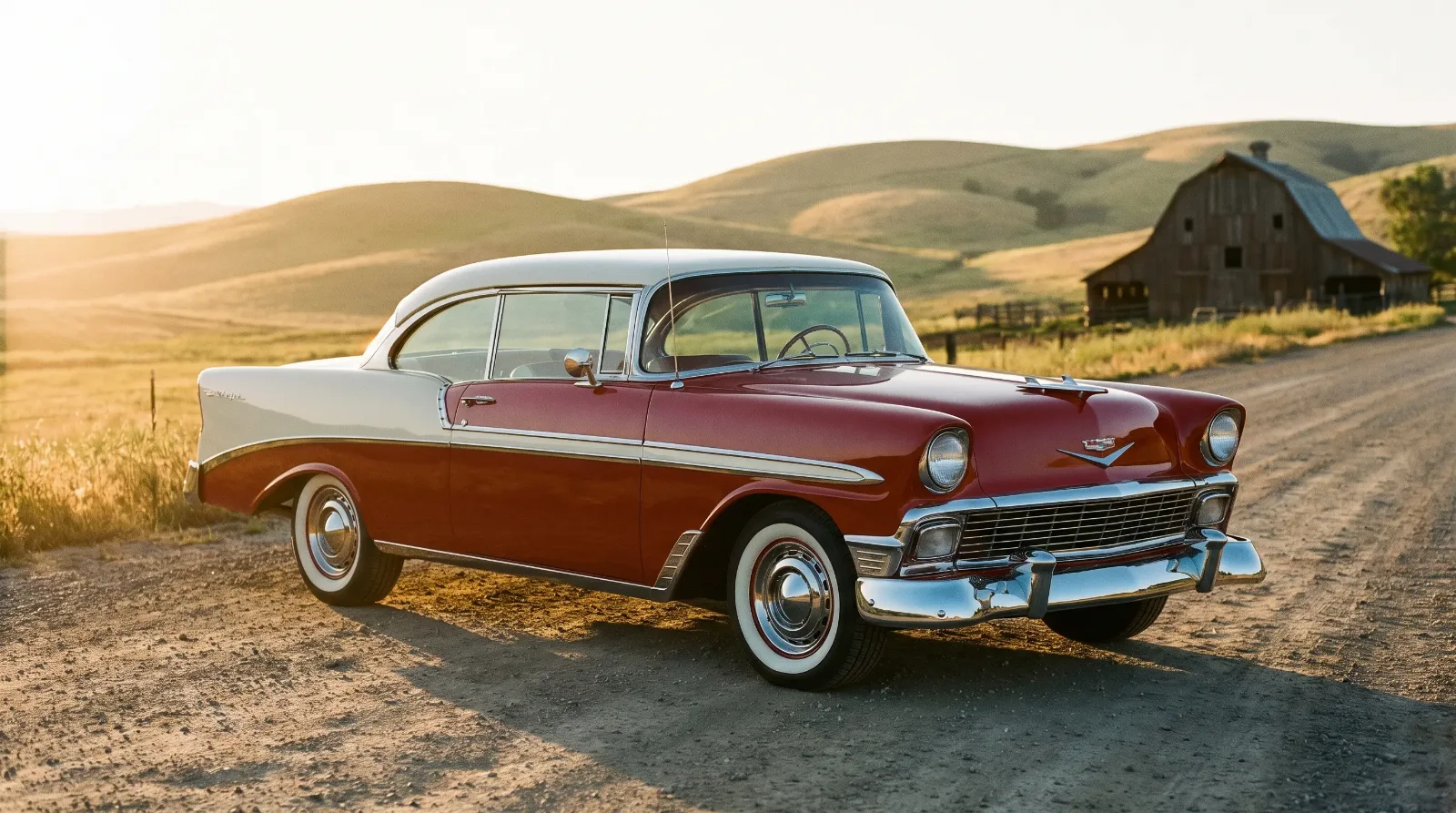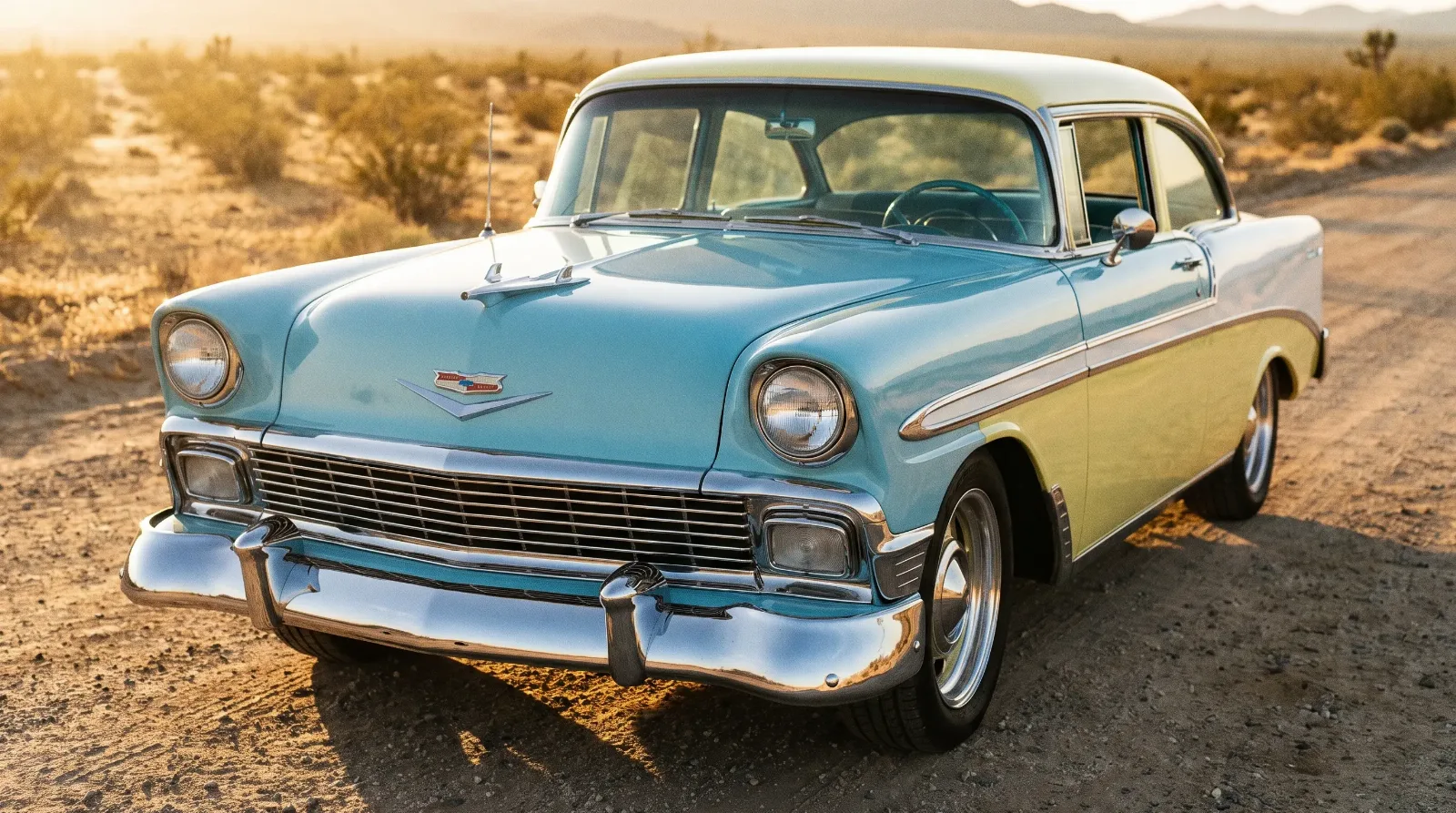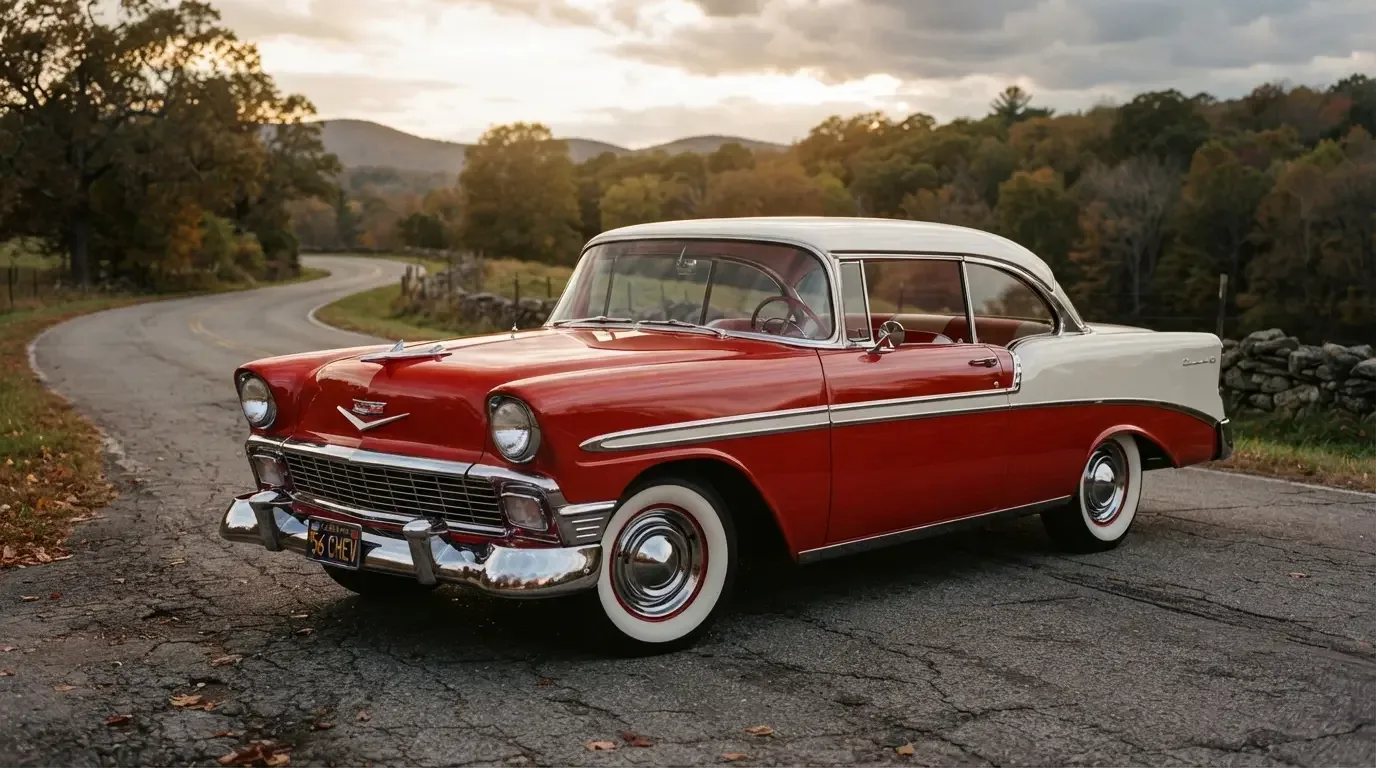
Collecting a 1956 Bel Air is a data problem before it is a nostalgia problem. The car has real, trackable value patterns across auction results and private sale data, and those patterns tell a more useful story than the general sense that "old Chevys are worth something now." If you are approaching this model year as a collector rather than a sentimental buyer, the numbers deserve as much attention as the chrome.
Body style drives value more than almost anything else
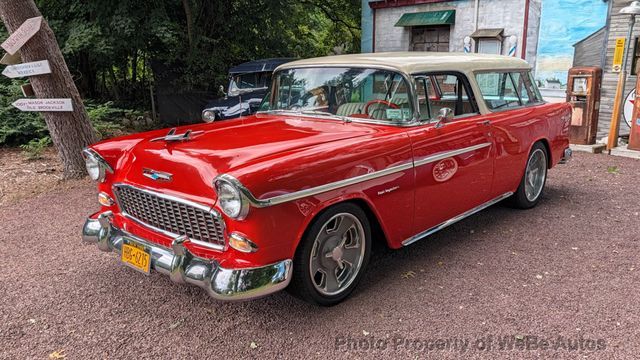
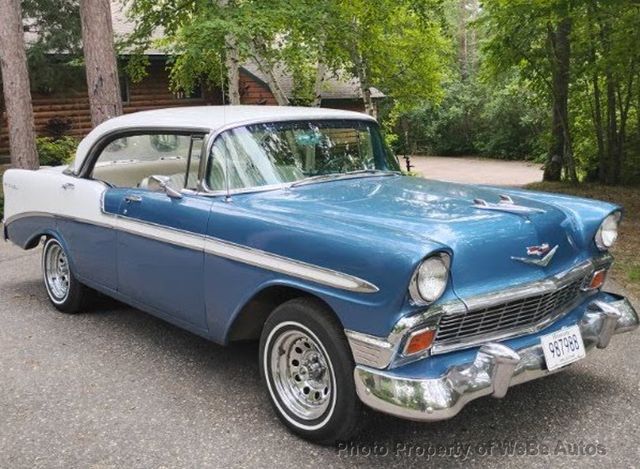
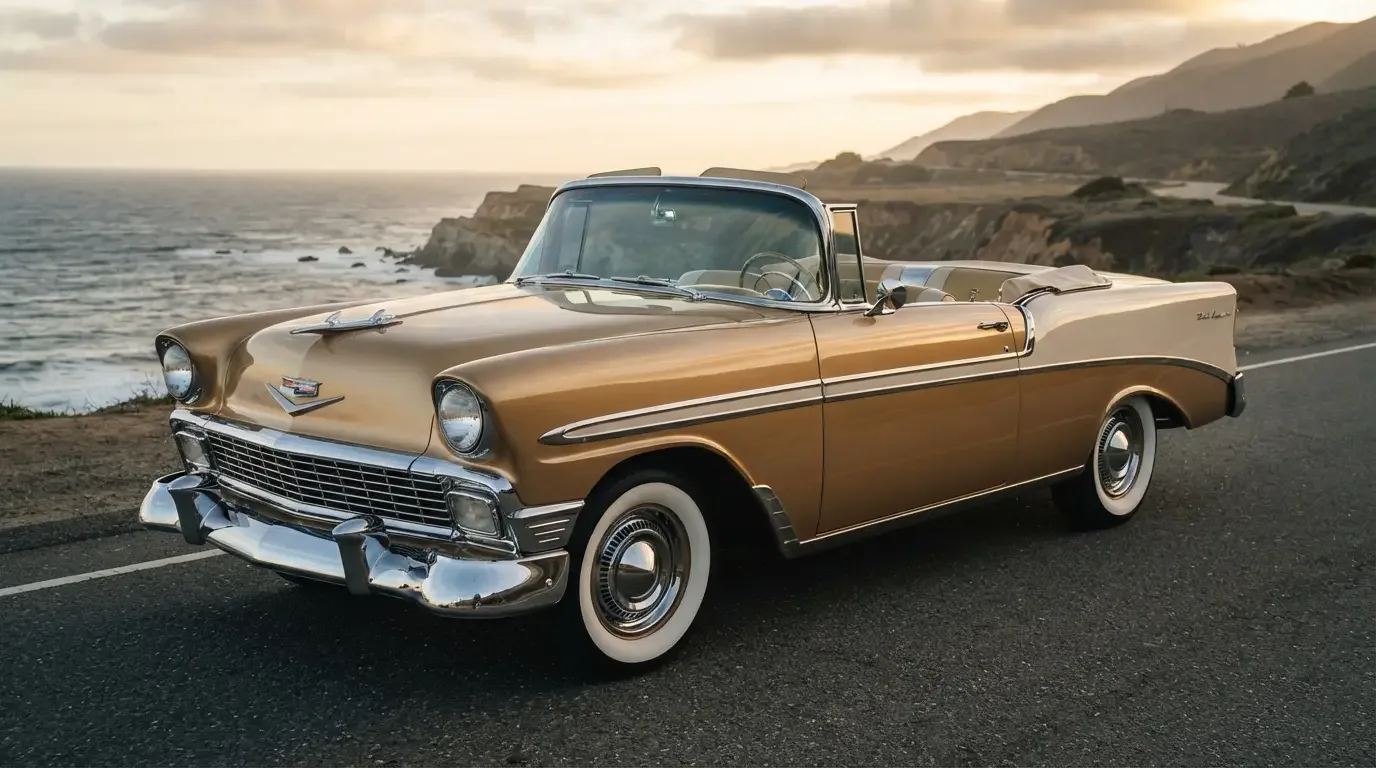
Across recent auction cycles, the 1956 Bel Air Nomad wagon and the convertible consistently command the highest prices, often by a wide margin over the Sport Coupe hardtop, which itself sells well above the two-door and four-door sedans. This is not a subtle gradient. A well-documented Nomad or convertible in strong condition can sell for multiples of a comparably conditioned sedan, and that gap has widened rather than narrowed as low-production body styles have become harder to find in original, unmolested condition.
Buyers who prioritize investment potential over daily usability should weight body style heavily in their search, understanding that sedans, while historically significant and often better values for actual driving enjoyment, are unlikely to appreciate at the same rate as the rarer body styles regardless of how well they are restored or maintained.
Condition and originality set the ceiling
Condition grading matters more for a 1956 Bel Air than for many later collector cars because the population still includes genuine survivor examples alongside heavily restored cars and outright resto-mods. A numbers-matching, factory-correct example with strong documentation reliably outperforms a nicer-looking car with an unverified history or replaced drivetrain, particularly at the upper end of the market where serious collectors are buying provenance as much as they are buying a car.
Originality claims should be treated skeptically until verified against the body tag and any available factory documentation. A seller's description of "numbers matching" or "all original" carries no independent verification value on its own, and the price premium attached to those claims is significant enough that misrepresentation, intentional or not, happens regularly in this market.
Regional and seasonal patterns worth tracking
Auction results for 1956 Bel Airs show some regional variance tied to where the strongest collector interest for Tri-Five Chevrolets concentrates, and timing within a given auction season can also move results meaningfully. Marquee auction events tend to produce stronger prices for top-tier examples than smaller regional sales, though the gap narrows for mid-condition cars where the buyer pool is less specialized and less willing to pay an event premium.
| Body style | Relative value position | Key value driver |
|---|---|---|
| Nomad wagon | Highest | Original production scarcity |
| Convertible | Very high | Original production scarcity |
| Sport Coupe hardtop | Moderate to high | Styling and body style desirability |
| Two-door sedan | Moderate | Solid entry point, good parts availability |
| Four-door sedan | Lowest | High original production volume |
"A 1956 Bel Air's price tells you exactly one thing for certain: what someone else was willing to pay for that specific car on that specific day. Everything else you have to verify yourself."
- David Mercer
The buy case, plainly stated
My actual take, having tracked this segment across multiple auction cycles, is that a documented, numbers-matching 1956 Bel Air in a mid-tier body style, meaning a Sport Coupe or a well-optioned two-door sedan, currently represents better relative value than chasing a Nomad or convertible at the top of the market. The upper tier has already been discovered by serious money. The mid-tier has not, fully, and that is where a disciplined buyer still finds room between purchase price and honest value.
For background on the model year these value patterns sit within, our complete history covers the styling and production context that underpins why certain body styles carry the premiums they do. And if the numbers here have you ready to shop rather than just read, you can browse classic Air listings and apply this same framework to what is actually available.
A note on downside risk
Every collector segment has downside risk, and 1956 Bel Airs are not immune. A misrepresented restoration, an unverified numbers-matching claim, or a body style bought purely on emotional appeal without regard to comparable sales data are the three most common ways buyers overpay in this market. None of those risks are unique to this car, but the price spread between body styles makes the consequences of getting it wrong larger here than in more homogeneous collector segments.
How liquidity varies by body style
Liquidity is a factor that gets less attention than headline price in most classic car discussions, but it matters just as much to a serious buyer. A Nomad or convertible at the top of the market sells to a smaller, more specialized pool of buyers, which can mean a longer time to sale even when the eventual price is strong. Sedans and two-door coupes, by contrast, move through a broader buyer pool more quickly, which is part of why they represent a more liquid, if less spectacular, position for a collector who values the ability to exit a position without waiting for exactly the right buyer to surface.
This liquidity difference should factor into any purchase decision alongside pure price appreciation potential. A buyer who needs to be able to sell reasonably quickly, for whatever reason, is generally better served by a body style with a deeper and more active buyer pool, even if the headline appreciation numbers for rarer body styles look more attractive on paper.
Financing and insurance also behave differently across this spread. Agreed-value policies on the top-tier body styles typically require more extensive documentation to underwrite at the values these cars now command, while sedans and coupes move through standard classic car insurance channels with less friction. Buyers new to the collector market sometimes underestimate how much this administrative layer affects the real cost of ownership at the upper end, and it is worth pricing into any comparison between a Nomad purchase and a comparable spend spread across two or three lower body-style examples instead.
Documentation as a value multiplier
Across every body style, the single factor that most consistently separates strong results from disappointing ones at auction is documentation depth. Build sheets, original bills of sale, verified ownership chains, and period photographs all compound to support a price premium that a comparable but undocumented car cannot command, regardless of how good it looks in person. This is not a new phenomenon in the collector car market broadly, but it is worth stating plainly for 1956 Bel Air buyers specifically, because the model year's relative lack of mainstream attention compared to 1955 and 1957 means fewer buyers are actively demanding this level of documentation, which creates both a risk and an opportunity depending on which side of the transaction you are on.