Production numbers get thrown around loosely in the classic car world, and the 1956 Bel Air suffers from that more than most because it sits between two more famous siblings, the 1955 that started the Tri-Five story and the 1957 that closed it with tailfins and legend. The actual factory record for 1956 is worth pulling apart carefully, because the common shorthand people repeat at swap meets does not always match what General Motors documented at the time.
Where the 1956 Bel Air was actually built
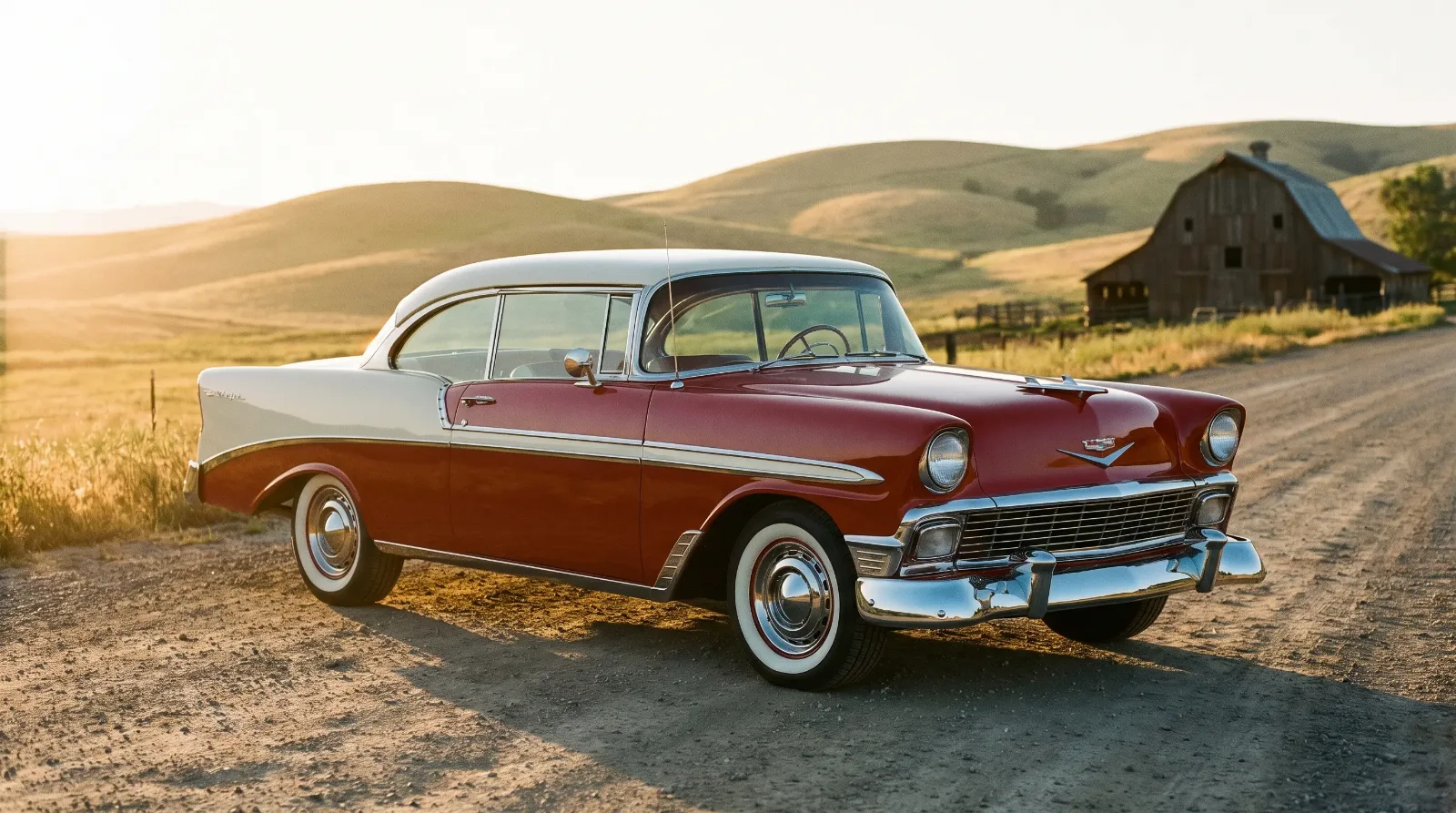
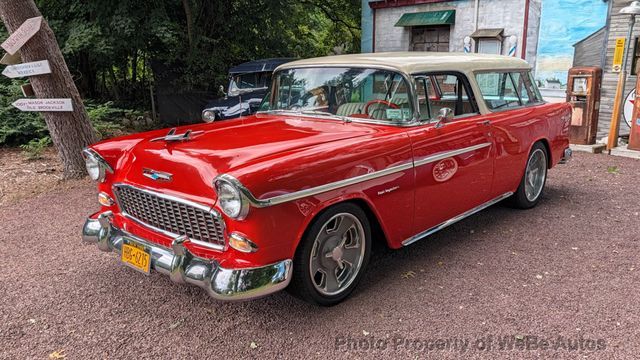
Chevrolet built the 1956 model year across multiple assembly plants in the United States, a standard practice for the division given the volume it needed to move. Flint, Michigan handled a significant share, alongside additional plants that ran Chevrolet passenger cars that year including facilities in California, Georgia, and other regional locations set up specifically to reduce shipping costs on finished vehicles. The body style breakdown for Bel Air in 1956 included the four-door sedan, the two-door sedan, the Sport Coupe hardtop, the convertible, and the Nomad wagon, each produced in different volumes that reflected what American buyers actually wanted that year rather than what collectors chase today.
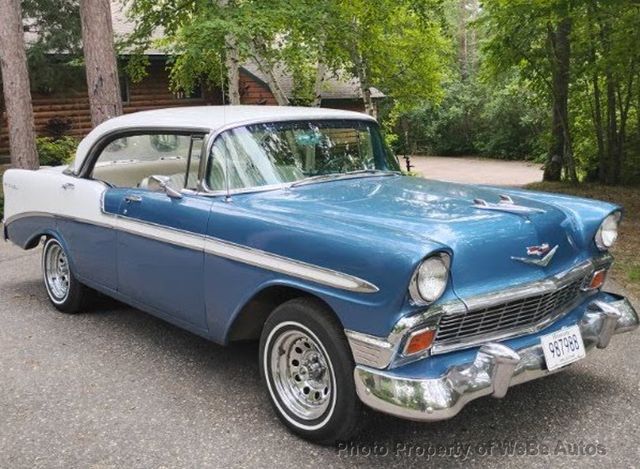
The Sport Coupe and the four-door sedan were the volume sellers. The convertible and the Nomad were always the smaller-production body styles, which is exactly why they carry outsized value now relative to how many were actually sold new. A buyer in 1956 shopping for basic family transportation was far more likely to drive home in a sedan than a Nomad, and the production spread reflects that ordinary reality rather than anything resembling today's collector priorities.
Engine and equipment mix
Chevrolet offered the 1956 Bel Air with a range of engines starting with the base inline six and extending through several V8 configurations, including performance-oriented options that Chevrolet marketed aggressively that year as the division pushed into the horsepower race other manufacturers were already fighting. The exact production split between six-cylinder and V8 cars, and between the various V8 output levels, was not tracked with the granularity modern researchers would prefer, so any specific figure quoted for a particular engine and trim combination should be treated as an informed estimate rather than a confirmed factory count.
Reading a body tag against the production record
For anyone trying to verify a specific 1956 Bel Air against factory records, the body tag remains the primary source, listing the assembly plant, body style, trim level, and paint and interior codes assigned to that individual car. Cross-referencing a body tag against known plant codes and production date ranges is standard practice for anyone doing serious documentation work, and it is far more reliable than relying on family history or a previous owner's recollection, both of which tend to drift over decades.
| Body style | Relative production volume | Collector demand today |
|---|---|---|
| Four-door sedan | High | Moderate |
| Two-door sedan | High | Moderate |
| Sport Coupe hardtop | Moderate to high | Strong |
| Convertible | Low | Very strong |
| Nomad wagon | Lowest | Very strong |
That inverse relationship between original production volume and current collector demand is not unique to 1956, but it is especially pronounced in this model year because the Nomad and convertible were always intended as image cars for the showroom floor rather than high-volume sellers. Chevrolet built enough of them to have one on the lot to draw attention, not enough to make them common.
Why 1956 gets undercounted in the bigger Tri-Five story
Total Chevrolet output for the 1956 model year was strong, continuing the sales momentum the division built with the redesigned 1955 body, but the specific narrative around the year gets compressed in most retellings that jump straight from "1955 introduced the small-block V8 revolution" to "1957 got the fins and became the icon." That compression does 1956 a disservice, because the model year represents Chevrolet at a genuine production and engineering peak, refining what worked in 1955 without yet reaching for the more aggressive styling changes of 1957.
"People remember 1955 for what it started and 1957 for how it ended. 1956 is the year the factory actually had the whole thing figured out, and the production numbers back that up."
- Tom Ramirez
For the whole picture on how 1956 fits into the broader Bel Air story, the full retrospective covers styling and market context alongside these production details. And if the factory numbers have you curious what a genuine 1956 Bel Air actually looks like in person, you can shop classic Air listings currently available.
What this means for documentation-focused buyers
Anyone buying a 1956 Bel Air with an eye toward its historical significance should prioritize verified production data over marketing shorthand. Ask for the body tag, ask which plant built the car, and treat any specific engine-mix percentage quoted without a cited factory source with appropriate skepticism. The 1956 model year has real, well-documented production history behind it. It just requires actually consulting the record instead of repeating what the last seller said.
How plant assignment affected build details
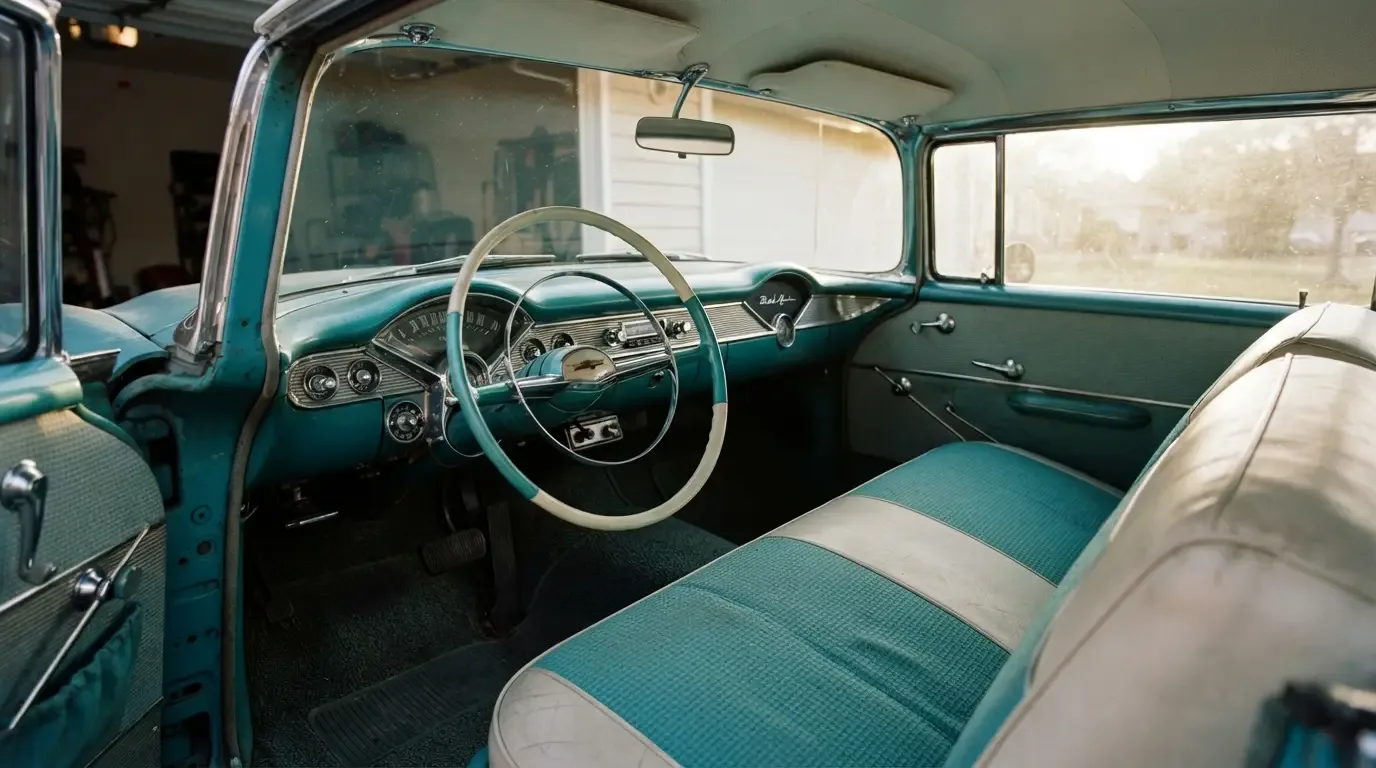
Assembly plant location was not a purely administrative detail. Different plants sourced certain components regionally where practical, and minor build variations, down to details like specific supplier stampings on interior hardware, can sometimes be traced to a particular facility once a researcher has enough comparative examples to establish a pattern. This is painstaking work, more the province of dedicated marque historians and long-running club research projects than something an individual buyer typically undertakes, but it is worth knowing this level of documentation exists for anyone whose interest in a specific car goes beyond ordinary ownership.
The plant code stamped into the body tag remains the starting point for any of this research, and cross-referencing that code against known Chevrolet plant designations for the 1956 model year is a straightforward first step available to any owner with access to reference material published by marque-specific clubs and historical societies. These organizations have done considerable work over the decades compiling and verifying plant codes, production date ranges, and known build variations, work that individual researchers benefit from without needing to replicate it from scratch.
Comparing 1956 output to the years around it
Total Chevrolet production for 1956 remained strong relative to the industry, continuing the sales momentum built by the redesigned 1955 body, though it did not match the sales peak the division would reach later in the decade. Understanding 1956's output in context, rather than in isolation, helps explain why the model year's specific production figures are sometimes cited inconsistently across different secondary sources. Some figures reported in older enthusiast literature reflect total Chevrolet division output across all series and body styles, while others isolate Bel Air specifically, and conflating the two produces the kind of inflated or deflated numbers that circulate at swap meets without much scrutiny.
Sources and notes
- Classic Industries: 1955-57 Chevy Bel Air, 210, and 150 Production Numbers
- Wikipedia: Chevrolet Bel Air
- Conceptcarz: 1956 Chevrolet Bel Air
- Automobile Catalog: 1956 Chevrolet Bel Air Sport Coupe specs
- Hagerty Valuation Tools: 1956 Chevrolet Bel Air
- Trifive.com: Tri-Five Chevrolet owners forum and reference