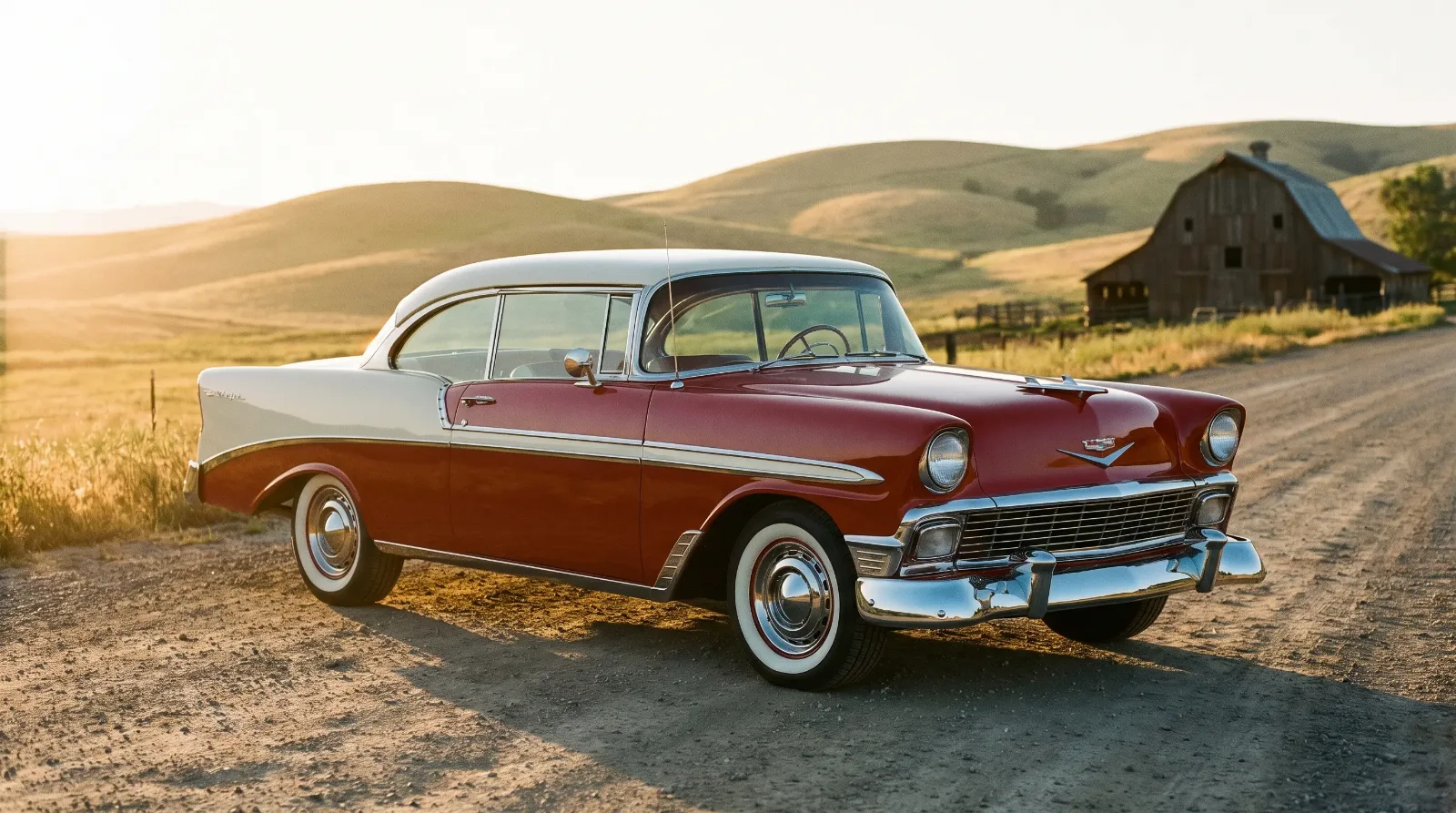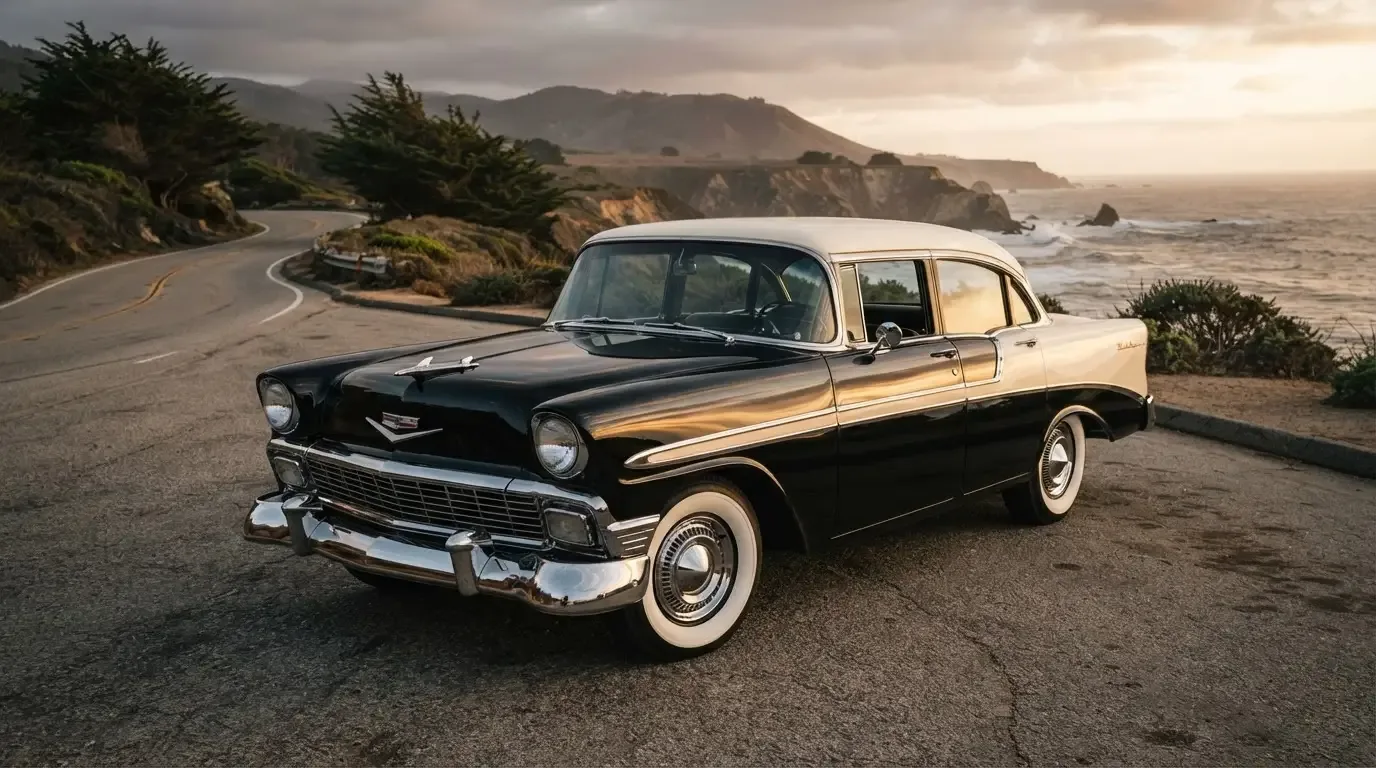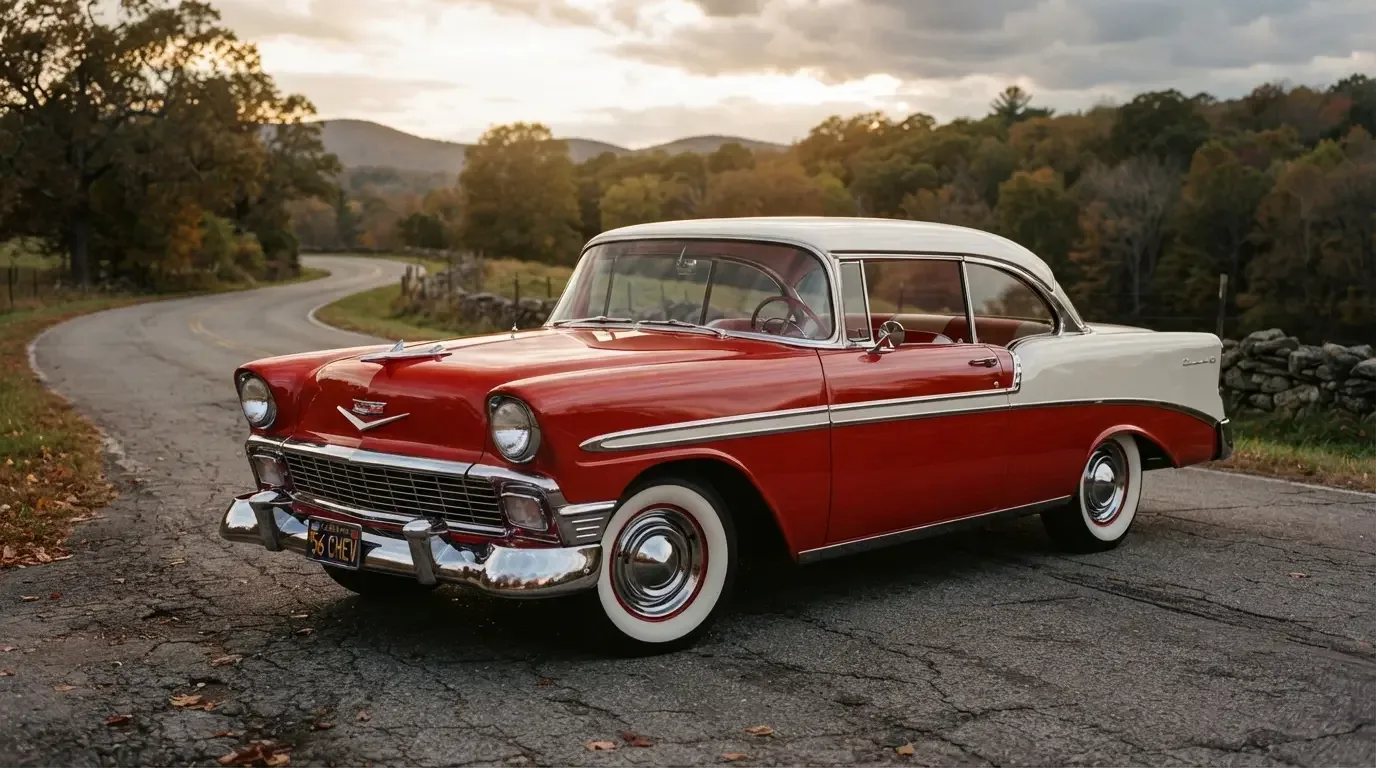
The Pikes Peak International Hill Climb has been testing American machinery against gravel switchbacks and thin mountain air since 1916, and by the mid-1950s it had become one of the few venues where Detroit's newest sedans faced a genuinely public, genuinely uncontrolled proving ground. A 1956 Chevrolet climbing that mountain was not a factory-sanctioned publicity stunt in the way later manufacturer efforts would be. It was closer to independent competitors and regional dealers proving, in front of a paying crowd, that Chevrolet's new V8 could do more than sell family sedans.
Why Pikes Peak mattered to a mid-fifties Chevrolet
Chevrolet's reputation heading into 1956 rested heavily on the small-block V8 introduced the previous year, an engine that had already reoriented how the division marketed performance. Pikes Peak offered something a dealership brochure could not: an uncontrolled, public demonstration of what that engine and the Bel Air's chassis could survive over twelve and a half miles of unpaved switchbacks climbing more than four thousand vertical feet to a summit above fourteen thousand feet. Altitude alone punished engines of the period, thinning the air enough that naturally aspirated power dropped noticeably before a car ever reached the technical sections near the top.
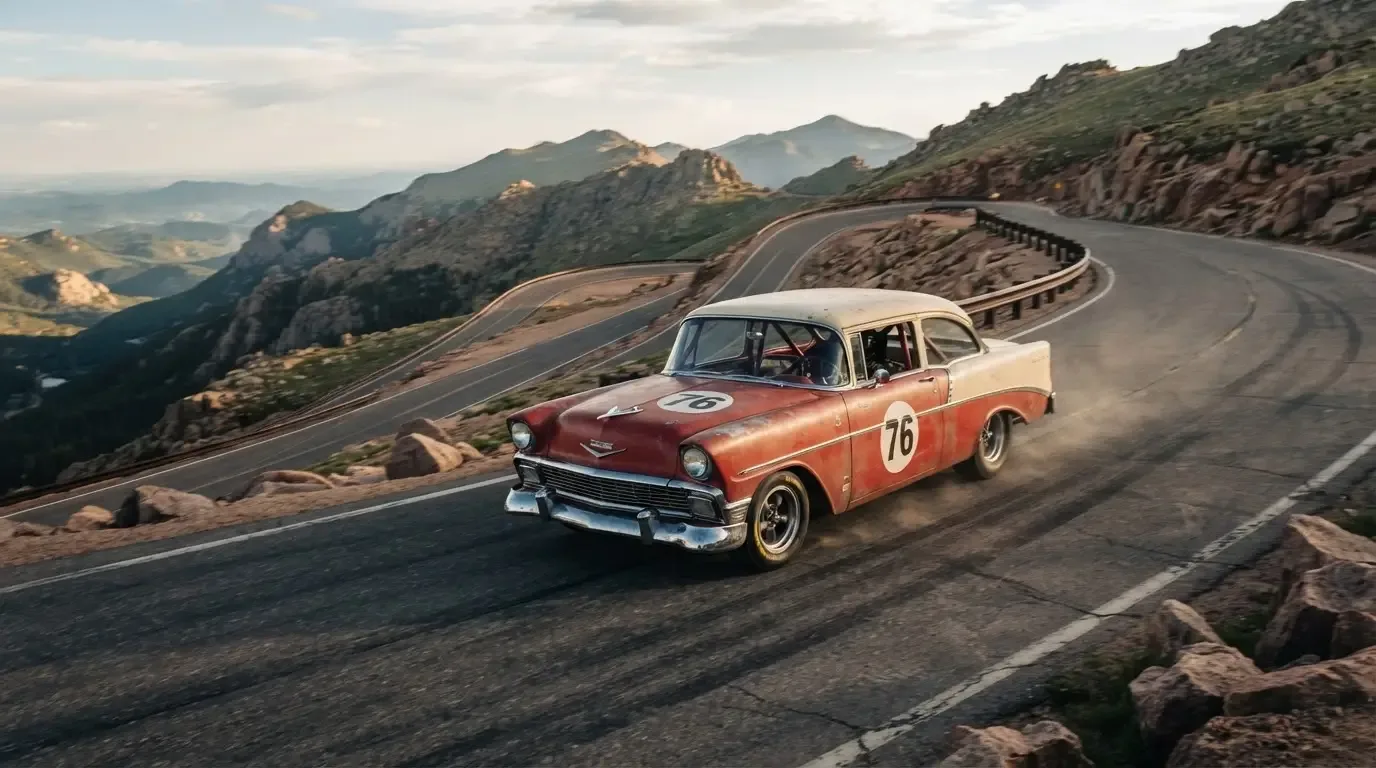
Competitors running Chevrolets at Pikes Peak in this era were largely privateers and regional racers rather than a factory-backed team in the way later manufacturers would organize hill climb efforts. That distinction matters for anyone researching the period. The 1956 Chevrolet's presence at the mountain reflects grassroots enthusiasm for what the small-block V8 made possible, not a coordinated Chevrolet marketing campaign the way, for example, later Pikes Peak programs from other manufacturers were structured. The clearest documented example from that year is Jerry Unser Jr., who drove a Chevrolet to victory in the Stock Car division on July 4, 1956, with a winning time of 16 minutes 8 seconds, the first stock car winner at the event since 1934.
What the mountain demanded of a 1956 chassis
Unlike a flat oval or a road course, Pikes Peak in this period was unpaved for most of its length, a gravel ribbon with no guardrail and a drop that punished any driver who misjudged a switchback. A production-based 1956 Chevrolet running that course was being asked to do something its factory engineers had not specifically designed for: sustained hard braking, prolonged climbing under load, and steering precision on a surface that shifted under the tires with every pass of other competitors. That a largely stock Bel Air chassis could survive the run, let alone compete for time, said something real about the platform Chevrolet had built, independent of whatever the sales brochures claimed.
The broader context of 1950s hill climb racing
Hill climbing occupied a different cultural space than oval track racing in the 1950s. It rewarded a car that combined power with control rather than pure top speed, and it drew a mix of serious competitors and genuinely amateur entrants in a way NASCAR's increasingly professionalized ovals no longer did by mid-decade. A 1956 Chevrolet at Pikes Peak represented that amateur, proving-ground spirit even as the car itself carried genuinely modern engineering for its era.
"Pikes Peak in this period asked a production car to do something no dealership test drive ever would, and a Chevrolet that survived the mountain earned a credibility no advertisement could manufacture."
- Sarah Whitfield
Documenting a competition history claim
For collectors and researchers, any claim that a specific surviving 1956 Chevrolet ran Pikes Peak deserves the same rigor applied to any competition provenance claim. Period photographs showing the car with a competition number, contemporaneous newspaper coverage of the event, and any surviving entry lists from the Pikes Peak organizing body are the categories of evidence worth pursuing before accepting a verbal history. Competition provenance adds real value to a car, which unfortunately also means it attracts more unverified claims than ordinary history does.
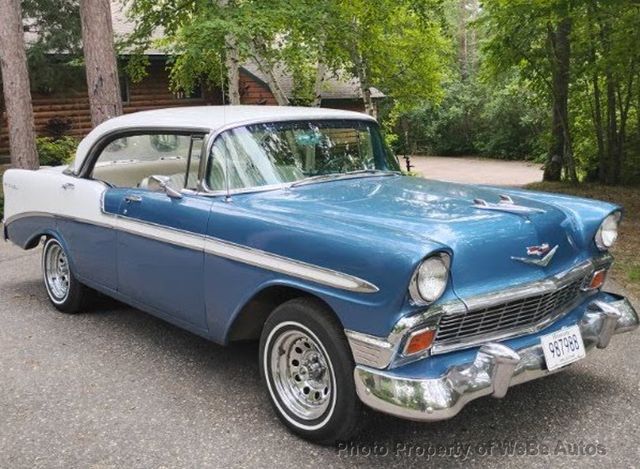
Anyone wanting the fuller context of the model year this story sits within should read the 1956 chevy bel air story, which covers the styling and market position of the car beyond its competition appearances. For the broader arc connecting 1956 to the rest of the Bel Air's run, the full story traces the nameplate across its entire classic era.
Why this history still matters to today's buyers
A 1956 Chevrolet with documented competition history, Pikes Peak or otherwise, occupies a different collector category than an ordinary example, and that distinction is worth understanding even for buyers with no interest in racing history themselves. Competition provenance shapes value, shapes the story a car can tell at a show, and shapes how carefully a prospective buyer should verify paperwork before purchase. If mountain roads and mid-century engineering have you curious about the cars themselves rather than just their history, there are classic Airs on the market today, none of which need to have climbed a mountain to earn a place in a serious collection.
The event's place in the broader hill climb tradition
Pikes Peak was already four decades old by 1956, having run continuously since 1916 with only wartime interruptions, and the Stock Car category that a production Chevrolet would have entered occupied a specific place in the event's structure alongside dedicated open-wheel racers built for nothing but the climb. This coexistence of purpose-built machinery and largely stock production cars on the same mountain, in the same event, is part of what made mid-century Pikes Peak such a distinctive proving ground. A manufacturer's engineering claims could be tested directly against the same conditions punishing far more specialized competition cars.
The altitude factor deserves particular attention for anyone trying to understand what a 1956 Chevrolet was actually up against. The summit sits well above fourteen thousand feet, and naturally aspirated engines of the period lost meaningful power as the course climbed, a problem modern forced-induction and electronic engine management have largely solved for today's competitors but one that mid-century drivers and mechanics had to work around through gearing and tuning choices made well before the green flag. A production-based Chevrolet running that course was not just fighting the road. It was fighting physics that its engineers back in Detroit had never specifically designed the engine to overcome.
Researching a specific car's claimed history
Beyond period photographs and newspaper coverage, regional historical societies and hill climb enthusiast organizations have in some cases compiled partial entrant records for mid-century Pikes Peak events, though coverage from the 1950s is considerably less complete than for later decades when the event began attracting more consistent media attention. A researcher pursuing a specific car's claimed history should treat these partial records as a starting point rather than a definitive source, cross-referencing wherever possible against multiple independent accounts before treating a competition claim as established fact.
What survives from a run like this
Cars that actually competed at Pikes Peak in the 1950s rarely came home unmarked. Gravel throw chipped paint, sustained braking cooked drum linings, and the sheer duration of a climb under load stressed components in ways an ordinary road trip never would. A restorer working on a car with a credible competition claim should expect to find, and ideally document before any repair work begins, evidence consistent with that history: period-correct patching, non-factory reinforcement in areas that would have taken abuse, or replaced components that match what a hill climb run of this kind would plausibly have worn out. The absence of any such evidence on a car claimed to have run the mountain is itself a data point worth weighing carefully.
None of this is meant to discourage genuine interest in a car's competition past. It is meant to encourage the same rigor toward a racing claim that a careful buyer would already apply to a paint code or an engine casting number. History that cannot be corroborated is still an interesting story. It simply should not be priced as documented fact.
Sources and notes
- Pikes Peak International Hill Climb: Jerry Unser Jr., 1956 Chevy Stock Car Winner
- Wikipedia: Pikes Peak International Hill Climb
- Pikes Peak International Hill Climb: History
- ChampCarStats: 1956 Pikes Peak Auto Hill Climb results
- Pikes Peak International Hill Climb: Historical Results Archive
- Wikipedia: Chevrolet Bel Air