Cabin materials rarely survive the way sheet metal does, which is why the 1956 Bel Air interior deserves closer archival attention than it typically gets. Paint can be matched from a chip on a fender that never saw sun. Vinyl, cloth, and the specific weave patterns Chevrolet specified for that single model year are much harder to trace once a car has been reupholstered even once, and most of them have been reupholstered at least twice by now.
What the factory actually specified
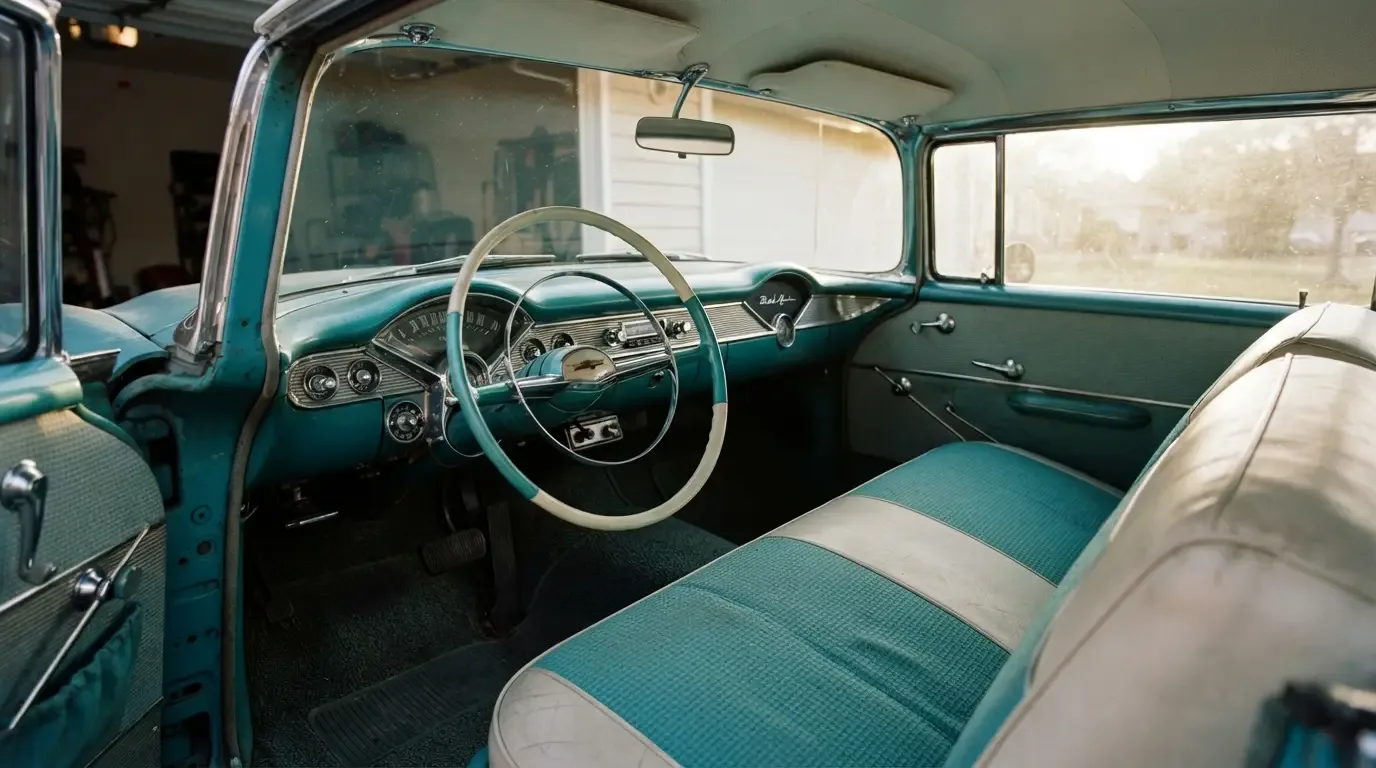
The 1956 Bel Air interior used a combination of woven nylon or rayon cloth inserts on the seat faces paired with vinyl bolsters, and the pattern itself changed from the 1955 model, which is a detail period-correct restorers care about far more than casual buyers realize. Color and pattern were coordinated to the exterior paint code, meaning a car ordered in a particular two-tone combination would arrive with a specific, documented interior scheme rather than a mix-and-match assortment. Dealers worked from Chevrolet's color and trim data book to place orders, and that book is the closest thing researchers have to a primary source for what left the factory versus what a later owner installed.
The dashboard treatment matters just as much as the seats. Chevrolet gave the 1956 Bel Air a painted metal dash with chrome accents and, on Bel Air trim specifically, additional brightwork the base 150 and midline 210 series did not carry. The steering wheel, instrument cluster surround, and even the glovebox door trim varied by series, which is one reason a documented Bel Air commands more research interest than an outwardly similar 210.
Why originality is so hard to verify
Cloth degrades. Vinyl cracks and is replaced with whatever the upholsterer has in stock decades later, sometimes an approximation, sometimes not close at all. By the time a 1956 Bel Air reaches a concours field or a serious sale today, the odds that its interior is entirely factory-original are low. What a careful researcher looks for instead is evidence: partial original material tucked under a seat frame or behind a kick panel, factory documentation tags, and consistency between the interior color code stamped on the body tag and whatever trim is currently installed.
I have examined cars where an owner insisted on originality and the body tag told a different story entirely, not out of dishonesty but because nobody in the car's history had bothered to check. That is the value of doing the work rather than trusting a verbal history passed down through three or four owners.
Steering wheels, door panels, and small details that get overlooked
The horn ring design, the door panel stitching pattern, and even the material used on the package shelf behind the rear seat are all specific enough to the 1956 model year that a trained eye can date a car by its interior alone, independent of VIN or body tag. Restorers chasing accuracy source reproduction material woven to match the original pattern rather than a generic period-style cloth, because judges at serious events know the difference and score accordingly.
"Sheet metal tells you what a car looked like from across a parking lot. The interior tells you what the factory actually promised the buyer who signed the order form."
- Sarah Whitfield
Documenting a 1956 interior properly
For anyone researching or restoring a 1956 Bel Air interior, the process worth following is methodical rather than aesthetic. Start with the body tag to establish the factory-assigned trim code. Cross-reference that code against Chevrolet's period trim books, which list the cloth pattern and color pairing assigned to it. Then physically inspect the car for any surviving original material, however small a scrap, before assuming a full reproduction interior is necessary. Photographs from a car's earlier ownership, if they exist, are also useful corroborating evidence, particularly interior shots that show the dash, seat pattern, and door panels clearly enough to compare against factory reference material.
If you want to read the background on the 1956 model year as a whole, the surrounding history helps explain why interior documentation carries so much weight for this particular car. And for anyone whose research has turned into genuine interest in owning one, you can find a classic Air currently on the market to compare against everything documented here.
What this means for buyers today
A 1956 Bel Air with a documented, trim-code-correct interior is a meaningfully different purchase than one with an attractive but unverified reupholster job. The former has a paper trail that supports its history and, generally, its price. The latter may still be a good car, even a beautiful one, but it is asking a buyer to take the interior on faith. Given how much cloth and vinyl work has been done to these cars over seven decades, faith is not really a substitute for the body tag.
Common inaccuracies worth flagging in the field
Certain interior inaccuracies recur often enough in the current population of 1956 Bel Airs that they deserve specific mention. Generic diamond-pattern vinyl sourced from a supplier's catalog without reference to the correct 1956-specific pattern is one of the most common substitutions, close enough in general appearance to satisfy a casual buyer but distinguishable from correct material under direct comparison with factory reference photographs or documented original scraps. Steering wheel color mismatched to the interior code is another frequent inconsistency, often the result of a replacement wheel sourced for fit and general color family rather than exact code match.
Package shelf material behind the rear seat is commonly overlooked entirely during reupholstery projects, since it is largely hidden from casual view, which makes it one of the more useful places to check for surviving original material even on a car that has otherwise been fully redone. Door panel emblem placement and the specific chrome trim used around the panel edges also varied enough across the model year's production run that inconsistencies here can help date a car more precisely within the 1956 production window, information that matters more to serious documentation work than it does to a buyer simply looking for an attractive interior.
Working with an upholsterer on a correct restoration
For owners planning a full interior restoration rather than simply researching an existing one, the research phase described above should happen before any material is ordered, not after. A reputable upholsterer specializing in Tri-Five Chevrolets will be familiar with the correct patterns for 1956 specifically and should be able to source or reproduce material that matches documented originals rather than defaulting to whatever is easiest to obtain. Bringing documented reference photographs and the confirmed trim code to that conversation from the outset avoids the common and expensive mistake of redoing an interior a second time after a judge or a more knowledgeable buyer identifies the inaccuracy.
The cost difference between correct, pattern-matched reproduction material and generic period-style substitutes is real, and it is tempting to economize here when a restoration budget is already stretched. But interior accuracy is one of the more visible and easily checked originality markers on these cars, and cutting corners on it tends to cost more in resale value than it saves in upholstery bills.
Sources and notes
- Classic Industries: 1955-1957 Chevy Colors and Paint Codes
- Classic Industries: 1956 Bel Air Seat Upholstery
- Classic Industries: 1956 Bel Air Door Panels and Components
- Restoration Auto Supply: 1955-1957 Chevy Interior Trim and Upholstery
- Wikipedia: Chevrolet Bel Air
- Trifive.com: Tri-Five Chevrolet owners forum and reference